Top 12 Natural Monuments in the Altiplano
Natural monuments in the Altiplano encompass a high-altitude plateau in the Andes, featuring diverse geological formations and significant cultural sites. This region, primarily in Bolivia and Peru, is characterized by its vast salt flats, high-altitude lakes, and volcanic landscapes. It offers a range of natural features, from expansive white salt crusts to vividly colored lagoons and towering peaks. The Altiplano's natural monuments provide insight into unique ecosystems and ancient cultures.
Best natural monuments in the Altiplano
- The most popular natural…
Last updated: July 10, 2026
Cerro Calvario
Highlight • Viewpoint
Translated by Google •
Tip by

Sacred Rock (Titikala)
Highlight • Natural Monument
Translated by Google •
Tip by

Sign up now to discover places like this
Get recommendations on the best single tracks, peaks, & plenty of other exciting outdoor places.
Sign up for free
Plaza de las Banderas Uyuni
Highlight • Monument
Translated by Google •
Tip by

Tiwanaku Archaeological Site
Highlight • Historical Site
Translated by Google •
Tip by

Salar de Uyuni
Highlight • Natural
With a size of 10,580 square kilometers and a depth of at least 121 m, the Salar de Uyuni is the largest salt lake in the world.
Translated by Google •
Tip by
Cerro Palla Khasa Summit
Highlight • Summit
Translated by Google •
Tip by

Pachamama Peak, Amantani Island
Highlight • Summit
Translated by Google •
Tip by

Isla Incahuasi
Highlight • Natural Monument
Translated by Google •
Tip by
Cerro Tikani
Highlight • Summit
Translated by Google •
Tip by
Horca del Inca
Highlight • Historical Site
La Horca del Inca, however, was an astronomical cult site of the pre-Inca cultures.
Translated by Google •
Tip by

Sign up for free to discover even more natural monuments in the Altiplano.
Sign up for free
Already have an account?
Start today with a free account
Your next adventure awaits.
Login or Signup
Other adventures in the Altiplano

Tips from the Community

it is not a gallows, the name is a fake invented by the Spanish. it is an astronomical observatory for the solstice
0
0

The Spaniards, who discovered this structure many years ago, thought it was a gallows used by the Incas. La Horca del Inca, however, was an astronomical cult site of the pre-Inca cultures.
0
0

Cerro Tikani, at 3,936 meters, is the highest point in the northern part of the island. The climb is somewhat challenging due to the altitude, but the view from up here is impressive.
1
0
The Way of the Cross was built on this hill in the 1950s when the government decided that Copacabana should have more to offer its thousands of pilgrims than just the Basilica of the Virgin Mary.
2
0

Find your Flag 👌
1
0

Bring your national flag, club flag or something similar. The flags don't last forever and there is always a place for your own flag. A very impressive place.
1
0

Definitely worth the stop. We were there in 2006 so things may have changed since. We stayed overnight in the free cyclists refuge. After cycling in from Llica, I ate two Mondo burgers and later learned that electricity (and therefore refrigeration) on the island is intermittent. The result was violent vomiting in the middle of the night. Prior to that, the island was a great and experiencing sunset there was pretty magical.
0
0

Considered one of the most extreme and remarkable views in all of South America, if not on Earth, Bolivia's Salar de Uyuni is the world's largest salt desert, spread across more than 4,050 square miles of the Altiplano, left behind by prehistoric lakes that evaporated long ago. Here, a thick crust of salt stretches to the horizon, covered in quilted, polygonal salt patterns rising from the ground. At certain times of the year, nearby lakes overflow their banks and a thin layer of water transforms the plains into a stunning reflection of the sky. This beautiful and otherworldly terrain serves as a lucrative mining site for salt and lithium—the element responsible for powering laptops, smartphones, and electric cars. In addition to the local workers who mine these minerals, the landscape is home to the world's first salt hotel and is populated by tourists. Source: https://www.nationalgeographic.com/travel/article/how-to-see-salar-de-uyuni-salt-flats-bolivia
2
0
Frequently Asked Questions
What are some of the most unique natural features to explore in the Altiplano?
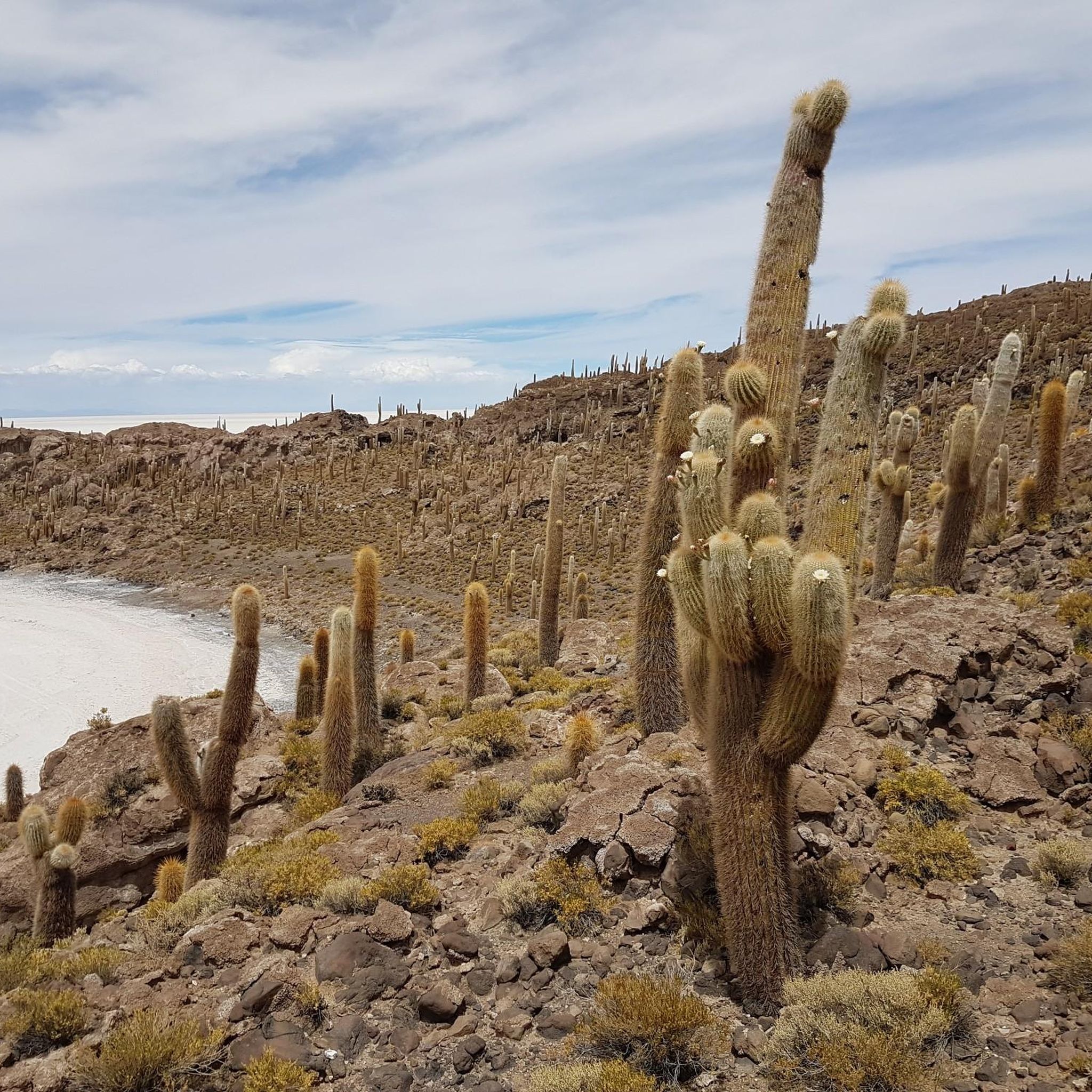
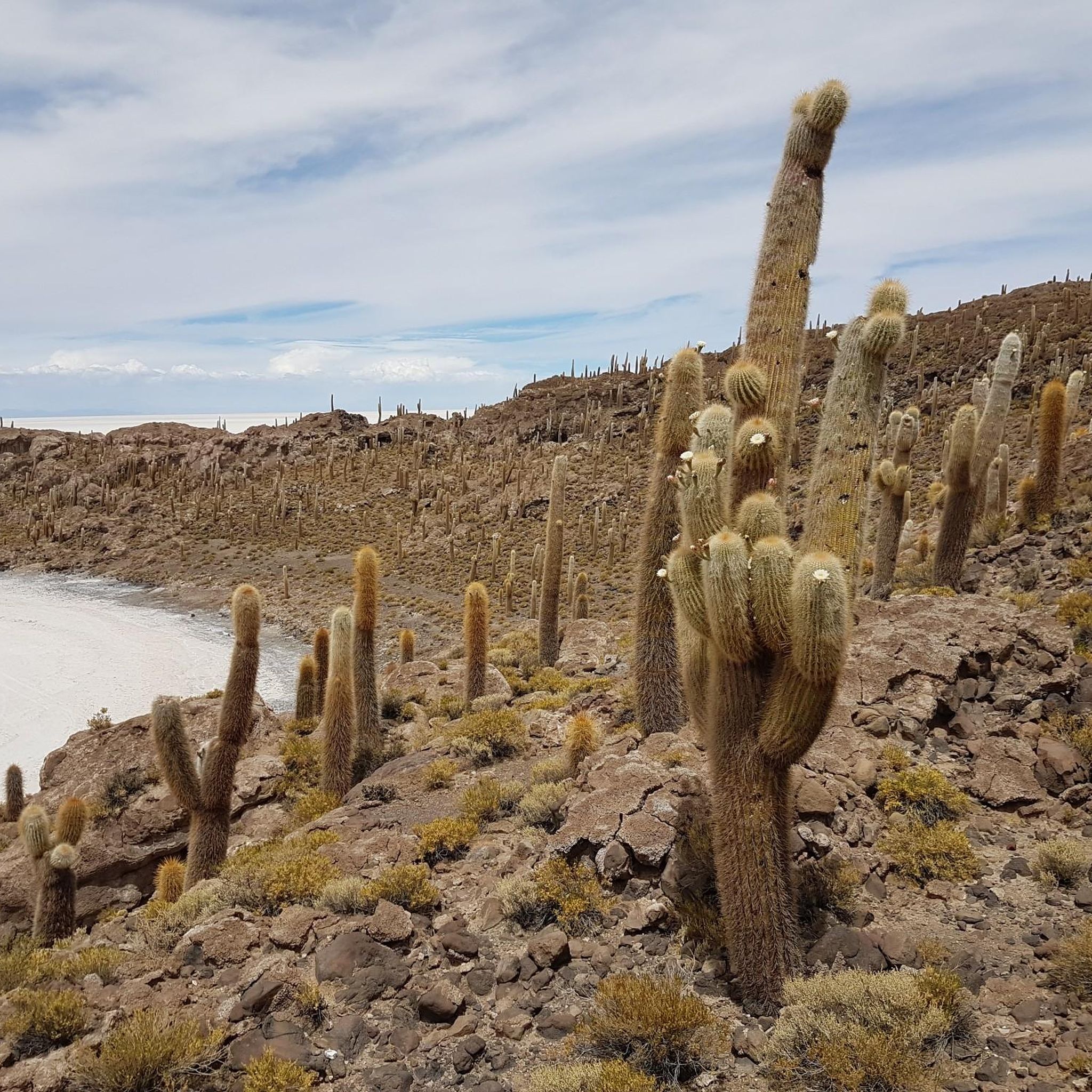
The Altiplano is renowned for its otherworldly landscapes. You can explore the vast, flat expanse of Salar de Uyuni, the world's largest salt flat, which transforms into a giant mirror during the wet season. Another unique feature is Isla Incahuasi, an 'island' covered in ancient cacti within the salt flat. The region also features high-altitude lakes like Lake Titicaca, with its unique floating islands, and vividly colored lagoons such as Laguna Colorada and Laguna Verde in the Eduardo Avaroa Andean Fauna National Reserve, known for their flamingo populations.
Are there any historical or cultural sites among the natural monuments in the Altiplano?
Yes, the Altiplano is rich in both natural beauty and cultural heritage. Lake Titicaca, for instance, is considered the 'birthplace of the Incas' and is home to indigenous communities. You can also visit the Tiwanaku Archaeological Site, an important pre-Columbian ruin site that was once the urban center of the Tiwanaku State. Another significant cultural landmark is the Sacred Rock (Titikala), which holds historical importance.
What kind of wildlife can I expect to see in the Altiplano's natural monuments?
The Altiplano's unique ecosystems support diverse wildlife. In the Eduardo Avaroa Andean Fauna National Reserve, you can observe large populations of three species of flamingos (Andean, James's, and Chilean) in the colorful lagoons, alongside vicuñas and guanacos. Sajama National Park is a sanctuary for vicuñas, llamas, alpacas, Andean foxes, Andean cats, and various bird species like flamingos and the Andean condor. Lake Titicaca is also home to endemic species such as the giant Titicaca water frog and various aquatic birds.
What are the best viewpoints for panoramic scenery in the Altiplano?
For breathtaking panoramic views, consider climbing Cerro Calvario, which offers stunning vistas down to Copacabana and Lake Titicaca, especially at sunset. On Amantani Island, Pachamama Peak provides expansive views. Additionally, Cerro Palla Khasa Summit on Isla del Sol offers a wonderful perspective of the island and distant glacier-covered mountains.
Are there family-friendly natural monuments or activities in the Altiplano?
While many sites involve high altitudes, some locations offer family-friendly experiences. The Plaza de las Banderas Uyuni is a popular stop before visiting the Salar de Uyuni, where families can take unique photos with flags from around the world and explore local craft shops. Visiting the Uros floating islands on Lake Titicaca can also be an engaging cultural experience for families.
What outdoor activities can I do near the natural monuments in the Altiplano?
The Altiplano offers various outdoor activities, particularly hiking and running. You can find numerous trails, such as the challenging 'Chincana Ruins, Isla del Sol loop from Yumani' or the moderate 'Pachatata loop from Amantaní'. For more options, explore the hiking routes in the Altiplano or the running trails in the Altiplano.
What is the best time to visit the natural monuments in the Altiplano?
The best time to visit the Altiplano generally depends on what you want to experience. The dry season (May to November) offers clear skies, ideal for stargazing and seeing the hexagonal patterns on the Salar de Uyuni. The wet season (December to April) transforms the Salar de Uyuni into the world's largest natural mirror, creating stunning photographic opportunities. However, some areas might be less accessible during heavy rains.
What are the typical terrain and elevation challenges when visiting the Altiplano's natural monuments?
The Altiplano is a high-altitude plateau, with elevations often exceeding 3,800 meters (12,500 feet) above sea level, and some areas like the Eduardo Avaroa Andean Fauna National Reserve reaching 4,200 to 5,400 meters. Visitors should be prepared for potential altitude sickness. The terrain can vary from the flat salt flats of Uyuni to mountainous areas with strenuous climbs, such as those leading to summits like Cerro Tikani or Horca del Inca.
Are there any lesser-known or hidden natural monuments in the Altiplano worth exploring?
While the Salar de Uyuni and Lake Titicaca are well-known, areas like Sajama National Park offer raw natural beauty and solitude, being less crowded. It features high-altitude Queñua forests, geysers, and natural hot springs. The Eduardo Avaroa Andean Fauna National Reserve, though gaining popularity, still provides an otherworldly experience with its unique colored lagoons and the surreal Dalí Desert, which feels remote and less explored compared to other destinations.
What should I pack for a trip to the natural monuments of the Altiplano?
Given the high altitude and varying conditions, it's essential to pack layers of clothing, including warm jackets, hats, and gloves, even in warmer months, as temperatures can drop significantly. Sun protection (sunscreen, sunglasses, wide-brimmed hat) is crucial due to the intense UV radiation at high altitudes. Comfortable walking shoes or hiking boots are recommended for exploring. Don't forget a reusable water bottle to stay hydrated and a headlamp or flashlight if you plan evening excursions, such as for sunset views from viewpoints like Cerro Calvario.
Most popular routes in the Altiplano
Most popular attractions in the Altiplano

Get inspired with the komoot mobile app


Explore more
Extend your search for the best caves by checking out these guides of the top ones in the Altiplano:
