Top 20 Natural Monuments around the Bug
Natural monuments around the Bug River span across Poland, Ukraine, and Belarus, showcasing diverse landscapes and ecological features. This significant waterway is characterized by its largely unregulated course in some sections, creating extensive natural and wildlife sanctuaries. The region includes protected areas with ancient trees, unique geological formations, and varied ecosystems. These areas offer opportunities to experience the natural heritage of Eastern Europe.
Best natural monuments around the Bug
- The most popular natural monuments is Jadwisin Nature Reserve, a…
Last updated: June 26, 2026
Mężenin – Natura 2000 Lower Bug Valley
Highlight • Natural Monument
The settlement was established at the …
Translated by Google •
Tip by

Bolko oak
Highlight • Natural Monument
Translated by Google •
Tip by

Sign up now to discover places like this
Get recommendations on the best single tracks, peaks, & plenty of other exciting outdoor places.
Sign up for free
Oxbow Lake of the Bug River
Highlight • Lake
Translated by Google •
Tip by

Jadwisin Nature Reserve
Highlight (Segment) • Forest
Translated by Google •
Tip by

T-34 Tank Monument in Szwajcaria Podlaska Nature Reserve
Highlight • Monument
Translated by Google •
Tip by

Grodzisko Barbarka in Serock
Highlight • Historical Site
Translated by Google •
Tip by

Viewpoint of the chalk mine
Highlight • Viewpoint
Translated by Google •
Tip by

Przekop Nature Reserve
Highlight • Forest
Translated by Google •
Tip by

Trail Through Jęgiel Nature Reserve
Highlight • Trail
Translated by Google •
Tip by

Wieliszewskie Łęgi Nature Reserve
Highlight • Natural Monument
Translated by Google •
Tip by

Sign up for free to discover even more natural monuments around the Bug.
Sign up for free
Already have an account?
Start today with a free account
Your next adventure awaits.
Login or Signup

Other adventures around the Bug

Tips from the Community

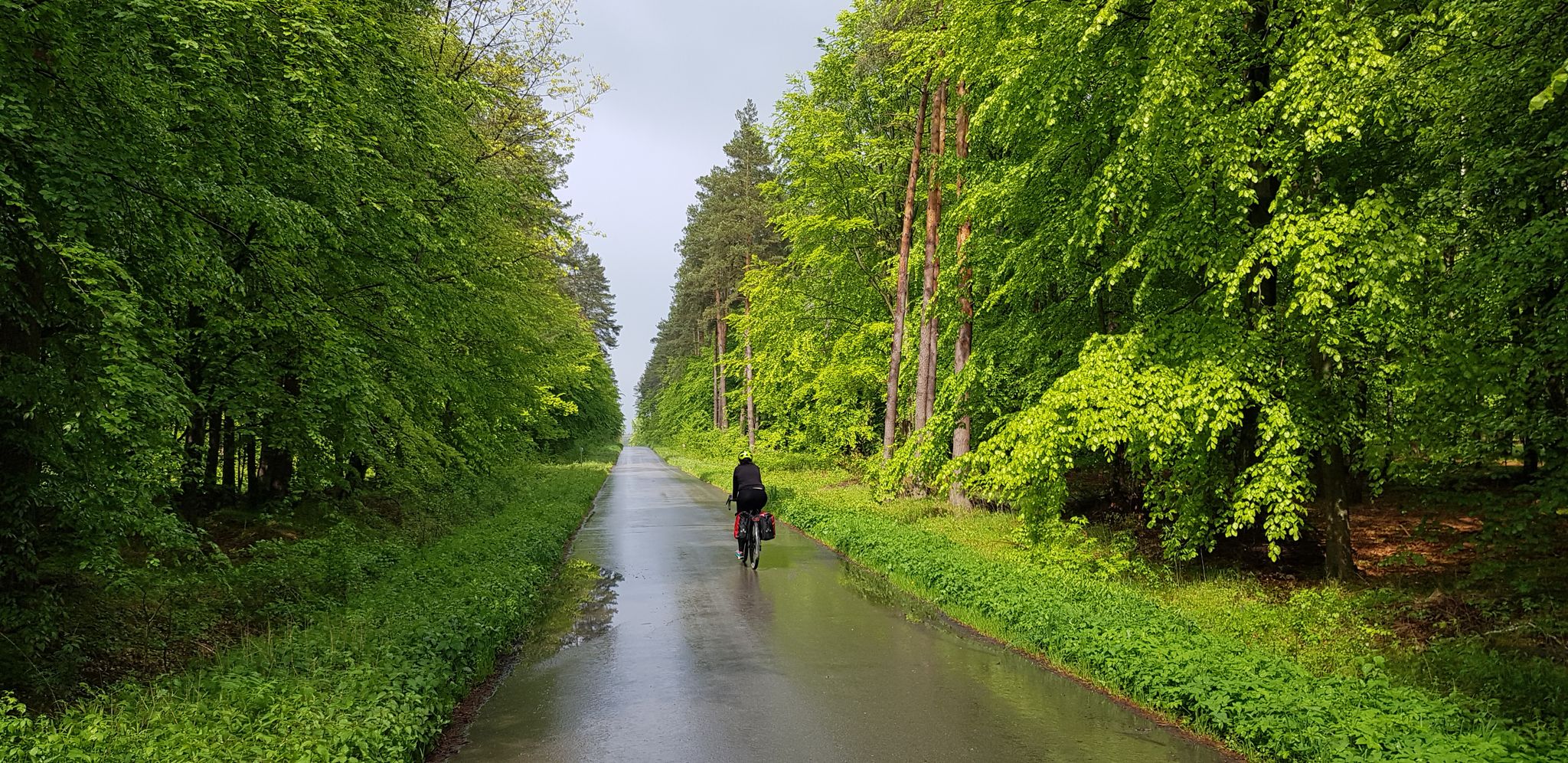
It is possible to ride across. Partially asphalt, partially singletrack.
0
0

a forest nature reserve established in 1964 with an area of 21.08 ha
1
0

The "Barbarka" stronghold is the remains of one of the most important strongholds in Mazovia. Located in a strategically important location on the route from Mazovia to Ruthenia, it guarded a river crossing. Serock also had a customs house. The early medieval stronghold and its surrounding settlements gave rise to the later city. Source: https://zabytek.pl/pl/obiekty/serock-grodzisko-barbarka
1
0

The Bolko Oak – a pedunculate oak, which, according to measurements from 1992, sprouted around 1370, making it approximately 650 years old. It grows in a former manor park in Hniszów, Ruda-Huta commune, and has been protected as a natural monument since 1959. In the first decade of the 21st century, its circumference was 870 cm, making it one of the largest oaks in Poland. It reaches a height of 29 m. To stabilize the tree, conservation procedures are performed on it, including sanitation pruning, and the crown is stabilized by dynamic bonds. The Bolko Oak has an exceptionally impressive crown, measuring 34 x 30 m. Source: https://pl.wikipedia.org/wiki/Dąb_Bolko
0
0

The "Wieliszewskie Łęgi" nature reserve is an area of 18.58 ha, protecting natural plant communities, such as willow-poplar meadows and marshes. It is located in the Wieliszew commune, near Lake Zegrze. It is a place of great biodiversity, with numerous species of plants (including orchids) and birds. The reserve is accessible on foot and by bike.
0
0

Touch history and land on the Bug River.
0
0
Floristic nature reserve established in 1990 on the lands of the former Wieliszew State Horticultural Farms Combine in the Wieliszew commune and the village of Zegrze Południowe in the Nieporęt commune. The aim of protection is to preserve diverse, natural plant communities with numerous species of orchid plants and other protected and rare species.
0
0

Wieliszewskie Łęgi Nature Reserve.
0
0
Frequently Asked Questions
What types of natural monuments can I explore around the Bug River?
The Bug River region offers a diverse range of natural monuments. You can find extensive landscape parks like the Bug Landscape Park in Poland, which protects ancient trees such as pedunculate oaks and small-leaved lindens, as well as unique geological formations and peat bog reserves. In Ukraine, areas like the Granite-Steppe Lands of Bug feature majestic granite rocks and river rapids, while Belarus boasts botanical, geological, and hydrological monuments, including ancient boulders and historic park complexes.
Are there specific natural monuments known for their ancient trees?
Yes, the Bug Landscape Park in Poland is particularly renowned for its ancient trees, with over 200 established natural monuments, many of which are ancient oaks, lindens, and ashes. A notable example is the Bolko oak, estimated to be around 650 years old, making it one of the largest oaks in Poland.
What kind of geological features are prominent in the Bug River region?
The region is home to impressive geological formations. In Ukraine, the Granite-Steppe Lands of Bug and Bug Gard National Nature Park showcase majestic granite rocks, some reaching 40-50 meters tall, creating a mountain-like landscape with rapids and waterfalls along the Southern Bug River. Belarus also features geological natural monuments like the "Devil's Stone" Khmelevsky, a large granite boulder of Scandinavian origin.
Are there family-friendly natural monuments or activities available?
Many natural monuments around the Bug River are suitable for families. Areas like the Bolko oak offer pleasant spots for relaxation. The T-34 Tank Monument in Szwajcaria Podlaska Nature Reserve provides a unique landmark with a path leading to a viewpoint over the Bug River, which can be an interesting stop for families. Canoeing is also a popular family-friendly activity on the Bug River, especially in the Podlaski Przełom Bugu Landscape Park.
What outdoor activities can I do near these natural monuments?
The Bug River region offers a variety of outdoor activities. You can enjoy cycling on routes like those found in the Cycling around the Bug guide, or explore mountain biking trails detailed in the MTB Trails around the Bug guide. Running enthusiasts can find suitable paths in the Running Trails around the Bug guide. Additionally, rafting and rock climbing are popular in areas like Ukraine's Bug Gard National Nature Park.
Are there hiking trails near the natural monuments around the Bug?
Yes, there are numerous hiking opportunities. The Bug Landscape Park features established environmental trails such as Huta Gruszyno – Treblinka and Korczew – Mogielnica. You can also explore forest reserves like Jadwisin Nature Reserve, which offers single-track trails, and Przekop Nature Reserve, located near the Bug River. The Bug Gard National Nature Park in Ukraine also has marked trails for eco-tourism.
What is the best time to visit the natural monuments around the Bug River?
The best time to visit generally depends on the activities you plan. Spring and autumn offer pleasant temperatures for hiking, cycling, and exploring the diverse flora and fauna, with vibrant colors in autumn and blooming landscapes in spring. Summer is ideal for water activities like canoeing and rafting, especially in the unregulated sections of the Bug River, though it can be warmer. Winter can offer unique snowy landscapes for those interested in cold-weather exploration.
Can I find natural monuments with historical significance in the area?
Absolutely. Beyond purely natural features, some sites blend natural beauty with history. For instance, the Grodzisko Barbarka in Serock is an ancient fortified settlement offering historical context alongside views of the Narew River. In Ukraine, the Bug Gard National Nature Park includes the historic "Gard" landmark, significant to Cossack traditions, and the 19th-century Skarzhynskyi Great Watermill.
What makes the Bug River itself a natural monument?
The Bug River is largely unregulated in many sections, particularly in Poland, creating extensive natural and wildlife sanctuaries. Its varied coastline, including impressive bends and high loess hills, provides habitats for diverse fish species, beavers, swans, cranes, and rare butterflies. This natural, untamed character of the river makes it a significant ecological and natural monument in itself.
Are there any unique natural monuments in Ukraine along the Bug River?
Ukraine's Bug River region is home to the stunning Granite-Steppe Lands of Bug and Bug Gard National Nature Park. These areas are characterized by majestic granite rocks, rapids (like the Myhiia rapids), waterfalls, and deep canyons such as Aktove and Arbuzynskyi. They are also significant for protecting numerous relict and endemic species, making them unique ecological treasures.
What do visitors enjoy most about the natural monuments around the Bug?
Visitors frequently appreciate the tranquility and natural beauty of the region. Many enjoy the alternative routes away from the water, such as the single-track trails through Jadwisin Nature Reserve, which are described as picturesque and wild. The impressive size and age of trees like the Bolko oak also leave a lasting impression, offering a good place to relax in the shade.
Can I find natural monuments in Belarus related to the Bug River basin?
While specific natural monuments explicitly named "Bug" are less common in Belarus, the Bug River forms part of its border, and the country has numerous other natural monuments that exemplify the region's beauty. These include geological sites like the "Devil's Stone" Khmelevsky and botanical monuments such as the 19th-century Park "Soveiki" and Park "Mankovichsky" with their unique plant species and water compositions.
Most popular routes around the Bug
Most popular attractions around the Bug

Get inspired with the komoot mobile app


Explore more
Extend your search for the best caves by checking out these guides of the top ones around the Bug:
