Attractions and Places To See around Braux - Top 18
Attractions and places to see around Braux offer a blend of historical sites and architectural interest. The region is characterized by its historical significance, including connections to notable figures. Visitors can explore various structures that showcase different periods of construction and restoration. The area provides opportunities to discover local heritage through its preserved buildings.
Best attractions and places to see around Braux
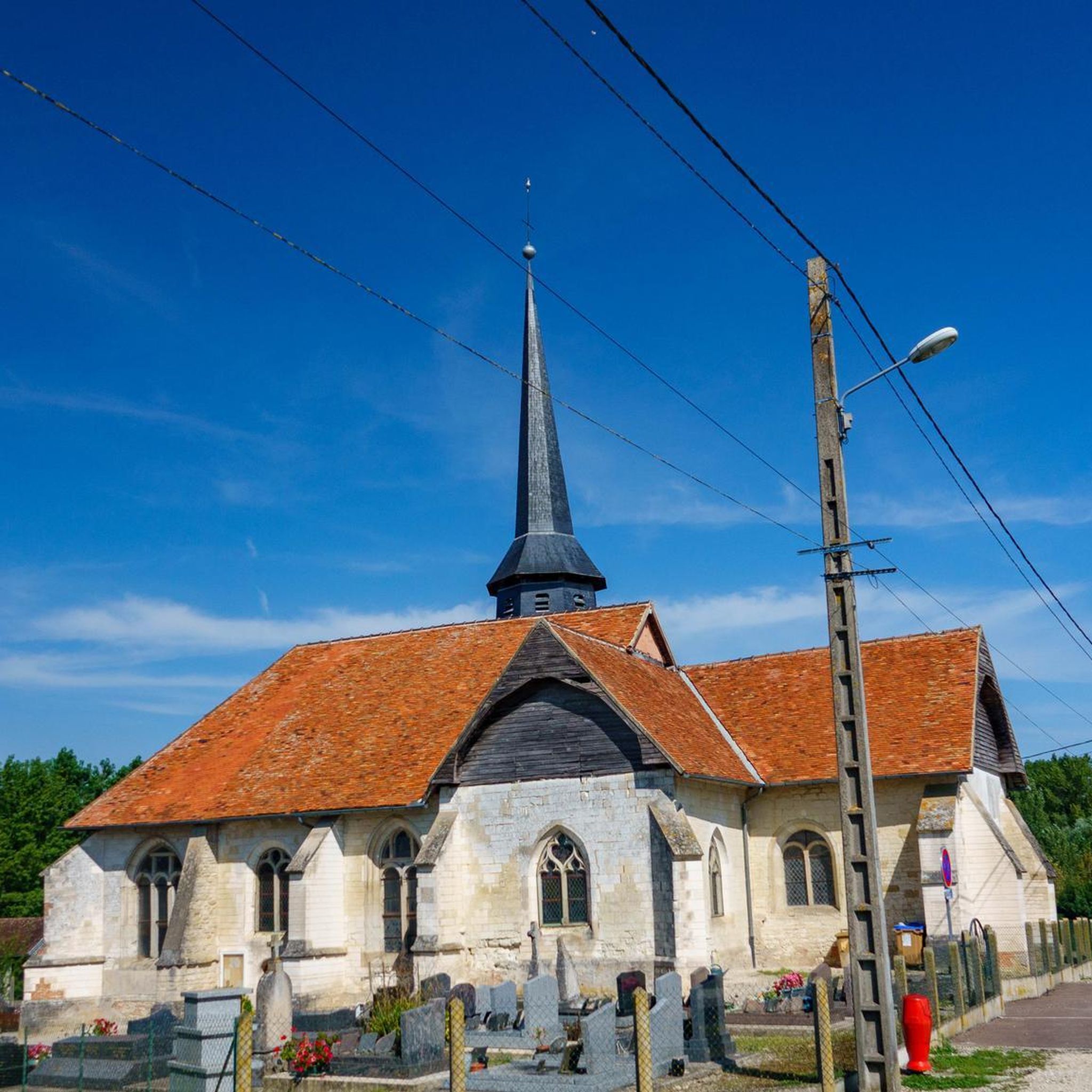
- The most popular attractions is Lentilles Church, a religious building that features timber-framed architecture and cob façades.…
Last updated: May 11, 2026
Napoleon and Brienne-le-Château
Highlight • Settlement
Translated by Google •
Tip by

Lentilles Church
Highlight • Religious Site
Translated by Google •
Tip by

Sign up now to discover places like this
Get recommendations on the best single tracks, peaks, & plenty of other exciting outdoor places.
Sign up for free
Saint-Georges Church of Chavanges
Highlight • Religious Site
Translated by Google •
Tip by
Church of Saint Peter and Saint Paul
Highlight • Religious Site
Translated by Google •
Tip by

Château de Brienne-le-Château
Highlight • Castle
Translated by Google •
Tip by
Sign up for free to discover even more attractions around Braux.
Sign up for free
Already have an account?
Start today with a free account
Your next adventure awaits.
Login or Signup

Tips from the Community

The Saint-Jacques-et-Saint-Philippe church in Lentille is eye-catching with its timber-framed architecture and cob façades. It was built during the 16th century and was restored to its original appearance in the 1970s.
0
0

This building was badly damaged in 1940 by a fire that destroyed much of the city, but has been restored to its original state. The church, where Napoleon made his first communion, is built of stone from the Champagne region. It has a 14th-century nave and a 16th-century choir with choir girth. Look at the original images in the Renaissance stained glass windows: on the left the story of Noah, on the right the legend of Saint Crispin and Saint Crispinian. Also note the bell-shaped holy water font (16th century), the baptismal font and the choir screen (18th century).
1
0
Château de Brienne-le-Château is a magnificent palace from the second half of the 18th century, located in the commune of Brienne-le-Château in the Aube department, in the Grand Est region. The castle is partly registered as a historical monument. The castle was inaugurated in 1778. The castle has a classical style and is surrounded by a large park with an orangery, a lavoir and a glacière. The castle is also called “the little Versailles of the Aube”. The castle also has a historical link with Napoleon Bonaparte, who studied there at the military school. In 1814, he stayed there for two nights during the Battle of La Rothière, where he almost managed to surprise the Prussian general Blücher in the castle1. In 1805, Napoleon tried to buy the castle for his mother, but the young Countess de Brienne refused him. The castle is now a psychiatric hospital.
2
0

Brienne lies on the banks of the Aube river in a plain called la Plaine de Brienne. The Counts of Brienne dominated the history of the area for a long time. They were one of the most important noble families of medieval France and produced statesmen, diplomats and crusaders. Johann von Brienne (1169/74–1237). He was chosen by the French King Philip II as husband and regent for the heir to the Kingdom of Jerusalem. From 1210 to 1212 he was king of Jerusalem. He then became the father-in-law of the Roman-German Emperor Frederick II, with whom he became enemies and also fought against him as the Pope's general. From 1229 he ruled Constantinople for nine years. Brienne-le-Château became known as the training site of Napoleon Bonaparte, who studied here for five years (May 1779 to October 1784) as a boarding school student at what was then the Royal Military School. To complete his studies, he left Brienne-le-Château and finished it at the École Militaire in Paris. On April 3, 1805, he visited Brienne-le-Château again on his trip to Italy for the coronation, now already as Emperor of the French. On January 29, 1814, the Battle of Brienne was fought near Brienne, which ended with a victory for France under Napoleon Bonaparte against the Russians and Prussians under Field Marshal Blücher. Sources: Wikipedia
1
0
The Roman Catholic parish church of Saint-Georges in Chavanges, a commune in the Aube department in the Grand Est region of France, dates back to the 12th century. In the 15th and 16th centuries the church was rebuilt in the Gothic style. The Romanesque west portal of the 12th century church has been preserved. The arched portal is framed by simple archivolts that rest on slender columns decorated with capitals. Stylized leaves, birds and a kneeling person are depicted on the capitals. The nave has three aisles and is divided into three bays. Adjacent to the nave is a two-aisled transept, which opens onto a wide choir. This has three apses with a polygonal end. The grisaille window with scenes of the Apocalypse was installed in 1540. The motifs are largely borrowed from Albrecht Dürer's woodcuts of the Apocalypse, which he published in 1498 in his “Big Book” with the title The Secret Revelation of Iohannis. Source: Wikipedia
1
0
Frequently Asked Questions
What historical sites can I explore around Braux?
The region around Braux is rich in history. You can visit Napoleon and Brienne-le-Château, a settlement known for Napoleon Bonaparte's military school days and the Battle of Brienne. Another significant site is the Château de Brienne-le-Château, an 18th-century palace often called 'the little Versailles of the Aube', which also has ties to Napoleon.
Are there any notable churches or religious buildings to see?
Yes, several historical churches are worth visiting. The Lentilles Church stands out with its unique timber-framed architecture and cob façades, dating back to the 16th century. The Saint-Georges Church of Chavanges, originally from the 12th century, features a preserved Romanesque west portal and Gothic reconstructions. Additionally, the Church of Saint Peter and Saint Paul, where Napoleon made his first communion, showcases 14th-century nave and 16th-century choir elements, along with Renaissance stained glass.
What natural attractions are there near Braux?
Braux is surrounded by natural beauty. You can explore the scenic Falaises de grès de la vallée du Coulomp (sandstone cliffs of the Coulomp valley) and the ancient chestnut groves (châtaigneraie). Further afield, the Gorges de Daluis offer dramatic natural landscapes, and the Grès d'Annot, about 11 km away, provides spectacular trails through sculpted sandstone formations. The Parc naturel régional du Verdon, approximately 22 km from Braux, boasts breathtaking panoramas and protected biodiversity.
Are there family-friendly attractions around Braux?
Yes, several attractions are suitable for families. The Lentilles Church and the Saint-Georges Church of Chavanges are both categorized as family-friendly historical sites. Exploring the natural features like the chestnut groves or the Grès d'Annot can also be an engaging activity for families.
Where can I go hiking or walking near Braux?
The region offers various hiking opportunities. You can find trails around Annot, known for its sculpted rocks and forests. For more structured routes, explore the hiking guide for Braux, which includes routes like the 'Brienne-le-Château Castle loop' and an 'easy' hiking loop from Précy-Notre-Dame.
What cycling routes are available in the Braux area?
Braux is great for cycling. You can find numerous routes for different types of bikes. Check out the road cycling guide for routes like the 'View of Lake Orient – Dienville Market Hall loop'. For general cycling, the cycling guide for Braux offers options such as the 'Château de Brienne-le-Château loop' and longer routes around Lake Der-Chantecoq.
Can I go swimming near Braux?
Yes, Lac de Castillon, located about 26 km from Braux, is an ideal spot for swimming and relaxation during the summer months. It also offers opportunities for lakeside strolls.
What is the significance of Napoleon Bonaparte in the Braux region?
Napoleon Bonaparte has strong historical ties to the Braux area. He studied for five years at the Royal Military School in Brienne-le-Château. He also made his first communion at the Church of Saint Peter and Saint Paul. The Battle of Brienne, where Napoleon's forces fought against the Russians and Prussians, also took place nearby in 1814.
Are there any local markets to visit near Braux?
While Braux itself is a smaller village, nearby towns host local markets. You can find markets in Venarey-les-Laumes (Wednesdays), Saulieu (Saturdays), and Montbard (Fridays), offering local produce and goods.
What is the Sentier Découverte de la Châtaigne?
The Sentier Découverte de la Châtaigne is a discovery trail in Braux specifically focused on chestnuts. It's an excellent way to learn about the region's century-old chestnut groves and their cultural significance.
What do visitors appreciate most about the attractions around Braux?
Visitors to Braux particularly enjoy the blend of historical significance and architectural beauty. The well-preserved religious buildings, like the timber-framed Lentilles Church, and the historical connections to figures like Napoleon Bonaparte, are frequently highlighted. The serene natural landscapes, including the Coulomp valley and chestnut groves, also contribute to a memorable experience.

Get inspired with the komoot mobile app


Explore more
Still not found the Highlight you’re looking for? See guides of the top attractions in other regions:
