Attractions and Places To See around Le Pailly - Top 20
Best attractions and places to see around Le Pailly, a commune in the Haute-Marne department, offer a blend of historical significance and natural beauty. Situated at an altitude of 325 meters at the foot of the Langres plateau, the area features the Cognelot mountain and the source of the Resaigne river. Historical elements include an ancient Roman road and Neolithic discoveries, indicating long-standing human activity. The region is characterized by its diverse landscape and cultural heritage.
Best attractions and places…
Last updated: July 7, 2026
Saint-Mammès Cathedral of Langres
Highlight • Religious Site
The city was destroyed by the Vandals …
Translated by Google •
Tip by

Door Lanyard Door
Highlight • Other
Translated by Google •
Tip by

Sign up now to discover places like this
Get recommendations on the best single tracks, peaks, & plenty of other exciting outdoor places.
Sign up for free
Porte des Terreaux
Highlight • Other
Translated by Google •
Tip by
Langres Rack Railway
Highlight • Monument
Translated by Google •
Tip by

Source of the Marne
Highlight • Other
Translated by Google •
Tip by
Sign up for free to discover even more attractions around Le Pailly.
Sign up for free
Already have an account?
Start today with a free account
Your next adventure awaits.
Login or Signup


Tips from the Community

Until the mid-19th century, the remains of a Gallo-Roman arch, which marked the northern city limit, were still visible. After being integrated into the fortifications at the end of the 3rd century and becoming a city gate, this structure owes its name either to its length or to a legendary king named Longo, whose effigy was mounted on a corbel overlooking the city. Around 1538, a barbican was built in front of the gate to prevent a frontal assault.
2
0

Nice hike with parking and picnic area nearby. The path leading to the spring is a bit steep and can be slippery if it rains. The Sabinus cave is worth the detour, watch out for children when going there.
0
0

This is the cathedral of Langres.
1
0

Imposing cathedral of a small town steeped in history! Worth seeing from the outside and inside
1
0

The Longe-Porte still has its 17th century guardhouse intact. The barbican of the “Longe-Porte” gate, projecting from the ramparts, allowed for increased control of access to the town of Langres.
5
0
The Train à crémaillère in Langres was the first rack railway in France, connecting the Gare de Langres with the town of Langres, which is situated on a hill. The railway was 1.475 km long and had a maximum gradient of 172 ‰. The railway opened in 1887 with steam traction and was electrified in 1935. The railway was closed in 1971 due to obsolescence. One of the old electric trains has been restored and stands on the Promenade Jules Verne in Langres. The other has been taken to the Musée français du chemin de fer in Mulhouse. The railway was a major attraction for the residents and visitors of Langres, who could enjoy the views over the town and its surroundings.
3
0
Langres Cathedral is dedicated to the 3rd century martyr Mammes of Caesarea. The cathedral is the seat of the Bishop of Langres and is a national monument. The cathedral dates from the 12th century and has a mixture of Romanesque, Gothic and Classical styles. The roof is decorated with colourful tiles and the façade has many details. The cathedral has some remarkable tapestries that are worth seeing. The cathedral is also a place of pilgrimage, as it houses the holy relic of the head of Saint Mammes. The cathedral is 94m long and 23m high. The façade was destroyed by fire and replaced in the 18th century by a three-storey classical façade.
3
0

The Marne (Latin Matrona) is a river in France. It rises on the plateau of Langres, in the municipality of Balesmes-sur-Marne, at an altitude of about 420 meters. It initially drains to the northwest, later turns to the west and southwest and flows into the Seine as a right tributary after about 514 kilometers between Charenton-le-Pont and Ivry-sur-Seine, just southeast of Paris. Several French departments are named after the Marne, namely Haute-Marne, Marne, Seine-et-Marne and Val-de-Marne.
3
0
Frequently Asked Questions
What historical landmarks can I explore in Le Pailly?
Le Pailly is rich in history. The most prominent landmark is the magnificent Château du Pailly, a Renaissance jewel built between 1563 and 1573, incorporating elements of an older medieval fortress. You can also visit the Church of Saint John the Baptist, with roots dating back to 1607, and discover traces of an ancient Roman road that once connected Langres to Besançon.
Are there any natural features or scenic spots to visit near Le Pailly?
Yes, Le Pailly is surrounded by natural beauty. You can explore Cognelot Mountain, which reaches 473 meters and is steeped in local folklore. Other natural features include Mont-Rond, a hill with a soft, rounded profile, and the source of the Resaigne River. The unique horseshoe-shaped relief known as "Les Fourches" is also worth seeing.
What are the most popular attractions in the wider region around Le Pailly?
Beyond Le Pailly itself, visitors highly recommend the Saint-Mammès Cathedral of Langres, known for its Burgundian-Romanesque and Gothic architecture. Another popular spot is the Porte des Terreaux, a historic gate in Langres' fortified city walls. The Langres Rack Railway, France's first rack railway, also offers historical interest and views.
What kind of outdoor activities can I do near Le Pailly?
The area around Le Pailly is excellent for outdoor activities. You can find numerous routes for cycling, road cycling, and gravel biking. For example, there are moderate to difficult gravel biking routes like the "Lake Liez – View to Langres up the lake loop" and various cycling tours around Langres. Explore more options on the Gravel biking around Le Pailly guide or the Cycling around Le Pailly guide.
Are there family-friendly attractions or activities in the Le Pailly area?
Yes, several attractions cater to families. The Langres Rack Railway is considered family-friendly, offering a unique historical experience. Additionally, the Liez Lake Beach provides a sandy beach with swimming opportunities (when the green flag is raised), a playground, and picnic areas, perfect for a family day out during summer months.
Where can I find swimming opportunities near Le Pailly?
For swimming, head to Liez Lake Beach. This sandy beach offers beautiful views of the lake and dam. Swimming is permitted when the green flag is raised, indicating good water quality and safety. The beach also features a solarium, volleyball court, and picnic area, with lifeguards on duty from June to September.
What do visitors enjoy most about the attractions around Le Pailly?
Visitors appreciate the blend of historical significance and natural beauty. Many enjoy walking along the four-kilometer-long city wall of Langres, with its twelve towers and seven gates, and admiring the architecture of sites like the Saint-Mammès Cathedral. The panoramic views from the fortified city and the unique experience of the Langres Rack Railway are also frequently highlighted.
Can I find evidence of ancient history in Le Pailly?
Absolutely. The communal territory of Le Pailly is traversed by an ancient Roman road that connected Langres to Besançon, indicating significant historical human activity. Furthermore, Neolithic tools, including arrowheads, have been discovered on the heights overlooking the village, particularly around Cognelot, providing evidence of even earlier human presence.
What is the best time to visit Le Pailly for outdoor activities?
While specific seasonal recommendations for Le Pailly aren't detailed, the region's natural features and outdoor routes suggest that spring and summer are ideal for activities like cycling, gravel biking, and enjoying the Liez Lake Beach. The beach itself is open from June to September, making summer a great time for water-based fun.
Are there any notable architectural features in the region?
The region boasts impressive architecture. The Château du Pailly is a prime example of Renaissance architecture, blending Ionic and Corinthian styles. In Langres, the Saint-Mammès Cathedral showcases Burgundian-Romanesque and Gothic influences. The historic gates of Langres, such as the Porte des Terreaux and the Porte de l'Hotêl de ville, also feature interesting medieval and later architectural elements like mâchicoulis cornices and friezes.
What is the significance of the Château du Pailly?
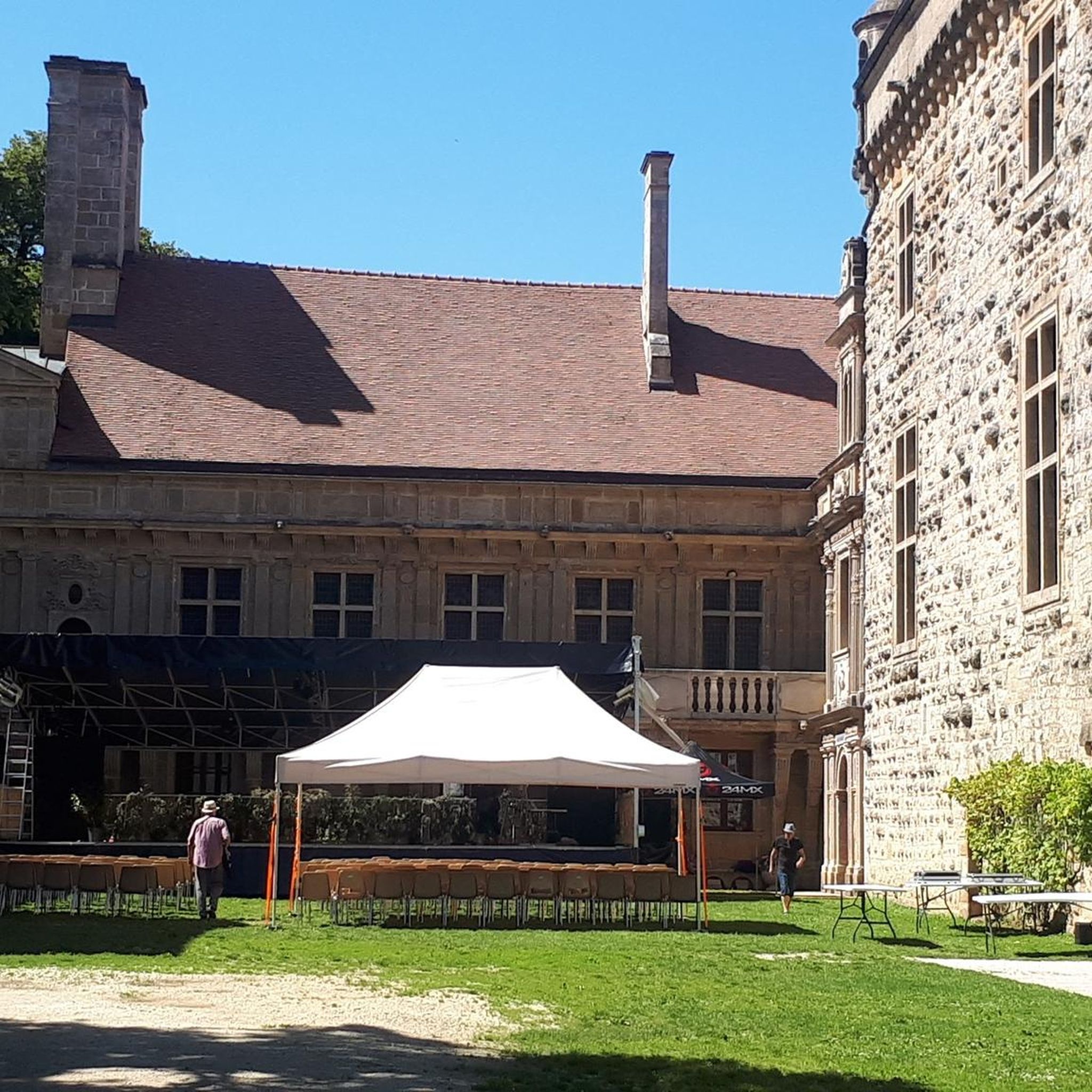
The Château du Pailly is considered a jewel of the Renaissance and the most prestigious example of Renaissance architecture in the Champagne-Ardenne region. Built by Gaspard de Saulx-Tavannes, Marshal of France, it stands on the site of an older medieval castle. Its blend of Ionic and Corinthian styles, the keep from its medieval origins, and its beautiful gardens make it a significant historical monument.

Get inspired with the komoot mobile app


Explore more
Still not found the Highlight you’re looking for? See guides of the top attractions in other regions:
