Attractions and Places To See around Senillé-Saint-Sauveur - Top 20
Best attractions and places to see around Senillé-Saint-Sauveur offer a blend of historical sites, natural beauty, and leisure activities. The area features ancient churches, archaeological sites, and medieval fortifications. Visitors can explore diverse landscapes, from shaded woodlands with hiking trails to spa towns known for thermal waters. This region provides opportunities for cultural exploration and outdoor pursuits.
Best attractions and places to see around Senillé-Saint-Sauveur
- The most popular attractions is La Roche-Posay, a settlement known as a spa resort.…
Last updated: October 11, 2026
La Roche-Posay
Highlight • Settlement
Translated by Google •
Tip by

Châtellerault
Highlight • Settlement
Translated by Google •
Tip by

Sign up now to discover places like this
Get recommendations on the best single tracks, peaks, & plenty of other exciting outdoor places.
Gallo-Roman Theatre of Old Poitiers
Highlight • Other
Translated by Google •
Tip by
Le Grand Atelier
Highlight • Museum
Translated by Google •
Tip by

Notre-Dame Church
Highlight • Religious Site
Translated by Google •
Tip by

Sign up for free to discover even more attractions around Senillé-Saint-Sauveur.
Already have an account?
Start today with a free account
Your next adventure awaits.





Tips from the Community

On 30/08/2026, the Francois Mitterand space, right in front of the kiosk, welcomed almost 1400 clarinettists to break the world record held by Hong Kong and entered in the Guinness Book. This has been done and recorded by an official member of the organization who came specifically for this purpose. The objective announced for months by the Poitiers conductor Emmanuel Boulanger has been largely achieved. The old record, set in Hong Kong with 448 clarinettists, has been smashed. Amateurs, music school students and professionals played together, in front of a large audience. The performance should now feature in the Guinness Book of Records. Below is the press article and video published locally. https://share.google/KJQ2WCRdVkkB0aF61
0
0
🏭 1. A museum set up in the former “Manu” Le Grand Atelier - Museum of Art and Industry is located on the site of the former Châtellerault Arms Factory ("Manufacture d’armes"). The Manufacture was created by royal ordinance on July 14, 1819, under Louis XVIII. Construction began in 1820. Its location in Châtellerault was notably due to the presence of the Vienne river, which allowed for the use of hydraulic energy, and the existence of a significant local tradition of cutlery and metallurgy. Initially, it mainly produced edged weapons: sabers, swords, lances, and cuirasses. From the 1830s onwards, production also turned to firearms. The Manufacture gradually became a huge industrial complex, employing several thousand people. It played a considerable role in the economic and social history of Châtellerault. 🔧 2. The museum building The building now occupied by the Grand Atelier is particularly interesting. It is part of the former assembly and finishing workshop, built between 1886 and 1887, notably in the context of the production of the Lebel rifle. It is a characteristic industrial building from the late 19th century, with vast spaces, large glass bays, and saw-tooth roofs allowing for significant natural light. It is now protected as heritage. The Manufacture closed permanently in 1968. 🚗 3. The birth of the automobile museum After the closure of the Manufacture, part of the buildings was reused for cultural purposes. As early as 1969, the site hosted a museum, notably stemming from Bernard de Lassée's vehicle collection. It was first named Musée de la Technique et de l’Automobile, then became Musée Auto-Moto-Vélo. The town of Châtellerault acquired part of Bernard de Lassée's collection and gradually developed the museum. The collections include, in particular, vintage cars, motorcycles, bicycles, engines, posters, and accessories, featuring prestigious brands such as Panhard-Levassor, Delahaye, Talbot, Darracq, or Bugatti. 🏛️ 4. The merger with the former Sully museum This is an important step in understanding why the museum today bears the name “museum of art and industry”. Châtellerault also had another museum, located in the Hôtel Sully, dedicated to the history and heritage of the town: archaeology, fine arts, weapons, cutlery, ethnology, local artists, etc. Gradually, the collections of the two institutions were brought together on the site of the former Manufacture. The Ministry of Culture thus indicates that the collections were regrouped on the Manufacture site, first under the name Musée de la technique et de l’automobile, then Musée Auto-Moto-Vélo, and finally Grand Atelier. 🎭 5. The transformation into “Grand Atelier” After significant renovations, the museum was reorganized and took its current name in 2019: Le Grand Atelier – Musée d’art et d’industrie. It is therefore no longer just a museum dedicated to automobiles. It now offers three main tours: 🚗 Auto-Moto-Vélo: the evolution of transport from the 19th century to the 2000s; 🔫 Manufacture d’armes: the industrial and social history of the “Manu” and its workers; 🎭 Cabaret du Chat Noir: dedicated to Rodolphe Salis, born in Châtellerault and founder of the famous Montmartre cabaret. The museum now covers over 3,000 m² of exhibition space. An important clarification It is therefore necessary to distinguish: - The Arms Factory (“La Manufacture d’armes”) → the large industrial site created in 1819, closed in 1968. - The Grand Atelier building → a former workshop of the Manufacture, built in 1886-1887. - Le Grand Atelier – Museum of Art and Industry → the museum gradually created on this site, whose current name dates from 2019. - And the former Sully museum → a historic museum institution in Châtellerault, part of whose collections have been integrated into the Grand Atelier.
0
0

The church of La Roche-Posay appears rather austere from the outside, but appearances can be deceiving. Inside, you'll find details you wouldn't immediately expect in such a small spa town: – stained-glass windows that make the entire interior glow in the right light, – Romanesque elements dating back to the 11th and 12th centuries, – and a strikingly massive bell tower that also once served a defensive function. Fun fact: the church has always been the heart of the pilgrimage route, long before La Roche-Posay became known for its thermal springs. Travelers came here to pray before continuing on to the Creuse Valley.
4
0


La Roche-Posay is a charming spa town located in the Vienne, renowned for its waters with dermatological properties. Surrounded by nature, it offers a soothing setting, a historical heritage with its medieval fortifications, and world-renowned thermal treatments, perfect for a wellness and relaxation getaway. Points of Interest: The Thermes de La Roche-Posay: Thermal Waters: La Roche-Posay is renowned for its thermal waters with therapeutic properties, particularly effective for treating dermatological conditions such as eczema, psoriasis, and burns. The town's thermal baths offer specialized treatments based on this unique water, attracting visitors from all over the world. Thermal Cure: The thermal establishments offer a range of treatments, including medical cures, wellness treatments, and relaxation programs, making La Roche-Posay a leading destination for health tourism. Why visit La Roche-Posay? Health and Wellness: La Roche-Posay is a must-see destination for those looking to benefit from the benefits of its renowned thermal waters, in a setting dedicated to care and relaxation. Historical Heritage: The village offers an interesting mix of medieval heritage and rural charm, ideal for a cultural getaway. Various Activities: Between thermal treatments, golf, hiking, and the casino, there is something to satisfy all tastes, whether for rest, sport, or leisure. In short, La Roche-Posay is a destination that combines health, well-being, history, and entertainment, making this small town an attractive place to stay for visitors looking for relaxation and discovery.
1
0
The Gallo-Roman Theatre of Old Poitiers is a major archaeological site located in the Vienne department, in the Nouvelle-Aquitaine region. This ancient theatre is one of the remains of the Gallo-Roman period in France. Cultural Importance Heritage: The Gallo-Roman Theatre of Old Poitiers is a precious testimony to Roman civilisation in Gaul and is part of the city's rich historical heritage. It offers insights into cultural and social life in Roman times. Education: The site also serves as an educational tool to understand Roman architecture and ancient theatrical practices, enriching visitors' knowledge of ancient history. The Gallo-Roman Theatre of Old Poitiers is therefore a must-see site for ancient history enthusiasts and visitors interested in Gallo-Roman heritage, offering a fascinating journey into the past. Guided tours possible by appointment.
3
0
Frequently Asked Questions
What historical sites can I explore around Senillé-Saint-Sauveur?
The area offers a rich historical tapestry. You can visit the Église et son cloître in Saint-Sauveur, a classified historical monument dating back to the late 15th century. The old cemetery next to the church in Senillé-Saint-Sauveur is also a classified historical monument. Further afield, explore the significant archaeological site of the Gallo-Roman Theatre of Old Poitiers, offering insights into ancient Roman civilization. In La Roche-Posay, discover the Notre-Dame Church with Romanesque elements from the 11th and 12th centuries, and the medieval Porte Bourbon, which was once part of the city walls.
Are there any natural attractions or scenic spots in the area?
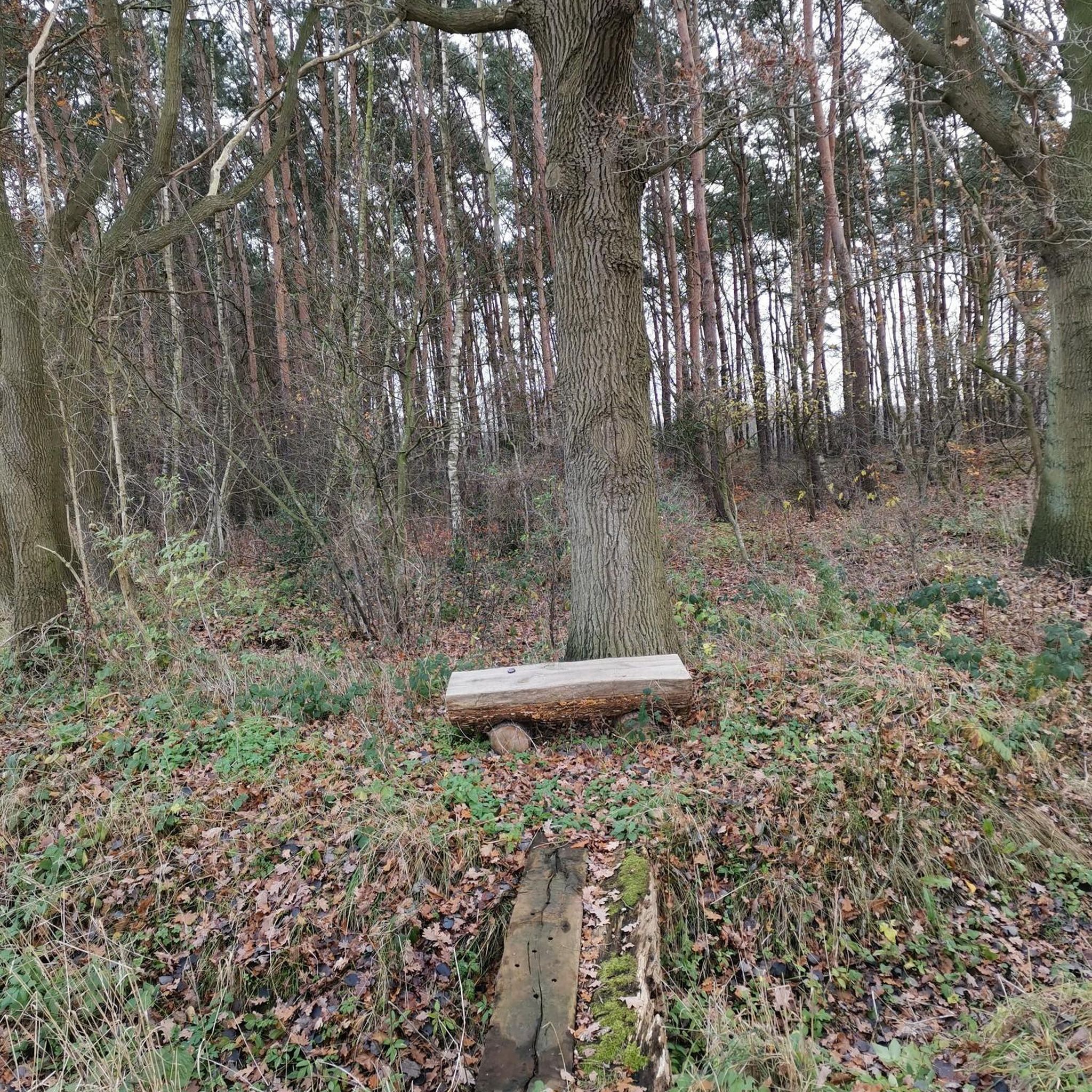
Yes, the region boasts natural beauty. The 'Les Bois de Saint-Sauveur' circuit is particularly noted for its shaded and hilly landscapes, beautiful viewpoints, and a remarkable oak tree. The charming spa town of La Roche-Posay is renowned for its thermal waters and offers opportunities for hiking amidst its natural heritage.
What kind of outdoor activities are available near Senillé-Saint-Sauveur?
You can enjoy a variety of outdoor activities. For hiking, explore trails like the 'Circuit des Forts de Senillé' or 'Les Bois de Saint-Sauveur'. There are also numerous hiking routes, running trails, and road cycling routes in the surrounding area, catering to different difficulty levels.
Are there family-friendly attractions or activities for children?
Absolutely. For families, the Place Vaudreching in Senillé-Saint-Sauveur has been renovated to include play areas for children aged 3 to 6, along with fitness equipment for adults. A significant attraction in the vicinity, especially popular with families, is Futuroscope, a well-known theme park. The town of La Roche-Posay is also considered family-friendly, offering a pleasant environment for all ages.
What is La Roche-Posay known for?
La Roche-Posay is a charming spa town famous for its thermal waters, which are recognized for their dermatological properties. Beyond its wellness offerings, it also boasts a rich historical heritage, including medieval fortifications and a picturesque town center. Visitors can enjoy wellness treatments, golf, and hiking in the area.
Where can I find information about hiking trails in the region?
The area offers several hiking opportunities. You can explore trails like the 'Circuit des Forts de Senillé' or the 'Les Bois de Saint-Sauveur' circuit, which is known for its scenic views and shaded paths. For more detailed information and routes, you can refer to the tourisme-vienne.com website for 'The Woods of Saint-Savior' circuit, or check out the hiking guide around Senillé-Saint-Sauveur for a variety of routes.
What is the Gallo-Roman Theatre of Old Poitiers?
The Gallo-Roman Theatre of Old Poitiers is a major archaeological site that serves as a testament to Roman civilization in Gaul. It provides valuable insights into ancient architecture and theatrical practices. Guided tours are available by appointment, allowing visitors to delve deeper into its 2000-year-old history.
Are there any unique architectural features to see?
Yes, beyond the historical monuments, you can observe unique architecture. For instance, the Park Lodges in La Roche-Posay, originally built as the 'Hotel Du Parc' around 1905, showcase Belle Époque design with wide balconies and a chic facade, reflecting the era's spa culture.
What is the best time to visit Senillé-Saint-Sauveur for outdoor activities?
The region is generally pleasant for outdoor activities from spring through early autumn. Spring (April-May) offers mild temperatures and blooming landscapes, while summer (June-August) is ideal for longer days and warmer weather, though some trails like 'Les Bois de Saint-Sauveur' offer welcome shade. Early autumn (September-October) brings comfortable temperatures and beautiful foliage, making it excellent for hiking and cycling.
What do visitors enjoy most about the attractions around Senillé-Saint-Sauveur?
Visitors appreciate the blend of historical depth and natural beauty. Many enjoy the unique experience of La Roche-Posay as a spa resort and its charming town center. The historical significance of sites like the Gallo-Roman Theatre of Old Poitiers and the medieval Porte Bourbon also captivates those interested in history. The scenic hiking trails and opportunities for outdoor pursuits are also highly valued by the community.
Are there cycling routes available near Senillé-Saint-Sauveur?
Yes, the area is suitable for cycling. You can find various road cycling routes around Senillé-Saint-Sauveur, ranging from easy to moderate difficulty. These routes often take you through scenic landscapes and charming villages, offering a great way to explore the region.
Most popular routes around Senillé-Saint-Sauveur

Get inspired with the komoot mobile app


Explore more
Still not found the Highlight you’re looking for? See guides of the top attractions in other regions:
