The best gravel rides around Senillé-Saint-Sauveur
4.8
(17)
314
riders
18
rides
Gravel biking around Senillé-Saint-Sauveur offers diverse landscapes with varied terrain. The region features altitudes ranging from 57 to 146 meters, providing both challenging and scenic routes. Riders can expect a mix of wooded areas, open spaces, and hilly landscapes, suitable for exploring the natural environment. This area is characterized by its varied topography, offering a range of experiences for gravel bikers.
Best gravel bike trails around Senillé-Saint-Sauveur
- The most popular gravel bike trail is Les Ormes – Châtellerault loop from…
Last updated: October 20, 2026
5.0
(1)
53
riders
111km
07:47
950m
950m
Hard gravel ride. Very good fitness required. Mostly paved surfaces. Suitable for all skill levels.
4.8
(4)
25
riders
49.2km
03:15
330m
330m
Moderate gravel ride. Good fitness required. Mostly paved surfaces. Suitable for all skill levels.

5.0
(1)
27
riders
76.7km
04:47
430m
430m
Moderate gravel ride. Good fitness required. Mostly paved surfaces. Suitable for all skill levels.
5.0
(1)
41
riders
97.2km
06:05
830m
830m
Hard gravel ride. Very good fitness required. Mostly paved surfaces. Suitable for all skill levels.
4.5
(8)
33
riders
57.8km
03:40
350m
350m
Moderate gravel ride. Good fitness required. Mostly paved surfaces. Suitable for all skill levels.
Get access to more routes and recommendations from other explorers.
Already have an account?
Our route recommendations are based on thousands of hikes, rides, and runs completed by other people on komoot.
Start today with a free account
Your next adventure awaits.




Tips from the Community

The oldest part of the church dates from the 12th century. The apse (the ambulatory) and the bell tower have been recognized as a historical monument since 1914.
0
0

The "Tours" at the beginning of the Henri IV bridge in Châtellerault are indeed a historic complex linked to the city's old fortifications. However, they must be distinguished from the three brick towers of the former Weapons Factory. The towers are located at the end of the Henri IV bridge, on the town side, and are a remnant of the defensive system that protected the crossing of the Vienne. Two round towers remain, on the Châteauneuf side. They once framed a monumental central pavilion, which may explain the name or the impression of a set of three towers. 🏰 The history of the Henri IV bridge towers 1. Towers already existed before the current bridge The crossing of the Vienne at Châtellerault is very old. In the Middle Ages, the bridge had a major strategic and economic function. At the end of the 15th century, a document already mentions two towers built on the Châteauneuf side and connected by a vault or a central structure. They were preceded by a drawbridge. It was therefore a true monumental gate giving access to the bridge. 🏛️ But there was much more than the two current towers This is probably the point that interests us. Originally, the entrance to the bridge on the Châteauneuf side comprised: - a round tower to the north; - a round tower to the south; between them, a central pavilion with - a monumental gate; - and a drawbridge allowing access to be closed. The central pavilion was demolished in 1824. The two towers, however, were preserved. Recent archaeological research has indeed made it possible to find the foundations of the central pavilion. 🔎 And there were also two other towers! The bridge was designed in a much more monumental way than we see today. At the other end of the bridge, on the town side, there were also two square towers. They disappeared later, notably because they hindered traffic. So originally there were four towers, two at each end, to which the central pavilion on the Châteauneuf side was added. 📷 A particularly interesting old photograph The Ministry of Culture holds an old photograph titled "Tour d’entrée" (Entrance Tower), taken by Georges-Louis Arlaud (1869-1944). It shows the complex at a time when both towers still existed with their ancient appearance. See the old photograph from the Ministry of Culture https://pop.culture.gouv.fr/notice/memoire/APHF002200?utm_source=chatgpt.com And here is an old postcard of the southern entrance tower, which allows us to see the towers at the beginning of the 20th century. https://www.geneanet.org/cartes-postales/view/7912977 📍 What can be seen today The two current towers are impressive: cylindrical stone towers, topped with conical slate roofs. They belong to the City of Châtellerault, while the bridge itself is under the jurisdiction of the Department of Vienne. Interesting point: contrary to what their military appearance might suggest, these towers did not primarily have a military defense function. They were notably used for controlling entrances and, at certain periods, for sanitary control or the collection of passage tolls.
0
0
On 30/08/2026, the Francois Mitterand space, right in front of the kiosk, welcomed almost 1400 clarinettists to break the world record held by Hong Kong and entered in the Guinness Book. This has been done and recorded by an official member of the organization who came specifically for this purpose. The objective announced for months by the Poitiers conductor Emmanuel Boulanger has been largely achieved. The old record, set in Hong Kong with 448 clarinettists, has been smashed. Amateurs, music school students and professionals played together, in front of a large audience. The performance should now feature in the Guinness Book of Records. Below is the press article and video published locally. https://share.google/KJQ2WCRdVkkB0aF61
0
0
The former Saint-Romain church of Châtellerault, located at 30 rue Saint-Romain, is a building of particular importance to the town's history: it is one of the oldest religious establishments in Châtellerault, and its inhabitants once nicknamed it "the cathedral" due to its importance and dimensions. 🏛️ A very ancient foundation The sources do not all give the exact same date: - the Châtellerault tourist office places the foundation in the 10th century; - archaeological research places it more cautiously around 1020-1050. It was probably designed from the outset as an abbey church. The first lords of Châtellerault made numerous donations to it, allowing it to become an important religious establishment. In 1086, the local lords gave the abbey to the Benedictine monks of Saint-Cyprien in Poitiers. In 1088, it was transformed into a priory dependent on this abbey. The church whose remains are visible today mainly corresponds to this Romanesque period. ⛪ A monumental Romanesque church The oldest preserved part exhibits the characteristics of the Poitevin Romanesque style from the late 11th century, notably: - a semi-circular apse; - part of the transept; - sculpted capitals; - elements of the former Romanesque portal. The south arm of the transept notably preserves capitals depicting figures, angels, and a skull, elements of particular interest for understanding the medieval decoration of the building. 🏗️ Transformations in the 15th-17th centuries The church has been remodeled several times. A particularly interesting episode concerns prior Pierre Frétard, who led Saint-Romain from 1475 to 1480. Work was carried out on the transept level at that time. A keystone bearing the arms of the Frétard family is still preserved in the north arm of the transept. It is now dated more towards the late 15th or early 16th century. In 1687, the church was enlarged. Materials from the Protestant temple of Châtellerault, then demolished, were reused. The facade was also restored, while retaining Romanesque elements. ⚔️ The Revolution and the disappearance of the church The church was deconsecrated in 1790. It was subsequently sold to private individuals and definitively ceased to be a place of worship. The building was converted into housing, with the creation of several interior levels. This transformation explains the rather surprising appearance of the building today: behind a structure that now resembles a house, important elements of a former large Romanesque church still remain. 🏛️ Historic Monument The former Saint-Romain church has been listed as a Historic Monument since June 1, 1973. It is now private property. The Châtellerault heritage service also presents it as the oldest church in the town and emphasizes that its remains still bear witness to its monumentality. Note: it should not be confused with the former Notre-Dame church, located nearby on rue Saint-Romain. The two buildings were neighbors and their history is closely linked.
0
0
The remains of the Notre-Dame church are the remnants of an old medieval church located on Rue Saint-Romain in Châtellerault. Although converted into private property, the building retains remarkable Romanesque and Gothic elements and has been listed as a Historic Monument since 1942. Historical interest The old church was built in two major phases. The oldest part dates back to around 1150 and retains two bays, a semi-circular apse, and barrel vaults. At the beginning of the 13th century, a second nave was added to the north, with two bays covered by Angevin rib vaults and a flat chevet. Despite its transformation into housing after the Revolution, these elements still bear witness to the evolution of medieval religious architecture in the region. Visitor reviews * Available comments highlight the site's heritage value, particularly for lovers of ancient architecture. * The remains are mainly visible from the street; interior access is not possible as the building is private property. * Some visitors regret the state of conservation and the lack of a known rehabilitation project. Site overview * The exterior notably allows a glimpse of the Romanesque apse, which is the most easily visible part from public space. * The remains are integrated into the historic fabric of old Châtellerault, near other ancient monuments of the city. Good to know * The interior is not open for visits: the building is private property. * The site is mainly appreciated as part of a heritage walk in the historic center of Châtellerault. * Its interest lies more in its historical and architectural value than in an immersive visit, as a large part of the old church has been repurposed for residential use.
0
0
The collegiate church of Notre-Dame de Châtellerault has largely disappeared today, but it played an important role in the religious and political history of the city in the Middle Ages. On YOU TUBE, a well-documented video tells you the history of this collegiate church https://share.google/Ls4jm8R58rfIxaCd7 🏛️ The origins A first church of Sainte-Marie / Notre-Dame already existed at the end of the 11th century. It is attested in 1087 and was located near the priory of Saint-Romain. The Romanesque building, of which elements still remain, would have been built or rebuilt in the 12th century, probably by the abbey of Noyers. Its architecture was characteristic of Poitevin Romanesque, notably with a semi-circular apse. ⛪ The creation of the collegiate church in 1196 The major event occurred in 1196. Hugues III, Viscount of Châtellerault, obtained the creation of a chapter of nine canons and a dean at Notre-Dame. The foundation was supported by prominent figures, including Philip Augustus, Richard the Lionheart, and the Pope. The term collegiate church here means that the church is served by a college of canons, who live according to a collective organization but are not monks. The collegiate church thus became closely linked to the power of the Viscounts of Châtellerault: the viscount retained, in particular, the right to appoint the dean and had a prebend in the chapter. 📜 An important institution The chapter possessed considerable assets: 36 parishes were among its possessions. It therefore had significant religious and economic influence in the Châtelleraudais region. During the 14th and 15th centuries, the collegiate church underwent several developments and enrichments. It notably had a psaltery, intended for the training and musical service of the chapter. 🔥 The Wars of Religion A particularly damaging episode occurred in 1569, when Châtellerault was taken by the Protestants. The archives of the collegiate church burned, which partly explains the difficulties historians face today in precisely reconstructing its history. Only certain scattered deeds and documents remain. ⚔️ From the Revolution to the disappearance of the collegiate church The collegiate church operated until the 18th century. In 1768, the chapter of Notre-Dame was finally united with the priory of Saint-Romain, leading to the institutional disappearance of the collegiate church. Then the Revolution led to the suppression of worship and the transformation of religious heritage. The building gradually lost its religious function. Today, only two naves of the former collegiate church remain, integrated into private constructions. 🧱 What can still be seen today The remains are particularly interesting for understanding the medieval architecture of Châtellerault: -the oldest nave, dating from the second half of the 12th century, has a semi-circular apse and broken barrel vaults; -a second nave, to the north, dates from the early 13th century and retains two bays with Angevin rib vaults. The official architectural tour of Châtellerault confirms that only the choir of Notre-Dame, with its Romanesque apse with buttress-columns, remains today. 📍 Not to be confused with Saint-Romain This is an important point in the history of Châtellerault: Notre-Dame and Saint-Romain were two distinct religious establishments, geographically very close. Saint-Romain is much older—probably founded in the 11th century—and was transformed into a priory dependent on Saint-Cyprien de Poitiers. Notre-Dame, on the other hand, truly became a collegiate church in 1196.
0
0
🏭 1. A museum set up in the former “Manu” Le Grand Atelier - Museum of Art and Industry is located on the site of the former Châtellerault Arms Factory ("Manufacture d’armes"). The Manufacture was created by royal ordinance on July 14, 1819, under Louis XVIII. Construction began in 1820. Its location in Châtellerault was notably due to the presence of the Vienne river, which allowed for the use of hydraulic energy, and the existence of a significant local tradition of cutlery and metallurgy. Initially, it mainly produced edged weapons: sabers, swords, lances, and cuirasses. From the 1830s onwards, production also turned to firearms. The Manufacture gradually became a huge industrial complex, employing several thousand people. It played a considerable role in the economic and social history of Châtellerault. 🔧 2. The museum building The building now occupied by the Grand Atelier is particularly interesting. It is part of the former assembly and finishing workshop, built between 1886 and 1887, notably in the context of the production of the Lebel rifle. It is a characteristic industrial building from the late 19th century, with vast spaces, large glass bays, and saw-tooth roofs allowing for significant natural light. It is now protected as heritage. The Manufacture closed permanently in 1968. 🚗 3. The birth of the automobile museum After the closure of the Manufacture, part of the buildings was reused for cultural purposes. As early as 1969, the site hosted a museum, notably stemming from Bernard de Lassée's vehicle collection. It was first named Musée de la Technique et de l’Automobile, then became Musée Auto-Moto-Vélo. The town of Châtellerault acquired part of Bernard de Lassée's collection and gradually developed the museum. The collections include, in particular, vintage cars, motorcycles, bicycles, engines, posters, and accessories, featuring prestigious brands such as Panhard-Levassor, Delahaye, Talbot, Darracq, or Bugatti. 🏛️ 4. The merger with the former Sully museum This is an important step in understanding why the museum today bears the name “museum of art and industry”. Châtellerault also had another museum, located in the Hôtel Sully, dedicated to the history and heritage of the town: archaeology, fine arts, weapons, cutlery, ethnology, local artists, etc. Gradually, the collections of the two institutions were brought together on the site of the former Manufacture. The Ministry of Culture thus indicates that the collections were regrouped on the Manufacture site, first under the name Musée de la technique et de l’automobile, then Musée Auto-Moto-Vélo, and finally Grand Atelier. 🎭 5. The transformation into “Grand Atelier” After significant renovations, the museum was reorganized and took its current name in 2019: Le Grand Atelier – Musée d’art et d’industrie. It is therefore no longer just a museum dedicated to automobiles. It now offers three main tours: 🚗 Auto-Moto-Vélo: the evolution of transport from the 19th century to the 2000s; 🔫 Manufacture d’armes: the industrial and social history of the “Manu” and its workers; 🎭 Cabaret du Chat Noir: dedicated to Rodolphe Salis, born in Châtellerault and founder of the famous Montmartre cabaret. The museum now covers over 3,000 m² of exhibition space. An important clarification It is therefore necessary to distinguish: - The Arms Factory (“La Manufacture d’armes”) → the large industrial site created in 1819, closed in 1968. - The Grand Atelier building → a former workshop of the Manufacture, built in 1886-1887. - Le Grand Atelier – Museum of Art and Industry → the museum gradually created on this site, whose current name dates from 2019. - And the former Sully museum → a historic museum institution in Châtellerault, part of whose collections have been integrated into the Grand Atelier.
0
0
The history of the Châtellerault dam on the Vienne river, located at the site of the former weapons factory (Manufacture d’armes), is particularly interesting as it is directly linked to the industrialization of the town. 1. A first dam for the Manufacture The first structure was built around 1824, shortly after the creation of the Châtellerault weapons factory in 1819-1822. Its primary objective was not to produce electricity: it was to provide hydraulic power to the Manufacture and to regulate the level of the Vienne necessary for its installations. Administrative sources do indicate a dam built in 1824, intended to supply the Manufacture. The presence of this dam is therefore closely linked to the spectacular industrial development of Châtellerault in the 19th century. 2. The dam then plays a role in water supply The dam also gained importance for the town's water supply. After 1864, when the Manufacture no longer opposed the use of the Vienne's water, the town installed a pumping station near the dam. Hydraulic rams and then, from 1879, a steam engine, made it possible to pump water to the reservoirs and fountains of Châtellerault. It is therefore a site where three stories intersect: - the weapons factory; - water supply; - and then electricity production. 3. Transformation into a hydroelectric power plant The major turning point occurred at the beginning of the 20th century. A hydroelectric power plant was built from 1918 and commissioned in 1921, for the Société des Forces Motrices de la Vienne. The associated dam measures approximately 207 m and creates a head of 11.50 m. The power reached about 10,000 hp in 1926. There are also plans preserved at the Defence Historical Service (Service historique de la Défense) concerning precisely the dam, the spillway, the gates, and the hydroelectric power plant, dated notably from 1916 to 1928. 4. Destruction in 1944 The dam and hydroelectric installations were destroyed in 1944, during the fighting and the withdrawal of German forces. They were then rebuilt in 1952. This reconstruction partly explains why the structure we see today does not exactly correspond to the dam of the 1920s. 5. Since 1967: EDF In 1967, EDF took over the operation of the hydraulic power plant. Since then, the dam has mainly served the function of hydroelectric power production. A point of interest: this dam is not a flood control structure Despite its presence on the Vienne, it should not be equated with a large dam intended to protect Châtellerault against floods. Its storage capacity is relatively small and its role is essentially linked to electricity production and maintaining a water level. PPRI (Flood Risk Prevention Plan) documents specify that its influence is negligible during very large floods, such as those of 1913 or 1944. Simplified chronology -1824: Construction of the first dam for the Manufacture -1864-1879: Use for the water supply of Châtellerault -1918: Start of construction of the hydroelectric power plant -1920-1921: Commissioning of the hydroelectric installation -1926: power of approximately 10,000 hp -1944: The history of the Châtellerault dam on the Vienne river, located at the site of the former weapons factory, is particularly interesting as it is directly linked to the industrialization of the town.
0
0
Frequently Asked Questions
How many gravel bike trails are available around Senillé-Saint-Sauveur?
There are over 20 gravel bike trails in the Senillé-Saint-Sauveur area, offering a diverse range of experiences. These include 1 easy route, 15 moderate routes, and 8 difficult routes, catering to various skill levels.
What kind of terrain can I expect on gravel bike routes in Senillé-Saint-Sauveur?
The region around Senillé-Saint-Sauveur is characterized by varied terrain, with altitudes ranging from 57 to 146 meters. You can expect a mix of wooded sections, open landscapes, and hilly areas, providing both scenic views and challenging climbs. Routes often feature shaded trails and natural sites.
Are there any family-friendly gravel biking options in the area?
While many routes offer varied terrain, the area does have options suitable for different abilities. For a less strenuous ride, consider exploring some of the easier sections or local paths. The Château de la Motte d'Usseau – Châtellerault loop from Châtellerault is a moderate option that might be suitable for families with some biking experience, offering a distance of 49.3 km.
What are the best times of year for gravel biking in Senillé-Saint-Sauveur?
The Nouvelle-Aquitaine region generally offers pleasant conditions for gravel biking during spring and autumn, when temperatures are milder. Summer can also be enjoyable, especially on routes with shaded sections like the 'Woods of Saint-Sauveur'. It's always a good idea to check the local weather forecast before heading out.
Are there any circular gravel bike routes available?
Yes, many of the gravel bike routes around Senillé-Saint-Sauveur are designed as loops. For example, the popular Les Ormes – Châtellerault loop from Châtellerault is a challenging 107.6 km circular route. Another local favorite is the Châtellerault – Lake Saint-Cyr loop from Châtellerault, a moderate 77.2 km loop.
What points of interest can I see along the gravel bike trails?
The region offers a blend of natural beauty and historical sites. While riding, you might encounter charming landscapes and natural features. For specific landmarks, consider visiting nearby attractions such as the medieval fortifications of La Roche-Posay or the significant Gallo-Roman Theatre of Old Poitiers. The 'Woods of Saint-Sauveur' route is known for its beautiful viewpoints and a remarkable oak tree.
What do other gravel bikers enjoy most about the trails in Senillé-Saint-Sauveur?
The gravel bike routes in Senillé-Saint-Sauveur are highly rated by the komoot community, with an average score of 4.9 stars from over 20 reviews. Riders often praise the diverse landscapes, the mix of wooded and open areas, and the challenging yet rewarding climbs that offer panoramic views. The variety of routes, from moderate to difficult, is also a key highlight.
Are there options for longer, more challenging gravel rides?
Absolutely. For experienced gravel bikers seeking a challenge, routes like the Châtellerault – Angles-sur-l'Anglin loop from Châtellerault offer a difficult 98.1 km path with significant elevation changes and panoramic trails. The Les Ormes – Châtellerault loop from Châtellerault is another demanding option, spanning 107.6 km.
Where can I find parking for gravel biking in Senillé-Saint-Sauveur?
While specific parking spots for each trailhead are not detailed, many routes start from larger towns like Châtellerault, where public parking is generally available. For local exploration within Senillé-Saint-Sauveur, the recently renovated Place Vaudreching offers a local leisure space that might have parking options suitable for accessing nearby trails.
Can I access the gravel trails using public transport?
Senillé-Saint-Sauveur is a rural municipality. While direct public transport to specific trailheads might be limited, larger nearby towns like Châtellerault are better connected by regional transport. From there, you might need to cycle to the starting points of the routes. It's advisable to check local bus or train schedules for connections to Châtellerault.
Are there any specific natural sites or viewpoints to look out for?
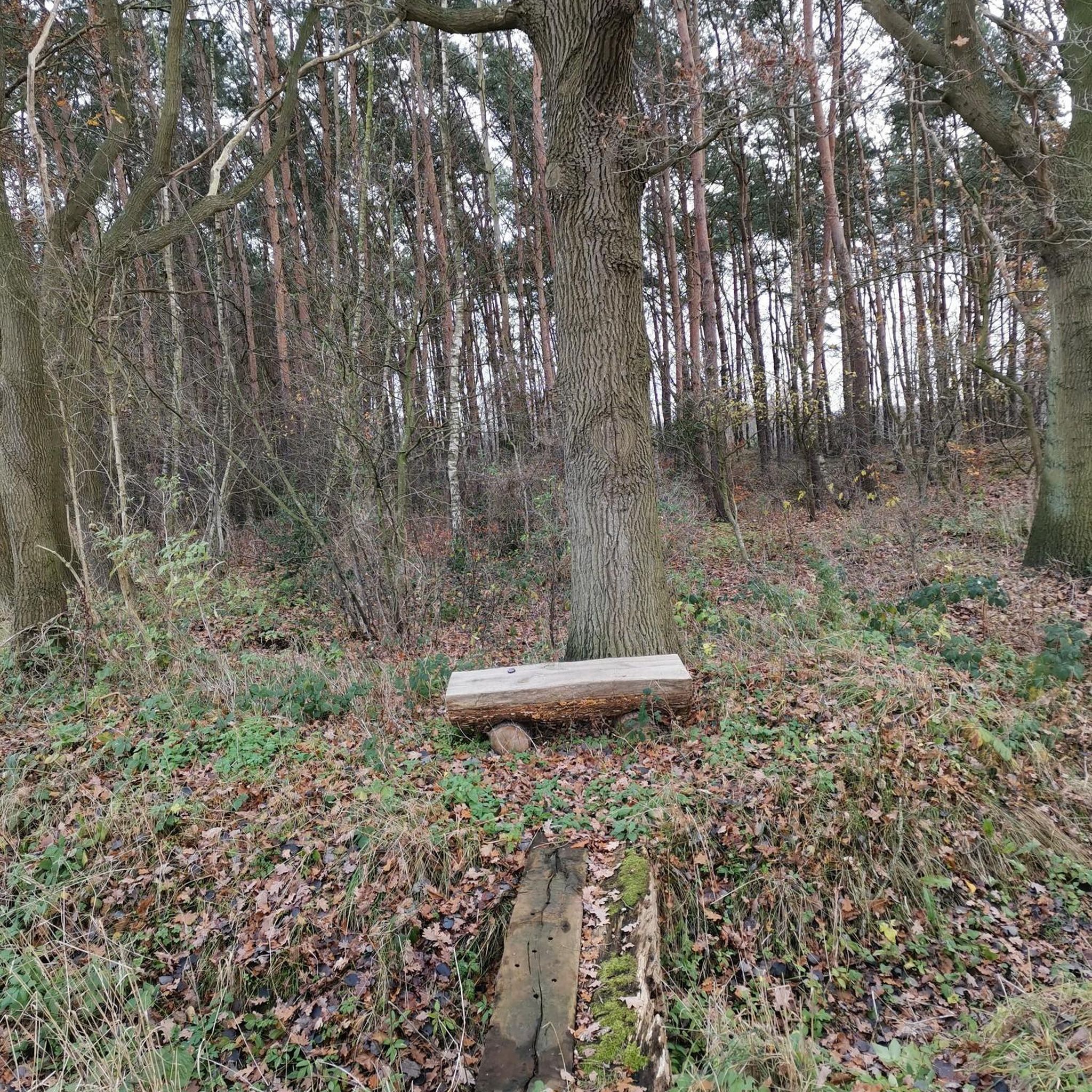
Yes, the region is known for its natural beauty. The 'Woods of Saint-Sauveur' are particularly noted for their shaded and hilly landscapes, offering very beautiful viewpoints and natural sites, including a remarkable oak tree. Many routes traverse varied terrain that provides scenic vistas of the surrounding countryside.
Are there any moderate-difficulty routes that are a good balance of distance and challenge?
Certainly. The area features 15 moderate routes that offer a good balance. The Châtellerault – Château de Dissay loop from Châtellerault is a moderate 59.2 km route that provides a rewarding ride without being overly strenuous. Another excellent choice is the Châtellerault – Lake Saint-Cyr loop from Châtellerault, which is 77.2 km and leads through diverse natural scenery.
Most popular routes around Senillé-Saint-Sauveur
Most popular attractions around Senillé-Saint-Sauveur

Get inspired with the komoot mobile app


Explore more
Browse the best Gravel rides in other regions.
