The best cycling routes in Poloniny
4.8
(180)
1,423
riders
66
rides
Touring cycling in Poloniny National Park features routes through the Eastern Carpathians, characterized by low-lying peaks and expansive rolling meadows known as "poloniny." The region encompasses UNESCO-listed primeval beech forests and the Starina Reservoir, offering varied terrain for cyclists. Routes navigate through dense woodlands and open landscapes, providing diverse cycling conditions. The park's elevation changes are generally moderate, with some routes featuring sustained climbs.
Best touring cycling routes in Poloniny
- The most popular touring cycling route is Starina Reservoir –…
Last updated: October 13, 2026
5.0
(4)
33
riders
55.4km
04:05
1,000m
1,010m
Hard bike ride. Very good fitness required. Mostly paved surfaces. Suitable for all skill levels.
4.7
(6)
57
riders
59.2km
04:21
1,100m
1,100m
Hard bike ride. Very good fitness required. Mostly paved surfaces. Suitable for all skill levels.

4.8
(14)
56
riders
27.8km
02:11
380m
380m
Moderate bike ride. Good fitness required. Mostly paved surfaces. Suitable for all skill levels.
5.0
(3)
39
riders
55.6km
03:35
730m
730m
Hard bike ride. Very good fitness required. Mostly paved surfaces. Suitable for all skill levels.
5.0
(1)
7
riders
88.1km
06:21
1,270m
1,270m
Hard bike ride. Very good fitness required. Mostly paved surfaces. Suitable for all skill levels.
Get access to more routes and recommendations from other explorers.
Already have an account?
Our route recommendations are based on thousands of hikes, rides, and runs completed by other people on komoot.
Start today with a free account
Your next adventure awaits.


Tips from the Community

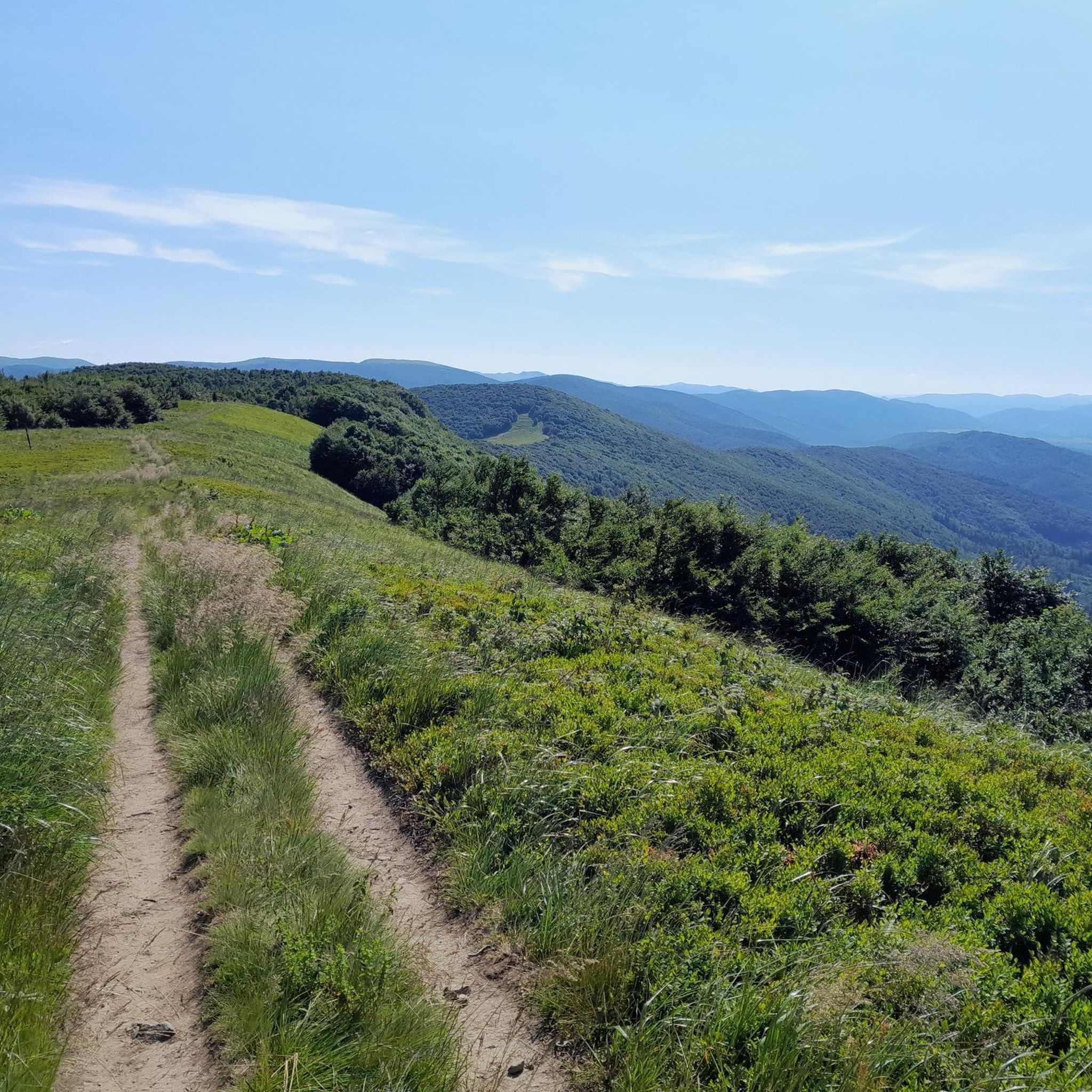
More information and photos: https://pl.wikipedia.org/wiki/Prze%C5%82%C4%99cz_nad_Roztokami_G%C3%B3rnymi https://mapa-turystyczna.pl/node/przelecz-nad-roztokami#49.14426/22.33040/14 https://goryaktywnie.pl/przelecz-nad-roztokami https://odtur.pl/atrakcje/cisna-przelecz-nad-roztokami-gornymi-55250.html
2
0


Greek Catholic wooden church of St. George, 1792, NKP On the slope above the village of Jalová, a small Greek Catholic church was built in 1792, sufficient for the number of inhabitants at that time. He was dedicated to St. to the great martyr Juraj. It was extensively repaired already in 1831. This temple also belonged to the so-called "a temple in a fur coat", it was plastered and whitewashed. In 2002, extensive repairs took place in the temple, it was completely restored, but no longer plastered
0
0
Wooden church of St. Michael the Archangel was built at the turn of the 17th and 18th centuries in the village of Topoľa. The temple of a log structure on a stone foundation is built on a slope and is surrounded by a cemetery. The three-room wooden church once stood at the lower end of the village, but in 1780 it was moved above the village of Topoľa, from where there is a beautiful view of the surroundings. The wooden temple has a massive roof in the shape of a truncated pyramid and has only one tower with a three-armed cross. The church bells are currently located in the brick church. The iconostasis from the middle of the 18th century is extremely valuable. It has a four-row architecture and a variety of colors. Part of the area is an empty wooden belfry, which was built in the 20th century. In the vicinity of the church there is a military cemetery that was established in 1917. 240 soldiers of the 44th Infantry Division of General Ziegler's 2nd Austro-Hungarian Army are buried in the cemetery.
0
0

Border crossing between Poland and Slovakia
0
0

Approximately 200-300 m of asphalt exit to the Slovak side. Then a road paved with flat stones begins
0
0

Artificial water reservoir. It looks picturesque, but is of little use to tourists. It is not suitable for bathing, and the cloudy water is definitely not suitable for drinking.
1
0
A shelter with a fireplace and several educational boards. There is a retention reservoir nearby, but the water in it is dirty and there is not even a convenient exit. For tourist purposes, the reservoir is basically useless.
1
0
Frequently Asked Questions
How many touring cycling routes are available in Poloniny?
Poloniny National Park offers a comprehensive network of over 60 touring cycling routes. These routes cater to various skill levels, with options ranging from easy to difficult, allowing every cyclist to find a suitable adventure.
What is the best time of year for touring cycling in Poloniny?
The best time for touring cycling in Poloniny is typically from late spring to early autumn (May to October). During these months, the weather is generally mild, and the Poloniny meadows are vibrant with wildflowers. Summer offers the warmest temperatures, while autumn brings beautiful foliage. Always check local weather forecasts before heading out.
What are the typical cycling conditions and terrain like in Poloniny?
Cycling in Poloniny features varied terrain, from low-lying peaks and expansive rolling meadows to dense UNESCO-listed primeval beech forests. Routes often combine paved surfaces with unpaved segments, requiring different fitness levels. Elevation changes are generally moderate, though some routes, like the difficult Starina Reservoir – Porta Rusica Stone Road loop from Stakčín, include sustained climbs.
Are there any circular touring cycling routes in Poloniny?
Yes, many touring cycling routes in Poloniny are designed as loops, allowing you to start and finish at the same point. A popular example is the Starina Reservoir – Porta Rusica Stone Road loop from Jalová, which explores the area around the reservoir. The region also features the Poloniny Trail, a 74-kilometer cycling circuit connecting picturesque Ruthenian villages.
Are there easy touring cycling routes suitable for beginners in Poloniny?
Yes, Poloniny offers several easy touring cycling routes perfect for beginners or those looking for a relaxed ride. There are 4 easy routes available, providing gentle terrain and shorter distances to help you enjoy the natural beauty without excessive challenge. A moderate option like the Bike loop from Ulič is also a good starting point.
What natural features or landmarks can I see while cycling in Poloniny?
Poloniny National Park is rich in natural beauty. You can cycle past the expansive Starina Reservoir, explore parts of the UNESCO-listed primeval beech forests, or even discover the Small Waterfall in Stužica. For panoramic views, consider routes that pass near viewpoints like the Ruské Sedlo / Przełęcz nad Roztokami Górnymi Lookout Tower.
Are there any cultural or historical sites accessible by bike in Poloniny?
Absolutely. Poloniny is known for its rich cultural heritage. You can explore traditional Rusyn villages and their unique wooden churches, such as the Church of St. Nicholas in Ruský Potok. The 'Cycle path of icons' specifically leads past these breathtaking wooden churches, offering a glimpse into the region's history and sacred architecture.
Where can I find parking for my touring cycling trip in Poloniny?
While specific parking areas for each route are not always detailed, Poloniny National Park generally provides designated parking facilities at key entry points, trailheads, and near popular villages. It's advisable to check local signage or visitor information centers upon arrival for the most convenient parking options for your chosen route.
Are there cafes or restaurants near the touring cycling routes in Poloniny?
Yes, you can find cafes, pubs, and restaurants in the villages scattered throughout Poloniny National Park. These establishments offer opportunities to refuel and experience local cuisine. The Poloniny Trail, for instance, is designed to connect picturesque Ruthenian villages, making it easier to find refreshment stops along the way.
Are there family-friendly touring cycling routes in Poloniny?
Poloniny offers several family-friendly touring cycling routes, particularly among its 4 easy-rated options. These routes typically feature gentler gradients and shorter distances, making them suitable for cyclists of all ages and abilities. Look for routes that pass through villages or offer picnic spots for a pleasant family outing.
Can I bring my dog on touring cycling routes in Poloniny?
Poloniny National Park generally welcomes dogs, but it's crucial to keep them on a leash to protect wildlife and ensure the safety of other visitors. Always check specific trail regulations, especially in sensitive areas like primeval forests or nature reserves, as rules may vary. Ensure your dog is accustomed to cycling and can handle the terrain.
What do other touring cyclists say about their experience in Poloniny?
The touring cycling routes in Poloniny are highly rated by the komoot community, with an impressive average score of 4.9 stars from over 100 reviews. Cyclists often praise the region's pristine natural landscapes, the tranquility of the UNESCO-listed beech forests, and the expansive views from the Poloniny meadows. Many appreciate the blend of natural beauty with cultural insights found in the traditional villages.
Most popular routes in Poloniny
Most popular attractions in Poloniny

Get inspired with the komoot mobile app


Explore more
Browse the best Cycling routes in other regions.
