The best walks and hikes around Mauna Loa
4.8
(440)
4,040
hikers
52
hikes
Hiking around Mauna Loa offers routes across the slopes of the world's largest active volcano, located within Hawaiʻi Volcanoes National Park. The landscape is characterized by high-altitude volcanic terrain, with vast lava flows and cinder cones. Trails range from lower-elevation forest paths to challenging high-altitude hikes to the summit caldera.
Best hiking trails around Mauna Loa
- The most popular hiking route is Mauna Loa Summit from Observatory — Hawai‘i Volcanoes National Park, a 12.9 mile (20.7 km) trail that takes 6 hours 30 minutes to complete. This is a challenging high-altitude route across lava fields to the Mokuʻāweoweo caldera rim.
- Another top favourite among local hiking enthusiasts is Ka‘ū Desert Trail to Kamakai‘a Hills — Hawai‘i Volcanoes National Park, a moderate 9.2 mile (14.8 km) path. The route crosses the unique landscape of the Kaʻū Desert, an area of unusual lava formations.
- Local hiking enthusiasts also love the Manukā Nature Trail loop — Manukā Natural Area Reserve, Hawaiʻi Island, a 2.1 mile (3.4 km) trail leading through native forest, often completed in about 1 hour.
- Hiking around Mauna Loa is defined by stark volcanic deserts, high-altitude lava fields, and pockets of native forest. The network of trails provides options for different ability levels, from short nature walks to strenuous summit hikes.
- The routes in Mauna Loa are highly rated by the komoot community with an average score of 4.8 stars from over 380 reviews. More than 3,500 hikers have used komoot to explore Mauna Loa's varied terrain.
Last updated: August 18, 2026
797m
00:12
0m
10m
The Kawa'a Beach Trail offers a unique, easy escape to a secluded black sand beach on the Big Island. This short 0.5-mile (0.8 km) hike, with virtually no elevation gain, leads you through a landscape of lava rock and shrubland before revealing Kāwā Bay, a hidden gem with numerous tidepools and freshwater springs. It's a perfect, quick adventure for those seeking a tranquil coastal experience without a strenuous trek.
To access the trail, you'll follow a lava road from the highway; consider a high-clearance vehicle or be prepared for a 15-minute walk if parking by the highway. The entire journey takes only about 12 minutes, making it an ideal stop for a quick exploration. Remember to bring your own water and snacks, as there are no facilities at the bay, and always practice Leave No Trace principles to preserve this special place.
Beyond its natural beauty, Kawa'a Beach holds deep cultural and historical significance, with ancient structure remains like Ke'eku Heiau in the area. It's also a vital conservation site, protecting nesting areas for the critically endangered Hawaiian hawksbill turtle. This trail offers a chance to connect with both the natural and cultural heritage of Hawaiʻi County, making it a truly notable destination.
5.0
(2)
30
hikers
3.32km
00:51
10m
10m
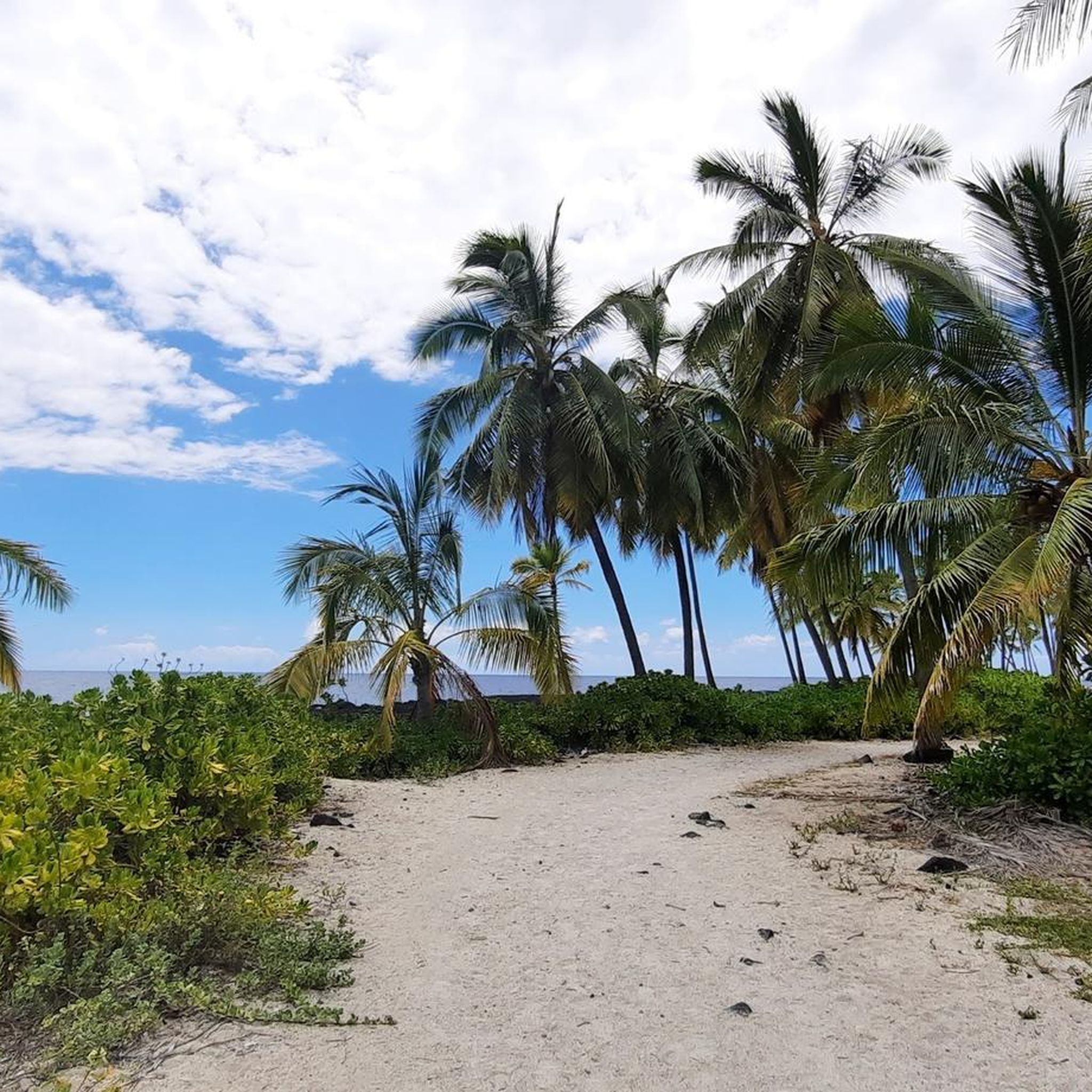
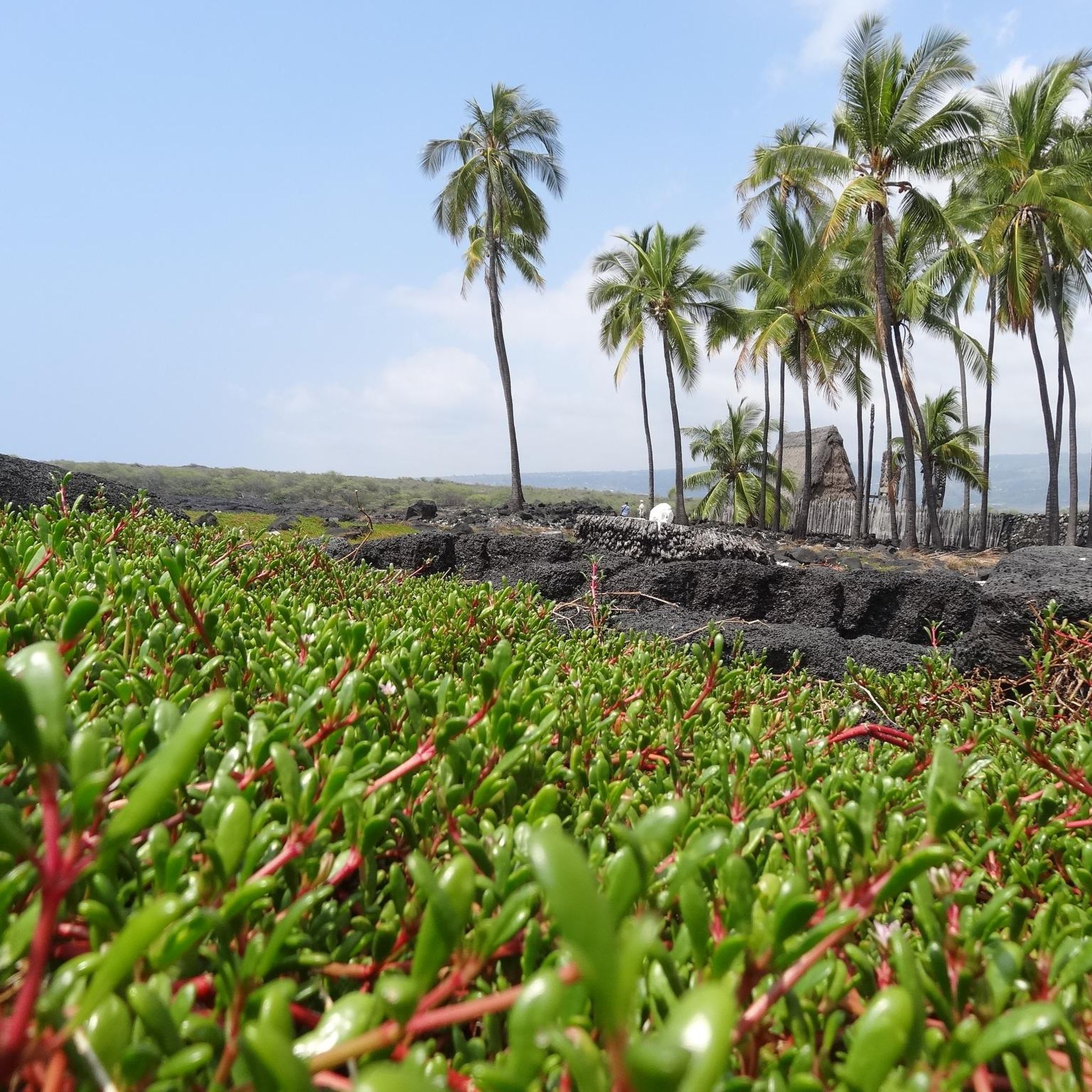
Embark on a journey through ancient Hawaiian history along the Ala Kahakai National Historic Trail (1871 Trail), a moderate 2.1-mile (3.3 km) hike that offers a unique blend of culture and coastal beauty. With only 47 feet (14 metres) of elevation gain, this route is more about the experience than the exertion, guiding you past stark black lava fields, white sands, and swaying coconut groves. You'll feel transported back in time as you explore this significant stretch of coastline, perfect for those seeking a meaningful and scenic walk.
This accessible section of the 1871 Trail is conveniently located within Puʻuhonua o Hōnaunau National Historical Park, where parking is readily available. To make the most of your visit and avoid the midday heat, plan to start your hike in the cooler morning hours. Remember to bring plenty of water, as the coastal climate can be quite dry, ensuring a comfortable and enjoyable exploration of the trail.
The Ala Kahakai National Historic Trail is not just a path; it's a living museum, preserving ancient Hawaiian pathways used for travel and trade. This particular segment, the 1871 Trail, is notable for its historical improvements to accommodate horse traffic and passes through numerous archaeological remains, including ancient ramps and remnants of coastal fishing villages. It's an excellent opportunity to connect with the rich heritage of the Big Island.

Sign up for free
5.0
(1)
8
hikers
20.7km
06:32
860m
860m
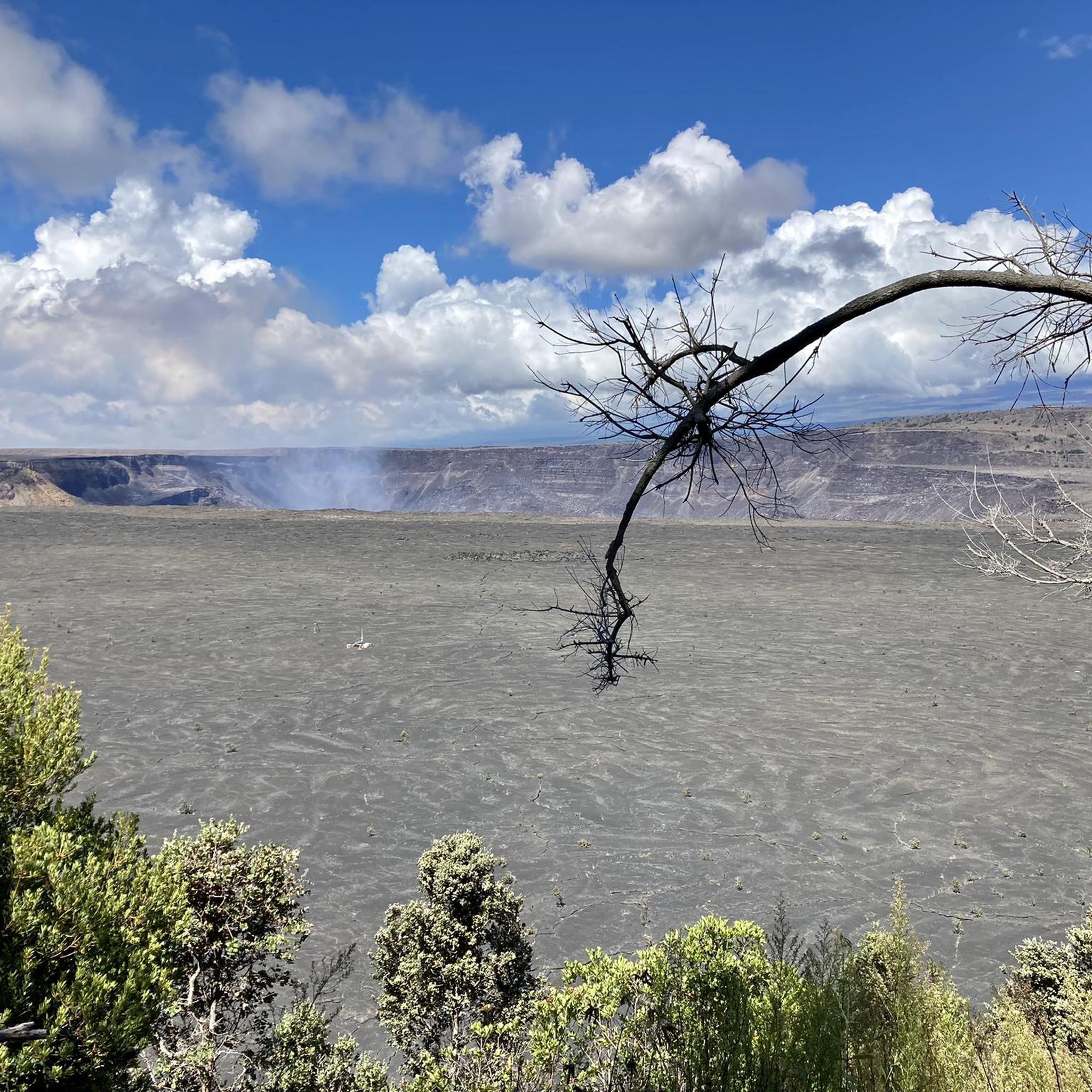
Hike the challenging Mauna Loa Summit Trail, a 12.9-mile route across volcanic landscapes in Hawaiʻi Volcanoes National Park.
4.7
(3)
17
hikers
3.41km
01:00
100m
100m
Hike the easy 2.1-mile Manukā Nature Trail loop through a cool Hawaiian forest, exploring lava flows and a pit crater.
5.0
(2)
12
hikers
6.52km
01:44
70m
70m
Step back in time on the Footprints Trail, an easy 4.0-mile (6.5 km) hike through the otherworldly Kaʻū Desert. This route, which takes about 1 hour and 43 minutes with a gentle 218 feet (66 metres) of elevation gain, offers a fascinating journey across old lava flows and volcanic ash. The main draw is the Footprints shelter, where you can witness ancient human footprints preserved in volcanic mud, a truly unique sight in this desolate yet captivating landscape.
Access the trail from the Kaʻū Desert Trailhead on Highway 11. While the path is generally easy and family-friendly, be aware that some sections can be uneven or have deep sand. The elevation of around 3,500 feet means cooler temperatures, so dress accordingly. Dogs are permitted on the trail, provided they remain on a leash.
This trail is a profound connection to Hawaii's geological and human history, showcasing the raw power of Kīlauea Volcano. The fossilized footprints tell a dramatic story of ancient Hawaiians encountering a massive eruption in 1790, making it a significant cultural and natural landmark. It's a must-do for anyone interested in the island's past and its unique volcanic environment.
5.0
(2)
6
hikers
4.41km
01:12
70m
70m
The Pu'u o Lokuana Trail offers a captivating and easy 2.7-mile (4.4 km) hike through a landscape shaped by both volcanic activity and human history. With only 224 feet (68 metres) of elevation gain, taking about 1 hour and 12 minutes, you'll traverse old ranch roads, grassy pastures, and ancient lava flows. The route culminates at the Puʻu o Lokuana cinder cone, where you can explore a historic "crimson heart" quarry and enjoy panoramic views of the Kahuku area and the Kaʻū coastline.
Planning your visit is straightforward, though sturdy footwear is advisable for the varied, sometimes rocky and grassy terrain, especially on the ascent to the cinder cone. As with many Hawaiian trails, an early start or late afternoon hike can provide cooler temperatures and optimal lighting for the scenic viewpoints. There are also longer Pu'u o Lokuana Trail loop options if you want to extend your adventure.
This trail is notable for its rich historical context; the cinder cone was once significantly taller before being mined for its vibrant cinders, and it even housed a secret radio station during World War II. It's a fantastic way to experience the dynamic interplay of natural features like magma formations and grasslands with significant human events, offering a unique glimpse into the Kahuku landscape.
5.0
(1)
3
hikers
15.8km
04:09
130m
130m
Hike the moderate 9.8-mile Maunaiki and Footprints Trail in Hawaiʻi Volcanoes National Park, exploring a unique volcanic desert.
1
hikers
19.1km
05:52
700m
700m
Hike the challenging Mauna Loa Observatory Trail, a 11.9-mile route across volcanic terrain to Mauna Loa's summit caldera.
5.0
(1)
2
hikers
14.8km
04:00
190m
190m
Hike the moderate 9.2-mile Ka‘ū Desert Trail to Kamakai‘a Hills in Hawaiʻi Volcanoes National Park, exploring unique volcanic landscapes.
1.61km
00:25
10m
10m
Discover the unique beauty of Kāwā Bay on an easy 1.0-mile (1.6 km) hike that takes roughly 25 minutes to complete. This short walking track leads you across fascinating volcanic terrain, where rugged lava fields give way to picturesque black sand beaches. You'll experience the raw, undeveloped coastline of the Big Island, with freshwater springs mingling with the ocean and broad, sweeping views that are particularly stunning as the sun dips below the horizon. It's a perfect, low-effort way to immerse yourself in Hawaii's natural landscape.
Planning your visit to Kāwā Bay is straightforward, though it's important to note the area has limited facilities. While an outhouse might be available near some access points, the bay itself is undeveloped, so pack everything you need and plan to carry out all your waste. This trail is an excellent choice for a peaceful outing, especially if you're looking to avoid crowds. Consider going in the morning or late afternoon for the best light and cooler temperatures, and always practice Leave No Trace principles to protect this special environment.
Kāwā Bay is more than just a scenic spot; it's a place rich in cultural and ecological significance. The area is home to ancient sites, including Ke'ekū Heiau, one of the largest intact ceremonial temples in the region, and extensive burial grounds. It's also a critical nesting area for the critically endangered Hawaiian hawksbill turtle, and green sea turtles are often spotted near the shore. This protected 550-acre space offers a rare chance to connect with both the natural and historical heritage of Hawai'i.
Get access to more routes and recommendations from other explorers.
Sign up for free
Already have an account?
Our route recommendations are based on thousands of hikes, rides, and runs completed by other people on komoot.
Start today with a free account
Your next adventure awaits.
Login or Signup
Popular around Mauna Loa
Tips from the Community


Short, easy walk along the coast. Good shoes are still important, as it is uneven and over lava rock. Great views from an elevated cliff at the end.
0
0
Interesting information with video and a short tour on historical topics.
0
0

The Mauna Loa Observatory deals with atmospheric change, and according to NOAA (the National Oceanic and Atmospheric Administration) it is the oldest CO2 monitoring station in the world. The observatory is closed to the public. At the time of writing the trails to Mauna Loa's summit are closed due to volcanic activity. Before planning a hike, visitors should check the national park website here: nps.gov/havo/planyourvisit/hike_maunaloa.htm
0
0

Kāwā Bay offers an unknown and still kind of hidden beach in the southeast of the Big Island. As the water is usually rough, it's not the best spot to go swimming, but the views are beautiful, and you will certainly find a nice spot for a picknick at this beautiful secluded beach with black sand.
0
0
Manukā Nature Trail is located in the Manukā Natural Area Reserve and leads through a beautiful forest of Hawaiian plants and animals. Besides that, you will pass multiple remains of the old arboretum that was located here and is completely overgrown today. The trail doesn't include a lot of inclines, but the rugged path makes it a little more difficult, so it can be rated a moderate hike.
0
0
Mauna Loa Summit Cabin is located on the eastern rim of Mauna Loa at an elevation of 13,250 feet. It is possible to stay in the cabin overnight but make sure, that a reservation and permits are required. Please be aware, that it's a strenuous hike to reach the cabin, and you will be hiking at high altitude.
0
0

Reaching Kamakapa‘a peak is a relatively easy run thanks to the flat terrain. At the summit, take in sweeping views encompassing the expansive breadth of lower Kaʻū, an exceptional panorama as your reward for the moderate ascent.
0
0
Frequently Asked Questions
Is it safe to hike on Mauna Loa?
Yes, but it requires serious preparation. Mauna Loa is the world's largest active volcano, and its high-altitude environment presents unique challenges like altitude sickness, unpredictable weather, and rugged volcanic terrain. It is crucial to check the current volcano alerts and trail conditions on the official Hawaiʻi Volcanoes National Park website before your hike.
How can I prevent altitude sickness on Mauna Loa?
Altitude sickness is a significant risk on Mauna Loa's high-altitude trails. To minimize your risk, acclimatize by spending time at intermediate elevations before attempting the summit. Stay well-hydrated by drinking plenty of water, avoid alcohol and caffeine, and ascend slowly. If you experience symptoms like headache, nausea, or dizziness, descend to a lower elevation immediately.
Do I need a permit to hike on Mauna Loa?
Yes, for any overnight trips in the Mauna Loa backcountry, including stays at the Puʻu ʻUlaʻula (Red Hill) Cabin or the Mauna Loa Summit Cabin, a backcountry permit is required. These can be obtained from the Hawaiʻi Volcanoes National Park's backcountry office. Day hiking generally does not require a permit, but always verify current regulations before you go.
Are there any easy, short hikes on Mauna Loa?
Yes, there are several shorter options. The Manukā Nature Trail loop is a pleasant 2.1-mile (3.4 km) walk through a native forest. Another great choice is the Pu‘u o Lokuana Cinder Cone Trail Loop in the Kahuku Unit, which offers a gentle walk with views of historic lava flows.
What is the hike to the Mauna Loa summit like?
The hike to the summit is an extremely challenging, multi-day backcountry trek best suited for experienced and well-prepared hikers. The trail crosses a stark, otherworldly landscape of ʻaʻā and pāhoehoe lava flows at very high altitudes. The reward is reaching the rim of Mokuʻāweoweo, the massive summit caldera. A difficult but rewarding route is the Mauna Loa Summit Cabin trail.
Can I hike to the Mauna Loa summit as a day hike?
While extremely strenuous, it is possible for very fit, acclimatized hikers to day-hike to the summit rim from the Mauna Loa Observatory. The Mauna Loa Summit from Observatory route is a 12.9-mile (20.7 km) round trip over rugged lava and at high altitude, typically taking over 6 hours. This should only be attempted with an early start and ideal weather conditions.
What is the terrain like in the Kaʻū Desert?
The Kaʻū Desert is a unique and arid landscape shaped by volcanic activity and acid rain. It's not a true desert but receives little rainfall. Hiking here involves crossing vast, cracked lava flows with minimal vegetation. The Ka‘ū Desert Trail to Kamakai‘a Hills offers a fantastic experience of this dramatic environment.
Are there any circular walks available?
Yes, there are some enjoyable loop trails. For a moderate hike with great views, the Mauna Loa Observatory loop from Papaloa is a 7.6-mile (12.3 km) circular route. For a much shorter and easier loop, consider the Puʻuhonua o Hōnaunau National Historical Park loop, which explores a significant cultural site.
What should I pack for a hike on Mauna Loa?
Essentials include sturdy hiking boots, layered clothing for a wide range of temperatures, and high-quality rain gear, as weather can change suddenly. For high-altitude hikes, you'll need sun protection (hat, sunglasses, sunscreen) and much more water than you think you'll need—at least 4 liters per person per day. Navigation tools like a map, compass, or GPS are also critical.
What do other hikers enjoy most about Mauna Loa?
The area is highly rated by the komoot community. Reviewers often praise the unique volcanic landscapes, the sense of solitude on the trails, and the breathtaking views from the high-altitude routes. The challenge and reward of hiking on such a massive and powerful volcano is a frequently mentioned highlight.
How many hiking trails are there around Mauna Loa?
There are over 50 designated hiking routes around Mauna Loa. These trails offer a wide variety of experiences, from easy nature walks in forested areas to moderate desert treks and difficult multi-day expeditions to the summit.
Are there any coastal hikes near Mauna Loa?
Yes, while Mauna Loa itself is a high-altitude mountain, its slopes reach the sea. You can find beautiful coastal trails nearby. The short hike to Kāwā Bay offers a chance to see a scenic black sand beach. For a more challenging coastal trek across hardened lava fields, consider the Mauna Iki Trail which can be linked to other coastal routes.
Most popular routes around Mauna Loa
Most popular attractions around Mauna Loa

Get inspired with the komoot mobile app


Explore more
Browse the best Hikes in other regions.
