The best traffic-free bike rides around Aranda De Duero
4.4
(49)
1,467
riders
5
rides
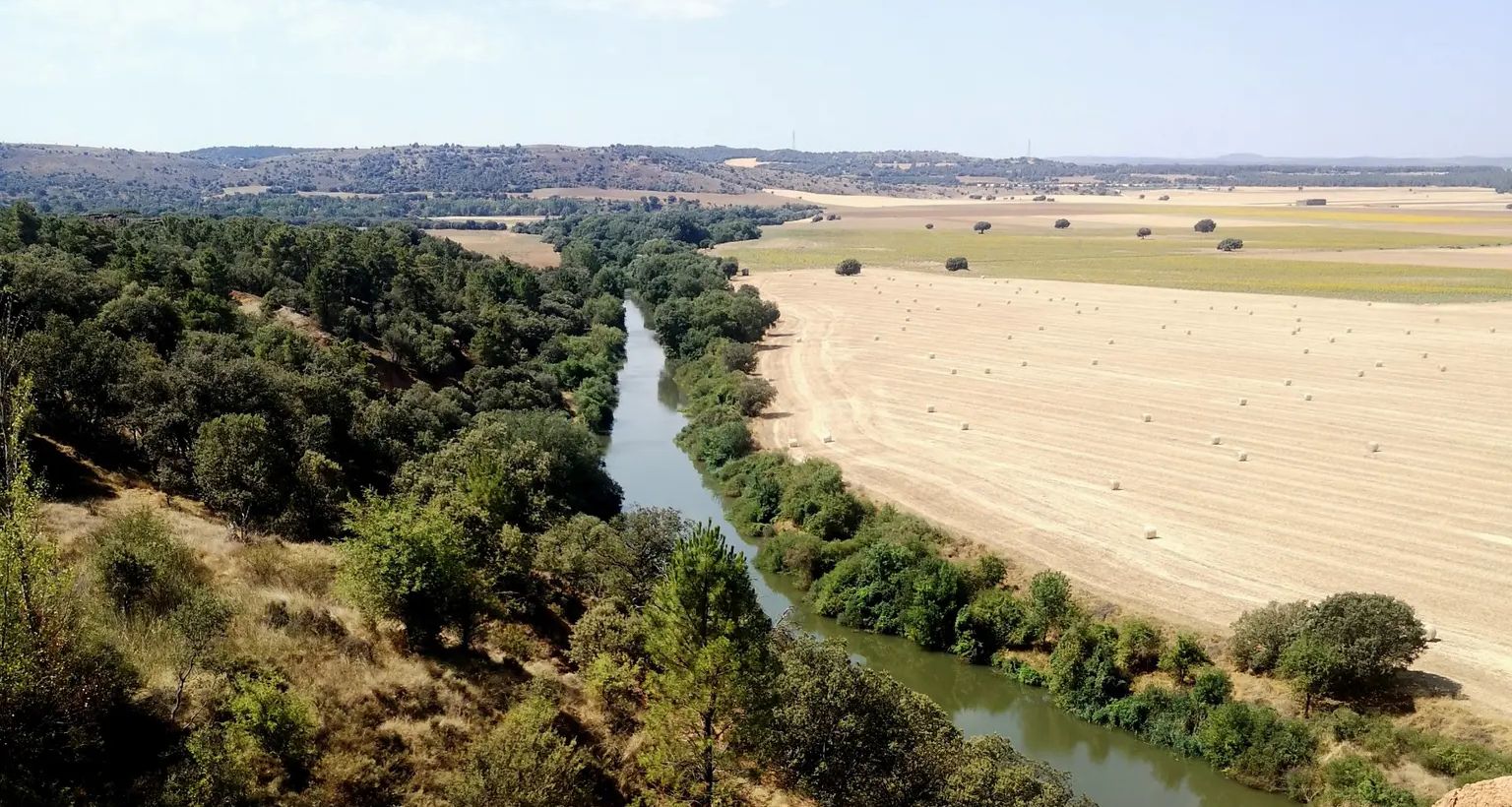
No traffic road cycling routes around Aranda De Duero traverse a landscape shaped by the Duero River and its tributaries, offering diverse terrain for cyclists. The region is characterized by extensive vineyards of the Ribera del Duero, picturesque river valleys, and the broader Castilian plateau. Cyclists can expect routes that wind through historical villages and open rural areas, providing varied scenery.
Best no traffic road cycling routes around Aranda De Duero
- The most popular no traffic road cycling route is…
Last updated: October 18, 2026
9
riders
91.6km
04:11
1,010m
1,020m
Hard road ride. Very good fitness required. Mostly well-paved surfaces and easy to ride.
23
riders
65.3km
02:45
480m
480m
Moderate road ride. Good fitness required. Mostly well-paved surfaces and easy to ride.

3
riders
Easy road ride. Great for any fitness level. Mostly well-paved surfaces and easy to ride.
5
riders
14.1km
00:41
50m
50m
Easy road ride. Great for any fitness level. Mostly well-paved surfaces and easy to ride.
3
riders
57.0km
02:32
500m
500m
Moderate road ride. Good fitness required. Mostly well-paved surfaces and easy to ride.
Our route recommendations are based on thousands of hikes, rides, and runs completed by other people on komoot.
Start today with a free account
Your next adventure awaits.

Other adventures around Aranda De Duero

Tips from the Community

Built of stone and with several semicircular arches, it is a good example of medieval civil engineering and has withstood the test of time thanks to its solidity, although it has been restored at different times. At one time it was key for the transit of workers and goods between neighborhoods, contributing to the economic growth of Aranda. Today it is preserved as a heritage element and is a pleasant place to walk, forming part of the city's historic complex and allowing visitors to learn about its industrial and medieval past along the river.
2
0
The medieval Puente de las Tenerías, located in Aranda de Duero over the Bañuelos river, is one of the most interesting historical corners of the city, although less known than the Duero bridge. It is a construction of medieval origin, linked to the urban and industrial development of the town, as it takes its name from the old tanneries (leather tanning workshops) that were in the area and that needed abundant water for their activity.
2
0
The bridge is built of stone and is characterized by its semicircular arches; it originally had four, although today it retains three due to later renovations. Over the centuries it has undergone numerous restorations, especially due to the floods of the Duero, one of the most important being the expansion and widening in the 19th century. In addition to its architectural value, it has been a strategic point for the passage of people, goods and herds, and today it is a symbol of the city and a very pleasant place to walk and enjoy the views of the river and Aranda de Duero. [iglesiaslocales.com], [edadesdelh...ogspot.com]
2
0
The Aranda de Duero Bridge, also known as Puente Mayor, is one of the city's most important historical elements, as it crosses the Duero River and has been key to its development. Although often called "Roman", it is actually a bridge of medieval origin, with references from the 12th-14th centuries, when it served as a fundamental crossing point on trade routes and the old Royal Road that connected the center and north of Spain.
2
0
It is also worth strolling through its surroundings among vineyards and lavender fields, enjoying viewpoints and nature trails, and learning about its wine tradition, which makes the visit a perfect combination of medieval history, religious heritage, and tranquil nature.
1
0
Caleruega, in the province of Burgos and in the heart of the Ribera del Duero, is one of the most beautiful villages in the area and stands out for its great historical and spiritual value, as it is the birthplace of Santo Domingo de Guzmán, founder of the Dominicans. The most interesting thing is to walk through its stone old town and visit the Dominican monumental complex, formed by the Royal Monastery of Santo Domingo (on the site where the saint was born), the convent and the Guzmanes tower, as well as the church of San Sebastián, where he was baptized.
2
0

Spectacular area for hiking routes
0
0

Peñaranda de Duero is a municipality in Burgos, in the Ribera del Duero region, known for its rich historical heritage. Its old town, declared a Historic Site, is notable for the Peñaranda de Duero Castle, the Palace of the Counts of Miranda, its arcaded Plaza Mayor, and its provincial roll. In addition to its architecture, the town is part of the Ribera del Duero Designation of Origin and has a strong winemaking tradition.
3
0
Frequently Asked Questions
How many no traffic road cycling routes are available around Aranda de Duero?
There are 6 dedicated no traffic road cycling routes around Aranda de Duero featured in this guide. These routes offer a variety of distances and elevations, ensuring options for different fitness levels.
What kind of terrain can I expect on these no traffic road cycling routes?
The routes primarily traverse the scenic Castilian plateau and the Ribera del Duero wine region. You'll find a mix of gentle vineyard roads and routes along river valleys, with some offering more challenging climbs, especially towards areas like the Hoces del Río Riaza Natural Park. Surfaces are generally well-paved, ideal for road bikes.
Are there any easy, family-friendly no traffic road cycling routes?
Yes, there are 4 easy routes perfect for a more relaxed ride. For instance, the Pilón loop from Aranda de Duero is a shorter, flatter option, covering just over 14 km with minimal elevation gain, making it suitable for families or those new to road cycling.
What are some notable landmarks or attractions I can see along these routes?
Many routes pass through or near historic villages and natural features. You can explore architectural treasures like the Church of Santa María la Real of Aranda de Duero or the medieval Aranda Bridge. Routes also lead to charming settlements such as Peñaranda de Duero, known for its castle and historic square, or the Monastery of Santa María de la Vid.
Are there any circular no traffic road cycling routes available?
Yes, all the routes in this guide are circular loops, designed to bring you back to your starting point. An example is the Aranda Bridge – Aranda de Duero loop, which offers a longer, moderate ride through the region's diverse landscapes.
Where can I park my car when starting a no traffic road cycling route?
While specific parking details for each trailhead are not provided here, Aranda de Duero and its surrounding villages generally offer public parking options. It's advisable to check local parking availability in the starting village of your chosen route, such as Baños de Valdearados for the Roman Villa of Santa Cruz loop.
What is the best time of year to enjoy no traffic road cycling in Aranda de Duero?
The spring and autumn months are generally ideal for cycling in Aranda de Duero. The weather is milder, and the vineyards offer beautiful scenery, whether budding in spring or displaying rich colors in autumn. Summers can be hot, while winters can be chilly, so plan accordingly.
Can I find cafes or places to eat along these quiet cycling routes?
Many routes pass through or near small villages where you can often find local cafes, restaurants, or bodegas. The Ribera del Duero region is famous for its wine and gastronomy, so you'll have opportunities to enjoy local specialties like roast lamb or excellent wines, particularly in towns like Aranda de Duero or Peñaranda de Duero.
What do other road cyclists enjoy most about cycling in Aranda de Duero?
The area is highly rated by the komoot community, with an average score of 4.38 stars. Reviewers often praise the beautiful vineyard landscapes, the quiet, well-paved roads perfect for road cycling, and the opportunity to combine rides with visits to historic villages and local wineries.
Are there any moderate difficulty no traffic road cycling routes for experienced cyclists?
Yes, for cyclists seeking a bit more challenge, there are 2 moderate routes. The Church of Arauzo de Torre – Caleruega loop is a good example, covering over 58 km with more significant elevation gain, taking you through varied terrain and offering a rewarding ride.
Do these routes offer views of the Duero River or its tributaries?
Yes, Aranda de Duero is situated at the confluence of the Duero, Arandilla, and Bañuelos rivers. Many routes will offer glimpses of these fluvial landscapes, providing picturesque riverside sections and views, especially as you cycle through the broader Duero River valley.
Most popular routes around Aranda De Duero
Most popular attractions around Aranda De Duero

Get inspired with the komoot mobile app


Explore more
Browse the best Road cycling routes in other regions.
