The best traffic-free bike rides around Ouffet
4.2
(277)
11,441
riders
114
rides
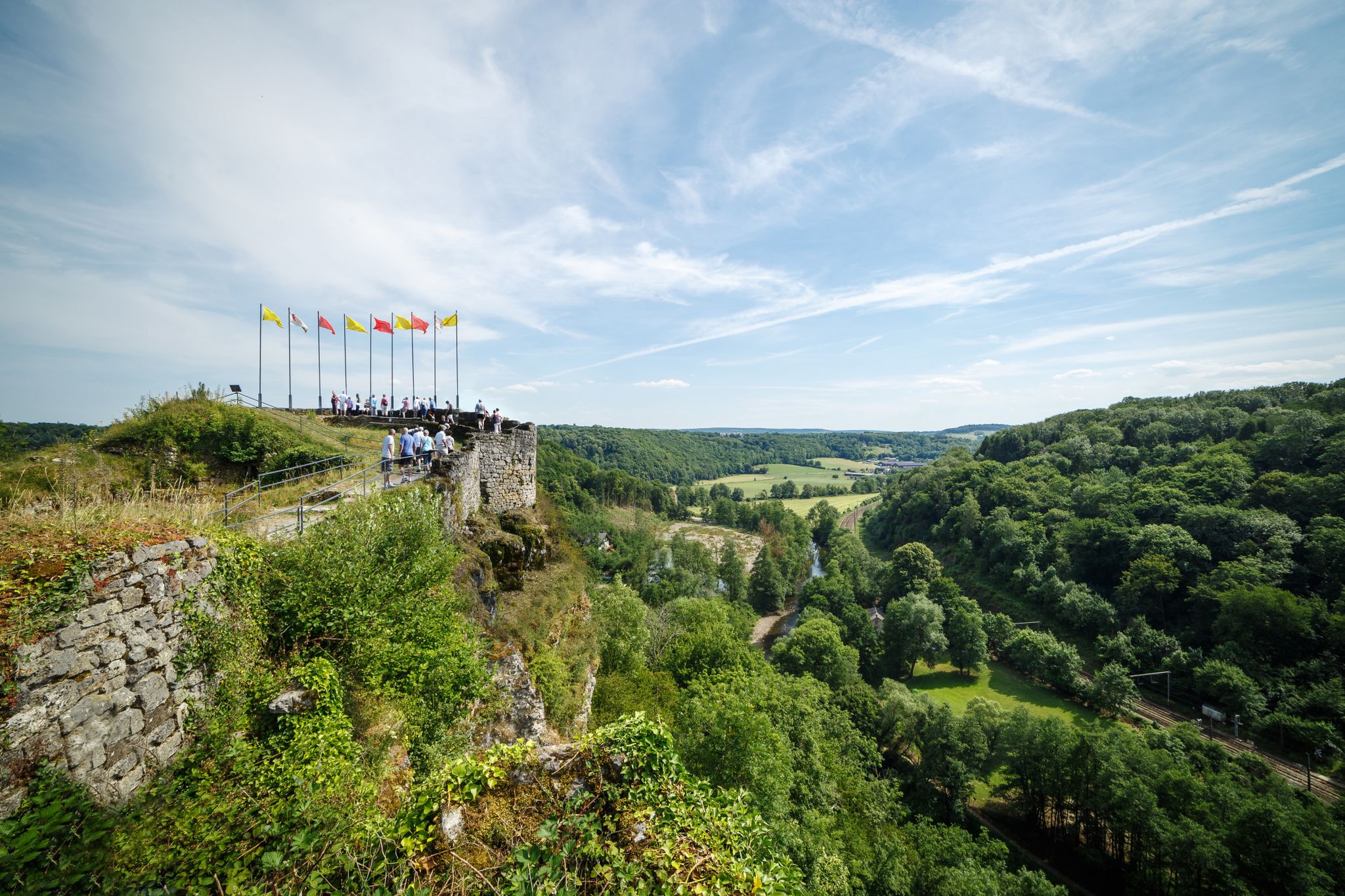
No traffic road cycling routes around Ouffet traverse a landscape characterized by the rolling hills and dense forests of the Ardennes. The region features varied terrain, with numerous routes following the meandering Ourthe River through picturesque valleys. Cyclists encounter both challenging climbs and enjoyable descents, making the area suitable for diverse fitness levels. This environment provides extensive greenery and natural features away from motorized traffic.
Best no traffic road cycling routes around Ouffet
- The most popular no traffic road cycling…
Last updated: July 14, 2026
4.5
(2)
199
riders
53.4km
02:44
720m
720m
Moderate road ride. Good fitness required. Some segments of this route may be unpaved and difficult to ride.
3.0
(1)
31
riders
29.9km
01:22
270m
270m
Easy road ride. Great for any fitness level. Mostly well-paved surfaces and easy to ride.

Sign up for free
7
riders
28.5km
01:24
300m
300m
Moderate road ride. Good fitness required. Mostly well-paved surfaces and easy to ride.
12
riders
23.1km
01:06
240m
240m
Easy road ride. Great for any fitness level. Mostly well-paved surfaces and easy to ride.
3
riders
67.8km
03:29
870m
870m
Moderate road ride. Good fitness required. Some segments of this route may be unpaved and difficult to ride.
Get access to more routes and recommendations from other explorers.
Sign up for free
Already have an account?
Our route recommendations are based on thousands of hikes, rides, and runs completed by other people on komoot.
Start today with a free account
Your next adventure awaits.
Login or Signup

Other adventures around Ouffet

Tips from the Community

The Seraing Arboretum boasts a rich collection of tree species, including a giant sequoia measuring approximately 38 meters tall with a circumference of 6.60 meters (approximately 2.10 meters in diameter). The giant sequoia is renowned for its ability to withstand impacts (its bark is approximately 3 cm thick) and was used in firebreaks because its moist bark provides good resistance to forest fires. There are also Vancouver firs measuring approximately 51 meters tall, though some have died standing. If you'd like to see for yourself, you can make the "lumberjack's cross," an easy and fun activity. Please respect the trees by not tearing the bark off the sequoia and by staying on the paths. We wish you a pleasant walk.
0
0

Durbuy is first mentioned in 1078 (as Dolbui) and in 1084 (under the current name). The first traces of habitation are found during excavations in the Anticlinaal cave by Count Pierre d'Ursel. The d'Ursel family still inhabits Durbuy Castle. Before the current castle, there were already others. Based on the archives of Luxembourg, a castle was destroyed and in the eleventh century, another was built by Henry II the Lame, who had received the domain from his mother Rageline, sister of Pope Stephen II, and her husband Albert II of Namur. Around 1156, that castle was severely damaged by flames and during the succession wars of the Duchy of Limburg, it was destroyed several more times. From 1412, Durbuy came into the hands of the House of Burgundy and at the end of the fifteenth century, the then-existing castle was destroyed by Maximilian of Austria, like all the castles of the la Marck family: besides Durbuy, these also include the castles of Logne and La Roche. In 1628, Baron Antoine Schetz of Grobendonck leased the Durbuy estate for 40,000 gold marks, a very considerable sum. Besides being a baron, he was also Count of Grobbendonk, Lord of Tilburg and Goirle, Pulle and Pulderbos, and Wezemaal. He was in the service of the Spanish and had led the defense of 's-Hertogenbosch during the Eighty Years' War. At the age of 71, he was also governor of the city of Leuven during the Siege of Leuven. And he was the first in a long line of the d'Ursel family who, to this day, inhabit the castle. In 1731, the castle was rebuilt by the then Duke of Ursel. Countess Auguste d'Ursel, who acquired the d'Ursel family's possessions in Durbuy, then modernized the castle from 1880 to 1882 with the help of architect Thirian from Namur. During the Second World War, the castle was occupied several times and in 1944, during the Battle of the Bulge, it was used as a field hospital by the American liberators, with the billiard table serving as an operating table. Sources: historical overviews in Word documents on the website of Count Jean-Michel d'Ursel, current resident, at https://www.chateaudedurbuy.be/historique.html
6
0

Beautiful chapel at the castle/estate. It's private, so it's not open to the public. It's being restored. It's said to have been built with perfectly cut stones on site and without the use of cement or mortar. Thanks to its perfect construction techniques, the crypt is said to remain bone dry after all this time, even though it lies below the waterline.
0
0

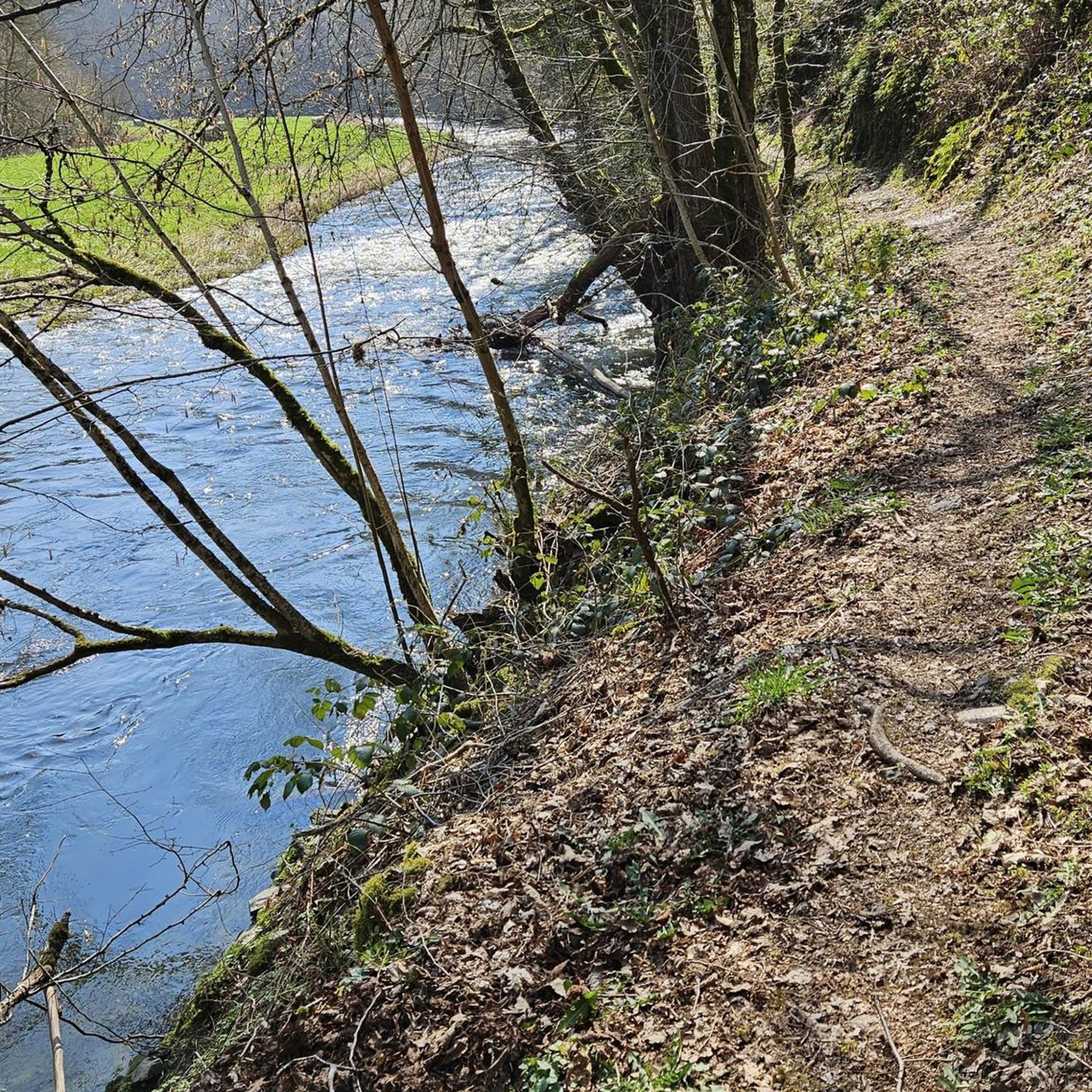
The village is located on the right bank of the Ourthe River. It is a popular area for climbing, kayaking, and hiking.
0
0

Beautiful castle and surroundings. Here is the hara krishna located.
0
0

The Arboretum du Bois de la Vecquée is a hidden gem with a beautiful collection of trees and plants from all over the world. This peaceful walking area offers winding paths that take you past impressive tree species and green glades.
1
0

chapel street of the shufflers
0
0

Located on the banks of the Ourthe River, the village of Durby is picturesque thanks to its rich history and remarkably well-preserved architecture. It is considered the smallest village in the world. The downside is that it attracts large crowds during the summer months.
0
0
Frequently Asked Questions
How many no-traffic road cycling routes are available around Ouffet?
There are over 120 dedicated no-traffic road cycling routes around Ouffet, offering a wide variety of distances and difficulty levels. This includes routes suitable for easy rides, moderate excursions, and more challenging climbs.
What makes Ouffet an ideal destination for no-traffic road cycling?
Ouffet is nestled in the Ardennes Forest, known for its extensive greenery, rolling hills, and the picturesque Ourthe River. This creates a diverse landscape with many quiet roads and dedicated paths, including sections of the Vennbahn cycle route and EuroVelo 5, ensuring a serene cycling experience away from motorized traffic.
Are there easy no-traffic road cycling routes for beginners or families?
Yes, Ouffet offers a good selection of easy no-traffic road cycling routes. For instance, the Côte de Berleur loop from Nandrin is an easy 17.5 km ride with minimal elevation gain. Another accessible option is the Château Ferme de la Chapelle loop from Nandrin, which is 23.3 km long and also considered easy.
What kind of challenging no-traffic road cycling routes can I find in Ouffet?
For experienced cyclists seeking a challenge, Ouffet's rolling hills provide ample opportunity for significant elevation gains. Routes like the Porcheresse Castle – Bois-Borsu Farm-Castle loop from Ocquier cover over 53 km with more than 700 meters of ascent, offering a rewarding workout amidst stunning scenery.
What are some notable attractions or landmarks I can see along the no-traffic routes?
Many routes pass by charming villages and historical sites. You can cycle past the historic Durbuy — Old Town and Castle, or discover natural wonders like The Anticline and Sy Rocks. The region also features impressive structures such as Modave Castle and the ancient Wéris Dolmen.
Are there circular no-traffic road cycling routes available?
Yes, many of the no-traffic road cycling routes around Ouffet are designed as loops, allowing you to start and finish at the same point. Examples include the Château de Saint-Fontaine – Moulin de Scoville loop from Terwagne, which is a moderate 50 km ride, and the Saint-Séverin Church – Château de la Gotte loop from Terwagne, a 28 km moderate option.
What is the best time of year to go no-traffic road cycling in Ouffet?
The spring and autumn months generally offer the most pleasant conditions for road cycling in Ouffet, with mild temperatures and beautiful scenery as the forests change colors. Summer is also popular, though it can be warmer. Always check local weather forecasts before heading out.
Can I access long-distance cycle paths like the Vennbahn or EuroVelo 5 from Ouffet?
Yes, the Ouffet region provides access to sections of longer-distance cycling paths. The Vennbahn cycle route and EuroVelo 5 are both accessible, offering opportunities to explore the diverse nature and culture of Wallonia on traffic-free or low-traffic routes.
What do other road cyclists enjoy most about cycling in Ouffet?
The komoot community highly rates the road cycling experience in Ouffet, with an average score of 4.3 stars. Reviewers often praise the region's diverse landscapes, the quiet roads, and the blend of challenging climbs with scenic descents through dense forests and along river valleys.
Are there options for parking or public transport to reach the no-traffic cycling routes?
While specific parking details vary by trailhead, many routes around Ouffet start from villages where parking is available. For public transport, it's advisable to check local bus or train schedules and their bike carriage policies, as options can be limited in rural areas. Planning your starting point in advance is recommended.
Most popular attractions around Ouffet

Get inspired with the komoot mobile app


Explore more
Browse the best Road cycling routes in other regions.
