Top 10 Natural Monuments around Catalina
Best natural monuments around Catalina Island offer diverse ecosystems and unique geological features. The island's interior, largely undeveloped and managed by the Catalina Island Conservancy, features rugged terrain with coastal scrub, chaparral, and oak woodlands. These areas provide habitats for endemic wildlife and offer extensive trail networks for exploration. Catalina's natural landscape includes significant geological formations and marine protected areas with vibrant underwater environments.
Best natural monuments around Catalina
- The most popular natural monuments is View from Pusch Peak,…
Last updated: April 26, 2026
Montrose Pools
Highlight • River
Tip by

View from Pusch Peak
Highlight • Summit
Tip by
Sign up now to discover places like this
Get recommendations on the best single tracks, peaks, & plenty of other exciting outdoor places.
Sign up for free
The Ravens
Highlight • Natural Monument
Tip by
Wilderness of Rocks Trail
Highlight (Segment) • Trail
Tip by

Petroglyphs
Highlight • Historical Site
Tip by

Sign up for free to discover even more natural monuments around Catalina.
Sign up for free
Already have an account?
Start today with a free account
Your next adventure awaits.
Login or Signup
Tips from the Community

This area is mostly cattle paths. When not overgrown, it is moderately challenging to navigate. There is one area with dozens of petroglyphs. These images show that many are only visible if you really explore. I was traversing some boulders (often easier than the scrub) and chose to go around after I threw my walking stick ahead. I would not have seen the tarantula and likely big horn had I not come over the top. Other petroglyphs in the area from other hikes are in the gallery. It is sobering to know most of the large rocks are unchanged since indigenous people were the only human inhabitants.
1
0
If you are in decent shape, can follow your own pace, hike early when hot, and hydrate with sips, not chugging, it is a half day hike or less. It is a fairly high elevation for a 360 view in the Catalinas. Follow the trail with your eyes, especially when it is overgrown. Several side trails with many Sheep trails can lead to off trail, which can be dangerously steep. It you pay attention, it is beautiful and safe.
0
0

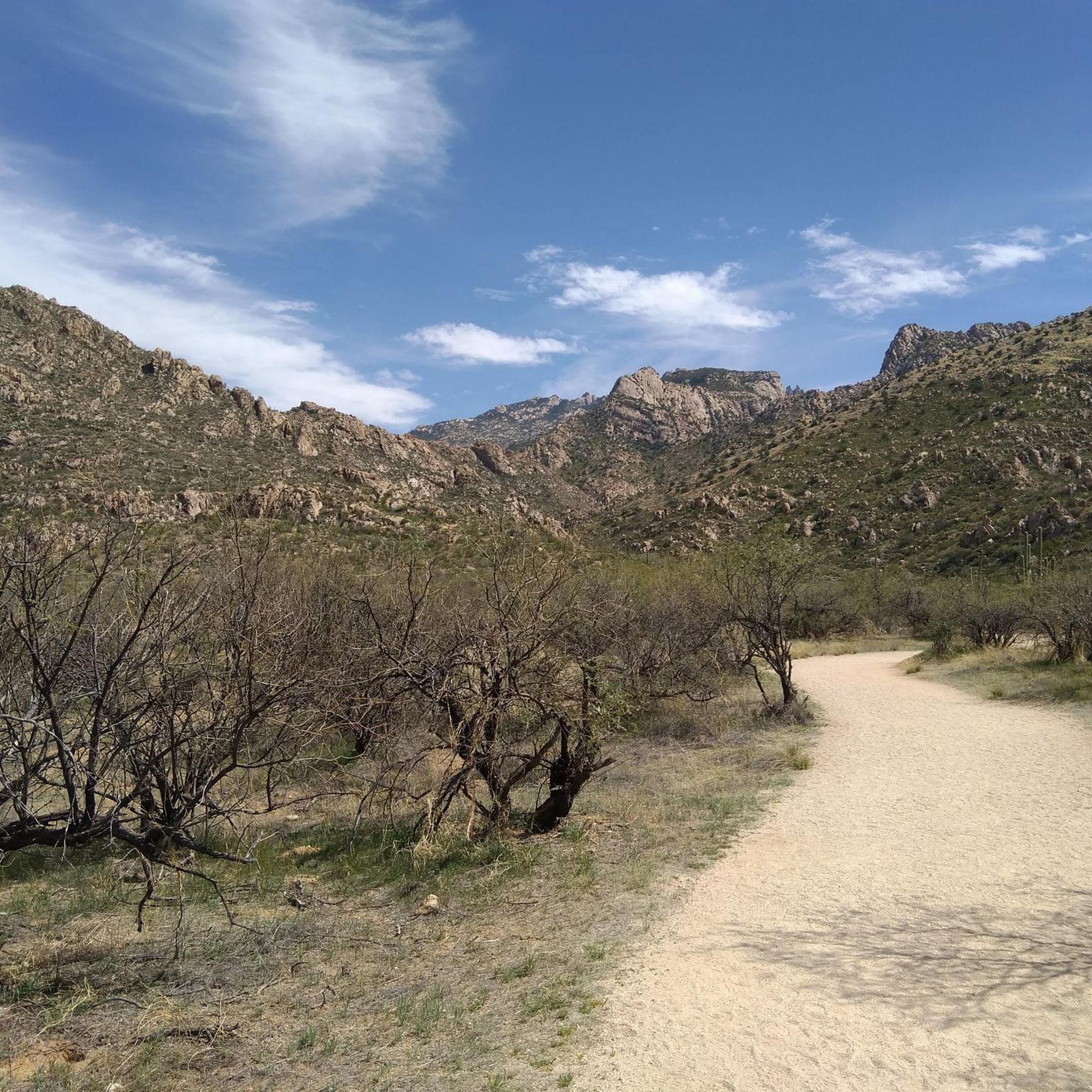
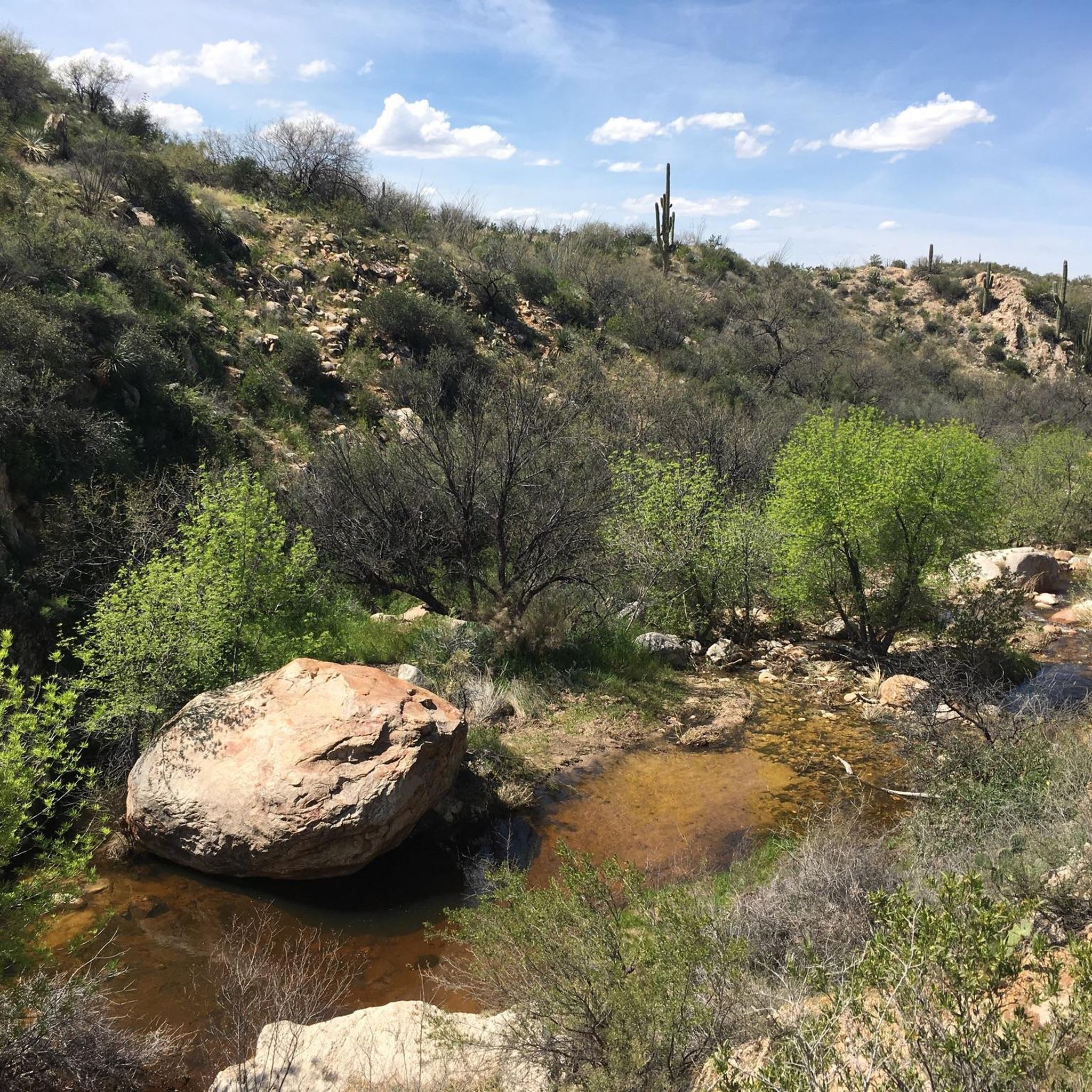
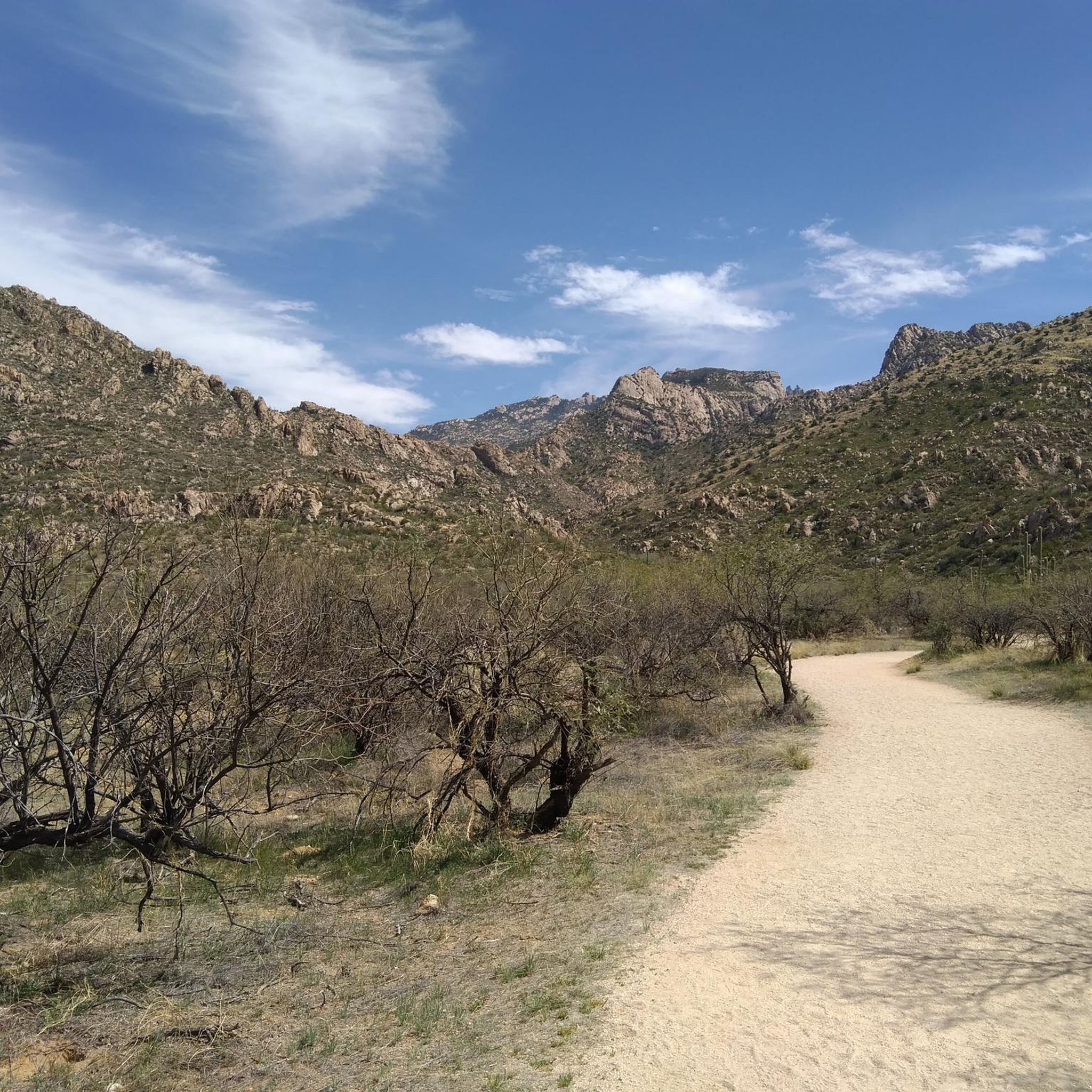
This is a very quick hike from the Catalina State Park trailhead! It avoids the steepest sections of the trail to Romero Pools, but at the right time of year, you can still find water here.
1
0

The Wilderness of Rocks Trail leads across a plain surrounded by round-washed rock formations, a unique sight in this area. Between giant conifers, rushing streams and pine cones, you forget you're in the desert state of Arizona. Those who shy away from the arduous climb from Tucson can easily reach the trail by car via the approach to Mount Lemmon.
4
0
The rock outcropping known as The Ravens has quite a few established rock climbing routes (https://www.mountainproject.com/area/105838611/the-ravens). Even if you don't plan to climb, it's a nice hike down from the summit parking area, with stunning views to the south overlooking Tucson.
1
0
The Linda Vista trailhead is located just off Oracle Road, very convenient to locations in Oro Valley or northwest Tucson. This relatively short but extremely steep hike quickly gets you into the mountain preserve and up to the summit of Pusch Peak. On a clear day, the views are breathtaking, and in the right season, you stand a chance of seeing bighorn sheep.
1
0
Frequently Asked Questions
What unique wildlife can I encounter on Catalina Island?
Catalina Island is home to diverse wildlife, including the endemic Catalina Island fox, found nowhere else in the world. You might also spot bison, which were introduced to the island in the 1920s, roaming the interior. The island's protected wilderness provides a sanctuary for over 60 species of plants and animals unique to Catalina.
What geological features are significant on Catalina Island?
A significant geological feature is the Catalina Schist, believed to be one of the oldest rocks on the island. This unique metamorphic rock offers insights into millions of years of the island's geological history. Some beaches on the seaward side even feature silvery-grey sand due to rich quartz deposits.
Are there opportunities for marine exploration around Catalina Island?
Yes, Catalina Island is surrounded by nine Marine Protected Areas (MPAs) with crystal-clear waters and vibrant kelp forests teeming with diverse marine life. Montrose Pools, a river and lake area, also offers opportunities for enjoying water activities. These areas are excellent for diving, snorkeling, kayaking, and paddleboarding to observe the rich underwater world.
What kind of hiking trails can I find around Catalina's natural monuments?
You'll find a variety of hiking trails, from challenging mountain ascents to serene paths. For instance, the hike to View from Pusch Peak is steep but offers breathtaking 360-degree views. The Wilderness of Rocks Trail leads through unique rock formations, conifers, and streams. For more hiking options, explore the Hiking around Catalina guide.
Are there any historical natural monuments on Catalina Island?
Yes, you can visit Petroglyphs, an area featuring ancient rock carvings. These images provide a sobering glimpse into the indigenous people who were the only human inhabitants of the island, with many large rocks remaining unchanged since their time.
What are some popular viewpoints to experience the natural beauty of Catalina?
For stunning vistas, the View from Pusch Peak offers a 360-degree panorama of the Catalinas. Another excellent spot is The Ravens, a rock outcropping that provides stunning views overlooking Tucson to the south.
Can I find family-friendly natural monuments on Catalina Island?
While many areas offer a rugged experience, the Wrigley Memorial & Botanic Garden is a great family-friendly option. It showcases the island's unique flora in a serene setting. For outdoor activities, Montrose Pools can be accessed via a quick hike and offers a pleasant natural environment, especially when water is present.
What kind of outdoor activities can I do near Catalina's natural monuments?
Beyond exploring the monuments themselves, Catalina offers a range of outdoor activities. You can find numerous running trails, such as those detailed in the Running Trails around Catalina guide, or explore road cycling routes like those in the Road Cycling Routes around Catalina guide. The island's interior is also popular for mountain biking and camping.
What is the best time to visit Catalina Island for natural monuments?
Catalina Island can be enjoyed year-round, but spring and fall generally offer pleasant temperatures for outdoor activities like hiking and exploring the natural monuments. During these seasons, the weather is often mild, and the island's flora can be particularly vibrant. Summer can be warm, making marine activities more appealing, while winter offers cooler, quieter exploration.
Are there any unique plant species to look out for on Catalina Island?
Yes, Catalina Island is known for its unique botanical diversity, including six endemic plant species found naturally only on the island. The Wrigley Memorial & Botanic Garden specifically highlights these, with examples like the Catalina manzanita and Catalina mahogany. The island's interior also features diverse ecosystems with coastal scrub, chaparral, oak woodlands, and grasslands.
What is the difficulty level of trails leading to natural monuments on Catalina Island?
The difficulty varies significantly. Some trails, like the one to View from Pusch Peak, are considered challenging due to their steepness. Others, such as the Wilderness of Rocks Trail or the path to Montrose Pools, are rated as intermediate. It's advisable to check specific trail details before heading out.
What is the Catalina Island Conservancy's role in protecting these natural monuments?
The Catalina Island Conservancy plays a crucial role in managing and protecting approximately 88% of the island's undeveloped wilderness. Their efforts ensure the preservation of diverse ecosystems, unique geological features, and endemic wildlife, making it possible for visitors to experience the island's unspoiled natural beauty.
Most popular attractions around Catalina

Get inspired with the komoot mobile app


Explore more
Extend your search for the best caves by checking out these guides of the top ones around Catalina:
