Top 20 Natural Monuments around Getafe
Best natural monuments around Getafe include significant natural spaces and parks that offer environmental features and recreational opportunities. While Getafe is an urban area, its municipal boundaries encompass parts of the larger Southeast Regional Park, providing opportunities to connect with nature. These areas feature diverse landscapes, from riverine ecosystems along the Manzanares River to unique gypsum cliffs and urban green spaces. Visitors can explore these natural areas for outdoor activities.
Best natural monuments around Getafe
- The most popular natural monuments…
Last updated: August 11, 2026
Artichoke Fountain (Magnificent fountain)
Highlight • Monument
Translated by Google •
Tip by

Fountain of the Fallen Angel
Highlight • Monument
Translated by Google •
Tip by
Sign up now to discover places like this
Get recommendations on the best single tracks, peaks, & plenty of other exciting outdoor places.
Sign up for free
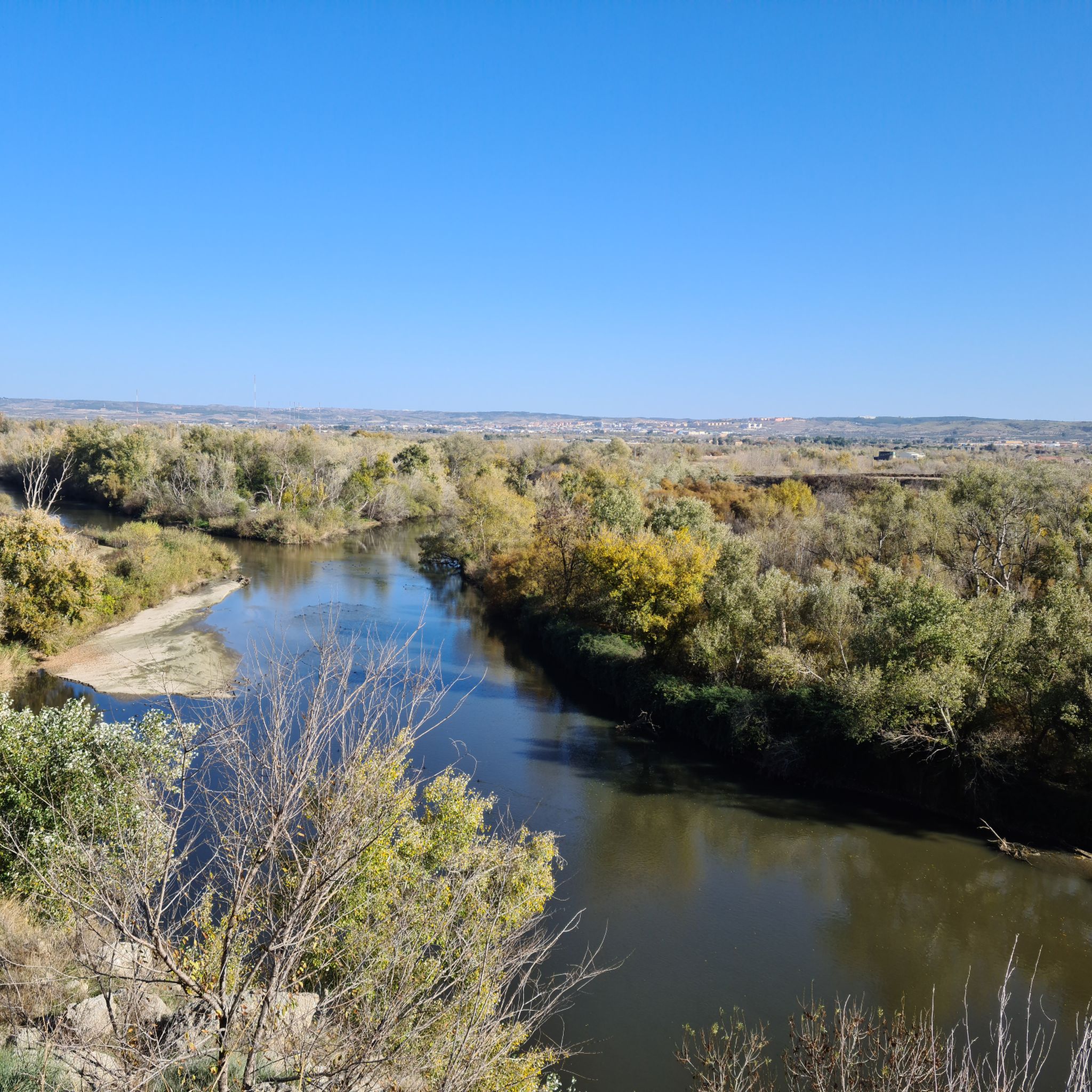
Jarama Cliffs
Highlight • Gorge
Translated by Google •
Tip by

CaixaForum Madrid & Vertical Garden
Highlight • Monument
Translated by Google •
Tip by
Forest of Remembrance (Bosque del Recuerdo)
Highlight • Monument
Translated by Google •
Tip by
Sign up for free to discover even more natural monuments around Getafe.
Sign up for free
Already have an account?
Start today with a free account
Your next adventure awaits.
Login or Signup

Tips from the Community

The Fontana dell'Angelo Caduto (Fuente del Ángel Caído) is one of Madrid's most fascinating and unusual monuments, famous for being one of the very few public sculptures in the world explicitly dedicated to Lucifer. The work is located within the famous Retiro Park. Author: The bronze statue was created in 1877 by the Madrilenian sculptor Ricardo Bellver. Literary source: The work is directly inspired by the verses of the first canto of John Milton's Paradise Lost, capturing the exact moment the angel is cast out of Heaven.
0
0

The sculpture, located in El Retiro Park, is the work of Ricardo Bellver, who sculpted it in 1878 for the Universal Exhibition in Paris that same year. It was later acquired by the Madrid City Council, which commissioned the architect Francisco Jareño to design a pedestal. This was made of granite, bronze and stone, adopting the structure of a fountain with a wide basin. The complex was officially inaugurated in 1885.
15
0

Beautiful vertical garden.
4
0

One - but definitely not the only - biblical basis for the fall of the fallen angel (dragon, devil, Satan, Lucifer ...) into hell can be found in the 12th chapter of the Book of Revelation, the so-called "Apocalypse": "Then there was war in heaven; Michael and his angels rose up to fight with the dragon. The dragon and his angels fought, but they did not stand firm, and they lost their place in heaven. The great dragon was thrown down, that ancient serpent, who is called the devil or Satan, who deceives the whole world. The dragon was thrown down to the earth, and his angels were thrown down with him." (Rev 12:7-9, New Rev 12:7-9)
3
1
It is often said that Madrid is the only city in the world with a monument to the Devil. It is, in fact, a fountain representing the Fallen Angel at the moment of his expulsion from Paradise. The sculpture, located in El Retiro Park, is the work of Ricardo Bellver, who sculpted it in 1878 for the Universal Exhibition in Paris that same year. It was later acquired by the Madrid City Council, which commissioned the architect Francisco Jareño to design a pedestal. This was made of granite, bronze and stone, adopting the structure of a fountain with a wide basin. The complex was officially inaugurated in 1885.
18
0

CaixaForum Madrid is a cultural centre that is part of the "La Caixa" Foundation and is located in the heart of Madrid, close to the Retiro Park. The centre is housed in a former electricity substation, which has been converted into a modern and innovative building. The design of the building, created by the architects Herzog & de Meuron, stands out for its unique appearance, combining industrial elements and modern architecture.
6
0
The Alcachofa Fountain is a monumental fountain in Madrid (Spain) built in the last third of the 18th century and installed in front of the old Puerta de Atocha, from where it was moved in 1880 to the Buen Retiro Gardens. There is also a bronze replica in Madrid that was placed in the Atocha roundabout in 1986. https://es.wikipedia.org/wiki/Fuente_de_la_Alcachofa
2
0
monumental of Madrid, Spain. It was built in the last third of the 18th century and installed in front of the old Puerta de Atocha. Later, in 1880, it was moved to the Buen Retiro Gardens. This fountain is also known as the Fountain of Triton and the Nereid due to the mythological figures that decorate it. The design of the fountain, by architect Ventura Rodríguez, combines neoclassical elements with baroque influences. In the first body of the fountain, you will find a merman and a nereid holding the coat of arms of Madrid. The second body rests on a cup with putti surrounding the column and an artichoke on top, symbolizing fertility or its medicinal properties. An artistic gem to admire! 😊
22
0
Frequently Asked Questions
What natural features can I explore in Getafe?
Getafe offers a variety of natural spaces, including parts of the larger Parque Regional del Sureste, which features riverine ecosystems along the Manzanares River and Arroyo Culebro. You can also visit the Campillo Lagoon, a valuable natural reserve for waterfowl and lake ecosystems. Additionally, the area includes significant green spaces like Alhóndiga Park with its tranquil lake and well-maintained gardens.
Are there any significant viewpoints or landmarks in Getafe's natural areas?
Yes, the iconic Cerro de los Ángeles offers expansive panoramic views and is traditionally considered the geographical center of the Iberian Peninsula. You can also find impressive vistas at the Jarama Cliffs, which showcase unique botanical adaptations. While man-made, the Artichoke Fountain and the Fountain of the Fallen Angel are notable landmarks integrated into natural settings like El Retiro Park.
What kind of outdoor activities can I do near Getafe's natural monuments?
The natural areas around Getafe are excellent for various outdoor activities. You can enjoy cycling, gravel biking, and road cycling on routes that pass through or near these natural spaces. For example, there are routes like the 'View of Cerro de los Ángeles – Getafe Bullring loop' for cycling, and 'Lake in Butarque Park – Wooden Bridge loop' for gravel biking. You can find more details on these activities in the Cycling around Getafe, Gravel biking around Getafe, and Road Cycling Routes around Getafe guides.
Are there family-friendly natural monuments or parks in Getafe?
Absolutely. Alhóndiga Park is a significant green space ideal for families, offering well-maintained gardens, a tranquil lake, children's playgrounds, and sports facilities. The Campillo Lagoon is also considered family-friendly, providing opportunities for nature observation. Additionally, the Fountain of the Fallen Angel, located in El Retiro Park, is a popular spot for families.
What is the best time to visit the natural monuments around Getafe?
The natural areas around Getafe can be enjoyed throughout the year. Spring and autumn generally offer the most pleasant temperatures for outdoor activities like hiking and cycling. During these seasons, the flora is vibrant, and the weather is mild. Summer can be hot, making early mornings or late afternoons ideal for visits, while winter offers cooler, crisp air for walks.
Can I reach Getafe's natural areas using public transport?
Many of Getafe's natural areas and parks are accessible via public transport. For instance, the Manzanares Linear Park is part of a longer trail along the Manzanares River with accessible trails. Alhóndiga Park is also well-integrated into the city, making it easy to reach. For specific routes and connections to larger protected areas like the Parque Regional del Sureste, it's advisable to check local transport schedules.
Are there any historical or cultural sites integrated with the natural monuments?
Yes, Getafe uniquely blends natural settings with historical and cultural significance. Cerro de los Ángeles, for example, hosts the Hermitage of Nuestra Señora de los Ángeles and the Monument to the Sacred Heart, offering a mix of natural beauty and religious heritage. The Artichoke Fountain and Fountain of the Fallen Angel are historic man-made monuments set within green spaces, showcasing neoclassical and baroque influences.
What kind of wildlife can I expect to see in Getafe's natural areas?
The Campillo Lagoon is a significant natural reserve for waterfowl and lake ecosystems, making it an excellent spot for birdwatching. The Parque Regional del Sureste, which includes parts of Getafe, is crucial for its biodiversity, offering opportunities to observe local flora and fauna within its protected landscape along the rivers.
Are there any easy trails or natural monuments suitable for beginners?
Yes, many of Getafe's urban green spaces like Alhóndiga Park and sections of the Manzanares Linear Park offer accessible and easy trails suitable for beginners or casual strolls. For cycling, there are easy routes such as the 'View of Cerro de los Ángeles – Getafe Bullring loop' mentioned in the Cycling around Getafe guide.
What do visitors enjoy most about the natural monuments around Getafe?
Visitors particularly appreciate the tranquility and natural beauty offered by places like the Campillo Lagoon, which is valued for its role as a natural reserve. The panoramic views from Cerro de los Ángeles are also a major draw. The integration of historical monuments like the Artichoke Fountain and Fountain of the Fallen Angel within green spaces also adds a unique charm that visitors enjoy.
Are there any specific plant species or unique geology to observe?
The Jarama Cliffs are notable for their plant cover, which exhibits ingenious botanical adaptations to survive in the gypsum aljezares characteristic of southeastern Madrid. You can observe species like esparto grass, jabuna, ontina (mugwort), reseda, thyme, scaly rosemary, and harmaga, all adapted to xerophytic environments.
How long should I plan for a visit to Getafe's natural monuments?
The duration of your visit can vary. For a leisurely stroll through Alhóndiga Park or a quick visit to Cerro de los Ángeles for views, a couple of hours might suffice. Exploring the Campillo Lagoon or undertaking a cycling route in the Parque Regional del Sureste could easily fill half a day or more, depending on your chosen activity and pace.
Most popular attractions around Getafe

Get inspired with the komoot mobile app


Explore more
Extend your search for the best caves by checking out these guides of the top ones around Getafe:
