Attractions and Places To See in the Ethiopian Highlands - Top 20
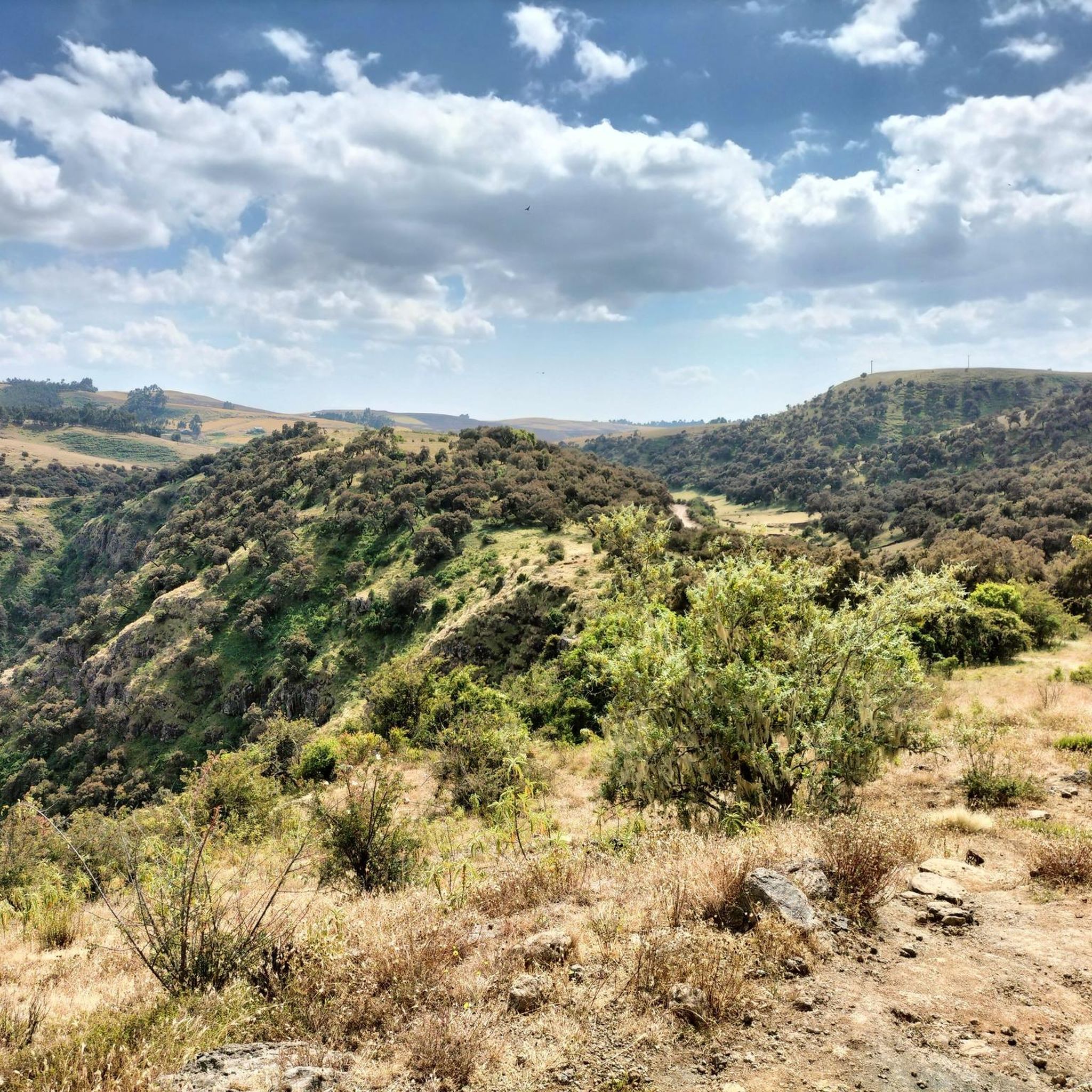
Best attractions and places to see in the Ethiopian Highlands, often referred to as the "Roof of Africa," are characterized by their impressive elevation and vastness. The region features rugged mountains, deep gorges, expansive plateaus, and unique ecosystems. It offers a diverse range of attractions, from dramatic natural landscapes to ancient cultural and historical sites.
Best attractions and places to see in the Ethiopian Highlands
- The most popular attractions is View of Addis Ababa, a viewpoint that offers a panoramic perspective of the city. It is a short walk from Mariam Church to this location.
- Another must-see spot is Gelada Baboons in Simien Mountains National Park, a natural monument known for its endemic wildlife. Visitors can observe baboon groups with approximately 100 animals, maintaining a distance of 3 meters.
- Visitors also love Ura Kidane Mehret, a religious building and historical site. This monastery, founded in the 14th century, features a circular church with beautifully painted frescoes depicting biblical scenes and Ethiopian Orthodox Church history.
- Ethiopian Highlands is known for its natural landscapes, ancient cultural sites, and historical landmarks. The region offers a variety of experiences, from exploring rock-hewn churches to trekking in national parks.
- The attractions in the Ethiopian Highlands are appreciated by the komoot community. With 2 upvotes and 8 photos, the community actively shares its experiences.
Last updated: July 6, 2026
Ura Kidane Mehret
Highlight • Religious Site
Her Kidane Mehret is dedicated to the patron saint of Ethiopia - George the Victorious. The name of this biblical figure has been mentioned by many churches in the country, but this monastery is the most popular with pilgrims. Unlike other similar monasteries on the islands, Mehret in your Khitan is allowed to enter the women.
Translated by Google •
Tip by

Rock-Hewn Churches of Lalibela
Highlight • Religious Site
The churches are located in the central Ethiopian highlands in the urban area of the growing town of Lalibela. They still serve their original purpose and are visited by Ethiopian Orthodox pilgrims.
The church buildings have been listed as a UNESCO World Heritage Site since 1978.
More information: de.wikipedia.org/wiki/Felsenkirchen_von_Lalibela
Translated by Google •
Tip by

Sign up now to discover places like this
Get recommendations on the best single tracks, peaks, & plenty of other exciting outdoor places.
Sign up for free
Debre Berhan Selassie Church
Highlight • Religious Site
Winged angel heads even look down on visitors from the wooden monastery ceiling. The famous ceiling paintings and wall paintings are among the most precious in Ethiopian iconography.
The life of Christ and Mary is presented in great detail on the side walls. Furthermore, all kinds of saints such as Saint Michael or George with the dragon are depicted. The walls are filled with scenes from the New and Old Testaments. Inside the monastery, everything is completely painted, so that there is not a single empty space on the walls. Debre Berhan Selassie is probably the most beautiful monastery church in Gondar. As the only place of worship that survived the invasion of the dervishes, this jewel has been declared a World Heritage Site by UNESCO.
Translated by Google •
Tip by
Portuguese Bridge and Waterfalls
Highlight • Bridge
Translated by Google •
Tip by

Fasilides' Bath
Highlight • Historical Site
Towards the end of the Gondar period, the pleasure palace was finally converted into a church.
Timkat Festival
Every year on January 19th, the Bath of Fasilidas is the central location for the Timkat Festival, the festival commemorating the baptism of Jesus Christ in the Jordan.
For the Timkat Festival, the entire Fasilidas Basin is filled with holy water from the nearby river. The Bishop of Gondar consecrates the water by dipping his carrying cross into it. The believers then bathe in this holy water in ecstasy and with liturgical chants. Orthodox Ethiopian Christians celebrate the festival in their colorful cloaks. Priests adorn themselves with church crowns and brocade-decorated parasols.
On the eve of Epiphany, priests from all churches carry the holy "Tabot tablets" into the castle to venerate the shrines containing replicas of the two tablets of the law of Moses. On the actual day of the festival, church dignitaries gather around the tablets, sprinkle the believers present with holy water and renew the tablet vows. Before the tablets are returned to the churches, the church followers walk through the town in extensive processions singing, praying and dancing.
Translated by Google •
Tip by
Ras Dashen
Highlight • Summit
The entire Ras Dashen trek can take up to 12 hours. 7 hours up and 5 hours down.
You have to climb the last 100 m.
After Kili, Mt Kenya, Ruwenzori and Mt Meru, Ras Dashen is the fifth highest mountain in Africa at 4543 m.
Translated by Google •
Tip by
Fasil Ghebbi Fortress, Gondar
Highlight • Castle
In the 17th century, the town was the residence of the Ethiopian Emperor Fasilidas, who built a residence here for the rainy season. His successors continued to expand the town and palace.
Plan of Fasil Gebi
The town lies at an altitude of 2208 m and is surrounded by a 900 m long fortress wall. It includes palaces, churches, monasteries and other public and private buildings.
The architecture shows Hindu and Arabic influences, and later also Baroque elements introduced by Jesuit missionaries.
After the capital was moved to Debre Tabor in the middle of the 19th century, Fasil Ghebbi was damaged by an attack by followers of the Mahdi in 1881 and by British air raids in 1941.
More information: de.wikipedia.org/wiki/Fasil_Ghebbi
Translated by Google •
Tip by
Gelada Baboons in Simien Mountains National Park
Highlight • Natural Monument
If you sit in the garden of the "Altes Klösterli" restaurant in Zurich, you can watch blood-breasted baboon in the zoo.
Translated by Google •
Tip by
Ambiko
Highlight • Mountain Hut
Translated by Google •
Tip by
View of Addis Ababa
Highlight • Viewpoint
Translated by Google •
Tip by
Sign up for free to discover even more attractions in the Ethiopian Highlands.
Sign up for free
Already have an account?
Start today with a free account
Your next adventure awaits.
Login or Signup
Other adventures in the Ethiopian Highlands


Tips from the Community

The TV series »Schätze der Welt – Erbe der Menschheit«, which I can wholeheartedly recommend, shows in short segments of fifteen minutes each special sites from all continents and eras, which have been “honoured” by UNESCO with the special status of World Heritage. One episode also documents the exciting history of the rock-hewn churches of Lalibela. If you are interested, this episode (in German) is available in the ARD media library at =>> https://www.ardmediathek.de/video/schaetze-der-welt/lalibela-aethiopien-folge-203/swr/Y3JpZDovL3N3ci5kZS83MDI1OTc0
1
0

The landscape here changes dramatically depending on the season, but the gorge is also impressive in late summer (February), even though there are no waterfalls then. There's also a good place to eat at the starting point, and the cook is very friendly.
0
0

Make sure to come on a day with clear view
0
0

A short hike leads from the car park (4WD road!) to the Portuguese bridge and some waterfalls. There is also a magnificent view towards the Blue Nile Gorge. There is also unique vegetation and if you are lucky you can even see raccoon baboons. Ideal as a day trip from Addis Ababa, combined with the Debre Libanos monastery.
0
0

Fasil Ghebbi is a fortress town in the Gonder region of Ethiopia and is a UNESCO World Heritage Site. In the 17th century, the town was the residence of the Ethiopian Emperor Fasilidas, who built a residence here for the rainy season. His successors continued to expand the town and palace. Plan of Fasil Gebi The town lies at an altitude of 2208 m and is surrounded by a 900 m long fortress wall. It includes palaces, churches, monasteries and other public and private buildings. The architecture shows Hindu and Arabic influences, and later also Baroque elements introduced by Jesuit missionaries. After the capital was moved to Debre Tabor in the middle of the 19th century, Fasil Ghebbi was damaged by an attack by followers of the Mahdi in 1881 and by British air raids in 1941. More information: https://de.wikipedia.org/wiki/Fasil_Ghebbi
2
0
Not far from Gondar lies the Debre Berhan Selassie monastery, which is decorated with beautiful and unique wall paintings from 1694. Debre Berhan Selassie translates as "Monastery of the Trinity on the Mountain of Light" and was founded by Emperor Iyasu around 1700. It is impressive and surprising at the same time how extensively the paintings are in the anteroom accessible to visitors. Winged angel heads even look down on visitors from the wooden monastery ceiling. The famous ceiling paintings and wall paintings are among the most precious in Ethiopian iconography. The life of Christ and Mary is presented in great detail on the side walls. Furthermore, all kinds of saints such as Saint Michael or George with the dragon are depicted. The walls are filled with scenes from the New and Old Testaments. Inside the monastery, everything is completely painted, so that there is not a single empty space on the walls. Debre Berhan Selassie is probably the most beautiful monastery church in Gondar. As the only place of worship that survived the invasion of the dervishes, this jewel has been declared a World Heritage Site by UNESCO.
1
0
The rock churches of Lalibela in Ethiopia are eleven churches, each carved out of the surrounding rock formation as a monolith around the year 1250. Their construction was originally attributed to Emperor Lalibela, who wanted to build a "New Jerusalem" in the 12th century after Muslim conquests brought Christian pilgrimages to the Holy Land to a standstill. The holy city of Lalibela experienced its heyday after the fall of the Aksum Empire. The churches are located in the central Ethiopian highlands in the urban area of the growing town of Lalibela. They still serve their original purpose and are visited by Ethiopian Orthodox pilgrims. The church buildings have been listed as a UNESCO World Heritage Site since 1978. More information: https://de.wikipedia.org/wiki/Felsenkirchen_von_Lalibela
1
0
Frequently Asked Questions
What are the most significant historical and cultural sites in the Ethiopian Highlands?
The Ethiopian Highlands are rich in history and culture. You can explore the rock-hewn churches of Lalibela, a UNESCO World Heritage Site, known for its monolithic churches carved directly into rock. Another significant site is Fasil Ghebbi Fortress in Gondar, a UNESCO site that served as the residence for Ethiopian emperors, showcasing unique architectural styles. Don't miss the Debre Berhan Selassie Church near Gondar, famous for its intricate 17th-century wall and ceiling paintings.
Where can I experience unique natural landscapes and wildlife in the Ethiopian Highlands?
For breathtaking natural beauty and endemic wildlife, visit Simien Mountains National Park, a UNESCO World Heritage site. Here, you can witness dramatic landscapes with towering peaks and deep valleys, and observe unique species like the Gelada baboon and Walia ibex. Another excellent option is Bale Mountains National Park, known for its high-altitude alpine landscapes and diverse wildlife, including the endangered Ethiopian wolf.
Are there family-friendly attractions in the Ethiopian Highlands?
Yes, several attractions are suitable for families. The View of Addis Ababa offers a panoramic perspective of the city and is easily accessible. Observing the Gelada Baboons in Simien Mountains National Park from a safe distance can be a captivating experience for all ages. Additionally, exploring Fasilides' Bath in Gondar provides an interesting historical insight in a family-friendly setting.
What kind of outdoor activities can I do near these attractions?
The Ethiopian Highlands offer diverse outdoor activities. You can find numerous hiking trails, including those around Addis Ababa like the 'Entoto City View' loop. For more challenging treks, the Simien Mountains and Bale Mountains National Parks are prime destinations. Cycling enthusiasts can explore routes such as the 'Nasire loop' near Addis Ababa. For more details on routes, check out the Hiking in the Ethiopian Highlands, Cycling in the Ethiopian Highlands, and Running Trails in the Ethiopian Highlands guides.
Where can I find ancient monasteries and religious sites?
The region is dotted with ancient religious sites. The island monasteries of Lake Tana, such as Ura Kidane Mehret, offer a glimpse into centuries-old religious traditions with beautifully painted frescoes. The Rock-Hewn Churches of Tigray, carved into sandstone cliffs, are another remarkable example, preserving ancient paintings and artifacts.
What is the best time to visit the Ethiopian Highlands for trekking and sightseeing?
The best time to visit the Ethiopian Highlands for trekking and sightseeing is generally during the dry season, which runs from October to May. During these months, the weather is typically clear and sunny, making conditions ideal for exploring historical sites and enjoying outdoor activities in national parks like the Simien and Bale Mountains.
Are there any unique natural formations or geological wonders to see?
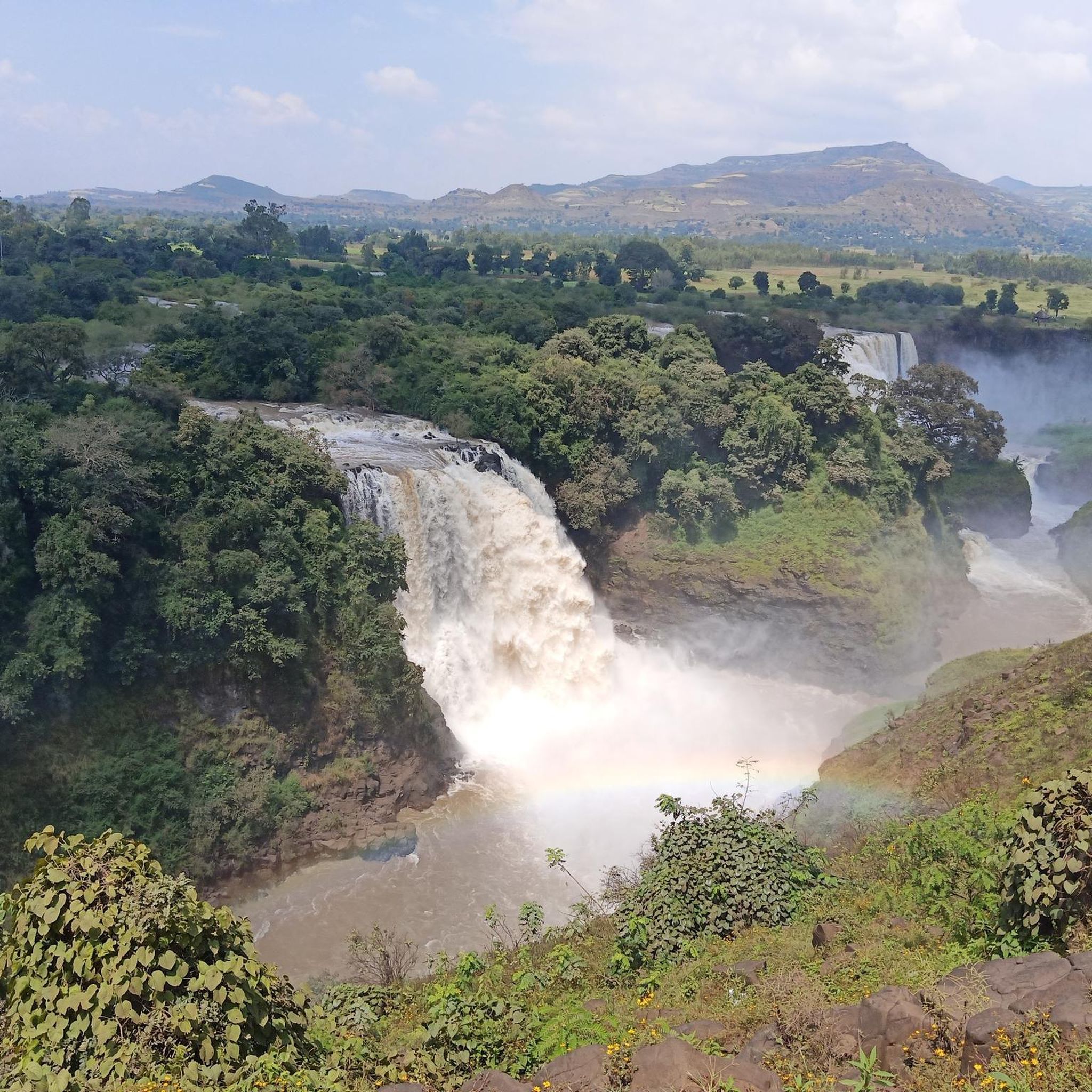
Absolutely. The Great Rift Valley bisects the Ethiopian Highlands, offering diverse landscapes including lakes, hot springs, and unique volcanic formations. The Danakil Depression, one of the hottest and lowest places on Earth, features colorful sulfur springs, salt flats, and the active lava lake of Erta Ale. You can also visit the spectacular Blue Nile Falls (Tis Issat) near Bahir Dar, known as 'The Water That Smokes'.
What are some lesser-known or 'hidden gem' attractions in the Highlands?
Beyond the major sites, consider visiting Portuguese Bridge and Waterfalls near Debre Libanos. This historic bridge offers magnificent views towards the Blue Nile Gorge and unique vegetation, with a chance to spot baboons. The archaeological site of Tiya, with its megaliths and engraved figures, also offers a fascinating, less-crowded historical experience.
What do visitors enjoy most about the Ethiopian Highlands?
Visitors frequently praise the Ethiopian Highlands for their dramatic natural landscapes, the rich history embedded in ancient cultural sites, and the unique wildlife. Many are captivated by the rock-hewn churches and the vibrant frescoes found in monasteries. The opportunity to observe endemic species like the Gelada baboons in their natural habitat is also a highlight for many travelers.
Can I find opportunities to interact with local communities and experience rural life?
Yes, the Ethiopian Highlands provide ample opportunities to experience authentic rural life. Many areas allow visitors to explore terraced farms and interact with local communities, offering a deeper understanding of the region's culture and traditions beyond the main tourist attractions.
How do the Simien Mountains and Bale Mountains compare for trekking?
Both the Simien Mountains and Bale Mountains National Parks offer incredible trekking experiences, but they differ in landscape and wildlife. The Simien Mountains are renowned for their dramatic, jagged peaks and deep escarpments, home to the Walia ibex and Gelada baboons. The Bale Mountains, on the other hand, feature high-altitude alpine plateaus, cloud forests, and are the best place to spot the endangered Ethiopian wolf and Mountain Nyala. Both offer challenging treks, but the Simiens are often considered more visually dramatic, while Bale offers a unique high-altitude ecosystem.
Most popular routes in the Ethiopian Highlands
Most popular attractions in the Ethiopian Highlands

Get inspired with the komoot mobile app


