Top 8 Caves around Kleinschwabhausen
Best caves around Kleinschwabhausen are found in the surrounding Thuringia region, which offers diverse geological formations. Kleinschwabhausen itself is a municipality in the Weimarer Land district, situated within a landscape characterized by rolling hills and natural features. The broader area provides opportunities to explore various natural and historical sites, including unique cave systems. These caves contribute to the region's natural heritage, offering insights into geology and local history.
Best caves around Kleinschwabhausen
- The most popular caves is Rock Castle,…
Last updated: July 11, 2026
Bridge over the Ilm
Highlight • Cave
Showing Translation
Tip by

Rock Castle
Highlight • Castle
Translated by Google •
Tip by

Sign up now to discover places like this
Get recommendations on the best single tracks, peaks, & plenty of other exciting outdoor places.
Sign up for free
Teufelslöcher Caves (Jena)
Highlight • Cave
Translated by Google •
Tip by

Hermitage of Hans Weichberger
Highlight • Historical Site
Translated by Google •
Tip by

Weimar Park Cave
Highlight • Cave
The Park Cave is an underground tunnel system in the park on the Ilm. It is located twelve meters below the ground between the steep slope to …
Translated by Google •
Tip by

Sign up for free to discover even more caves around Kleinschwabhausen.
Sign up for free
Already have an account?
Start today with a free account
Your next adventure awaits.
Login or Signup

Tips from the Community

At the end of the 12th century, an artificial sewage tunnel system was created at a depth of 12 meters. It was used as an air raid shelter during World War II. Today, the cave is accessible and features an exhibition on its history, geology, and the Ice Age in the Weimar region.
11
0

Sewage Tunnel – Walkway – Air-Raid Shelter – Underground Museum The origins of the Park Cave date back to the desire of Duke Carl August of Saxe-Weimar and Eisenach to have his own brewery. Between 1794 and 1796, a roughly 500-meter-long tunnel was built in the park on the Ilm River for beer storage and the drainage of process water for the planned brewery. After the original project was abandoned, the tunnel was used for sand and gravel mining. A complex network of tunnels was created, which court members and park visitors occasionally used as an underground walkway between 1810 and 1830. Towards the end of World War II, part of the complex was converted into an air-raid shelter. The current museum rooms are located in this area. From 1992 to 1999, the partially filled and dilapidated tunnel system was reopened in an extensive renovation project. https://www.klassik-stiftung.de/parkhoehle/
0
0

The Einsielicher Weichberger lived here from 1937 to 1956. Two social systems allowed him to live here.
0
0

First mentioned in the early 14th century, the Teufelslöcher (Devil's Holes) are among the oldest documented caves in Germany. These are karst caves that have since been sealed. Several benches are located at the Teufelslöcher, and Jena's local history trail begins here, leading from here across the central Kernberg horizontal. You can find more information here: https://www.entdecke-jena.de/jena/teufelsloecher.htm.
3
0

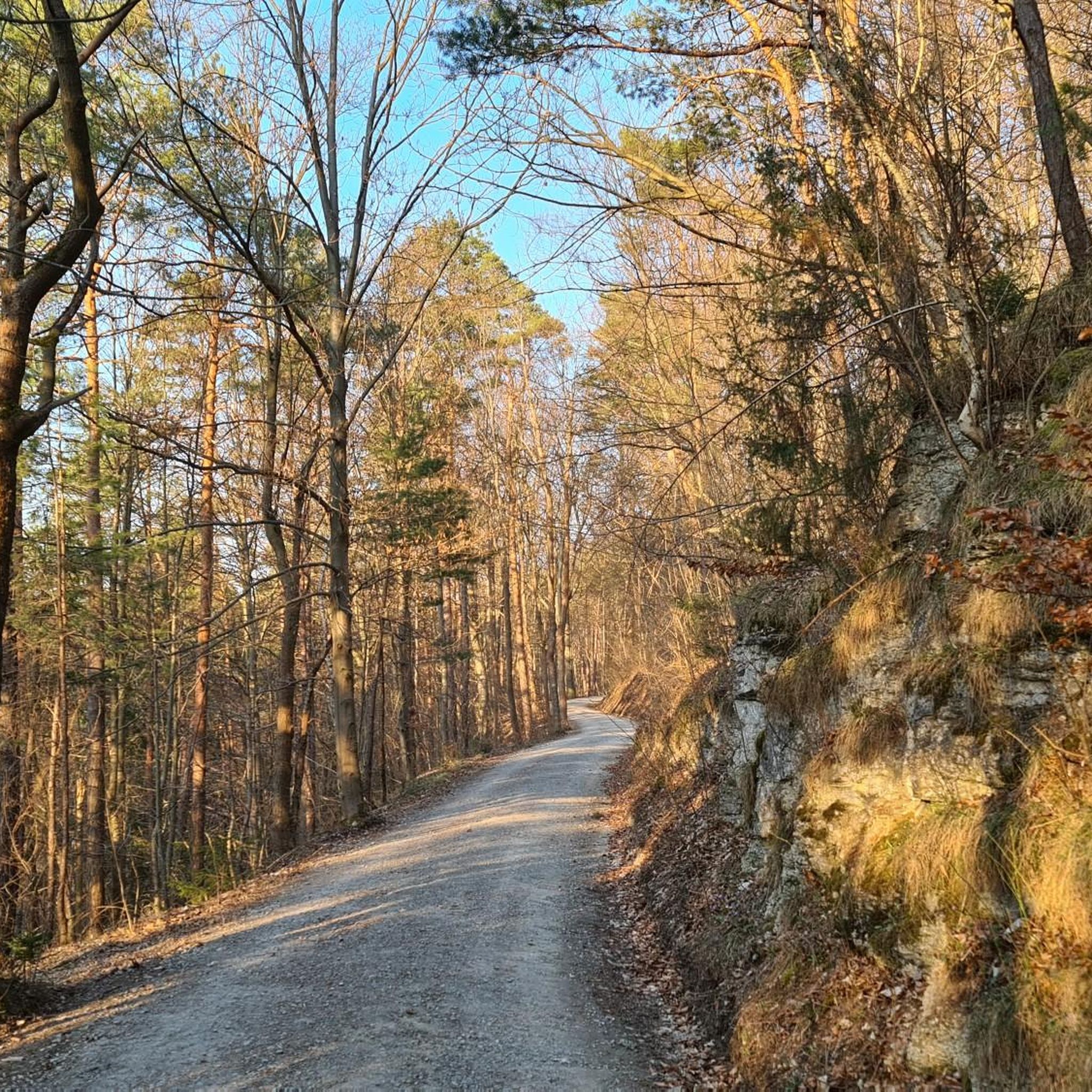
A look inside would be interesting, the mighty shell limestone cliff immediately captivates you.
9
0

Park Cave, Weimar The Park Cave is an underground tunnel system in the park on the Ilm. It is located twelve meters below the ground between the steep slope to the Ilm and Belvederer Allee. A staircase near the Liszt House leads down to the tunnel, which ends at the so-called "needle's eye", an artificially created rock gate on the Ilm. History The Park Cave owes its existence to Duke Carl August's desire for his own brewery. Between 1794 and 1796, a tunnel around 500 meters long was built in the park on the Ilm to drain the process water of the planned brewery. After the plan to build a brewery was abandoned, the tunnel was used for sand and gravel mining between 1797 and 1815. A complex system of passageways and tunnels was created. Towards the end of the Second World War, part of the complex was converted into a bunker. This area now houses the Park Cave Museum. Permanent exhibition: Park Cave Experience Through time and climate The permanent exhibition tells the story of the park cave: created in Goethe's time, unused for decades, converted into a shelter towards the end of World War II, it has been accessible again since 1997, interrupted by a pandemic and a comprehensive renovation. Text / Source: Weimar GmbH, Tourist Information Weimar, Markt 4, Weimar https://www.weimar.de/kultur/sehenswuerdigkeiten/museen-in-weimar/erlebnis-parkhoehle/
13
0

A little off the beaten track, but refreshing and interesting, especially in summer.
1
1

Haven't seen it. I wandered past.
1
0
Frequently Asked Questions
What types of caves can I explore in the broader Thuringia region near Kleinschwabhausen?
The Thuringia region offers a variety of cave types. You can find unique anhydrite caves like the Barbarossa Cave, which is one of only two accessible anhydrite caves in the world. There are also show caves that combine natural formations with historical mining activities, such as the Marienglashöhle, known for its stunning crystal grotto. Closer to Kleinschwabhausen, you can find karst caves like the Teufelslöcher Caves (Jena) and historical cave dwellings.
Are there any family-friendly caves to visit near Kleinschwabhausen?
Yes, several caves in the broader region are suitable for families. The Park Cave and the Nadelöhr in the Park on the Ilm is located in a park setting and offers a natural bridge and other interesting features. The Teufelslöcher Caves (Jena), though now closed for entry, are part of a local history nature trail, making the area around them family-friendly for exploration. The Sphinx Grotto at the Leutra Spring is also considered family-friendly.
What are the geological highlights of the caves in Thuringia?
Thuringia's caves boast impressive geological features. The Barbarossa Cave is famous for its anhydrite formations, including large caverns, grottos, and underground lakes with an iridescent green shimmer due to gypsum content. You can also observe unique 'gypsum wallpaper,' 'gypsum beads,' and 'alabaster eyes' there. The Marienglashöhle features a spectacular natural crystal grotto with one of Europe's largest gypsum crystal druses.
Can I learn about history and folklore at the caves near Kleinschwabhausen?
Absolutely. The Barbarossa Cave is steeped in the legend of Emperor Frederick Barbarossa, who is said to sleep within an underground palace until Germany is unified. The Marienglashöhle offers insights into historical gypsum and copper mining practices, which continued until 1903. Additionally, the Teufelslöcher Caves (Jena) are among the oldest known caves in Germany, first mentioned in the early 14th century, and were known to historical figures like Alexander von Humboldt and J.W. von Goethe.
Are there any caves with unique cultural aspects or events?
Yes, the Marienglashöhle in the Thuringian Forest is known for its excellent acoustics and regularly hosts concerts within its unique underground setting, offering a memorable cultural experience alongside its natural beauty.
What kind of air quality can I expect in the caves?
The Marienglashöhle is particularly noted for its pure air, which is free of dust, allergens, pollen, and germs. This environment is believed to strengthen the immune system, making it a beneficial visit for those seeking clean air.
What outdoor activities can I do near the caves around Kleinschwabhausen?
The region around Kleinschwabhausen offers various outdoor activities. You can find numerous hiking trails, including routes like the 'Vollradisroda Inn – Vollradisrodaer Stern loop' or the 'Forest Inn “At the Four Lindens” – Nennsdorf Village loop.' There are also running trails and road cycling routes that pass through scenic areas, some of which are near cave highlights like the Rock Castle.
Are there any caves that are part of a castle structure?
Yes, the Rock Castle is a unique highlight featuring a cave castle within its structure. This facility once offered villagers protection and is considered a special feature in the Thuringian castle landscape, though its condition is deteriorating due to erosion.
What do visitors enjoy most about the caves and surrounding areas?
Visitors appreciate the unique geological formations, the blend of natural beauty with historical significance, and the opportunities for outdoor activities. Highlights like the Park Cave and the Nadelöhr in the Park on the Ilm are enjoyed for their natural bridge and scenic views. The Rock Castle captivates with its mighty shell limestone cliff and historical context. The community has contributed 183 photos and 599 upvotes for various highlights, indicating a strong appreciation for the region's diverse offerings.
Are there any historical cave dwellings or hermitages in the area?
Yes, the Hermitage of Hans Weichberger is a notable historical site where Hans Weichberger lived as a hermit from 1937-1956. It offers a glimpse into a solitary life lived under simple conditions within a cave-like setting.
What should I know about visiting the Teufelslöcher Caves (Jena)?
The Teufelslöcher Caves (Jena) are a series of karst caves and are among the oldest known in Germany, first mentioned in the early 14th century. While the caves themselves are now closed for entry, the surrounding area is part of a local history nature trail with rest benches, offering a pleasant spot for a walk and to appreciate the historical significance of the site.
Most popular attractions around Kleinschwabhausen

Get inspired with the komoot mobile app


Explore more
Extend your search for the best caves by checking out these guides of the top ones around Kleinschwabhausen:
