Top 20 Castles around Nieuwerkerken
Castles around Nieuwerkerken offer a glimpse into the region's rich history and architectural heritage. Nieuwerkerken, located in Belgium, features a landscape characterized by historical landmarks and natural routes. The area is home to several historically significant castles, many of which are protected monuments. Walking and cycling routes often pass by these sites, allowing for exploration of the external architecture and historical narratives.
Best castles around Nieuwerkerken
- The most popular castles is Rullingen Castle and Vineyard, a castle that is…
Last updated: October 14, 2026
Wijer Castle
Highlight • Castle
Translated by Google •
Tip by

Rullingen Castle and Vineyard
Highlight (Segment) • Castle
Translated by Google •
Tip by

Sign up now to discover places like this
Get recommendations on the best single tracks, peaks, & plenty of other exciting outdoor places.
Castle of Rullingen
Highlight • Castle
Translated by Google •
Tip by

Mariagaarde Castle
Highlight • Castle
Translated by Google •
Tip by

De Burg Castle
Highlight • Castle
Showing Translation
Tip by
Sign up for free to discover even more castles around Nieuwerkerken.
Already have an account?
Start today with a free account
Your next adventure awaits.

Tips from the Community

The castle of the lords of Kozen is located on the spot where three municipalities meet: Kozen, Wijer and Stevoort. Strictly speaking, the castle is on the territory of Wijer, the farm is in Kozen and the barn in Stevoort. Previously, avenues connected the castle site with these three villages. The oldest known lords of Kozen belong to the van Wesemael family, who lived in the fourteenth century. Around 1400, the lordship and the castle belonged to the de Diest family, and in the seventeenth century, the de Kerckhem family ruled here. Above one of the gates, a stone can be seen, on which the family coat of arms is shown twice. It dates from the time when Arnold de Kerckhem and his wife Annemarie de Kerckhem, who was also his niece, lived here. Still in the seventeenth century, the castle belonged for a time to the land commander of Alden Biesen. From 1699, the van Afferden family acquired the domain. They are the last lords of Kozen. At the end of the nineteenth century, the castle was owned by a certain Jacquelart. He rebuilt the castle and gave it its current appearance.
4
0

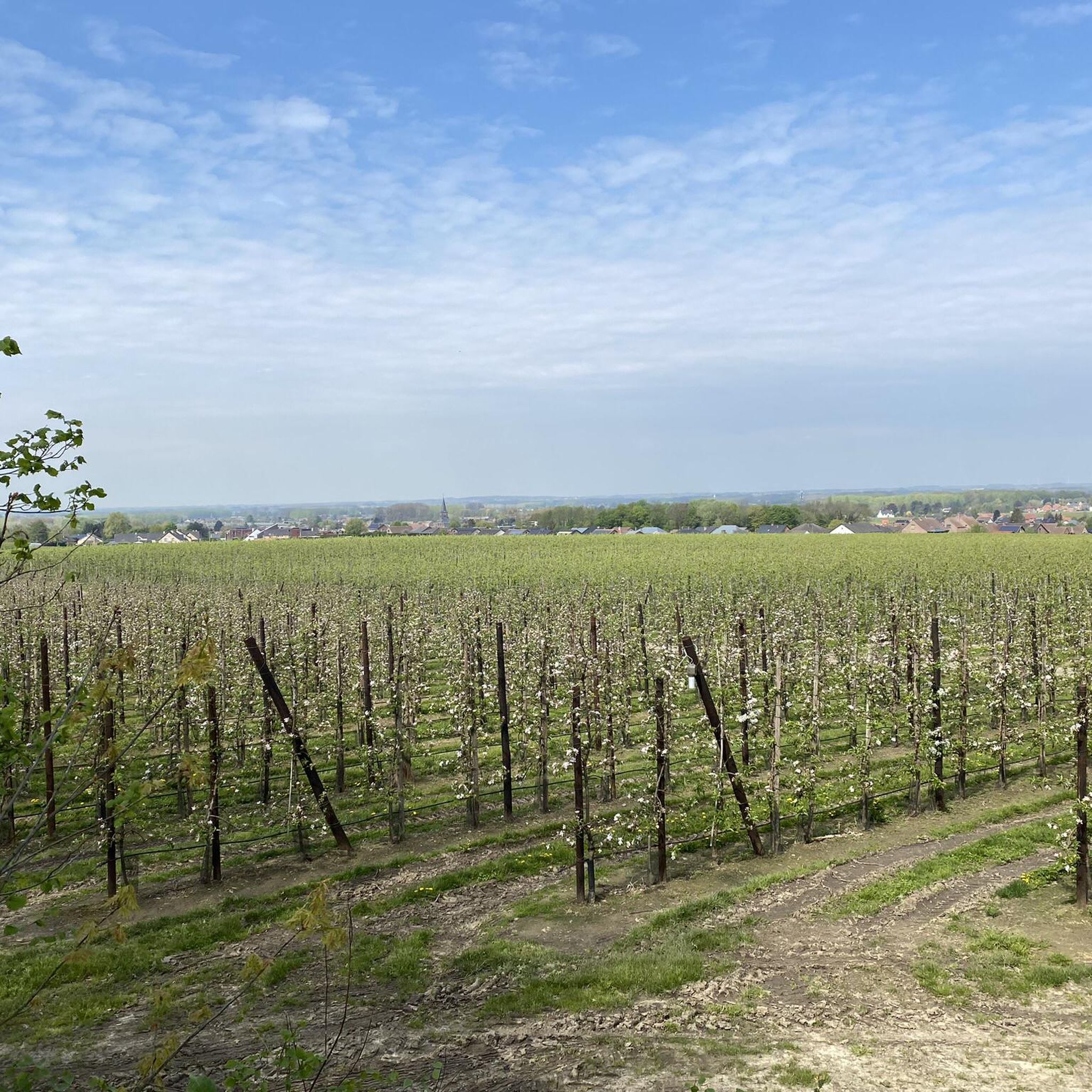
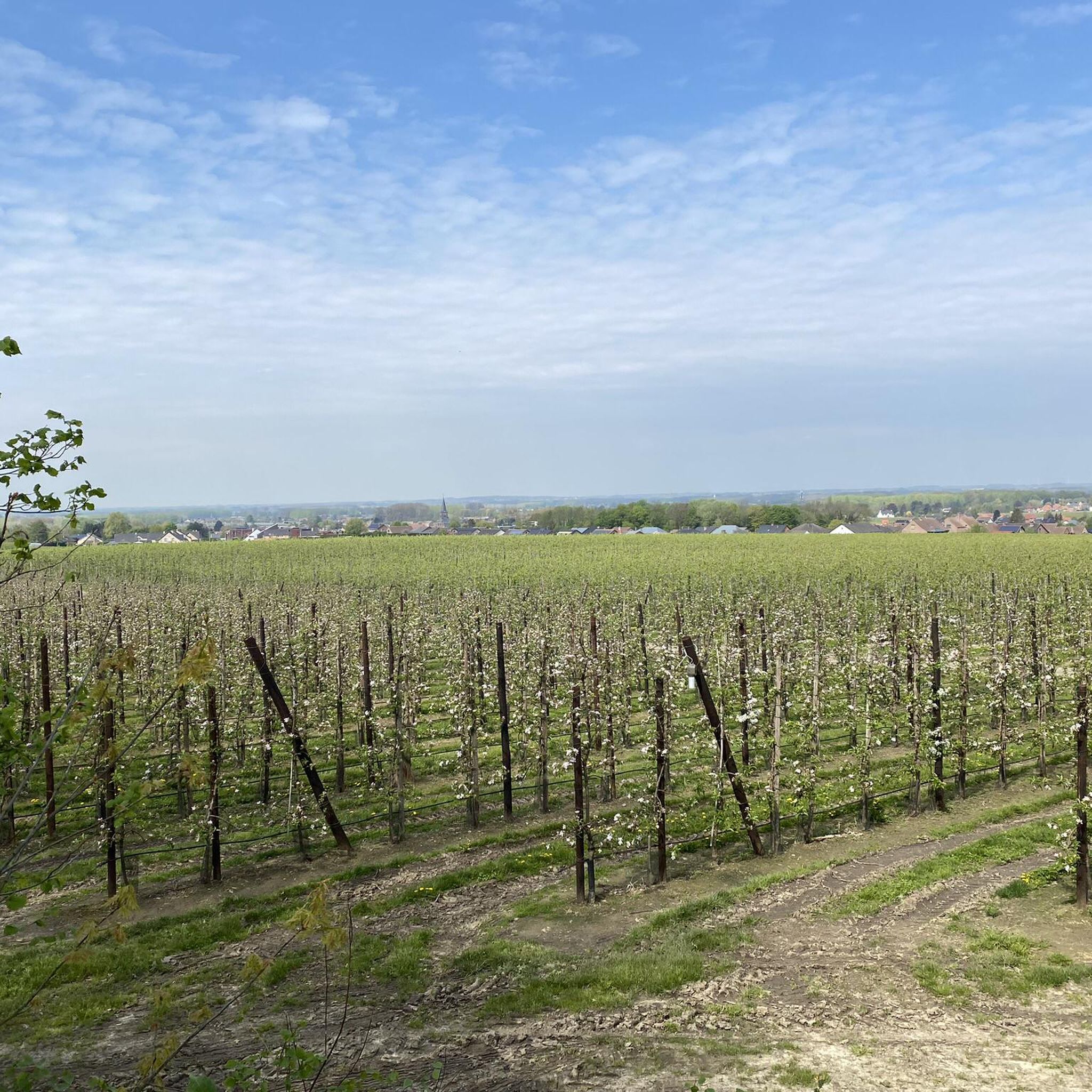
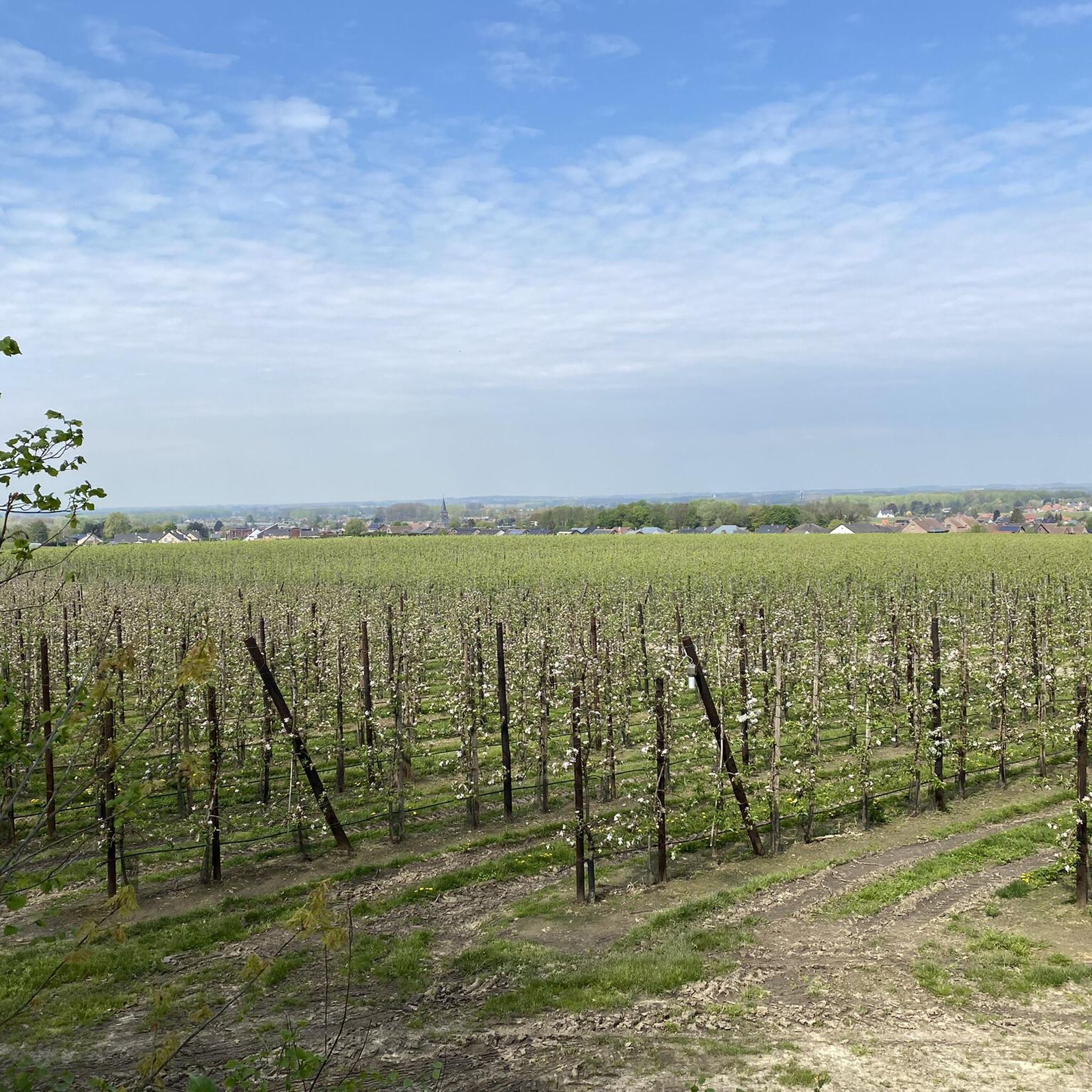
I was overwhelmed by the beautiful blossoms, also how many plantations on this hike, recommended!
0
0
The castle is a U-shaped building with a northwest corner tower, which is the former keep. The side wings still have their 17th-century stepped gables. The appearance is strongly influenced by the renovation of 1763, and the interior is also from that period. Rococo stucco work, a plastered ceiling, and some fireplaces are found. Interesting is the cardinal's hall, dedicated to Jean Walther de Sluse, who was a cardinal and whose coat of arms is present. A stone flower vase on a pedestal is also depicted, attributed to the Liège native Cockler. Of the lower court, only the southern wing remains. There is also the gatehouse from around 1700, flanked by two square, brick towers. These are covered by bell-shaped roofs - covered with slate - crowned with a lantern. The castle – located near the church – is surrounded by a park. @https://nl.wikipedia.org/wiki/Kasteel_van_Hoepertingen
3
0
Rullingen Castle (also called Rolengen, Rolenghem, and Ruelingen) is located in the Herk valley in Rullingen, a hamlet of the Belgian town of Borgloon. The oldest known lord of Rullingen was Eggebertus van Rolengen, who witnessed the foundation of Averbode Abbey by his feudal lord, Arnold II van Loon. The medieval fortress was replaced, probably between 1623 and 1638, by a typical Maasland moated castle. It consisted of a U-shaped farmyard and an L-shaped manor house with a projecting square corner tower. In the 18th and 19th centuries, the castle was adapted to the then-current residential standards; a coach house was added. Between 1770 and 1850, an English garden was laid out to the south. In 1912, Knight Pangaert d'Opdorp purchased the castle. The farm behind the castle and a service wing were destroyed by fire in 1920. The building was then thoroughly renovated, a garden was created, and the moats were partially filled in. A new coach house was built using the demolition material. The Provincial Government of Limburg has owned the building since 1978. Until 2013, it was operated as a hotel and restaurant. In 2014, the Province of Limburg sold the castle to NV Livaco in Sint-Lambrechts-Woluwe, one of the companies of the project developer Kolmont, owned by the Tans family in Hasselt. A real vineyard has been located on the Rullingen estate for several years now. In May 2005, one hectare of land was set aside for planting. The vineyard consists of 3,000 Pinot Gris vines, 2,000 Pinot Blanc, 600 Pinot Noir (Sankt Laurence), 200 Riesling, and 200 Kerner. The wine from Kasteel van Rullingen is organic. Unlike "regular" wine, which uses chemical agents, the grapes used in organic wine are grown without the use of any chemical products. Artificial fertilizers, highly toxic herbicides, and all chemical insecticides and fungicides are STRICTLY FORBIDDEN in this cultivation. Organic cultivation is therefore 100% environmentally friendly.
3
0

beautiful big castle in Rullingen
0
1

nice terrace at the back of the brasserie
0
1
beautifully maintained castle with adjacent B&B, nice cycling/hiking trails
2
0

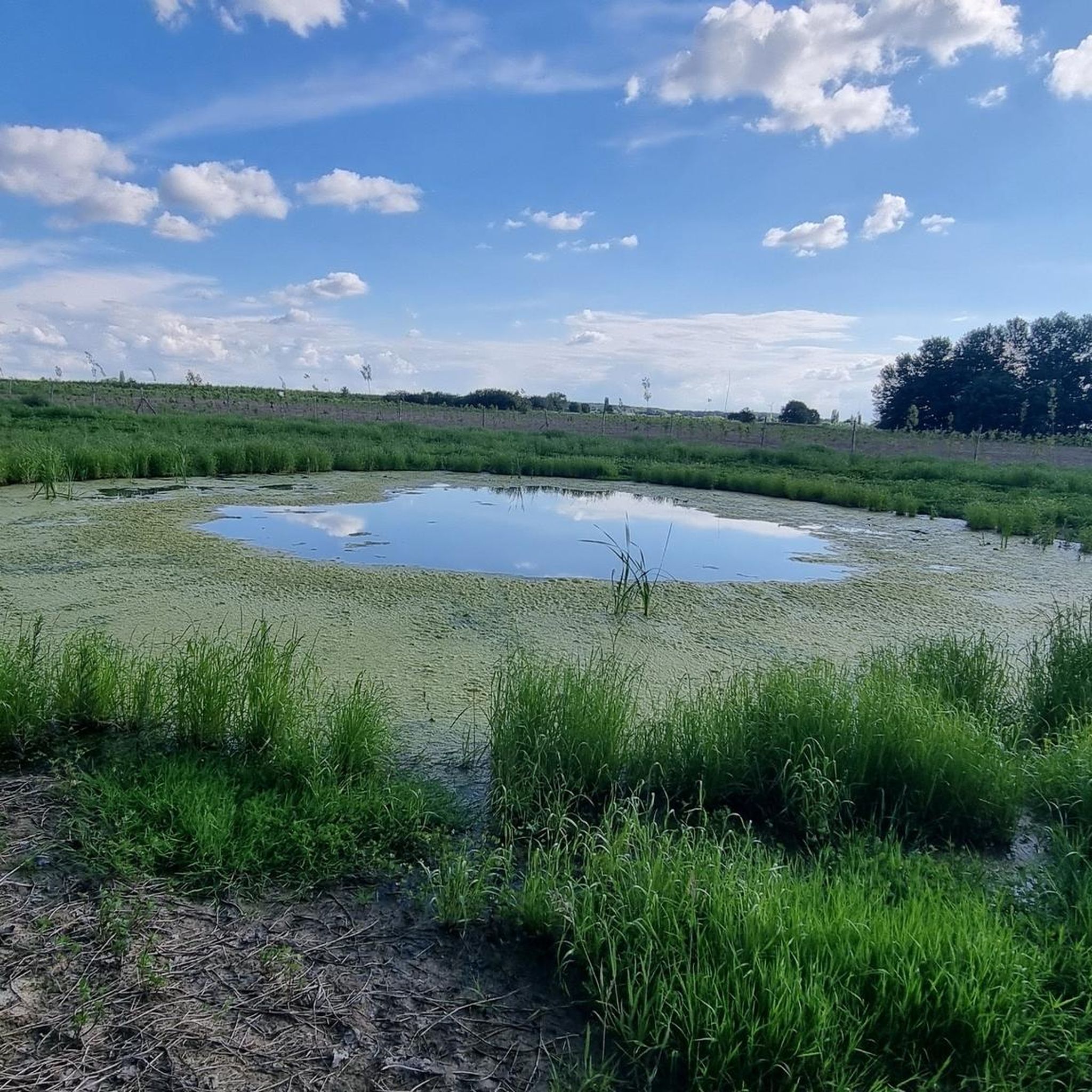
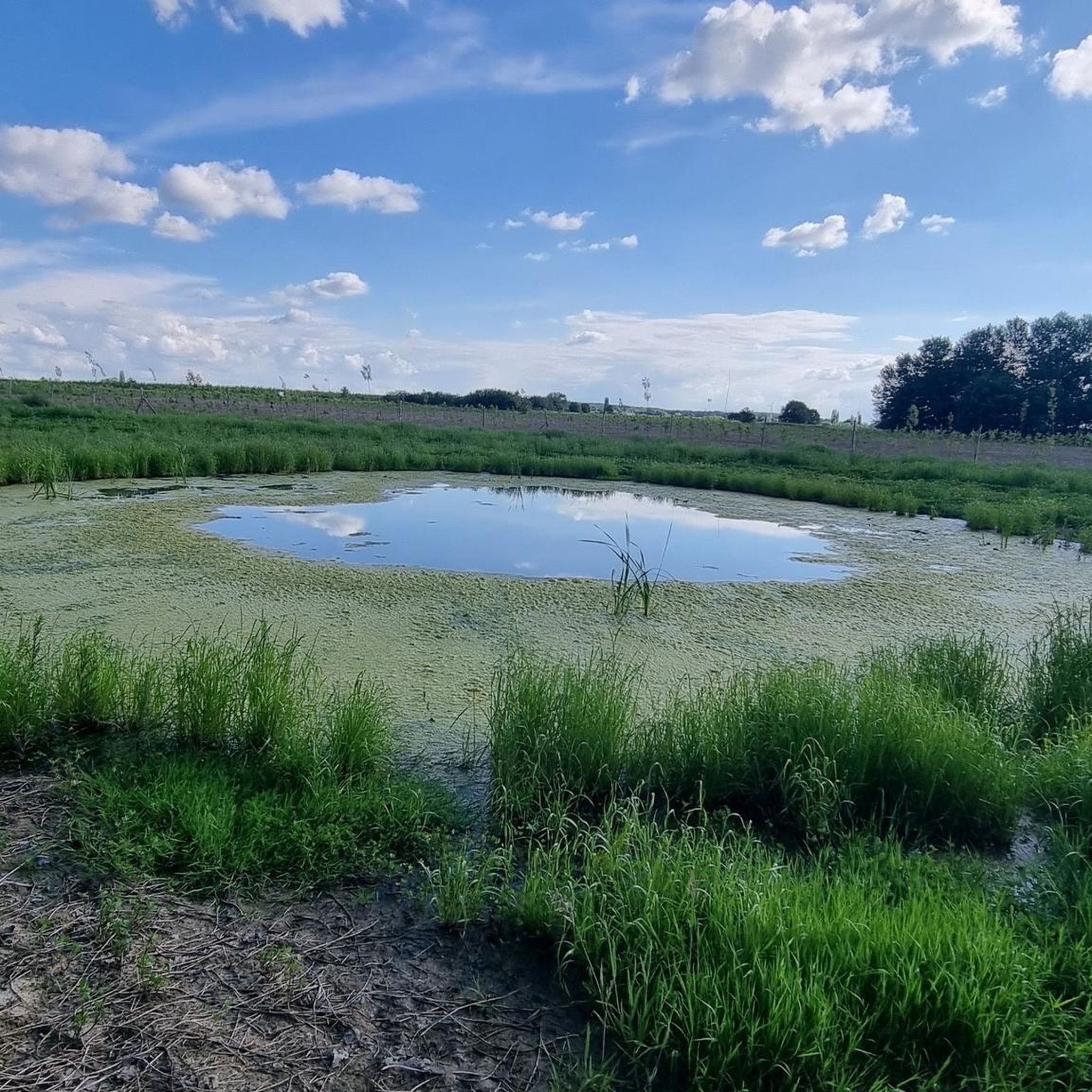
Before Jan-Willem van Scharenberg became the first of the Scharenberg family to own the Hoepertingen estate, the castle he bought was owned by Ernest d'Arenbergh de La Marck. At that time it was still a moated house with a leasehold farm, a very small part of which still exists in the current Hoepertingen castle. I deliberately write Hoepertingen castle because the name Mariagaarde is more recent and is actually no longer correct because there are already new owners and they gave it a new name. The list of the various previous owners has already been mentioned and is available together with the full description of the current U-shaped moated castle with northwestern corner tower, the former keep at https://inventaris.onroerenderfgoed.be/erfgoedobjecten/31935 In 2022, the Annuntiaten sisters of Heverlee sold what was also called Mariagaarde for a while as described by Dirk V. It was bought by the Dutch family van Vloten who also owned Château de la Motte in Sint-Truiden. The castle in Hoepertingen was renamed Château de Looz (Looz is French for Wage). Since 2024 it has been a star hotel with a brasserie, party venues, lounge bar, beautiful terrace and so on. In the takeover it was agreed that people like you and me can still walk in the park and on the estate. You can see the result in the photos. I thought it was worth it. And Mary, she still watches in the form of a statue in the park.
6
0
Frequently Asked Questions
What types of castles can I explore around Nieuwerkerken?
The Nieuwerkerken region is rich in historical architecture, featuring a variety of castles including moated castles, castle farms, and châteaux. You'll find structures ranging from 16th-century keeps to 18th-century residential houses, each offering a unique glimpse into the area's past.
Are there any castles in Nieuwerkerken that are particularly historically significant?
Yes, several castles hold significant historical value. The Kasteel van Nieuwerkerken, for example, is a protected monument built in the Maasland Renaissance style, dating back to the 17th and 18th centuries. It served as a refuge during the French Revolution. Another notable site is Wijer Castle, which features a late Gothic keep from the early 16th century and was once the residence of local lords.
Which castles are recommended for visitors interested in unique architectural features?
For unique architecture, consider Wijer Castle, known for its late Gothic keep with a stair tower and wide moat. Rullingen Castle and Vineyard is a typical Maasland moated castle with a U-shaped farmyard and an L-shaped manor house. The Kasteel van Nieuwerkerken also stands out with its closed, moated brick farmhouse design and high gatehouse with a dovecote.
Can I visit the castles around Nieuwerkerken, or are they private?
Many castles in the region, such as the Kasteel van Nieuwerkerken and Kasteel van Binderveld, are private residences and may have restricted public access. However, their external architecture and historical narratives can often be appreciated from nearby walking and cycling routes. Some, like Wijer Castle, may offer accommodation or dining options, providing a way to experience the site more closely.
Are there family-friendly castles to visit near Nieuwerkerken?
Yes, several castles are considered family-friendly. Wijer Castle, Nieuwenhoven Castle, Rullingen Castle and Vineyard, Rijkel Castle, and Mariagaarde Castle are all categorized as family-friendly, offering historical exploration in settings that can be enjoyed by all ages.
What outdoor activities can I do near the castles in Nieuwerkerken?
The region around Nieuwerkerken offers various outdoor activities, often passing by historical sites. You can find numerous cycling routes, such as the 'Wijer Castle – Among the orchards loop' or the 'Saint Genevieve Church, Zepperen – Among the orchards loop'. For more options, explore the Cycling around Nieuwerkerken guide. There are also MTB trails and gravel biking routes available, detailed in the MTB Trails around Nieuwerkerken guide and Gravel biking around Nieuwerkerken guide.
Are there any castles near Nieuwerkerken with vineyards?
Yes, Rullingen Castle and Vineyard is notable for its vineyard. It features 3,000 Pinot Gris vines, 2,000 Pinot Blanc, 600 Pinot Noir, 200 Riesling, and 200 Kerner, producing organic wine. This offers a unique combination of historical architecture and local viticulture.
What is the best time of year to visit the castles and surrounding area?
The municipality of Nieuwerkerken is known for its blend of nature and fruit orchards. Visiting during spring or early summer would allow you to experience the blooming orchards, which complement the historical landmarks beautifully. The weather is generally pleasant for walking and cycling routes that pass by the castles.
Are there any castles that offer accommodation or dining options?
Yes, Wijer Castle is known to offer overnight stays and dining. Additionally, Mariagaarde Castle (now Château de Looz) has been transformed into a star hotel with a brasserie, lounge bar, and beautiful terrace, where visitors can still walk in the park and on the estate.
What makes <a href="https://www.komoot.com/highlight/3115934" target="_blank" rel="noopener">Nieuwenhoven Castle</a> unique?
Nieuwenhoven Castle is situated in a fertile location amidst forests and farmland. It has a long history, with two farms and four castles standing on its site since the year 800. Initially a country retreat for Benedictine monks, it later became a 'pleasure garden for nourishing body and mind,' reflecting its serene and beautiful setting.
Can I find information about the history of the castles in the region?
Absolutely. The castles around Nieuwerkerken each have rich histories. For instance, the Kasteel van Wijer was the residence of the Lords of Wijer and Kozen, and its keep dates back to the early 16th century. Rijkel Castle, originally a farm, evolved into a U-shaped water castle with parts dating from the 16th century. Many of these sites are protected monuments, underscoring their historical importance.
Are there any castles that are particularly well-preserved?
The Kasteel van Nieuwerkerken is a well-preserved example of a 17th-18th century Maasland Renaissance castle farm, with visible traces of its moats and original structures like a gatehouse and stables. Wijer Castle also maintains its late Gothic keep and castle farm, offering insights into medieval architecture.
Most popular routes around Nieuwerkerken
Most popular attractions around Nieuwerkerken

Get inspired with the komoot mobile app


Explore more
Looking for the best castles somewhere else? Discover other guides around Nieuwerkerken:
