The best road cycling routes around Dambron
3.7
(11)
116
riders
17
rides
Road cycling around Dambron features a generally flat to gently undulating landscape, characterized by open fields and rural roads. The region's low elevation gains, with most routes staying well under 200 meters of ascent, make it suitable for various fitness levels. Cyclists can expect to traverse agricultural areas and quiet country lanes, often connecting small villages and historical points of interest.
Best road cycling routes around Dambron
- The most popular road cycling route is Saint-Sulpice Church loop from Sougy, a 17.9 miles (28.9 km) trail that takes 1 hour 6 minutes to complete, passing through serene rural landscapes.
- Another top favourite among local road cyclists is Route Forestière des Chapelles – Nice outing loop from Chevilly, a moderate 32.3 miles (52.0 km) path. This route offers a mix of open roads and sections through forested areas, with gentle ascents.
- Local road cyclists also love the Saint Martin Church – Saint-Sulpice Church loop from Sougy, a 36.8 miles (59.2 km) trail leading through a network of quiet country roads and past local churches, often completed in about 2 hours 16 minutes.
- Road cycling around Dambron is defined by quiet country roads, agricultural landscapes, and small village connections. The network offers options for easy, moderate, and difficult ability levels, catering to a range of road cyclists.
- The routes in Dambron are highly rated by the komoot community with an average score of 3.0 stars from 7 reviews. More than 70 road cyclists have used komoot to explore Dambron's varied terrain.
Last updated: July 8, 2026
4.0
(2)
19
riders
60.2km
02:17
130m
130m
Moderate road ride. Good fitness required. Mostly well-paved surfaces and easy to ride.
4.9
(7)
22
riders
28.9km
01:07
60m
60m
Easy road ride. Great for any fitness level. Mostly well-paved surfaces and easy to ride.

Sign up for free
11
riders
52.0km
02:05
120m
120m
Moderate road ride. Good fitness required. Mostly well-paved surfaces and easy to ride.
1.0
(1)
8
riders
59.2km
02:17
140m
140m
Moderate road ride. Good fitness required. Mostly well-paved surfaces and easy to ride.
6
riders
49.7km
01:53
130m
130m
Easy road ride. Great for any fitness level. Mostly well-paved surfaces and easy to ride.
Get access to more routes and recommendations from other explorers.
Sign up for free
Already have an account?
Our route recommendations are based on thousands of hikes, rides, and runs completed by other people on komoot.
Start today with a free account
Your next adventure awaits.
Login or Signup
Popular around Dambron

Tips from the Community

Please note, road condition is very poor for road bikes.
0
0

The Saint-Martin church dates from the 11th century. It was ravaged and burned by the Protestants, then restored at the end of the 16th century. It still retains remains of the Romanesque style, particularly in the nave which was rebuilt on the same plan, with stones and other debris from the fire.
0
0
After an unrealized project by the architect Plisson in 1861, church built in 1866, based on plans by Ricard, diocesan architect; with reuse of the previous 13th century building (bell tower)
0
0

The Moulin de Lignerolles is one of the last pivotal windmills in the Loiret department. Built in 1848, this wooden mill belonged to Louis-Joseph Soulas, famous painter and director of the Orléans School of Fine Arts. You can admire the restored mill and its ingenious mechanism, as well as the panoramic view of the plain. The mill is open to the public on Sundays from 2:30 p.m. to 6 p.m., and also hosts various events throughout the year, such as a flea market, concerts and exhibitions. Visiting the Moulin de Lignerolles is an excellent way to discover the heritage and charm of the Beauceron countryside.
1
0

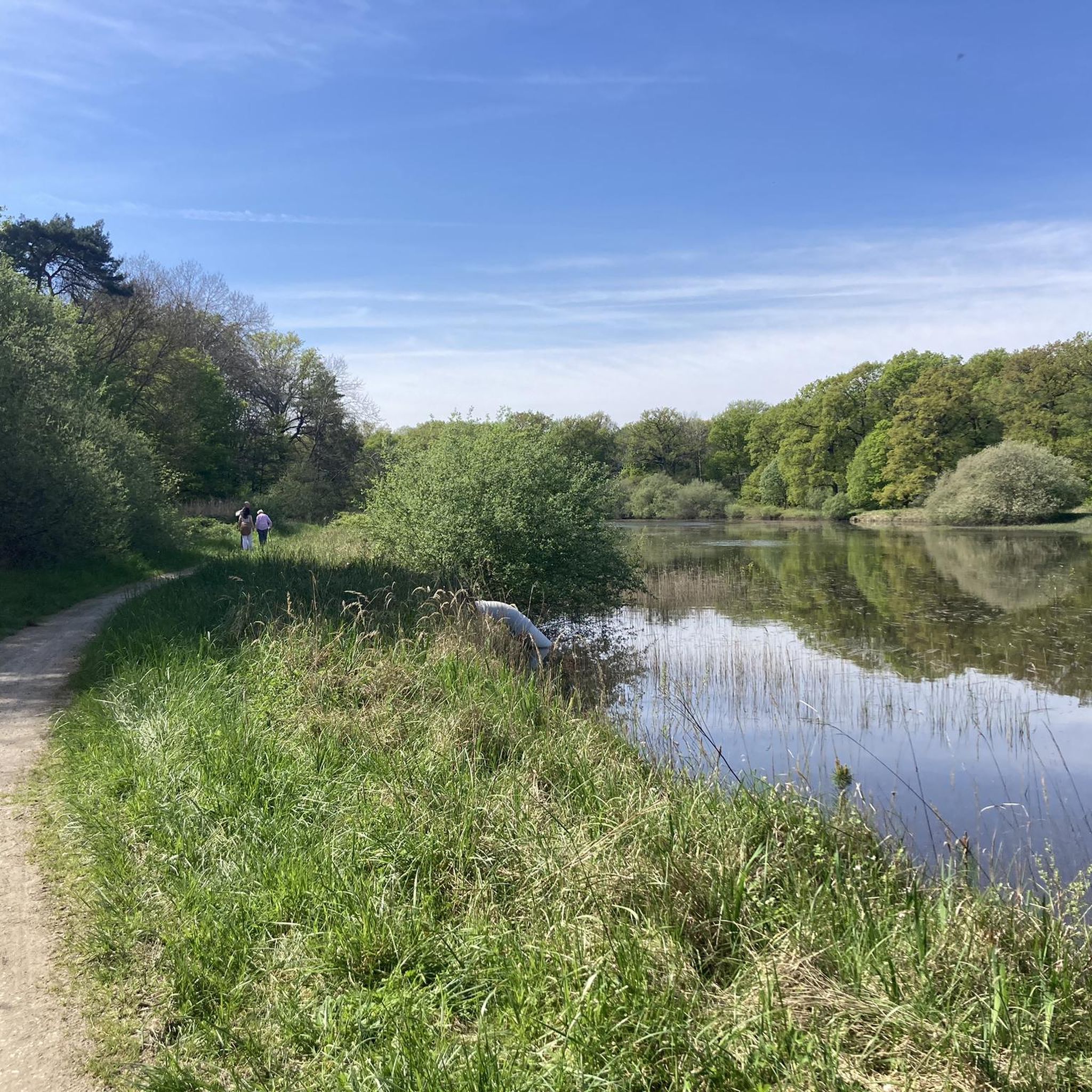
Pretty, quiet forest road, without traffic, in the middle of oak and pine forests.
0
0
The church of Guillonville, in Eure et Loir, in the Center-Val de Loire, is attached to the parish of Saint Martin en Beauce, of the Deanery of Beauce, in the diocese of Chartres. The church is placed under the protection of Saint Peter.
0
0
The Saint André church (13th-15th-16th centuries) In the 7th century, the Benedictine abbey of Bonneval created a priory-curate. Its existence is confirmed by a bull from Pope Gregory second half of the 16th century. In 1793 the church was desecrated and transformed into wine and spirits warehouses. In 1801, the church was returned to worship and changed diocese: from the diocese of Chartres, to which it belonged before the Revolution, it passed to the diocese of Orléans, notably for reasons of distance: Chartres is 48 km from Patay then that Orléans is only 27 km away. The church is 30 m long and 17 m wide. The oldest parts are located near the large porch (13th century). One of the pillars of the nave is decorated with a vestige of Danse Macabre from the mid-15th century. A small masonry door on the right communicated with the old priory, of which ruins remain to the south of the church. The choir dates from the 14th century; the apse wall was decorated with paintings at the end of the 19th century, the chapels were then redeveloped and equipped with new stained glass windows. The keystones of the large nave were made from casts taken from the figurines which adorn the Thesis Room of the University of Orléans, built in 1411. The bell tower, located to the north of the choir, would be an old watchtower. Its pinnacles and eight openings were made after the Wars of Religion. The four bells were melted in 1868. The largest was cracked by a Prussian shell in 1870 and was recast in 1871. Since that year, Ernestine (809 kg, 1 m 12 in diameter at the base, sounding the F), Gabrielle (550 kg, 0.981 m in diameter, sounding the ground), Anne (398 kg, 0.573 m in diameter) and Marie (222 kg, 0.724 m in diameter, sounding the C) give rhythm to the daily life of the small town of Patay, old Beauceron railway junction. On August 15, 1944, an ammunition train was blown up at Patay station. The station was blown up, except for the carriage shed, and all the windows in the town were shattered. Luckily, a providential storm limited the damage. The only two stained glass windows that survived the explosion are those on the right side aisle which date from 1930 and relate the communion of Joan of Arc in the Patay church in 1429. The church was listed as a Historic Monument in 1925 by decree of October 6, 1925.
0
0
The first church, dating from the 13th century, was partly demolished and remodeled several times over the centuries. Placed under the name of the Most Holy Trinity, it took its current form at the end of the 15th century, but was most certainly rebuilt in the 19th century. Extensive renovation work was undertaken at the start of the 21st century.
0
0
Frequently Asked Questions
What is the general terrain like for road cycling around Dambron?
Road cycling around Dambron is characterized by a generally flat to gently undulating landscape. You'll find yourself traversing open fields and quiet rural roads, connecting small villages and passing historical points of interest. The elevation gains are typically low, making it accessible for various fitness levels.
How many road cycling routes can I explore in the Dambron area?
There are over 10 road cycling routes available around Dambron, providing a good selection for different preferences and skill levels. These routes are highly rated by the komoot community, with an average score of 3.0 stars.
Are there road cycling routes suitable for beginners in Dambron?
Yes, Dambron offers several easy road cycling routes perfect for beginners. An excellent option is the Saint-Sulpice Church loop from Sougy, which is 17.9 miles (28.9 km) long and takes about 1 hour 6 minutes to complete through serene rural landscapes.
What are some moderate road cycling routes in Dambron?
For those looking for a moderate challenge, the Route Forestière des Chapelles – Nice outing loop from Chevilly is a great choice. This 32.3-mile (52.0 km) path offers a mix of open roads and forested sections with gentle ascents. Another popular moderate route is the Saint Martin Church – Saint-Sulpice Church loop from Sougy, covering 36.8 miles (59.2 km) past local churches.
Are there any longer road cycling routes for experienced cyclists in Dambron?
While Dambron's routes generally feature low elevation, some are longer and offer a good endurance ride. The Saint Martin Church – Saint-Sulpice Church loop from Chevilly is a substantial 59.3-mile (95.5 km) route with moderate difficulty, providing a longer exploration of the region's quiet country roads.
What do other road cyclists enjoy most about the routes in Dambron?
The komoot community highly rates the road cycling experience in Dambron, with an average score of 3.0 stars. Cyclists often praise the quiet country roads, the peaceful agricultural landscapes, and the charm of connecting small villages. The low elevation gains are also appreciated, making it enjoyable for a wide range of abilities.
Are there many circular road cycling routes around Dambron?
Yes, many of the road cycling routes around Dambron are designed as loops, allowing you to start and finish in the same location. Examples include the Saint-Sulpice Church loop from Sougy and the Saint-Sulpice Church – Saint Martin Church loop from Sougy.
What is the best season for road cycling in Dambron?
Given the open fields and rural roads, spring and autumn are generally ideal for road cycling in Dambron, offering pleasant temperatures and beautiful scenery. Summer can also be enjoyable, though it's advisable to cycle earlier in the morning or later in the afternoon to avoid the midday heat. Winter cycling is possible, but conditions may vary, and some roads could be less maintained.
Can I find routes that pass through forested areas in Dambron?
Yes, some routes offer a mix of open roads and sections through forested areas. The Route Forestière des Chapelles – Nice outing loop from Chevilly is a good example, providing a varied landscape with both agricultural views and tree-lined stretches.
Are there any specific landmarks or points of interest along the road cycling routes?
Many routes in Dambron connect small villages and pass by local churches, offering glimpses into the region's history and architecture. For instance, the Saint Martin Church – Saint-Sulpice Church loop from Sougy specifically highlights these historical structures.
What kind of scenery can I expect on a road cycling trip in Dambron?
You can expect picturesque rural scenery dominated by vast agricultural fields, quiet country lanes, and charming small villages. The landscape is generally flat to gently rolling, providing expansive views and a peaceful cycling experience.
Most popular routes around Dambron

Get inspired with the komoot mobile app


Explore more
Browse the best Road cycling routes in other regions.
