The best gravel rides around Börsch
4.3
(38)
246
riders
92
rides
Gravel biking around Börsch offers a diverse landscape characterized by quiet country roads, white forest paths, and farm tracks. The region, nestled in the Alsatian Piedmont, features sunny hillsides, vineyards, and rolling hills, providing varied terrain for cyclists. Riders can explore the Sundgau region with its meadows, fields, and forests, or venture towards the Vosges Mountains for more challenging routes. This mix of agricultural flatlands, forested areas, and vineyard-lined paths makes Börsch an ideal base for gravel biking.
Best gravel…
Last updated: October 19, 2026
3.5
(6)
16
riders
33.1km
02:26
470m
470m
Hard gravel ride. Very good fitness required. Mostly paved surfaces. Suitable for all skill levels.
4.2
(6)
25
riders
29.5km
02:06
620m
620m
Hard gravel ride. Very good fitness required. Mostly paved surfaces. Suitable for all skill levels.

4.0
(2)
6
riders
51.7km
04:23
1,060m
1,060m
Hard gravel ride. Very good fitness required. You may need to push your bike for some segments of this route.
2.5
(2)
6
riders
28.5km
01:57
360m
360m
Moderate gravel ride. Good fitness required. Mostly paved surfaces. Suitable for all skill levels.
4.0
(1)
3
riders
23.3km
01:54
580m
580m
Hard gravel ride. Very good fitness required. Mostly paved surfaces. Suitable for all skill levels.
Get access to more routes and recommendations from other explorers.
Already have an account?
Our route recommendations are based on thousands of hikes, rides, and runs completed by other people on komoot.
Start today with a free account
Your next adventure awaits.
Tips from the Community

The Odilienberg (763 m) in Alsace is the most important spiritual center of the region. Founded around 690 by Saint Odilia, the monastery attracts hundreds of thousands of pilgrims annually. The centerpiece of the complex is the Basilica of the Assumption of Mary (1687–1692) with the burial chapel, where the relics of the patron saint rest in an 8th-century sandstone sarcophagus. Directly on the panoramic terrace are the Chapel of Tears and the Chapel of Angels (12th century), known for their luminous gold mosaics from 1935. Inside the basilica, there is also a fine wooden inlaid Way of the Cross by Charles Spindler. Below the monastery rocks runs a magnificent hiking trail. It leads past the monumental, colorful ceramic Way of the Cross (14 stations) and the Lourdes Grotto, both integrated directly into the red sandstone by Léon Elchinger in the 1930s. About a 15-minute walk further down, the Odilien spring emerges in the forest, its water traditionally sought for eye ailments. The entire mountain plateau is enclosed by the Heidenmauer, a mysterious, 11-kilometer-long prehistoric defensive wall. Following the hiking trails further south, you reach the Maennelstein (817 m), the highest point of the ridge, which offers a wide panoramic view over the Rhine plain to the Black Forest. The monastery grounds are open all year round and admission is free. Would you like to use this short text for a brochure or are you still looking for information on how to get there for your tour? AI answers may contain errors. For legal advice, you should consult an expert. More information
0
1
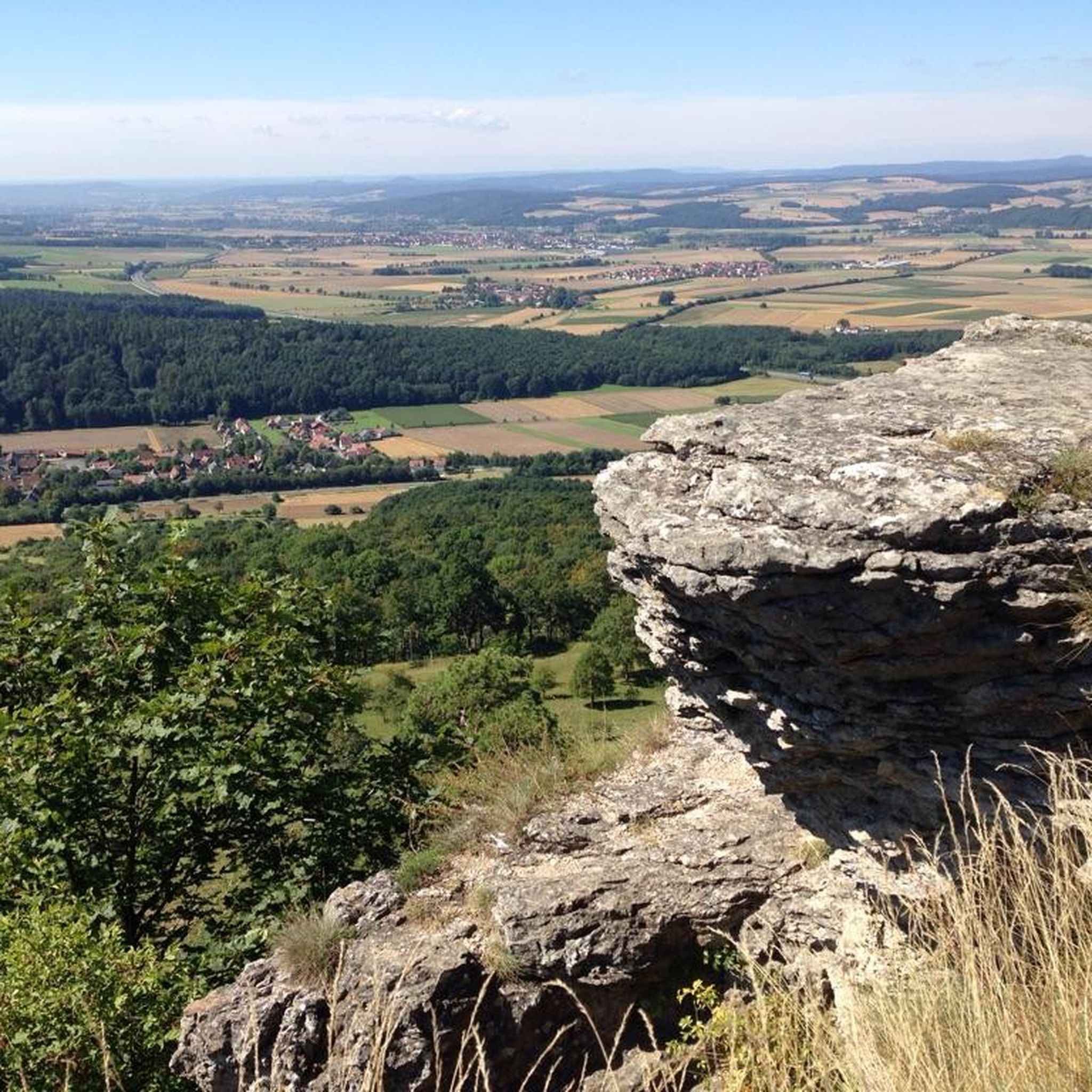
Beautiful viewpoint of the Rhine valley and the Black Forest. The Panoramafelsen is located at 780 m.
0
0


Opening hours daily: 9:00 - 12:00 and 14:00 - 18:00.
0
0

The Saint-Nabor promontory, located in Alsace at the foot of Mont Sainte-Odile, offers a natural site rich in history and geology. It is known for its old porphyry quarries, a volcanic rock formed in the Carboniferous period, exploited long before their closure in 2002. The promontory rises to an altitude of approximately 340 meters in a semi-continental microclimate favoring vineyards and forests. It constitutes a belvedere offering a remarkable panorama of the Alsace plain, as far as Strasbourg and the Black Forest on a clear day. The site is accessible by well-marked hiking trails, notably the Saint-Nabor loop which passes by the Sainte-Lucie Fountain and the Pagan Wall. This peaceful place, away from the tourist hustle and bustle, is also a starting point for discovering the region, its heritage and its peaceful landscapes. It is steeped in history linked to the nearby Niedermunster monastery, now in ruins, and the presence of medieval remains.
0
0

The cycle paths through the vineyards are simply fantastic and the views are very beautiful.
0
0
Great church building, unfortunately the church was closed
0
0

Frequently Asked Questions
How many gravel bike trails are available around Börsch?
There are over 100 gravel bike trails around Börsch, offering a wide range of options for different preferences and skill levels. The komoot community has explored more than 100 routes in the area.
What kind of terrain can I expect on gravel bike trails near Börsch?
The Börsch region offers a diverse gravel biking experience, combining quiet country roads, white forest paths, farm tracks, and even grassy trails across fields. You'll encounter sunny hillsides, vineyards, and rolling hills, particularly along the Alsace Wine Route, as well as forests and valleys in the Sundgau region and foothills of the Vosges Mountains.
Are there options for different skill levels among the gravel trails in Börsch?
Yes, Börsch provides gravel routes for various skill levels. While many routes are classified as difficult (72 out of 100), there are also 23 moderate and 5 easy trails available, ensuring options for beginners and experienced riders alike. For a challenging ride with significant elevation, consider the Mont Sainte-Odile Abbey – Mount Saint Odile loop from Rosenwiller.
What is the best time of year for gravel biking in Börsch?
The region around Börsch is generally pleasant for gravel biking from spring through autumn. Spring brings blooming vineyards, while autumn offers vibrant foliage. Summer can be warm, but many routes pass through shaded forests, providing relief. Winter riding is possible but may require checking weather conditions for snow or ice, especially at higher elevations in the Vosges foothills.
What natural features or landscapes will I encounter on gravel rides in the Börsch region?
Gravel rides around Börsch will take you through picturesque vineyards, rolling hills, and dense forests. You can explore the 'Land of Ponds' in the Sundgau area, agricultural flatlands in the Rhine Valley, and the more mysterious forests and rounded summits of the Vosges Mountains. Many routes offer scenic views of the Alsatian Piedmont.
Are there any historical sites or charming villages to see along the gravel routes?
Absolutely. Many gravel routes pass through traditional Alsatian villages with their distinctive half-timbered houses, offering opportunities to experience local culture. Börsch itself has a rich medieval past with 14th-century fortifications. You might also encounter historical sites like Rathsamhausen Castle, which is part of the Rathsamhausen Castle – Sculpture La Porte loop from Bischoffsheim, or the castles of Ferrette and Morimont on longer regional routes like the Tour du Sundgau.
Can I explore the Alsace Wine Route by gravel bike from Börsch?
Yes, Börsch is ideally situated in the Alsatian Piedmont, making it an excellent base for exploring the Alsace Wine Route. Many gravel routes traverse the sunny hillsides and vineyards characteristic of this famous region. For example, the Alsace Wine Route Vineyards – Historic centre of Barr loop from Obernai offers a great way to experience the wine route.
Are there specific viewpoints or scenic spots on the gravel trails?
Many routes offer scenic viewpoints, especially those climbing into the foothills of the Vosges or traversing the vineyards. Notable attractions and viewpoints include Mount Sainte-Odile, which is featured in routes like the Sculpture La Porte – Mont Sainte-Odile Abbey loop from Bischoffsheim, and the Vineyards around Mittelbergheim. The diverse terrain ensures constantly changing and picturesque views.
Are there any family-friendly gravel bike routes around Börsch?
While many routes are more challenging, there are 5 easy gravel trails available around Börsch that could be suitable for families. These routes typically feature less elevation gain and smoother surfaces, often winding through agricultural flatlands or quieter forest paths. Always check the route details for distance and elevation to ensure it matches your family's capabilities.
What do other gravel bikers enjoy the most about gravel biking in Börsch?
The gravel biking experience around Börsch is highly rated by the komoot community, with an average score of 4.3 stars from over 30 reviews. Riders often praise the diverse landscape, which combines quiet country roads, white forest paths, and farm tracks. The mix of vineyards, rolling hills, and dense forests provides an engaging and constantly changing riding experience, with options for different ability levels.
Are there circular gravel bike routes available near Börsch?
Yes, many of the gravel bike routes around Börsch are designed as circular loops, allowing you to start and end in the same location. Examples include the Obernai – Church of Saint Peter and Saint Paul loop from Obernai and the Alsace Wine Route Vineyards – Historic centre of Barr loop from Obernai. These loops are convenient for day trips and exploring the region without needing shuttle services.
Where can I find parking for gravel biking in Börsch?
Börsch and surrounding villages typically offer public parking options. For specific routes, it's advisable to check the starting point of the tour on komoot, as many routes begin from towns like Bischoffsheim or Obernai, which have designated parking areas. Always look for local signage for parking regulations.
Are there places to stop for food or drink along the gravel trails?
Yes, the region is dotted with charming Alsatian villages and towns where you can find cafes, restaurants, and local bakeries. Given its location on the Alsace Wine Route, there are also opportunities to visit local wineries. For example, the town of Obernai, a common starting point for tours, offers numerous amenities. Some mountain passes, like Charbonnière Pass, may also have establishments.
Most popular attractions around Börsch

Get inspired with the komoot mobile app


Explore more
Browse the best Gravel rides in other regions.
