Attractions and Places To See in Centro Habana - Top 20
Best attractions and places to see in Centro Habana include a variety of historical landmarks, cultural sites, and urban green spaces. This vibrant district is situated between Old Havana and Vedado, offering a blend of urban exploration and scenic waterfront views along the Malecón. While predominantly urban, the area provides access to the sea and features several parks for visitors to explore. It serves as a central hub for experiencing Havana's history and daily life.
Best attractions and places to…
Last updated: July 15, 2026
The Capitol of Havana
Highlight • Monument
Translated by Google •
Tip by

Plaza Vieja, Havana
Highlight • Historical Site
Translated by Google •
Tip by

Sign up now to discover places like this
Get recommendations on the best single tracks, peaks, & plenty of other exciting outdoor places.
Sign up for free
Gran Teatro de La Habana
Highlight • Monument
Translated by Google •
Tip by
Cathedral of the Virgin Mary of the Immaculate Conception of Havana
Highlight • Religious Site
Translated by Google •
Tip by

Statue of Carlos Manuel de Céspedes
Highlight • Monument
Translated by Google •
Tip by

La Bodeguita del Medio
Highlight • Pub
Translated by Google •
Tip by

El Capitolio (National Capitol Building of Cuba)
Highlight • Monument
Translated by Google •
Tip by

Havana Cathedral
Highlight • Religious Site
Translated by Google •
Tip by

Antonio Maceo Monument
Highlight • Monument
Translated by Google •
Tip by

El Floridita Bar
Highlight • Pub
Translated by Google •
Tip by
Sign up for free to discover even more attractions in Centro Habana.
Sign up for free
Already have an account?
Start today with a free account
Your next adventure awaits.
Login or Signup
Popular around Centro Habana
Tips from the Community

The Monument to Antonio Maceo in Havana, inaugurated in 1916, is an imposing bronze equestrian statue by the Italian sculptor Domenico Boni. Located in the seafront area, it is precisely in Parque Antonio Maceo (Centro Habana), between Avenida Malecón and the Hermanos Ameijeiras Hospital. The sculpture depicts General Maceo (known as the "Bronze Titan") on a galloping horse with a machete in hand, proudly looking towards the city. The granite and bronze base is richly decorated with allegorical scenes recalling the history of the Cuban War of Independence, including the Protest of Baraguá. The site is about a 15-20 minute walk from the heart of Habana Vieja (like Plaza de la Catedral) and is a highly appreciated spot for both its historical value and its sea view.
0
0

The Cathedral of the Virgin Mary of the Immaculate Conception in Havana, also known as the Cathedral of Havana, is an important Catholic church and a landmark of the Cuban capital, located in Plaza de la Catedral. It is the episcopal church of the Archdiocese of Havana and a stunning example of Spanish colonial architecture, originally dedicated to the city's patron saint, Saint Christopher, before being renamed in honor of the Virgin Mary in the 18th century.
2
0
The statue of Carlos Manuel de Céspedes is a monument to the Cuban revolutionary hero and "Father of the Fatherland," located in Old Havana's Plaza de Armas. Céspedes is considered a key figure in the struggle for Cuban independence, having led the 1868 uprising against Spanish colonial rule and freed the slaves, paving the way for the Cuban nation.
2
0
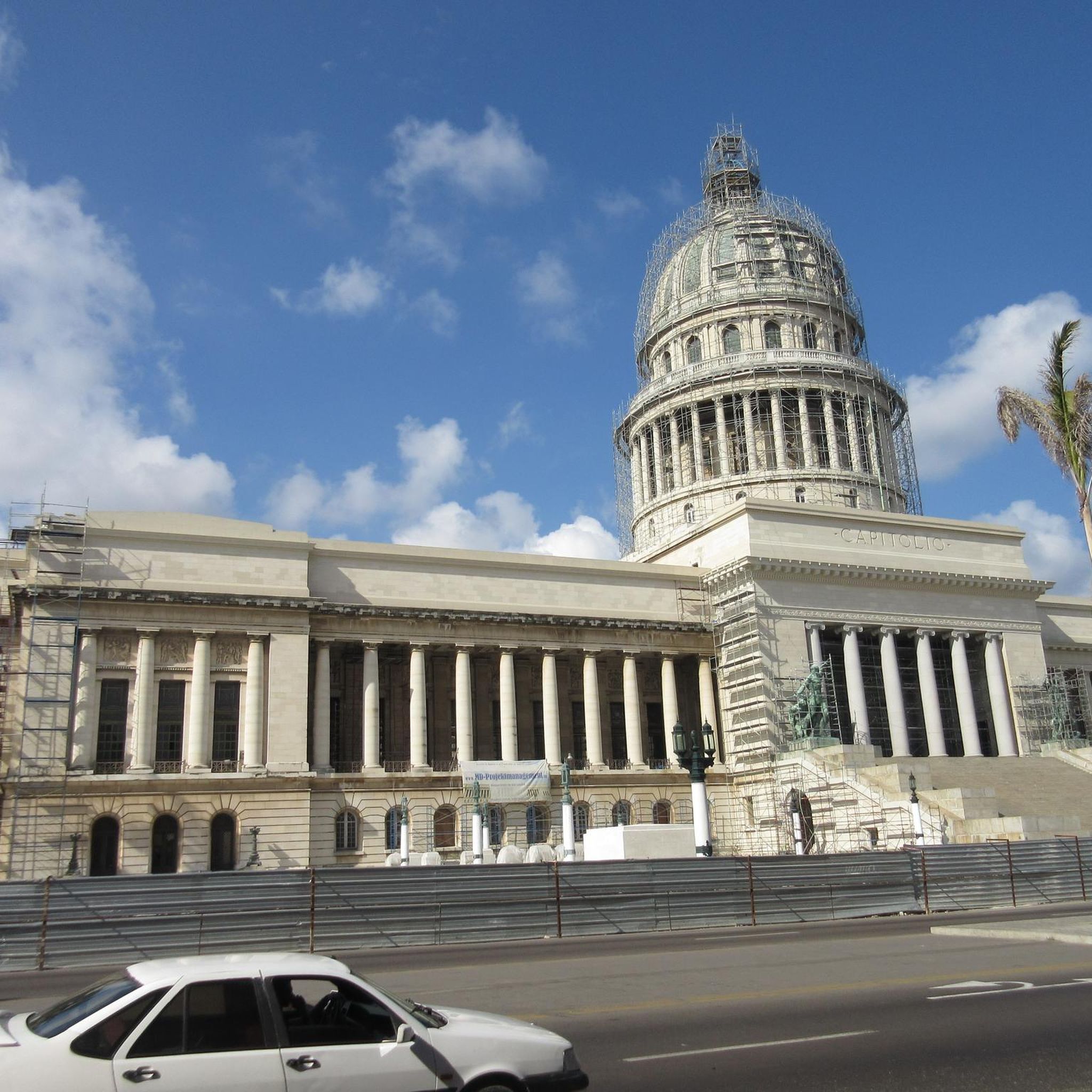
The Capitol Building in Havana is arguably Cuba's most famous landmark, a historic public building built between 1926 and 1929 and modeled after the U.S. Capitol. Until 1959, it served as the seat of the Cuban legislature. Today, it houses government ministries, is a tourist destination, and a symbol of Cuban national pride, notable for its impressive dome, the enormous staircase with statues of Labor and Justice, and the 14-meter-high bronze statue "La Republica" inside.
2
0
The Gran Teatro de La Habana Alicia Alonso is a magnificent opera house in Havana, Cuba, known for its neo-Baroque architecture and as the home of the National Ballet of Cuba. Opened in 1915, it is one of the oldest and most important cultural centers in Latin America, known not only for its magnificent interiors but also for a variety of cultural events such as ballet, opera, and theater.
2
0
La Bodeguita del Medio is a famous restaurant and bar in Havana, Cuba, known for its mojitos and is one of the city's most popular tourist destinations. Ernest Hemingway is said to have learned the recipe for the mojito there, helping to popularize it worldwide. The place is a symbol of the Cuban lifestyle, music, and hospitality.
3
0

The Cathedral of Havana, dedicated to the Virgin Mary, dates from the second half of the 18th century and is the most important representative of the so-called Cuban Baroque. It has been a UNESCO World Heritage Site since 1982. The towers can be climbed for a fee.
2
0
The large theater is the oldest stage in Central America and the Caribbean. The magnificent building, built in the neo-baroque style, not only has various stages for theater performances and concerts, but also conference rooms, art galleries and practice rooms for dance and ballet groups. The building can be visited for an admission fee.
2
0
Frequently Asked Questions
What historical landmarks should I visit in Centro Habana?
Centro Habana is rich in history. You can explore iconic sites such as The Capitol of Havana, a symbol of the city, and the magnificent Gran Teatro de La Habana, known for its neo-Baroque architecture. Other significant historical sites include the Plaza Vieja, where you can take a virtual tour of Havana from the Camera Obscura, and the historic Castillo de San Salvador de La Punta.
Where can I learn about Cuba's revolutionary history?
To delve into Cuba's revolutionary past, visit the Museo de la Revolución, housed in the former Presidential Palace. This museum provides a comprehensive overview of the 1959 Revolution and other key historical events.
Are there any notable architectural sites in Centro Habana?
Absolutely. Beyond the grandeur of The Capitol of Havana and Gran Teatro de La Habana, you'll find the stunning Edificio Bacardí, a prime example of Art Deco architecture from 1929. The Cathedral of the Virgin Mary of the Immaculate Conception of Havana also showcases beautiful Baroque architecture.
What cultural experiences can I find in Centro Habana?
Centro Habana offers diverse cultural experiences. Explore the vibrant Callejón de Hamel, an open-air gallery showcasing street art and Afro-Cuban Santería traditions. You can also visit the Museo Nacional de Bellas Artes, which features extensive Cuban and universal art collections, or the Asociación Cultural Yoruba de Cuba to learn about Yoruba traditions.
Can I learn about Cuban cigar making in Centro Habana?
Yes, you can. The Real Fábrica de Tabacos Partagás offers visitors the opportunity to learn about the traditional Cuban cigar-making process firsthand.
Are there any parks or green spaces in Centro Habana?
While predominantly urban, Centro Habana features several pleasant green spaces. You can relax in Parque Central, a popular meeting point with a statue of José Martí, or stroll along Paseo Martí (Paseo del Prado), a historic tree-lined promenade. Fraternidad Park is another notable green area near The Capitol of Havana.
Where can I enjoy scenic views or a waterfront stroll?
The Malecón, Havana's famous waterfront promenade, is perfect for a scenic stroll with views of the sea and coastal architecture. For a unique perspective, head to the Camera Obscura on the roof of Villa Gomez at Plaza Vieja for a 360-degree virtual tour of the city.
Are there family-friendly attractions in Centro Habana?
Many attractions in Centro Habana are suitable for families. Historical sites like The Capitol of Havana, Plaza Vieja, and Gran Teatro de La Habana are listed as family-friendly. Exploring the vibrant Callejón de Hamel or taking a classic car tour from Parque Central can also be enjoyable for all ages.
What walking routes are available to explore Centro Habana's attractions?
You can find several easy walking routes to explore the area. For instance, there's a loop from The Capitol of Havana to Museo Farmacia Taquechel, or a route connecting Gran Teatro de La Habana and The Capitol of Havana. You can find more options and details on easy hikes in Centro Habana.
Can I go cycling in Centro Habana?
Yes, cycling is a great way to see the city. There are various cycling routes available, ranging from easy to moderate. For example, you can find routes like the Presa La Coca – Colon Cemetery loop. Explore more options on cycling in Centro Habana or road cycling routes.
What is the best time of year to visit Centro Habana?
The best time to visit Centro Habana is generally during the dry season, from November to April. During these months, the weather is typically cooler and less humid, making it more comfortable for exploring the city's attractions on foot.
How can I get around Centro Habana using public transport?
Centro Habana is well-connected by various public transportation options, including local buses and shared taxis (almendrones). These can be a cost-effective way to navigate between different districts and attractions. For specific routes and schedules, it's best to consult local information upon arrival.
Are there wheelchair accessible attractions in Centro Habana?
While some historical areas may present challenges, Plaza Vieja is noted as wheelchair accessible. It is advisable to check with individual attractions regarding their specific accessibility features before your visit, as infrastructure can vary.
What do visitors particularly enjoy about Centro Habana?
Visitors often appreciate the vibrant atmosphere and the sense of stepping back in time. The historical sites, the lively streets, and the opportunity to experience authentic Cuban daily life are frequently highlighted. Many enjoy the architectural beauty of buildings like Gran Teatro de La Habana, especially at night, and the unique perspective offered by the Camera Obscura at Plaza Vieja.
Are there any unique local markets to explore?
Yes, for a glimpse into local life, visit the Mercado de Cuatro Caminos. This bustling market is where locals shop for produce, meats, and spices, offering an authentic experience of Cuban daily commerce.

Get inspired with the komoot mobile app


Explore more
Still not found the Highlight you’re looking for? See guides of the top attractions in other regions:
