Attractions and Places To See in San Pedro De Atacama - Top 20
Best attractions and places to see in San Pedro De Atacama are located within the Atacama Desert, a region known for its unique natural landscapes and cultural significance. The area features diverse terrains, high-altitude lagoons, and ancient archaeological sites. It offers a range of natural monuments and historical locations for exploration.
Best attractions and places to see in San Pedro De Atacama
- The most popular attractions is Church of San Pedro de Atacama, a religious building that is one…
Last updated: July 4, 2026
Church of San Pedro de Atacama
Highlight • Religious Site
Translated by Google •
Tip by

Pukará de Quitor
Highlight • Historical Site
Translated by Google •
Tip by

Sign up now to discover places like this
Get recommendations on the best single tracks, peaks, & plenty of other exciting outdoor places.
Sign up for free
Chaxa Lagoon
Highlight • Lake
Translated by Google •
Tip by

Laguna Miñiques
Highlight • Lake
Translated by Google •
Tip by
Laguna de los Flamencos, Los Flamencos National Reserve
Highlight • Lake
Translated by Google •
Tip by
Valley of Death
Highlight • Canyon
Translated by Google •
Tip by

La Casa de Juanita
Highlight • Restaurant
Translated by Google •
Tip by

Catarpe Valley Route
Highlight • Trail
Wonderful passage including stream crossings. Possibility to climb the ridge or master the Quebrada del Diablo Trail
Translated by Google •
Tip by
Tres Marías Rock Formation, Valle de la Luna
Highlight • Natural Monument
Translated by Google •
Tip by
Tunnel Climb San Pedro de Atacama
Highlight (Segment) • Climb
NB: Just insert my memories of a trip in October 2016 here to …
Translated by Google •
Tip by
Sign up for free to discover even more attractions in San Pedro De Atacama.
Sign up for free
Already have an account?
Start today with a free account
Your next adventure awaits.
Login or Signup
Popular around San Pedro De Atacama
Tips from the Community

Laguna Chaxa is located in the middle of the Salar de Atacama in an impressive protected area that is home to numerous flamingos. The visit is particularly worthwhile for bird lovers, as the flamingos that live here (especially the "Flamenco Chileno") can often be observed up close. In addition to the flamingos, there are also other water birds and occasionally small lizards to discover. The salt lake seems almost surreal with its white, glowing surface and the reflective lagoon offers breathtaking photo opportunities. The scenery with the volcanoes towering behind it also reinforces the feeling of being immersed in another world. The entrance fee is 5,000 pesos, which is definitely worth it, especially if you are also interested in the endangered wildlife. A clear tip: don't forget sun protection!
0
0
The Laguna Miñiques, in the middle of the Atacama Desert, is a place of fascinating, almost surreal beauty. The deep blue salt lake nestles against the barren slopes of the Miñiques volcano and, together with the neighboring Laguna Miscanti, forms a harmonious natural picture. A short path connects the two lagoons, and although the route is not long, it is advisable to equip yourself well with water and sun protection - the intensity of the sun at this altitude should not be underestimated. What makes the visit special is the untouched atmosphere. The silence of the surroundings, interrupted only by the wind and the occasional chirping of birds, allows you to completely switch off. The region's wildlife is also unique. If you're lucky, you might spot an Andean fox or flamingos in the distance, who also appreciate this area. Here, nature shows its rough but at the same time sublime side, far away from the hustle and bustle, and reminds us how diverse and impressive our world is.
0
0

As far as I understand, there are only two of the "Three Marys" left - a tourist hugged the third one and a piece broke off. That's why the path is regulated and you're not allowed to go close to the rock formation.
0
0
The Temple of San Pedro was built in 1557, possibly dependent on the Bishopric of Cuzco, but the building that remains today is the result of an extension of the previous temple from the mid-18th century, which in turn underwent partial reconstructions after earthquakes and fires. The Church of San Pedro is the largest of the Atacama churches. It was built on a stone foundation and for its construction mortar, clay plaster with straw and carob, chañar and cactus wood bound with leather strips were used. Built in the shape of a Latin cross with a single nave 41 meters long and 7.5 meters wide, it has two side chapels that give it the shape of a cruise, in addition to a baptistery near the entrance, a sacristy in the rear, a choir and a bell tower made of adobe from 1965, when it was built to replace an older one made of wood. It has all the characteristics of the Andean mestizo style: a compact volume, adobe walls almost a meter wide and a gable roof that ends in continuous eaves. Inside, the main altar has an altarpiece with stucco and painted motifs on the wood, adobe and stone structure in the Baroque style. The Church of San Pedro de Atacama was declared a Historic Monument in 1951. Due to the damage it suffered from the earthquakes that struck the region, important restoration work began in 2014, which included the installation of two ancient paintings of unknown angels. Source: https://www.monumentos.gob.cl/monumentos/monumentos-historicos/iglesia-san-pedro-atacama
2
0
All information about San Pedro de Atacama (in English, Spanish, Portuguese) at https://sanpedroatacama.com/
2
0

The Reserva nacional Los Flamencos is a group of nature reserves in the municipality of San Pedro de Atacama in northern Chile. It consists of seven independent and spatially separated zones with a total area of 709 km2, representing 3% of the municipal area of San Pedro de Atacama. These are important landscapes and biotopes in the Atacama Desert that are developed for sustainable tourism and are at the same time subject to nature conservation. 112 different species of birds, reptiles, amphibians and mammals have been counted in the reserve. Notable among these are the flamingos (Andean flamingo, James' flamingo, Chilean flamingo), after which it is named.
0
0

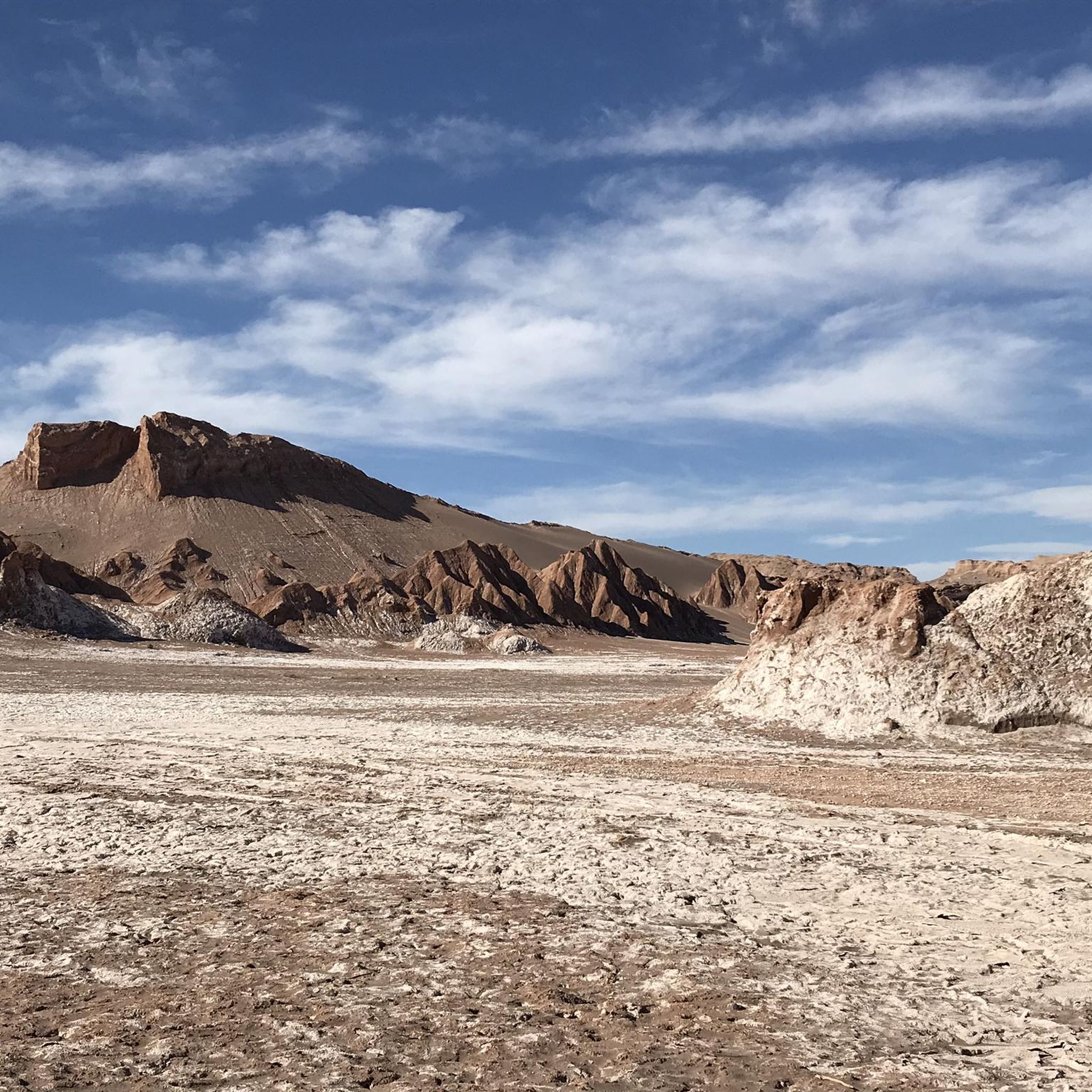
The "Three Marias" is a rock formation in Valle de la Luna and one of the lookout stops there. There is a parking lot and you can take photos, but you cannot hike from here.
3
0
Very nice lagoon where you can watch flamingos. The play of colors of the salt desert, the water and the sky is simply fantastic!
3
0
Frequently Asked Questions
What unique natural landscapes can I explore in San Pedro de Atacama?
The region offers a variety of extraordinary natural landscapes. You can visit the surreal, lunar-like terrain of Valle de la Luna, known for its dramatic rock formations and breathtaking sunsets. Another popular spot is Valley of Death, which features impressive sand formations and a unique rocky landscape. Further afield, explore the high-altitude Altiplanic Lagoons like Laguna Miñiques and Miscanti, set against photogenic volcanoes, or witness the steaming spectacle of El Tatio Geysers at sunrise.
What historical sites can I visit to learn about pre-Columbian cultures?
To delve into the region's rich history, visit Pukará de Quitor, an ancient Atacameño fortress offering insights into pre-Columbian cultures and panoramic valley views. Another significant site is Tulor Village, dating back over 2,000 years, which reveals remnants of an ancient settlement. The R.P. Gustavo Le Paige Archaeological Museum in San Pedro de Atacama also houses a large collection of pre-Columbian artifacts.
Are there family-friendly attractions in San Pedro de Atacama?
Yes, several attractions are suitable for families. The Church of San Pedro de Atacama is a historical and architectural point of interest. Natural sites like Chaxa Lagoon, where you can observe flamingos, and the Tres Marías Rock Formation in Valle de la Luna are also categorized as family-friendly.
What outdoor activities are popular in the San Pedro de Atacama region?
The region is excellent for outdoor enthusiasts. You can enjoy various running trails, including loops around San Pedro de Atacama and the Valle de la Luna, with distances ranging from 6.8 km to 24 km. For hiking, there are easy trails like the Piedras Rojas loop or moderate routes such as the Pukará de Quitor – Valley of Death loop. You can find more details on these activities in the Running Trails in San Pedro De Atacama and Hiking in San Pedro De Atacama guides.
Where can I experience the unique sensation of floating in a salt lake?
You can experience the unique sensation of floating effortlessly in Laguna Cejar. Due to its high salt concentration, visitors can easily float on its surface. Its distinctive calypso color adds to its allure amidst the desert landscape.
Are there opportunities for stargazing in the Atacama Desert?
Absolutely. The Atacama Desert is renowned as one of the best places in the world for stargazing. Its high altitude and minimal light pollution provide incredibly clear views of the night sky, making it a prime location for astronomical observation.
What are the best places for birdwatching in the area?
For birdwatching, Chaxa Lagoon is an excellent choice. This beautiful lagoon, composed of water and salt flats, is a haven for various bird species, including Chilean, James, and Andean flamingos, offering great opportunities for observation and photography.
Can I see colorful geological formations in San Pedro de Atacama?
Yes, the region is famous for its vibrant geological formations. The Rainbow Valley (Valle del Arcoíris) showcases mountains with a striking palette of colors, including red, green, black, purple, and brown, created by mineral deposits. Additionally, Piedras Rojas (Red Rocks) features stunning red rocks set against the turquoise waters of nearby lagoons in the Atacama Altiplano.
Are there any relaxing natural hot springs in the area?
Yes, the Puritama Hot Springs (Termas de Puritama) offer a relaxing and rejuvenating experience. These thermal springs are nestled amidst natural surroundings, providing a tranquil escape in the desert.
How long does it typically take to visit major natural attractions like Valle de la Luna?
The duration of a visit to attractions like Valle de la Luna can vary. A typical tour, often including sunset viewing, can take around 3-4 hours. It's recommended to allocate sufficient time to explore the unique formations and enjoy the views, especially during the golden hour.
What are some lesser-known natural wonders worth visiting?
Beyond the most popular sites, consider visiting Piedras Rojas (Red Rocks) for its striking red rock formations and turquoise lagoons, or the Rainbow Valley (Valle del Arcoíris) to witness mountains painted with a spectrum of natural colors. The Puritama Hot Springs also offer a unique and relaxing natural experience.
What is the best time of year to visit for specific experiences like stargazing?
The Atacama Desert offers excellent stargazing year-round due to its clear skies. However, the winter months (June to August) often provide the clearest nights with less atmospheric humidity, making them ideal for astronomical observations. For general visits, the shoulder seasons (spring and autumn) offer pleasant temperatures.
Are there hiking trails suitable for different skill levels near San Pedro de Atacama?
Yes, there are hiking trails for various skill levels. You can find easy hikes like the 2.7 km Piedras Rojas loop or the 5.6 km Pukará de Quitor – Valley of Death loop. For more challenging options, consider routes like the 22.6 km Ruinas de Catarpe loop. Explore more options in the Easy hikes in San Pedro De Atacama and Hiking in San Pedro De Atacama guides.
Most popular routes in San Pedro De Atacama
Most popular attractions in San Pedro De Atacama

Get inspired with the komoot mobile app


