Attractions and Places To See in Potosí - Top 20
Attractions and places to see in Potosí, a UNESCO World Heritage site, offer a diverse range of historical landmarks, cultural sites, and striking natural features. Perched at over 4,000 meters above sea level, Potosí is known for its rich history tied to silver mining. The region encompasses both the historic city center and expansive natural landscapes, providing a variety of notable landmarks and natural attractions.
Best attractions and places to see in Potosí
- The most popular attractions is Laguna Colorada, a lake that is 60 square kilometers in size and located at 4278m altitude. Its reddish color is caused by high mineral content and algae, making it a unique natural spectacle.
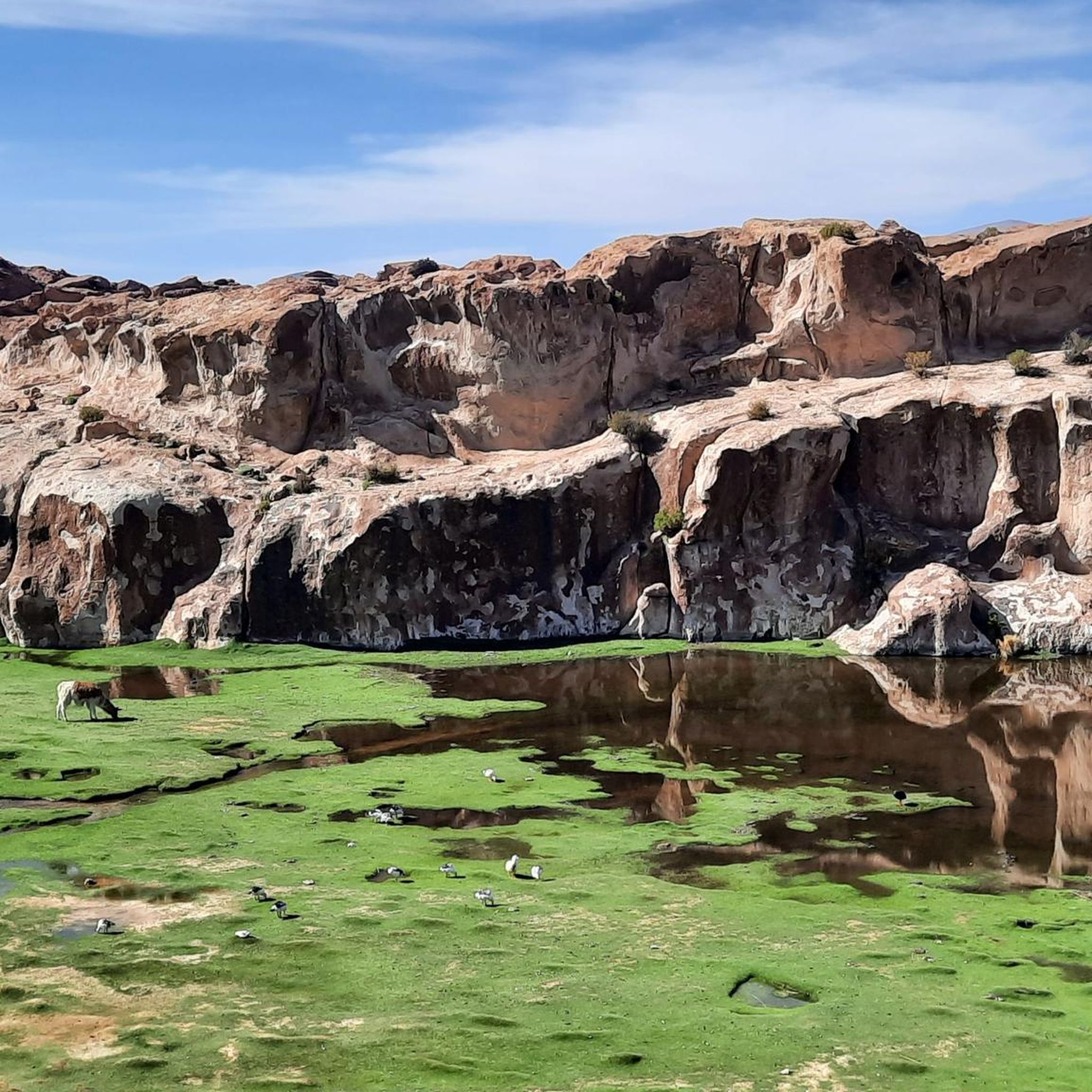
- Another must-see spot is Devil's Pass, a gorge that offers an easy hike. This natural formation provides scenic views and is accessible for walks or horseback riding trips.
- Visitors also love Train Museum, a man-made monument considered the largest railway cemetery in the world. It features around 100 locomotives and wagons, with the oldest dating back to the late 19th century.
- Potosí is known for its historical sites, unique natural monuments, and cultural experiences. The area offers a variety of attractions to see and explore, from high-altitude lakes to historical industrial sites.
- The attractions in Potosí are appreciated by the komoot community, with 13 upvotes and 77 photos shared by visitors.
Last updated: July 17, 2026
Laguna Colorada
Highlight • Lake
Its reddish color is caused by the high mineral content and algae.
The lagoon is a wonderful place for bird watching. Numerous flamingos also live here; All three species (Andean flamingo, Chilean flamingo and James flamingo) are represented.
Translated by Google •
Tip by

Train Museum
Highlight • Monument
Translated by Google •
Tip by

Sign up now to discover places like this
Get recommendations on the best single tracks, peaks, & plenty of other exciting outdoor places.
Sign up for free
Sol de Mañana Geothermal Field
Highlight • Natural Monument
Energy is generated from the steam in a nearby power plant.
Translated by Google •
Tip by
Devil's Pass
Highlight • Gorge
Translated by Google •
Tip by

Plaza de las Banderas Uyuni
Highlight • Monument
Translated by Google •
Tip by

Umajalanta Cave
Highlight • Cave
If you are looking for a little adventure, this is the place for you.
Translated by Google •
Tip by

Laguna Verde
Highlight • Lake
The Laguna Verde can be reached by off-road vehicle from San Pedro de Atacama (in Chile, about 70 km away) after crossing the Bolivian border. The Bolivian entry and exit procedures must be observed.
Source: de.m.wikipedia.org/wiki/Laguna_Verde_(Bolivien)
Translated by Google •
Tip by

Salar de Uyuni
Highlight • Natural
With a size of 10,580 square kilometers and a depth of at least 121 m, the Salar de Uyuni is the largest salt lake in the world.
Translated by Google •
Tip by
Isla Incahuasi
Highlight • Natural Monument
Translated by Google •
Tip by
Salvador Dalí Desert
Highlight • Natural
The unreality of the colorful mountains and the surreality of the landscape are reminiscent of Dali's works, hence the name. Dali himself was never here.
I found this mountain and desert landscape absolutely touching!
Translated by Google •
Tip by
Sign up for free to discover even more attractions in Potosí.
Sign up for free
Already have an account?
Start today with a free account
Your next adventure awaits.
Login or Signup
Popular around Potosí
Tips from the Community

Find your Flag 👌
1
0

Bring your national flag, club flag or something similar. The flags don't last forever and there is always a place for your own flag. A very impressive place.
1
0

Definitely worth the stop. We were there in 2006 so things may have changed since. We stayed overnight in the free cyclists refuge. After cycling in from Llica, I ate two Mondo burgers and later learned that electricity (and therefore refrigeration) on the island is intermittent. The result was violent vomiting in the middle of the night. Prior to that, the island was a great and experiencing sunset there was pretty magical.
0
0

Easy hike, possibly accessible by torito from Tupiza. Horseback riding trips are also offered here.
2
0

Considered one of the most extreme and remarkable views in all of South America, if not on Earth, Bolivia's Salar de Uyuni is the world's largest salt desert, spread across more than 4,050 square miles of the Altiplano, left behind by prehistoric lakes that evaporated long ago. Here, a thick crust of salt stretches to the horizon, covered in quilted, polygonal salt patterns rising from the ground. At certain times of the year, nearby lakes overflow their banks and a thin layer of water transforms the plains into a stunning reflection of the sky. This beautiful and otherworldly terrain serves as a lucrative mining site for salt and lithium—the element responsible for powering laptops, smartphones, and electric cars. In addition to the local workers who mine these minerals, the landscape is home to the world's first salt hotel and is populated by tourists. Source: https://www.nationalgeographic.com/travel/article/how-to-see-salar-de-uyuni-salt-flats-bolivia
2
0
The Uyuni Railway Cemetery (Spanish Cementerio de (los) Trenes) on the edge of the Salar de Uyuni salt plain in Bolivia, southwest of the city of Uyuni, a few kilometers from the city center, is considered the largest railway cemetery in the world. In 1872, construction began on the Ferrocarril de Antofagasta a Bolivia, Bolivia's first railway line. It was used to transport raw materials such as sodium nitrate and other salts, but also metals such as copper, silver and gold, from the mines in the interior of the country to the port cities on the Pacific Ocean. When the railway line reached Uyuni at the end of the 19th century, a railway depot was built in the city. Uyuni developed into an important railway junction. Around the 1940s, the local industry collapsed and most of the precious metal mines were abandoned by the operators. This meant that the supply routes built for this purpose and most of the locomotives and wagons were no longer needed, were shut down and left to decay. There are around 100 locomotives and wagons in total in the railway cemetery, the oldest dating back to the late 19th century. In addition to corrosion (which progresses slowly thanks to the local climate) and the salt from the Salar de Uyuni, local residents also damage the vehicles by using them to obtain scrap metal. Many of the locomotives and wagons have also been covered in graffiti. Source: https://de.wikipedia.org/wiki/Eisenbahnfriedhof_Uyuni
3
0
A lonely spot on the windswept Altiplano at an altitude of more than 4,000 meters: The Laguna Colorada not only has a unique location, but also combines all the colors of nature. The deep blue of the sky, the barren brown mountains and, last but not least, the unusual, bright red of the lagoon, which has given the lake the name Laguna Colorada (colored lagoon). Together with the pink flamingos that live here, the Laguna Colorada is a wonderful spectacle of nature that will delight nature lovers. During your visit to the Altiplano, explore the huge, colored salt lake, which stretches for kilometers and creates a dreamlike backdrop that no picture can really capture. Along with the Island of the Sun and the Salar de Uyuni, the Laguna Colorada is one of the most beautiful places on earth that Bolivia has to offer. Source: https://www.skr.de/bolivien-reisen/sehenswuerdigkeiten/laguna-colorada/
3
0
El Sol de Mañana is a desert area of about 2 km² in southern Bolivia in the department of Potosí, south of Laguna Colorada on the way to Salar de Chalviri, at an altitude of 4850 m above sea level, within the Eduardo Abaroa Andean Fauna National Reserve. This area is characterized by intense volcanic activity (including fumaroles and geysers), in the craters in the region you can see intense boiling mud. In addition, fumaroles and geysers emit mixed vapors of water and hot steam, which reach heights of 10 to 50 meters due to the pressure with which they are expelled. Source: https://salaruyuni.cl/tourist-attraction/sol-de-manana/#:~:text=El%20Sol%20de%20Ma%C3%B1ana%20es,de%20Fauna%20Andina%20Eduardo%20Abaroa.
1
0
Frequently Asked Questions
What natural wonders can I explore in the Potosí region?
The Potosí region is home to spectacular natural features. You can visit Laguna Colorada, a unique red lake known for its flamingos and vibrant colors. Another impressive site is the Sol de Mañana Geothermal Field, where you can witness bubbling mud pots and steam vents at high altitude. The vast Salar de Uyuni, the world's largest salt flat, is also a major draw, often visited on tours from Potosí, featuring highlights like Laguna Verde and the Siloli Desert with its unique rock formations like the Árbol de Piedra.
Are there historical sites to visit in Potosí?
Potosí is rich in history, particularly its silver mining past. The city's historic center is a UNESCO World Heritage site. Key historical attractions include the National Mint of Bolivia (Casa Nacional de la Moneda), which is considered one of South America's best museums, and the iconic Cerro Rico, where you can take guided mine tours. Other notable sites are the Catedral Villa Imperial Potosí, the Iglesia de San Lorenzo de Carangas with its elaborate baroque façade, and the San Francisco Museum, which offers access to catacombs and city views from its tower.
What are some family-friendly attractions in Potosí?
Families can enjoy several attractions in the Potosí region. The Train Museum, also known as the Uyuni Railway Cemetery, is a fascinating outdoor museum with around 100 old locomotives and wagons that kids often find exciting. The Devil's Pass offers an easy hike with scenic views, suitable for walks or horseback riding. The Plaza de las Banderas Uyuni is a fun spot for photos with flags from around the world, and the Salt Processing Facility in Colchani provides an interesting look into local industry.
Can I go hiking near Potosí's attractions?
Yes, there are several hiking opportunities in the Potosí region. For easy walks, you can explore routes like the "Huellas de Dinosaurio loop from Sierra de Marágua" or the "Valley of the Machos – Devil's Pass loop from Yurcuma." More challenging hikes include the "Valley of the Machos – Devil's Pass loop from Tupiza" and the "View of Tunupa Volcano loop from Khala Loma." You can find more details and routes in the Hiking in Potosí guide.
What is the best time of year to visit Potosí?
The best time to visit Potosí is generally during the dry season, which runs from May to October. During these months, you can expect clearer skies and less rainfall, making it ideal for exploring both the city's historical sites and the natural attractions in the surrounding region. However, temperatures can still be cold, especially at night, due to the high altitude.
Are there any unique cultural experiences in Potosí?
Beyond the major historical sites, Potosí offers unique cultural insights. You can visit the Callejón de las Brujas (Alley of the Witches), where shops sell traditional Bolivian remedies and spiritual items. Taking a guided tour of the Cerro Rico mines provides a stark but profound understanding of the region's mining heritage and the lives of the miners, including their worship of the "Uncle de la Mina" (Tío de la Mina).
What should I know about visiting Potosí given its high altitude?
Potosí is one of the highest cities in the world, situated at over 4,000 meters (13,000 feet) above sea level. Visitors should be aware of the risk of altitude sickness. It's recommended to take precautions such as acclimatizing gradually, staying hydrated, avoiding strenuous activity on your first day, and limiting alcohol consumption. Consult with a doctor before your trip if you have any health concerns.
Are there any adventurous activities for travelers in Potosí?
For adventurous travelers, Potosí offers unique experiences. Guided tours into the Cerro Rico mines provide a challenging and eye-opening adventure. Further afield, Torotoro National Park, north of Potosí, is a destination for adventure lovers, featuring impressive caves like Umajalanta Cave, dinosaur footprints, and waterfalls. The high-altitude landscapes around the Sol de Mañana Geothermal Field also offer a rugged, otherworldly exploration.
What kind of wildlife can I expect to see in the Potosí region?
The Potosí region, particularly its natural reserves and high-altitude lagoons, is excellent for wildlife viewing. At Laguna Colorada, you can observe numerous flamingos, including the Andean, Chilean, and James flamingo species. The broader Reserva Nacional de Fauna Andina Eduardo Abaroa is home to vicuñas, llamas, alpacas, and various high-Andean bird species.
What are some of the most popular viewpoints in Potosí?
Potosí offers several viewpoints to appreciate its unique landscape and architecture. The bell-tower of the Catedral Villa Imperial Potosí provides excellent views of the city center. You can also get panoramic views from the tower of the San Francisco Museum. For natural vistas, the Laguna Colorada and Laguna Verde offer stunning natural panoramas, and the Sol de Mañana Geothermal Field provides a unique high-altitude perspective.
Are there any specific permits required for visiting attractions in Potosí?
While most city attractions like museums and churches have entrance fees, specific permits might be required for certain activities. For instance, guided tours into the Cerro Rico mines are typically arranged through local agencies, which handle any necessary access permissions. For national parks like Torotoro or the Reserva Nacional de Fauna Andina Eduardo Abaroa (which includes Laguna Colorada), entrance fees are required upon arrival.
Most popular routes in Potosí
Most popular attractions in Potosí

Get inspired with the komoot mobile app


Didn’t find what you were looking for?
Are you keen on exploring more awesome places nearby? Browse our guides:
Explore more
Still not found the Highlight you’re looking for? See guides of the top attractions in other regions:
