The best cycling routes around Gillenfeld
4.4
(130)
516
riders
46
rides
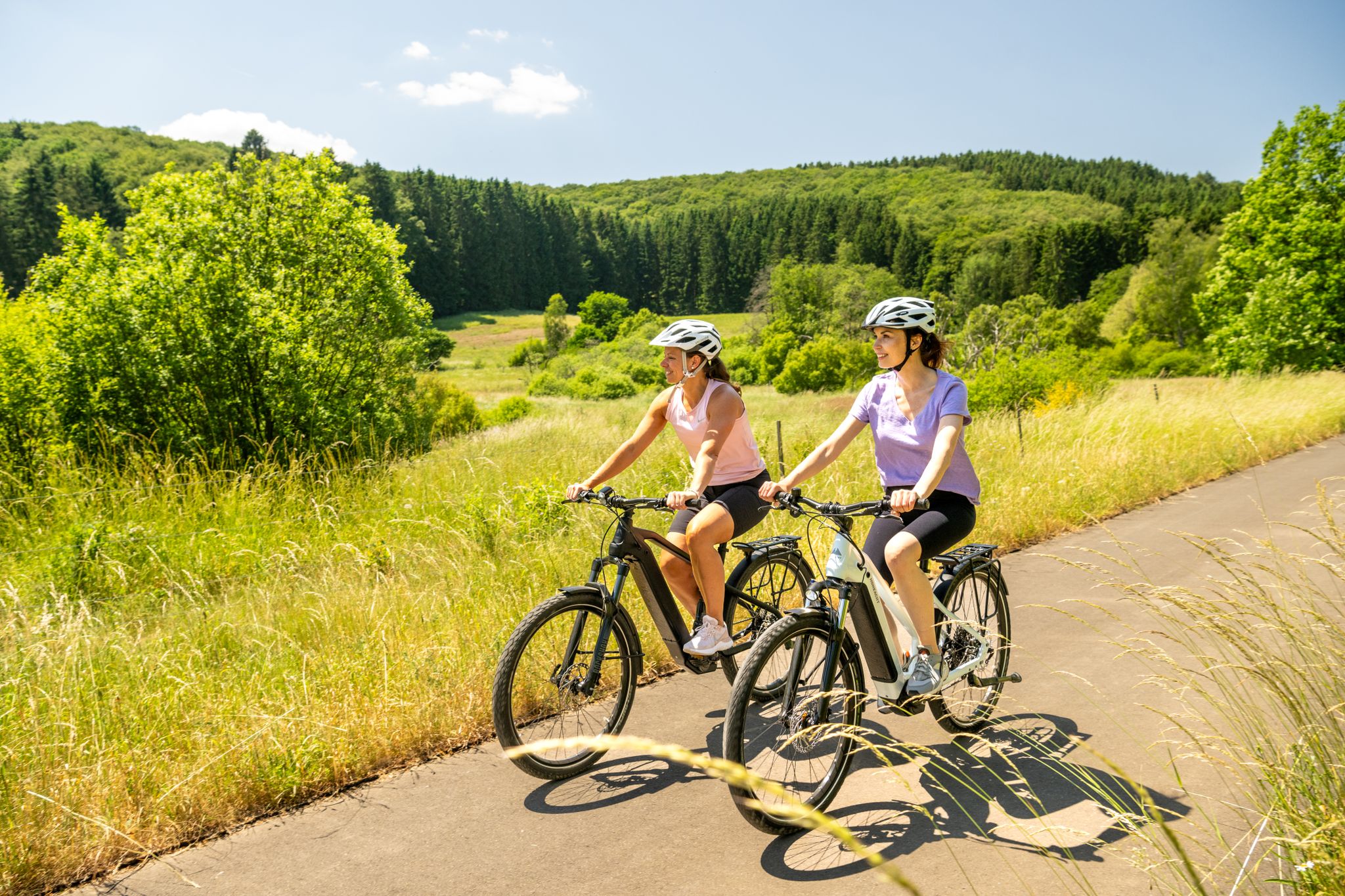
Touring cycling around Gillenfeld is characterized by its unique volcanic landscape within the Vulkaneifel district of Germany. The region features numerous maars, which are volcanic crater lakes, alongside gently rolling hills and extensive forests. Many routes utilize former railway lines, such as the Maare-Mosel Cycle Path, providing accessible and scenic paths for cyclists. The terrain offers varied surfaces, including paved paths and unpaved segments, suitable for different cycling preferences.
Best touring cycling routes around Gillenfeld
- The most popular touring cycling route is Weinfelder Maar viewpoint – View of the Schalkenmehrener Maar loop from Gillenfeld, a 23.9 miles (38.4 km) trail that takes 3 hours 13 minutes to complete. This difficult route offers views of prominent volcanic crater lakes.
- Another top favourite among local touring cyclists is Holzmaar – Cycle path on a railroad line loop from Gillenfeld, a moderate 10.8 miles (17.5 km) path. This route follows a former railway line, passing by Holzmaar and through forested sections.
- Local touring cyclists also love the Immerath Maar – Strohner Lava Bomb loop from Gillenfeld, a 13.8 miles (22.2 km) trail leading through volcanic maars and past the Strohner Lava Bomb, often completed in about 1 hour 41 minutes.
- Touring cycling around Gillenfeld is defined by volcanic maars, former railway lines, and gently rolling hills. The network offers options for different ability levels, from easy family-friendly paths to more challenging routes.
- The routes in Gillenfeld are highly rated by the komoot community with an average score of 4.4 stars from over 114 reviews. More than 500 touring cyclists have used komoot to explore Gillenfeld's varied terrain.
Last updated: June 27, 2026
4.2
(12)
42
riders
17.5km
01:13
190m
190m
Moderate bike ride. Good fitness required. Mostly paved surfaces. Suitable for all skill levels.
4.5
(22)
112
riders
19.8km
01:15
230m
230m
Moderate bike ride. Good fitness required. Mostly paved surfaces. Suitable for all skill levels.

Sign up for free
4.5
(6)
36
riders
Hard bike ride. Very good fitness required. Mostly paved surfaces. Suitable for all skill levels.
3.8
(6)
28
riders
22.2km
01:42
290m
290m
Moderate bike ride. Good fitness required. Mostly paved surfaces. Suitable for all skill levels.
4.8
(10)
25
riders
24.3km
01:49
320m
330m
Moderate bike ride. Good fitness required. Mostly paved surfaces. Suitable for all skill levels.
Get access to more routes and recommendations from other explorers.
Sign up for free
Already have an account?
Our route recommendations are based on thousands of hikes, rides, and runs completed by other people on komoot.
Start today with a free account
Your next adventure awaits.
Login or Signup

Other adventures around Gillenfeld


Tips from the Community

Very interesting and worth seeing place.
1
0

Weinfelder Maar - Impressive Evidence of Explosive Geological History The Weinfelder Maar – also known as Totenmaar – is one of the three so-called Daun Maars. It is located about 2 kilometers from our district town of Daun, near the municipality of Schalkenmehren, between the Gemünden and Schalkenmehren Maars. It has a diameter of approximately 525 meters and a depth of 51 meters, making it the deepest of the three Daun Maars. It is the youngest and, at 487 meters above sea level, the highest of the three closely adjacent maars, which formed between 20,000 and 30,000 years ago. Text / Source: Natur- und Geopark Vulkaneifel GmbH, Mainzer Str. 25, Daun https://www.geopark-vulkaneifel.de/eifel/landschaft/maare-und-kraterseen/weinfelder-maar.html
12
0
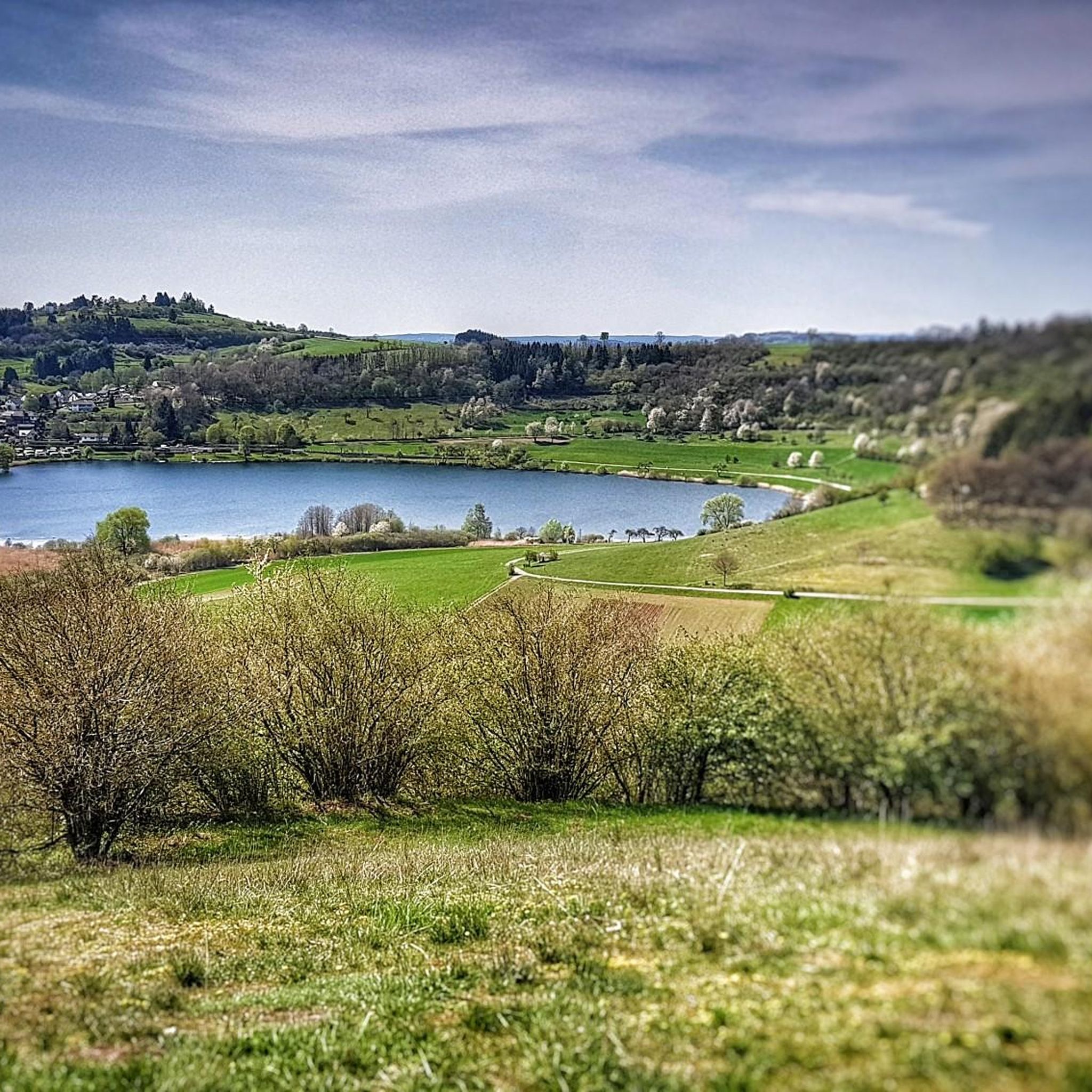
Weinfelder Maar The Weinfelder Maar, formed by volcanic activity around 20,000 to 30,000 years ago, is the highest of the three Daun Maars at 487 meters above sea level. The lake is 51 meters deep and has a diameter of 396 to 429 meters. An almost melancholic atmosphere surrounds the maar. Many legends surround the tranquil Eifel eye. A castle is said to have once stood on the site of the crater, where a count lived with his wife and only child. After returning home from a hunt, the castle had sunk as punishment for the woman's nastiness, and he found only a lake where a cradle miraculously floated his child safely to the shore. If you look at the dark surface of the water long enough, it is said that you can make out the outline of the castle. The German landscape painter Fritz von Wille was so fascinated by the Weinfelder Maar that he repeatedly immortalized it in his paintings. Among his favorite motifs was the small chapel on the north bank, dedicated to Saint Martin. It was once the parish church of the village of Weinfeld, which was ravaged by the plague in the 16th century. Anyone who rings the bells inside by pulling the ropes can make a wish. To this day, the associated cemetery is maintained and used by the local community of Schalkenmehren. This is also where its second name, Totenmaar, comes from. Donkeys and goats have been introduced to the Weinfelder Maar to regulate vegetation. The maar's unique flora and fauna are protected. Swimming and other water sports are prohibited in the Weinfelder Maar, but a nearly two-kilometer-long path makes it a wonderful place to explore on foot. Parking: Guests can park along the L64 either in the parking lot at the Weinfelder Maar or on the Maarsattel between the Weinfelder Maar and the Schalkenmehrener Maar. Text / Source: GesundLand Vulkaneifel GmbH, Leopoldstr. 9 A, 54550 Daun https://www.eifel.info/a-weinfelder-maar
12
0
The Daun Maars - 10,000-Year-Old Volcanic Lakes The Daun Maars were formed around 10,000 years ago from volcanic steam explosions. Hot lava rises from the Earth's interior and encounters water, which suddenly evaporates. This blasts away entire mountain peaks. What remains is a deep crater that fills with water over the years and a wall of boulders surrounding the lake. The Daun Maars include the Gemünden Maar, the Weinfelder Maar, and the Schalkenmehrener Doppelmaar. One crater of the Schalkenmehrener Maar has silted up over the millennia. The area is a nature reserve and a refuge for waterfowl and rare dragonfly species. Text / Source: deutschland-outdoor.der https://deutschland-outdoor.de/eifel/dauner-maare
13
0
Weinfelder Maar The Weinfelder Maar, formed by volcanic activity around 20,000 to 30,000 years ago, is the highest of the three Dauner Maars at 487 meters above sea level. The lake is 51 meters deep and has a diameter of 396 to 429 meters. An almost melancholic atmosphere surrounds the maar. Many legends surround the quiet Eifel eye. A castle is said to have once stood on the site of the crater, where a count lived with his wife and only child. After returning home from a hunt, the castle had sunk as punishment for the woman's nastiness, and he found only a lake where a cradle miraculously floated his child safely to the shore. If you look at the dark surface of the water long enough, it is said that you can make out the outline of the castle. The German landscape painter Fritz von Wille was so fascinated by the Weinfelder Maar that he repeatedly immortalized it in his paintings. Among his favorite motifs was the small chapel on the north bank, dedicated to Saint Martin. It was once the parish church of the village of Weinfeld, which was struck by the plague in the 16th century. Anyone who makes the bells inside ring by pulling the ropes can make a wish. To this day, the associated cemetery is maintained and used by the local community of Schalkenmehren. This is where its second name, Totenmaar, comes from. Donkeys and goats have been introduced to the Weinfelder Maar to regulate vegetation. The maar's unique flora and fauna are protected. Swimming and other water sports are prohibited in the Weinfelder Maar, but a nearly two-kilometer-long path makes it a wonderful place to explore on foot. Parking: Visitors can park along the L64 either in the parking lot at the Weinfelder Maar or on the Maarsattel between the Weinfelder Maar and the Schalkenmehrener Maar. Text / Source: GesundLand Vulkaneifel GmbH, Leopoldstr. 9 A, 54550 Daun https://www.eifel.info/a-weinfelder-maar
12
0


Here you can take a break with a wonderful view of Strohn.
1
0

To us, a mill pond like the one presented to the biker here may seem very ordinary, but in the fantasy world of someone like Otfried Preußler (1923 to 2013), who became famous with the children's books he wrote, things look very different: It is also the habitat of a water sprite family, and his book "The Little Water Sprite", which is still popular today, tells of the adventures that the family's offspring experience in the mill pond. The "Stiftung Lesen" reviews it: "The water sprite invited twenty-seven relatives - and twenty-six came. Twelve water sprites with their wives, a well man and the bridge woman from St. Nepomuk's Bridge! And they all accepted the invitation because they want to see the little water sprite that the water sprite dad is so proud of. And he can be - because the cheeky little shirt-faced boy can already swim, barely having been born. And he learns everything else faster than his worried parents would like. His friend, the cautious carp Cyprinus, can sometimes only wiggle his fins... The children's book classic from 1956 has already enchanted generations of readers, who can then pass on their own childhood memories as well as the fantastic adventures of the little water sprite when reading aloud to children aged around 5 and above." (Text source: Stiftung Lesen)
0
0
Frequently Asked Questions
How many touring cycling routes are available around Gillenfeld?
Gillenfeld offers a wide selection of touring cycling routes, with over 45 options available. These routes cater to various skill levels, including easy, moderate, and difficult trails.
What do other cyclists say about the touring routes in Gillenfeld?
The touring cycling routes around Gillenfeld are highly regarded by the komoot community, holding an average rating of 4.4 stars from over 150 reviews. Cyclists often praise the unique volcanic landscapes, the well-maintained paths, and the scenic views of the Maare.
Are there easy touring cycling routes suitable for beginners or families?
Yes, Gillenfeld has 14 easy touring cycling routes perfect for beginners or families. The Holzmaar – Cycle path on a railroad line loop from Gillenfeld is a moderate 17.5 km path that follows a former railway line, making it relatively flat and enjoyable. The Maare-Mosel Cycle Path, accessible from Gillenfeld, is also known for its gentle gradients, with a section from Daun to Gillenfeld specifically designed as a children's cycle route.
Can I find more challenging touring cycling routes in the Gillenfeld area?
For those seeking a greater challenge, there are 11 difficult touring cycling routes around Gillenfeld. An example is the Weinfelder Maar viewpoint – View of the Schalkenmehrener Maar loop from Gillenfeld, a 38.4 km route with significant elevation changes, offering rewarding views of the volcanic lakes.
Are there circular touring cycling routes around Gillenfeld?
Many touring cycling routes in Gillenfeld are circular, allowing you to start and end at the same point. For instance, the popular Schalkenmehren Maar – Schalkenmehrener Maar loop from Gillenfeld is a 20.4 km circular trail that offers views of two prominent volcanic crater lakes.
What natural features or landmarks can I see while cycling around Gillenfeld?
The region is rich in natural wonders. You can cycle past several volcanic crater lakes (Maare) like Pulvermaar, Holzmaar, Weinfelder Maar, and Schalkenmehrener Maar. The Immerath Maar – Strohner Lava Bomb loop from Gillenfeld will take you past the unique Strohner Lava Bomb, a geological curiosity. You might also encounter the Falkenlay Stone Shelter and Viewpoint, offering panoramic vistas.
Is the Maare-Mosel Cycle Path accessible from Gillenfeld?
Yes, the Maare-Mosel Cycle Path is easily accessible from Gillenfeld. This highly regarded route follows former railway lines, making it particularly suitable for touring cyclists due to its mostly flat or downhill gradients. A section between Daun and Gillenfeld is even designed as a children's cycle route.
Are dogs allowed on the touring cycling routes in Gillenfeld?
Generally, dogs are welcome on most public cycling paths in the Vulkaneifel region, including those around Gillenfeld, provided they are kept on a leash. However, specific nature reserves or private properties might have restrictions, so it's always advisable to check local signage.
Where can I find parking for touring cycling routes in Gillenfeld?
Parking is available in and around Gillenfeld, particularly near popular starting points for cycling routes. For routes accessing the Maare-Mosel Cycle Path, you can often find designated parking areas in towns along the route, including Gillenfeld itself or nearby Daun. Parking is also typically available near major Maare like Pulvermaar.
How can I reach the touring cycling routes around Gillenfeld using public transport?
Public transport options, such as regional buses, connect Gillenfeld with surrounding towns and train stations. Some bus lines are equipped to transport bicycles, especially during peak season, making it possible to access various starting points for touring cycling routes. It's recommended to check the local public transport schedules and bicycle transport policies in advance.
Are there places to eat or stay overnight near the cycling routes?
Yes, Gillenfeld and the surrounding villages offer various options for refreshments and accommodation. You'll find restaurants, cafes, and guesthouses. For example, the Heidsmühle Hotel & Restaurant is a notable spot. There are also several huts and shelters, like the Balduin Hut, which can serve as resting points along your journey.
What is the best time of year for touring cycling in Gillenfeld?
The Vulkaneifel region, including Gillenfeld, is generally pleasant for touring cycling from spring through autumn. Spring (April-May) offers blooming landscapes, while summer (June-August) provides warm weather. Autumn (September-October) is particularly scenic with vibrant fall colors. Always check the local weather forecast before heading out.
Most popular routes around Gillenfeld
Most popular attractions around Gillenfeld

Get inspired with the komoot mobile app


Explore more
Browse the best Cycling routes in other regions.
