Attractions and Places To See around Freiria - Top 20
Best attractions and places to see around Freiria include historical sites and natural viewpoints, offering insights into the region's past and coastal beauty. This area, encompassing parts of the Lisbon district, features cultural landmarks and scenic coastal spots. Visitors can explore ancient fortifications, impressive palaces, and picturesque beaches. The diverse landscape provides opportunities for various outdoor activities.
Best attractions and places to see around Freiria
- The most popular attractions is Forte do Milreu, a historical site that offers panoramic views of the coast. This fort, also known as Mil Regos Fort, is an ideal place for hiking.
- Another must-see spot is Mafra National Palace, a historical site and religious building. This 18th-century palace is Portugal's largest monastery and is recognized as a UNESCO World Heritage Site.
- Visitors also love The Surfer, a man-made monument. This monument in Ericeira celebrates the town's status as a World Surfing Reserve since 2011 and offers views of the Atlantic.
- Freiria is known for its historical sites, impressive architecture, and scenic coastal viewpoints. The region offers a variety of attractions to see and explore, from ancient forts to expansive beaches.
- The attractions around Freiria are appreciated by the komoot community, with more than 70 upvotes and over 50 photos shared by visitors.
Last updated: May 4, 2026
Forte do Milreu
Highlight • Historical Site
Translated by Google •
Tip by

The Surfer
Highlight • Monument
Translated by Google •
Tip by

Sign up now to discover places like this
Get recommendations on the best single tracks, peaks, & plenty of other exciting outdoor places.
Sign up for free
Mafra National Palace
Highlight • Historical Site
Translated by Google •
Tip by

Alto da Vela Viewpoint
Highlight • Viewpoint
Translated by Google •
Tip by

Fishermen's Beach 🏖️
Highlight • Beach
Translated by Google •
Tip by
Sign up for free to discover even more attractions around Freiria.
Sign up for free
Already have an account?
Start today with a free account
Your next adventure awaits.
Login or Signup

Tips from the Community

The National Palace of Mafra, located in the town of Mafra, Portugal, is a monumental complex that includes a palace, a convent, a basilica, and the Tapada de Mafra (hunting grounds). Construction began in 1717, commissioned by King John V of Portugal in fulfillment of a vow for the succession of his wife, and it is the most important monument of Portuguese Baroque. Since 2019, the Palace has been a UNESCO World Heritage Site.
2
0
The Monument to the Surfer in Ericeira, also known as the Guardian of the Ericeira World Surfing Reserve, is a statue that honors the surfing community and highlights the importance of environmental preservation. The sculpture is located at the viewpoint of Ribeira d'Ilhas Beach, one of the most famous and cosmopolitan waves in the region. Information about the monument Location: Ribeira d'Ilhas Beach viewpoint, Ericeira. Inauguration: It was inaugurated in March 2017. Other monuments dedicated to surfers already existed in Ericeira before, but this work is the symbol of the World Surfing Reserve. Authorship: The sculpture was created by local artist José Queiroz. Symbolism: The work represents the surfer as a guardian of the waves and nature, reinforcing the collective appeal for the protection of the coast and the sea. What to see at the site Panoramic view: The Ribeira d'Ilhas viewpoint offers one of the best views of the Atlantic coast, with the famous surf beach in the background. Sunset: The location is ideal for watching the sunset over the ocean, creating a spectacular landscape. Events: Ribeira d'Ilhas Beach hosts surfing championships, and the monument serves as a meeting and observation point for sports enthusiasts.
1
0
Fishermen's Beach! It's one of the most emblematic beaches in Lisbon, Portugal. Located in the Cascais area, it's known for its natural beauty and fishing tradition. The beach is surrounded by rocks and offers incredible views of the Atlantic Ocean. It's a popular spot for walks, relaxation, and enjoying the local culture.
2
0

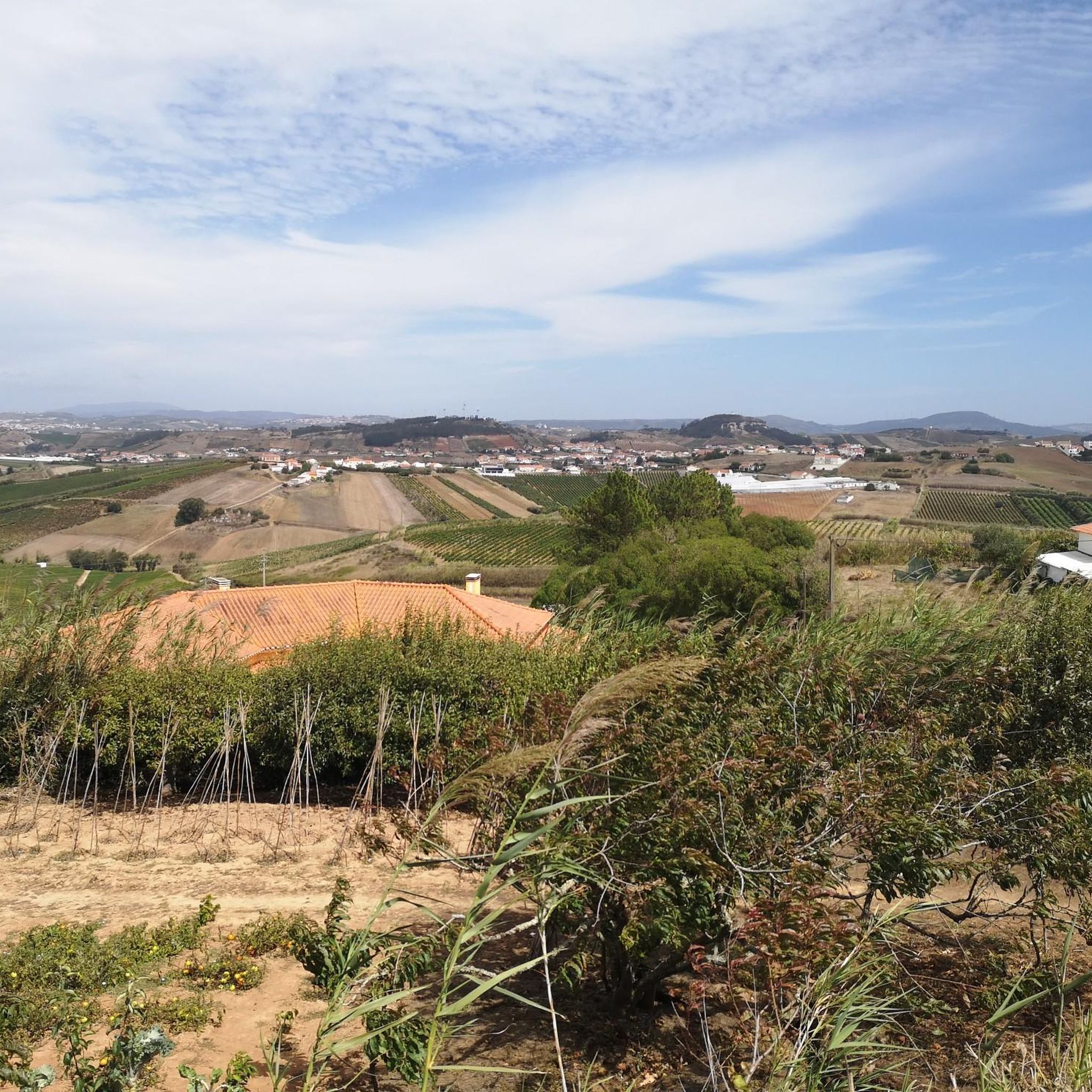
A beautiful view back to Santa Cruz and the rocky outcrop. A small path leads south from the highest point toward Praia Azul.
5
0
The poet Antero de Quental often hiked here to gaze out at the sea. Indeed, from here you have a magnificent view of the entire country. In strong winds, you can see paragliders practically suspended in mid-air, as the updrafts are so powerful.
3
0
A beautiful but steep path through low bushes starts from the road (just a few meters from the roundabout with the surfer in the middle). After a few minutes, you'll reach the fort and enjoy a magnificent view of Ericeira. Only a few walls remain, and this spot is often used by amateur photographers for photo ops.
12
2


Baroque architectural complex comprising a Palace, a Basilica and a Convent, together with gardens and a vast Tapada, forming a historical heritage complex covering over 1,200 hectares, inscribed on the UNESCO World Heritage List in 2019. Built by order of King João V in fulfilment of a succession vow, Mafra Palace is one of the most important Baroque monuments in Portugal and one of the largest in Europe, occupying a construction area of 38,000 m2, with around 1,200 rooms, 5,200 doors and windows and 156 staircases. UNESCO has recognised this monument as a feat of architecture, engineering and human genius. Based on designs by Filippo Juvarra, its final design was carried out by the German Johann Friedrich Ludwig (João Frederico Ludovice) and construction was led by the kingdom's chief engineer, Custódio Vieira. The first stone was laid on 17 November 1717 and the Basilica was consecrated on 22 October 1730. The Basilica, inspired by the great churches of Rome, has one of the most significant collections of Italian sculpture of its time, with 58 statues, a large crucifix with archangels in adoration and three high reliefs, as well as an important collection of paintings, representing some of the most famous painters active in Italy and France in the early 1730s. The collection of vestments and liturgical implements is also very significant, due to its quality and rarity. The Palace Library is one of the most iconic spaces in the monument. With a refined selection of around 30,000 volumes, it is one of the exponents of Enlightenment knowledge representative of the court culture of the first half of the 18th century. Also noteworthy is the bell ringing ensemble, with 120 bells, which include two of the largest carillons of the 18th century, cast in Antwerp and Liège in the workshops of Willem Witlockx and Nicolas Levache, respectively. The bells are accompanied by two clocks dating from the first half of the 18th century, as well as four automatons for automatic music. Inside the Basilica is a set of pipe organs, unique in the world, consisting of six instruments designed to play together, built between 1792 and 1807 by the Portuguese organ builders António Machado e Cerveira and Joaquim Peres Fontanes. The Mafra Palace has been a member of the Association of European Royal Residences since 2009.
5
0
Frequently Asked Questions
What is the main difference between Freiria in Cascais and Freiria in Torres Vedras?
The name 'Freiria' appears in different regions of Portugal. The most notable attractions are associated with the Roman Villa of Freiria in the municipality of Cascais, which is a significant archaeological site. A Freiria in Torres Vedras is a parish within a municipality known for its broader historical sites like castles and convents, and natural offerings, but without a specific central attraction named 'Freiria' itself.
What historical sites can I visit near Freiria?
Near Freiria, you can explore several historical sites. The most prominent is the Roman Villa of Freiria in Cascais, an archaeological site dating back to the 2nd century CE. In the broader region, particularly near Freiria in Torres Vedras, you can visit the 18th-century Mafra National Palace, a UNESCO World Heritage Site, and the historic Forte do Milreu, which offers panoramic coastal views.
Can I explore Roman ruins in the Freiria area?
Yes, the Roman Villa of Freiria in Cascais is a well-preserved archaeological site that provides a window into Roman life. You can see remnants of the manor house (domus), a monumental granary, agricultural structures, thermal baths with a hypocaust heating system, and a necropolis. The site features wooden boardwalks and informative signage in both Portuguese and English.
Are there any scenic viewpoints or beaches to visit around Freiria?
Absolutely. You can enjoy stunning coastal views from Forte do Milreu, which is also an excellent spot for hiking. Another popular location is Praia do Sul (Ericeira), a beach and viewpoint offering great vistas of the southern part of Balea beach. Additionally, the Alto da Vela Viewpoint provides beautiful views of Santa Cruz, with small paths leading down to the beach.
What outdoor activities are available near Freiria?
The region around Freiria offers diverse outdoor activities. You can find numerous routes for hiking, running, and road cycling. For example, there are easy hikes like the 'Ribeirinho (Azul) trail in Tapada de Mafra' and 'Cliffs of São Lourenço – Trail to Coxos Beach loop'. Running enthusiasts can explore trails such as the 'Tojeira (Green) Trail' or the 'Taipas Trail (Red)'. Road cyclists have options like the 'Long Descent – Picanceira Climb loop'. You can find more details on these activities in the easy hikes, running trails, and road cycling routes guides around Freiria.
Are there family-friendly attractions in the Freiria area?
Yes, several attractions around Freiria are suitable for families. The impressive Mafra National Palace is considered family-friendly. The Surfer Monument in Ericeira is also a great spot for families, offering a nice view of the beach. Additionally, Praia do Sul (Ericeira) and Alto da Vela Viewpoint are beaches and viewpoints that families can enjoy.
What do visitors particularly enjoy about the attractions near Freiria?
Visitors frequently praise the excellent panoramic coastal views from sites like Forte do Milreu and Praia do Sul (Ericeira). The sheer size and historical significance of Mafra National Palace leave a deep impression. Many also appreciate the opportunity for hikes and runs along the coast and through natural landscapes.
What are the opening hours for the Roman Villa of Freiria?
The Roman Villa of Freiria is accessible to the public Tuesdays through Sundays, from 9:00 AM to 6:00 PM.
Is there a place to see unique local art or monuments near Freiria?
Yes, in Ericeira, you can visit The Surfer monument. This sculpture, created by local artist José Queiroz, celebrates the World Surfing Reserve and symbolizes the surfer as a guardian of waves and nature. It's located at the Ribeira d'Ilhas Beach viewpoint, offering a great spot to watch the sunset.
What kind of archaeological finds have been made at the Roman Villa of Freiria?
The Roman Villa of Freiria has yielded a variety of significant archaeological finds. These include bell-shaped ceramic fragments from a proto-historic settlement, as well as Roman artifacts like a dog-shaped gargoyle, needles, bone pins, and a ceramic mold with a lion decoration. A lamp decorated with the goddess Diana was also discovered in the necropolis. Some of these artifacts are housed in the Municipal Museum in Cascais.
Are there easy hiking routes suitable for beginners around Freiria?
Yes, there are several easy hiking routes perfect for beginners near Freiria. Examples include the 'Ribeirinho (Azul) trail in Tapada de Mafra' (approx. 4.4 km), 'Cliffs of São Lourenço – Trail to Coxos Beach loop' (approx. 5.7 km), and 'Praia dos Coxos – Ribamar loop' (approx. 5.2 km). These routes offer a gentle introduction to the region's natural beauty. You can find more options in the easy hikes around Freiria guide.
What is the best time of year to visit Freiria for outdoor activities?
Given the coastal and rural landscapes, the best time to visit Freiria for outdoor activities is generally during spring (April to June) and early autumn (September to October). During these periods, the weather is typically mild and pleasant, ideal for hiking, running, and exploring historical sites without the intense heat of summer or the heavier rains of winter.
Most popular attractions around Freiria

Get inspired with the komoot mobile app


Explore more
Still not found the Highlight you’re looking for? See guides of the top attractions in other regions:
