Top 13 Castles around Mils
Best castles around Mils are found in the broader region of Tyrol, offering a glimpse into centuries of history. While Mils itself does not feature prominent standing castles, the surrounding areas are rich in historical fortifications and grand residences. The landscape of Tyrol, with its valleys and mountainous terrain, provided strategic locations for these structures. Visitors can explore a variety of historical sites, from medieval ruins to well-preserved castles.
Best castles around Mils
- The most popular castles is Thaur Castle…
Last updated: June 17, 2026
Thaur Castle Ruins
Highlight • Castle
Translated by Google •
Tip by

Ambras Castle, Innsbruck
Highlight • Castle
Ambras Castle, Innsbruck, is one of Austria's most important sights and the top day trip destination in Tyrol.
Visit the world's first museum preserved in its original …
Translated by Google •
Tip by

Sign up now to discover places like this
Get recommendations on the best single tracks, peaks, & plenty of other exciting outdoor places.
Sign up for free
Hasegg Castle
Highlight • Castle
The old town of Hall is the largest preserved medieval old town in North Tyrol: its landmark is the mint tower of …
Translated by Google •
Tip by
Schloss Ambras Castle Park, Innsbruck
Highlight • Historical Site
During the lifetime of Archduke Ferdinand II, Ambras Castle included a large forest area.
The grounds, which slope steeply to the east and today, …
Translated by Google •
Tip by
Water Wheels at Hasegg Castle (Hall Mint)
Highlight • Monument
The water-powered drive for the cylindrical stamping machine, which was a technical leader …
Tip by

Sign up for free to discover even more castles around Mils.
Sign up for free
Already have an account?
Start today with a free account
Your next adventure awaits.
Login or Signup
Tips from the Community

Closed to visitors from November
2
0
A very well-maintained park; today I was lucky and was able to observe two free-roaming peacocks there.
2
0

The World's First Museum / The History of Ambras Castle Ambras Castle is located on the southern outskirts of Innsbruck, the Tyrolean capital. Records of Ambras date back to the 10th century, spelled "Amras" or "Omras." In the High Middle Ages, it was the seat of the Upper Bavarian Counts of Andechs. The property then passed into the possession of the Tyrolean sovereigns through inheritance. The medieval character of the castle is still clearly evident in the structure of the upper castle. In 1564, Ambras Castle became the residence of the Tyrolean sovereign, Archduke Ferdinand II, who moved there with his young family, his wife Philippine, and their two sons, Andreas and Karl. The so-called upper castle was converted and expanded into a residential building in the Renaissance style. The impressive Spanish Hall and extensive gardens were created below the residential building as new buildings. Text / Source: Ambras Castle Innsbruck, Schlossstraße 20, 6020 Innsbruck https://www.schlossambras-innsbruck.at/das-schloss-entdecken/das-schloss#:~:text=Schloss%20Ambras%20liegt%20am%20s%C3%BCdlichen%20Stadtrand%20der%20Tiroler
16
0
Palace Park - Ambras Castle, Innsbruck During the lifetime of Archduke Ferdinand II, Ambras Castle included a large forest area. The grounds, which slope steeply to the east and today, with their cliffs, ravines, bridges, and an artificial waterfall, are reminiscent of their original state, served as a game park. The palace also boasted a richly landscaped park, completed in 1574, with fish ponds, bird aviaries, and private garden houses in the pleasure gardens. Remaining features from this period include the spacious Bacchus Grotto, carved into the rock, where the Archduke's guests were once welcomed with the famous Ambras drinking games, as well as a stair tower in the Keuchengarten, the former structure of which has been partially reconstructed. The hydroelectric "circulating table" and the ball game house south of the Spanish Hall are no longer preserved. Under Archduke Karl Ludwig, who used Ambras Castle as a summer residence, the western part of the park was transformed into a landscaped garden starting in 1855, and the Keuchengarten received a swimming pool. Text / Source: Ambras Castle Innsbruck, Schlossstraße 20, 6020 Innsbruck https://www.schlossambras-innsbruck.at/das-schloss-entdecken/orte-im-schloss/schlosspark
16
0


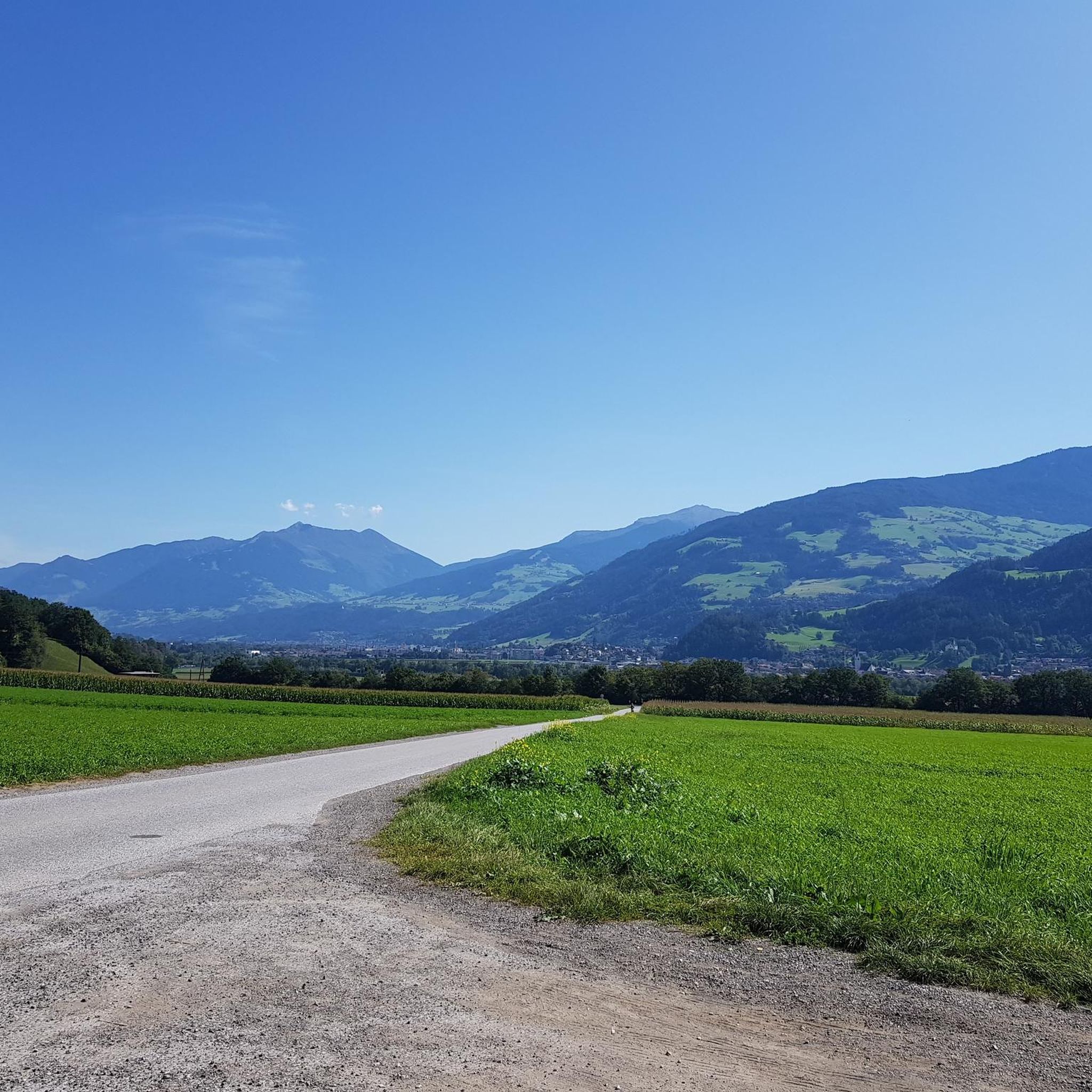
Castle ruins above Thaur with beautiful views
1
0
The World's First Museum / The History of Ambras Castle Ambras Castle is located on the southern outskirts of Innsbruck, the Tyrolean capital. Records of Ambras date back to the 10th century, spelled "Amras" or "Omras." In the High Middle Ages, it was the seat of the Upper Bavarian Counts of Andechs. The property then passed into the possession of the Tyrolean sovereigns through inheritance. The medieval character of the castle is still clearly evident today in the fabric of the upper castle. In 1564, Ambras Castle became the residence of the Tyrolean sovereign, Archduke Ferdinand II, who moved in with his young family, his wife Philippine, and their two sons, Andreas and Karl. The so-called upper castle was converted and expanded in the Renaissance style to create a residential area. The impressive Spanish Hall and extensive gardens were created below the residential building as new buildings. Text / Source: Ambras Castle Innsbruck, Schlossstraße 20, 6020 Innsbruck https://www.schlossambras-innsbruck.at/das-schloss-entdecken/das-schloss#:~:text=Ambras Castle is located on the southern outskirts of the Tyrolean town, and is the seat of the Upper Bavarian Counts of Andechs.
17
0
Ambras Castle, Innsbruck Ambras Castle, Innsbruck, is one of Austria's most important sights and the top day trip destination in Tyrol. Visit the world's first museum preserved in its original location and embark on a journey back 450 years. Text / Source: Ambras Castle, Innsbruck, Schlossstraße 20, 6020 Innsbruck https://www.schlossambras-innsbruck.at/
17
0
Frequently Asked Questions
What kind of castles can I explore near Mils?
While Mils itself doesn't have prominent standing castles, the surrounding Tyrol region offers a variety of historical sites. You can find medieval ruins like Thaur Castle Ruins, fortified castles such as Hasegg Castle in Hall in Tirol, and grand historical residences like Ambras Castle in Innsbruck.
Are there any family-friendly castles to visit near Mils?
Yes, several castles in the area are great for families. Thaur Castle Ruins offers open-air theater and scenic views. Hasegg Castle in Hall in Tirol, with its Mint Tower and historical water wheels, provides an engaging experience for all ages. Ambras Castle and its extensive Castle Park in Innsbruck also offer plenty to explore for families.
What is the best time of year to visit castles around Mils?
The best time to visit castles around Mils is generally from spring to autumn (April to October) when the weather is mild and most attractions are fully open. This period is ideal for exploring castle grounds, parks, and enjoying nearby hiking trails. Some castles, like Hasegg Castle and Ambras Castle, have indoor museums that can be enjoyed year-round, but outdoor access might be limited in winter.
Can I find hiking trails that lead to or pass by castles near Mils?
Absolutely! The region around Mils is excellent for combining castle visits with outdoor activities. You can find various hiking routes that incorporate historical sites. For instance, there are trails that lead to Thaur Castle Ruins, offering great views of the Inn Valley. For more hiking options, check out the Hiking around Mils guide or the Mountain Hikes around Mils guide for routes like the Halltal Escape Trail.
Are there any castles near Mils that offer scenic viewpoints?
Yes, several castles provide excellent scenic viewpoints. Thaur Castle Ruins, located on the edge of the Nordkette, offers panoramic views of the Inn Valley. The Mint Tower at Hasegg Castle in Hall in Tirol also provides a wonderful view of the historic town.
What historical significance does Hasegg Castle hold?
Hasegg Castle in Hall in Tirol is historically significant as it was built to protect the town, its saltworks, and the bridge over the Inn. Its importance grew in 1567 when Archduke Ferdinand II moved the mint there. The castle's Mint Tower became a landmark, and the site was crucial for the production of coins, including the Maria Theresa thaler.
Is Ambras Castle worth visiting, and what can I see there?
Ambras Castle in Innsbruck is definitely worth visiting. It's renowned for its cultural-historical importance, largely due to Archduke Ferdinand II, who established one of the earliest museum complexes there. You can explore his Art and Curiosity Chamber, the hero armory, and the Habsburg portrait gallery. The castle also houses a collection of late medieval sculptures and one of the world's largest glass collections. Don't miss the beautiful Schloss Ambras Castle Park with its historical features.
Are there options for cycling or gravel biking near the castles?
Yes, the region offers opportunities for cycling, including gravel biking. While not directly leading to every castle, routes often pass through scenic areas near these historical sites. For example, you can find routes like the 'Mint Tower, Hall in Tyrol – Gnadenwald Plateau loop' which incorporates the area around Hasegg Castle. Explore the Gravel biking around Mils guide for more options.
What do visitors enjoy most about the castles around Mils?
Visitors particularly enjoy the rich history and impressive architecture of the castles. The scenic views from places like Thaur Castle Ruins and the historical insights offered by Hasegg Castle are highly appreciated. The well-maintained grounds of Schloss Ambras Castle Park and the extensive collections within Ambras Castle also receive high praise.
Are there any lesser-known castle ruins or historical sites to discover?
While the guide focuses on the most prominent sites, the broader Tyrol region is dotted with many historical fortifications. Thaur Castle Ruins, though popular, still offers a more rustic and natural experience compared to fully restored castles. Exploring the hiking trails around Mils can sometimes lead to discovering smaller, less-frequented historical remnants in the landscape.
How can I reach the castles around Mils using public transport?
Many castles in the region are accessible by public transport, often requiring a combination of train and bus. For example, Hasegg Castle is located in the center of Hall in Tirol, which is well-connected by bus from Mils. Ambras Castle in Innsbruck is also reachable via public transport from Innsbruck city center, which itself is easily accessible from Mils. It's advisable to check local bus and train schedules for specific routes and timings.
Are dogs allowed at the castles or in their parks?
Policies regarding dogs vary by location. Generally, dogs on a leash are often permitted in outdoor castle parks and grounds, such as the Schloss Ambras Castle Park and around Thaur Castle Ruins. However, they are typically not allowed inside castle buildings or museums for conservation reasons. Always check the specific rules of each castle before your visit.
Most popular routes around Mils
Most popular attractions around Mils

Get inspired with the komoot mobile app


Explore more
Looking for the best castles somewhere else? Discover other guides around Mils:
