The 20 Most Amazing Peaks around Southwest Harbor
Best mountain peaks around Southwest Harbor are found on Mount Desert Island within Acadia National Park. This region offers diverse hiking experiences, providing views of the Atlantic Ocean, Somes Sound, and the island's landscape. The area features a variety of peaks, ranging from moderate trails to challenging ascents.
Best mountain peaks around Southwest Harbor
- The most popular mountain peaks include Bubble Rock at South Bubble, a natural monument and summit that is an icon of Acadia National Park. This…
Last updated: October 12, 2026
Sargent Mountain Summit
Highlight • Summit
Tip by

Penobscot Mountain Summit
Highlight • Summit
Translated by Google •
Tip by

Sign up now to discover places like this
Get recommendations on the best single tracks, peaks, & plenty of other exciting outdoor places.
Dike Peak — Cadillac South Ridge Trail
Highlight • Summit
Translated by Google •
Tip by
Bubble Rock at South Bubble
Highlight • Natural Monument
Translated by Google •
Tip by
Parkman Mountain Summit
Highlight • Summit
Translated by Google •
Tip by
Sign up for free to discover even more peaks around Southwest Harbor.
Already have an account?
Start today with a free account
Your next adventure awaits.
Tips from the Community

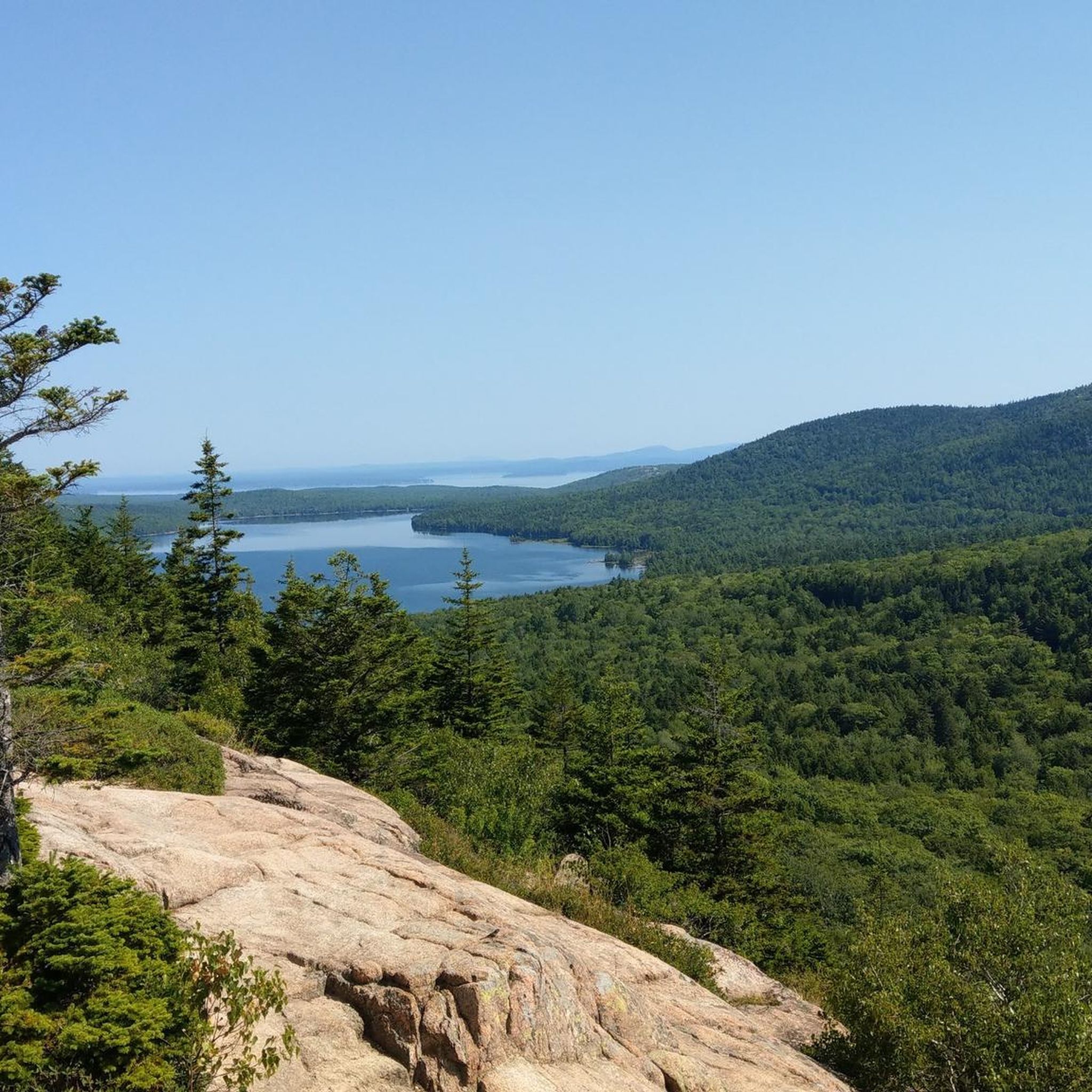
The "Dike Peak" lies along the "Cadillac Mountain South Ridge Trail" south of the small mountain lake "The Featherbed". However, the small elevation is not included in the statistics of the "26 peaks in Acadia National Park". The "Cadillac Mountain South Ridge Trail" follows the ridge west of the summit down to the depression at 'Fetherbed Lake' and then over the 'Dike Peak' and 'Eagles Crag' to the 'Champlain Drive'. On the way down you have a wonderful view of the Atlantic Ocean to the south.
2
0
Penobscot Mountain (360 m) was the first peak on our six-peak hike in spring in brilliant sunshine, starting and ending at Jordan Pond. The ascent was via the steep Spring Trail and Penobscot Mountain Trail on the granite rock ridge. The other peaks were Cedar Swamp Mountain (287 m), Bald Peak (297 m), Parkman Mountain (287 m), Gilmore Peak (316 m) and Sargent Mountain (419 m).
2
0
The ‘Parkman Mountain’ is located on our six-peak circular hike between ‘Somes Sound’ in the west and ‘Sargent Mountain’. At the end of May we reach the granite rock summit after a short descent from ‘Bald Peak’, which is in the immediate vicinity. The well-marked rock path leads steeply down into a mountain depression and steeply up again. The direct ascent to the mountain is usually via the ‘Parkman Mountain Trail’ from the Norumbega car park on Route 3.
2
0
The summit of Sargent Mountain can be reached via various hiking trails - from the west on the Sargent Northwest Trail in connection with the Giant Slide Trail and from the south on the Sargent South Ridge Trail. At the end of May we hike on the challenging Grandgent Trail from Parkman Mountain over Gilmore Peak to the summit. On the rocky plateau of Sargent Mountain we have a beautiful view of Mount Desert Island. We see Cadillac and Pemetic Mountains to the east, Eagle Lake to the northeast, Penobscot Mountain to the south and the mountains of Acadia National Park to the west. https://www.nps.gov/thingstodo/hike-sargent-and-penobscot-mountains-from-jph-with-island-explorer-bus.htm
2
0
East of the summit of the 'South Bubble' (220 m) lies the striking 'Bubble Rock' at the top of the granite cliff. The rock, made of a different granite, was transported from the north by a glacier during the Ice Age and deposited here when it melted. https://www.nps.gov/places/acadia-earthcache-stop-two.htm
2
0


Nice view in all directions
1
0

From this point you can enjoy an extraordinary view
0
1
Frequently Asked Questions
Which mountain peaks offer the most expansive panoramic views around Southwest Harbor?
For sweeping panoramic views, consider Sargent Mountain Summit, the second-highest peak in Acadia National Park. It offers vistas from Cadillac Mountain across Somes Sound to the western half of Mount Desert Island. Dike Peak, part of the Cadillac Mountain South Ridge Trail, also provides excellent views in all directions, particularly of the Atlantic Ocean.
Are there any unique natural landmarks among the mountain peaks?
Yes, Bubble Rock at South Bubble is an iconic natural monument. This massive glacial boulder appears precariously balanced on the South Bubble summit, a result of glacial transport during the Ice Age.
What are some challenging mountain trails in the Southwest Harbor area?
Acadia Mountain offers a strenuous hike with sections involving rock scrambling and granite ledges, providing wonderful views of Somes Sound. While not a peak itself, the Perpendicular Trail, often combined with the Beech Cliff Loop, is renowned for its steep climb over 300 stone steps and iron rungs, offering a challenging and rewarding trek with expansive views.
Are there any mountain peaks with historical significance?
Beech Mountain Fire Tower is a notable historic landmark. From the base of this tower, hikers can see most of the peaks on the western half of Mount Desert Island. While the tower's top is often closed, the mountain itself is a great destination.
Are there family-friendly mountain peaks around Southwest Harbor?
Flying Mountain offers a short but steep ascent, leading to a lower summit with stunning views of Somes Sound. Its manageable length and varied scenery, including a peaceful ocean cove and rocky beach, make it a popular choice for families looking for a rewarding hike without extreme difficulty.
What is the best time of year to hike the mountains around Southwest Harbor?
The warmer months, from late spring through early fall, generally offer the most favorable conditions for hiking. However, Beech Mountain is noted as a great option for a sunset hike, though visitors should bring lights if hiking during twilight. Winter hiking is possible, but conditions can be challenging due to snow and ice, requiring appropriate gear.
Where can I find parking for mountain trails near Southwest Harbor?
Parking is available at various trailheads within Acadia National Park. For example, the direct ascent to Parkman Mountain is usually via the Parkman Mountain Trail from the Norumbega car park on Route 3. It's always advisable to check specific trail information for designated parking areas before your visit, especially during peak season.
What other outdoor activities can I do near these mountain peaks?
Beyond mountain hiking, the area around Southwest Harbor offers a variety of outdoor activities. You can explore numerous running trails, including the Great Notch and Long Pond Loop. Cycling is also popular, with routes like the Bass Harbor Light Station & Seawall Road loop. For more hiking options, consider trails like the Perpendicular and Razorback Loop.
Are there any loop hikes that combine multiple peaks?
Yes, Parkman Mountain Summit makes a fantastic hike when combined with the nearby Gilmore Peak and Bald Peak. This allows for a longer, more varied experience with multiple viewpoints.
What kind of wildlife might I encounter on the mountain trails?
Acadia National Park is home to diverse wildlife. While specific sightings are never guaranteed, hikers might spot white-tailed deer, red foxes, and various bird species. The spruce-fir forests and open ledges provide habitats for many creatures. Always observe wildlife from a respectful distance.
What are the typical trail conditions on the mountain peaks?
Trails vary from well-marked rock paths to strenuous sections involving granite ledges and rock scrambling. Some trails, like those leading to Sargent Mountain, can be barren and windy at the summit. Lower elevations may feature carriage roads where bikers and horses are present. Always wear appropriate footwear and be prepared for varied terrain.
Are there any easy mountain hikes suitable for beginners?
While many trails offer moderate to challenging sections, some peaks like Flying Mountain provide a relatively short ascent with a rewarding view, making them more accessible. For easier, shorter hikes, you might also find sections of trails or loops that are less strenuous, such as the Beech Mountain West Ridge Trail which is rated as easy.
What do visitors enjoy most about the mountain peaks around Southwest Harbor?
Visitors consistently praise the stunning panoramic views of the Atlantic Ocean, Somes Sound, and the unique island landscape. The diverse hiking experiences, from challenging scrambles to more moderate paths, are also highly valued. The presence of unique natural features like Bubble Rock and historic sites like the Beech Mountain Fire Tower add to the appeal, making each hike a memorable experience.
Most popular attractions around Southwest Harbor

Get inspired with the komoot mobile app


Explore more
See even more amazing summits around Southwest Harbor with these guides:
