The best cycling routes in Badlands National Park
11
riders
6
rides
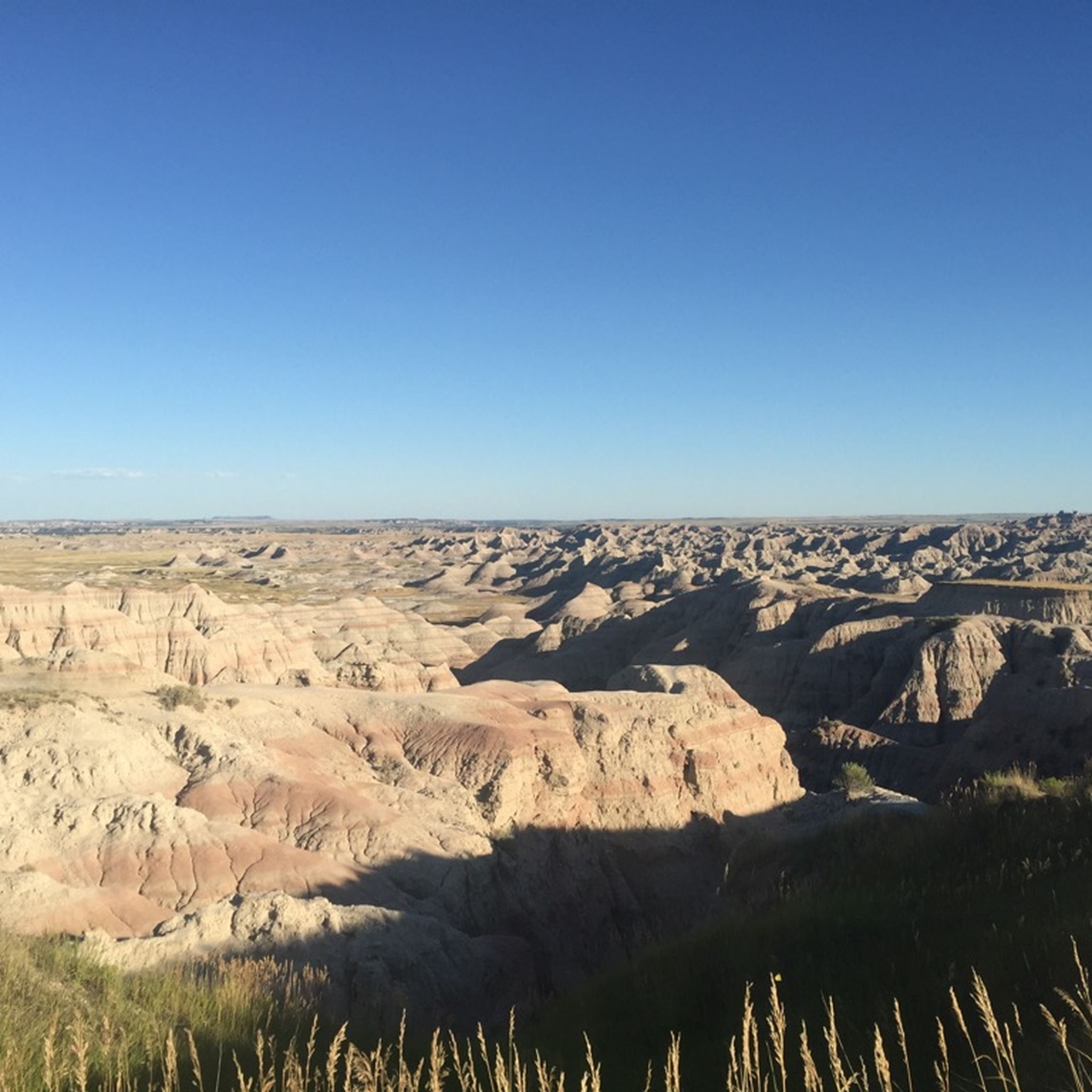
Touring cycling in Badlands National Park features a landscape of dramatically eroded buttes, spires, and pinnacles, sculpted by millions of years of deposition and erosion. The park is characterized by colorful layers of sediment, the prominent Badlands Wall, and the largest undisturbed mixed-grass prairie in the United States. This geological formation offers diverse terrain for cycling, from paved scenic roads to unpaved routes through grasslands.
Best touring cycling routes in Badlands National Park
- The most popular touring cycling route is…
Last updated: July 7, 2026
4
riders
42.2km
03:02
250m
250m
Moderate bike ride. Good fitness required. Mostly paved surfaces. Suitable for all skill levels.
1
riders
26.9km
02:01
180m
180m
Moderate bike ride. Good fitness required. Mostly paved surfaces. Suitable for all skill levels.

Sign up for free
2
riders
94.5km
06:43
530m
530m
Hard bike ride. Very good fitness required. Mostly paved surfaces. Suitable for all skill levels.
3
riders
45.2km
03:01
250m
250m
Moderate bike ride. Good fitness required. Mostly paved surfaces. Suitable for all skill levels.
1
riders
55.5km
04:18
330m
330m
Moderate bike ride. Good fitness required. Mostly paved surfaces. Suitable for all skill levels.
Our route recommendations are based on thousands of hikes, rides, and runs completed by other people on komoot.
Start today with a free account
Your next adventure awaits.
Login or Signup
Popular around Badlands National Park
Other adventures in Badlands National Park

Tips from the Community

Behind the ranch store, there is a field that is home to a group of prairie dogs. The prairie dogs are used to humans coming by to see them, so they should come out if you are there. Remember that the prairie dogs are wild animals, so you should not feed or touch them and should admire them from a safe distance.
0
0
Interesting viewpoint in Badlands National Park. From this point, you are able to see the environment transition from eroded Badland rock formations to prairie. Buffalo are known to roam this area, so keep your eye out for them if you stop to admire the view.
0
0
Bison are normally seen grazing in this area and are visible from the road. Remember to keep a minimum of a 100-foot distance from any wildlife -- if the wildlife notices you, you are too close. If you want to stop to admire the wildlife from a safe distance, make sure to stop in a pull off site and not directly on the road.
0
0
This is the largest prairie-dog town in the accessible areas of Badlands National Park. You will see and hear prairie-dogs moving between the mounds of dirt they make their home. Prairie-dogs are wildlife, so you should always view them from a safe distance.
1
0
Unlike other viewpoints along in Badlands National park, the hill formation in this area is different. Here the hills are smooth with beautiful pastel colors such as creamy white, yellow and rose.
1
0
Great view point of the Pinnacles and nearby grasslands. There is a viewing platform to get the best view. You will need to leave your bike for a minute to walk up a couple of stairs to reach the platform.
1
0
Viewpoint of Eagle Butte and Cliff Shelf. There is a viewing platform to get a more elevated view and give you a space to get off the road to take a break, but you will need to get off of your bike to go up several steps. There is parking at the viewpoint, but no water or restrooms.
1
0
Great view point of the Pinnacles and nearby grasslands. There is a viewing platform to get the best view. You will need to leave your bike for a minute to walk up a couple of stairs to reach the platform.
1
0
Frequently Asked Questions
How many touring cycling routes are available in Badlands National Park?
Badlands National Park offers a selection of 6 touring cycling routes, catering to various skill levels. These routes provide diverse experiences, from paved scenic roads to unpaved paths through the park's unique geological formations and mixed-grass prairie.
What is the best time of year to go touring cycling in Badlands National Park?
The best time for touring cycling in Badlands National Park is generally during the spring (April-May) and fall (September-October) when temperatures are milder. Summers can be very hot, and winters bring cold temperatures and potential snow, making cycling less comfortable. Be aware that heavy traffic can occur on the Badlands Loop Road from Memorial Day to Labor Day.
What kind of terrain can I expect on touring cycling routes in Badlands National Park?
You can expect a mix of terrain. The park features paved roads, such as sections of the Badlands Loop Road, as well as unpaved routes through rolling grasslands and near ranch land. Some routes, like the Northeast-Big Foot Loop, combine both paved and unpaved surfaces, showcasing the diverse landscape of badland formations and prairie.
Are there any specific challenges or things to be aware of when cycling in Badlands National Park?
Yes, touring cyclists should be aware of a few challenges. Water is not readily available along most routes, so carrying sufficient amounts is crucial. Some unpaved roads may have 'goatheads' (spiny seeds) in late summer, which can puncture tires. Additionally, sections of the Badlands Loop Road can have narrow sections, curves, and heavy traffic, especially during peak season, so cyclists should exercise caution.
What kind of wildlife might I encounter while cycling in Badlands National Park?
Badlands National Park is home to diverse wildlife. While cycling, you have a high probability of encountering bison, bighorn sheep, coyotes, prairie dogs, burrowing owls, and pronghorn. The Sage Creek area is particularly known for excellent wildlife viewing opportunities.
What are some notable landmarks or viewpoints to see along the cycling routes?
The park offers numerous spectacular viewpoints. Along the Badlands Loop Road, you'll find overlooks such as Pinnacles Overlook, Big Badlands Overlook, White River Valley Overlook, and Yellow Mounds Overlook, providing panoramic views of the dramatic formations. You can also explore short hiking trails like the Notch Trail or the Window Trail, which offer closer looks at the unique terrain.
Are there opportunities for hiking along the cycling routes?
Yes, while cycling is restricted to designated roads, you can dismount and explore various hiking trails to get a closer look at the unique terrain. Notable trails include the Door Trail Boardwalk, Notch Trail, and Window Trail. The Fossil Exhibit Trail is an accessible boardwalk for learning about paleontology.
Are there any loop cycling routes in Badlands National Park?
Yes, Badlands National Park features several loop cycling routes. For example, the Northeast-Big Foot Loop is a 27-mile route combining paved and unpaved surfaces. Another option is the Roberts Prairie Dog Town – Badlands Wilderness Overlook loop from Wall, which takes you through prairie dog towns.
What are the difficulty levels of touring cycling routes in Badlands National Park?
The touring cycling routes in Badlands National Park range from moderate to difficult. Out of the 6 available routes, 4 are classified as moderate, and 2 are considered difficult. This variety allows cyclists to choose routes that match their experience and fitness levels, with options like the moderate Badlands Loop or the more challenging Scenic loop.
Do I need any special permits for cycling in Badlands National Park?
While a park entrance fee is required to enter Badlands National Park, specific permits for general touring cycling on designated roads are typically not needed. However, it's always advisable to check the official National Park Service website for the most current regulations regarding permits or any special restrictions, especially for off-road or backcountry cycling. You can find more information on the official NPS Badlands website.
Are there family-friendly touring cycling routes in Badlands National Park?
While the Badlands Loop Road is popular, its narrow sections and traffic can be challenging for families with young children. For a potentially more family-friendly experience, consider routes with less traffic or shorter distances. Always assess the specific route conditions and your family's cycling abilities before embarking on a ride. The park's paved sections might be suitable for older children comfortable with road cycling.
Can I bring my dog on touring cycling routes in Badlands National Park?
Dogs are generally permitted in Badlands National Park, but their access is restricted. They are allowed in developed areas such as campgrounds, picnic areas, and along roads, but not on hiking trails or in the backcountry. This means your dog can accompany you on designated cycling roads, but you won't be able to take them on off-road trails or into wilderness areas. Always keep your dog on a leash and clean up after them.
What should I bring for a touring cycling trip in Badlands National Park?
Given the park's remote nature and climate, essential items for a touring cycling trip include ample water (as it's not readily available on routes), sun protection (sunscreen, hat, sunglasses), appropriate clothing layers, a repair kit for your bike (including spare tubes and a pump, especially due to potential goatheads on unpaved roads), and snacks. A map and navigation device are also recommended.
Most popular routes in Badlands National Park
Most popular attractions in Badlands National Park

Get inspired with the komoot mobile app


