The best cycling routes around Chettle
4.6
(69)
830
riders
69
rides
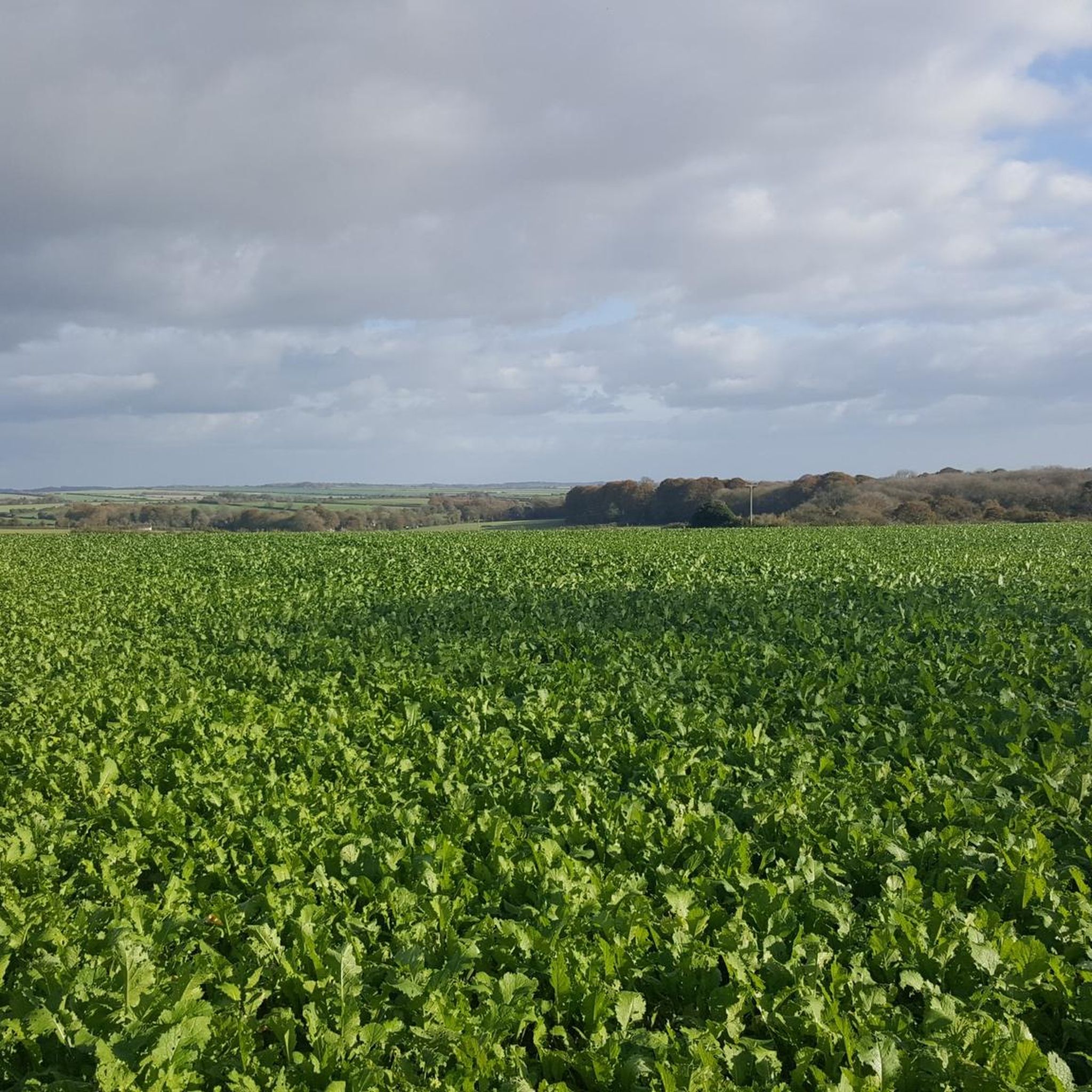
Touring cycling routes around Chettle traverse the gently rolling foothills of Cranborne Chase, an ancient landscape characterized by expansive open fields and prominent wood-topped hills. The region features a mix of mostly paved surfaces and some unpaved segments, offering varied terrain for cyclists. This area provides a sense of openness and tranquility, with routes often passing through historical sites and offering long views to distant woodlands.
Best touring cycling routes around Chettle
- The most popular touring cycling route is Gussage…
Last updated: June 18, 2026
3.0
(1)
1
riders
27.3km
02:02
210m
210m
Moderate bike ride. Good fitness required. Mostly paved surfaces. Suitable for all skill levels.
5.0
(1)
22
riders
56.1km
03:35
530m
530m
Hard bike ride. Very good fitness required. Mostly paved surfaces. Suitable for all skill levels.

Sign up for free
17
riders
31.9km
02:29
380m
380m
Moderate bike ride. Good fitness required. Mostly paved surfaces. Suitable for all skill levels.
5.0
(1)
7
riders
31.9km
01:58
260m
260m
Moderate bike ride. Good fitness required. Mostly paved surfaces. Suitable for all skill levels.
3
riders
27.7km
02:22
300m
300m
Hard bike ride. Good fitness required. You may need to push your bike for some segments of this route.
Get access to more routes and recommendations from other explorers.
Sign up for free
Already have an account?
Our route recommendations are based on thousands of hikes, rides, and runs completed by other people on komoot.
Start today with a free account
Your next adventure awaits.
Login or Signup

Tips from the Community

If you enjoy a bit of architectural time-travel with a spooky twist, Knowlton Church & EarthworksClick to open side panel for more information is one of the most atmospheric spots in Dorset. It is essentially a "history sandwich" where a 12th-century Christian church was built directly inside a much older Neolithic henge. The Ultimate Mash-up: It is a rare example of "reusing" a sacred site. The Normans built their church right in the middle of a pagan ceremonial circle, creating a visual timeline that spans thousands of years. Ghostly Vibes: Because of its lonely location and ruined state, it is a legendary hotspot for local ghost stories. Whether you believe in the "Face in the Window" or not, the silence of the surrounding fields makes it feel incredibly mysterious. The Henge High-Ground: You can still walk along the massive circular earthwork banks. From the top, you get a great view of the ruined flint walls of the church standing defiantly in the center of the ring. Picnic with the Past: Unlike many tourist spots, it is completely open and free to wander. It’s a perfect place to spread a blanket, grab a sandwich, and wonder what the original builders were thinking 4,000 years ago.
0
0
Interior Details: The interior is known for its high-quality flint work on the tower walls and a range of interesting features: Pulpit: A magnificent 15th-century pulpit is a central feature. Font: A 12th-century font is another medieval survival. Tomb Recess: Against the north wall, there is a canopied tomb recess from the 14th century. For a long time, it was thought to be a rare "Easter Sepulchre," but a skeleton was found inside during the 1860s restoration, suggesting it was a tomb. Organ: The church's organ is a fascinating piece of its history. An 18th-century Walker organ, it was gifted to the church and is said to have been used for choir practice at Westminster Abbey before its installation here. The church, set on a rise at the north-west corner of the village, is part of the "Knowlton Circle Benefice," which also includes nearby parishes like Cranborne and Wimborne St Giles, both of which are included on this cycle route.
0
0
All Saints Church is the parish church for the village of Gussage All Saints in Dorset. It's a Grade I listed building with a long and layered architectural history, primarily reflecting the Early English and Decorated Gothic styles. Medieval Origins: The church's main body, including the nave and chancel, dates largely to the early 14th century. The walls are constructed from a mix of local flint, rubble, and various types of stone, including Shaftesbury Sandstone and Heathstone. The Tower: The impressive west tower was built in several stages. Its lower part dates to the 14th century, while the upper stages and embattled parapet were added in the 15th century. The tower is particularly distinctive for its use of alternating bands of flint and ashlar stone. Victorian Restoration: Like many English churches, All Saints underwent a significant Victorian restoration. In 1864, architect Ewan Christian carried out extensive work. A notable change from this period was the moving of the original medieval chancel arch to the north wall, where it now frames the organ. A new chancel arch was then built by the architect John Hicks, who was a mentor to the famous novelist Thomas Hardy.
0
0
St. Giles Church is known for its numerous monuments, particularly those dedicated to the Earls of Shaftesbury. Sir Anthony Ashley's Tomb: A historic highlight is the spectacular gilded tomb of Sir Anthony Ashley, dating to 1628. The tomb features intricate classical columns and symbolism. A curious detail is a sphere at his feet, which has been the subject of various theories, including that it represents a globe, a jewel, or even a cabbage. Ashley-Cooper Family Memorials: The church houses several other memorials to the Ashley-Cooper family, including tombs for the 1st, 3rd, 4th, 7th, and 9th Earls. The 1st Earl's memorial includes a bust by Rysbrack, and the 3rd Earl's is a grand wall monument by Scheemakers. Crusader Effigy: There is a much-restored 14th-century effigy of a crusading knight, believed to be Sir John de Plecy. Comper's Work: The interior is almost entirely a result of Sir Ninian Comper's restoration. This includes the highly decorated screen separating the nave and chancel, new stained glass windows, and the gilded tester over the altar.
1
0
19th-Century Gothic Revival: In the 19th century, the church was remodeled twice. The most significant work was in 1887, a Gothic Revival-style memorial to the 8th Earl of Shaftesbury. The 1908 Fire and Comper's Restoration: A catastrophic fire in 1908 destroyed most of the church's interior, leaving only the walls standing. The 9th Earl of Shaftesbury commissioned the renowned Gothic Revival architect Sir Ninian Comper to restore and rebuild the church. Comper's work, completed between 1908 and 1910, is considered one of his masterpieces. He kept the 18th-century external walls but completely redesigned the interior, adding a new north aisle and a lady chapel. His intricate work, including stained glass, a wooden screen, and numerous sculptures, makes the church a "treasure-house of Comper work," as described by Sir John Betjeman.
1
0
St. Giles Church is the parish church for the village of Wimborne St Giles in Dorset. It has a rich and complex history, marked by several rebuilds, a major fire, and the patronage of the Ashley-Cooper family, the Earls of Shaftesbury. The church's origins date back to at least the 13th century, with the first recorded rector in 1207. The current building is a fascinating mix of architectural styles due to its turbulent history. 18th-Century Georgian: The church was almost entirely rebuilt in 1732 by the Dorset architects John and William Bastard, who were also responsible for much of the reconstruction of the town of Blandford Forum after a fire. The exterior of the church, with its greensand and flint walls, still largely reflects this Early Georgian design.
1
0
Easter Sepulchre: A truly exceptional feature is the ornate early 16th-century Easter Sepulchre, located on the north wall of the chancel. This superbly carved example is one of the few surviving in Dorset and is considered unique in the county. It bears the initials "TW" for Thomas Weaver, who served as rector from 1514-1536 and was likely responsible for its erection. Its sophisticated Renaissance decoration and resemblance to angels by Benedetto da Rovezzano suggest influences from contemporary French and Italian art. Norman Font: The 12th-century font is crafted from local Purbeck marble and is topped by a 17th-century oak cover. Lectern: The church boasts a beautiful Art Nouveau style lectern, made from iron and brass in 1909. Registers: The church registers date back to 1545.
0
0
St Mary's Church in Tarrant Hinton, Dorset, is a charming medieval church with a rich history and several notable architectural features. It is one of several "Tarrant" villages named after the River Tarrant that flows through the area. Medieval Origins: The church dates back to the 13th century, with some Norman elements surviving, such as the font and piscina. Restorations and Additions: The church underwent a restoration in 1891. The chancel, by contrast, is largely Victorian, resulting from remodelling in 1874. Materials: The walls are a mix of banded flint and Upper Greensand, with some Ham Hill Stone used for windows and Caen stone for the Easter Sepulchre. The tower is primarily Upper Greensand ashlar. The changing workmanship in the banding of materials can illustrate different dates of construction. Tower: The 15th-century tower is heavily decorated with grotesque carvings and has a battlemented top. South Door: The south door exhibits traditional Norman zigzag carving motifs
0
0
Frequently Asked Questions
How many touring cycling routes are available around Chettle?
There are over 70 touring cycling routes around Chettle, offering a wide range of options for different skill levels and preferences. These routes are highly rated by the komoot community, with an average score of 4.6 stars.
What kind of terrain can I expect on touring cycling routes near Chettle?
The routes around Chettle traverse the gently rolling foothills of Cranborne Chase, characterized by expansive open fields and prominent wood-topped hills. You'll find a mix of mostly paved surfaces, ideal for touring, alongside some unpaved segments that add variety to the ride. The area offers a sense of openness and tranquility with long views to distant woodlands.
Are there any family-friendly touring cycling routes in Chettle?
Yes, Chettle offers 13 easy touring cycling routes that are suitable for families. These routes typically feature gentler gradients and shorter distances, allowing for a relaxed and enjoyable experience for all ages. While specific family-friendly routes aren't highlighted by name in the data, the 'easy' classification indicates suitability.
Are there circular touring cycling routes around Chettle?
Yes, many of the touring cycling routes around Chettle are designed as loops, allowing you to start and finish at the same point. For example, the Gussage Hill and Knowlton Henge loop from Sixpenny Handley is a popular circular option that explores rolling hills and historical sites.
What landmarks or attractions can I see along the touring cycling routes?
The routes often pass through historical sites and offer scenic views. You might encounter ancient features like the Chettle Long Barrow or prehistoric earthworks within Cranborne Chase. Notable viewpoints and historical sites in the wider area include Win Green Summit, Hambledon Hill Iron Age hill fort, and Badbury Rings Iron Age hillfort. The village of Chettle itself features the magnificent Chettle House and St Mary's Church.
When is the best time of year to go touring cycling in Chettle?
The region's expansive open fields and vast skies are enjoyable throughout much of the year. Spring and autumn offer pleasant temperatures and beautiful scenery, while summer provides longer daylight hours. Be mindful that some unpaved segments might be muddier after heavy rain, especially in wetter seasons.
Are there any challenging touring cycling routes for experienced riders?
Yes, for experienced touring cyclists seeking a challenge, there are 16 difficult routes available. One such route is the Gussage All Saints Church – Cranborne Garden Centre loop from Cashmoor, a 34.9-mile path that leads through open fields and past village landmarks, offering a demanding ride with significant elevation changes.
Can I find places to stop for refreshments like cafes or pubs along the routes?
While specific cafes and pubs directly on every route are not detailed, the touring cycling routes often pass through or near villages such as Sixpenny Handley, Cashmoor, and Pimperne. These villages are good places to look for local establishments where you can stop for refreshments and a break.
What do other touring cyclists say about cycling in Chettle?
The touring cycling routes around Chettle are highly regarded by the komoot community, with an average rating of 4.6 out of 5 stars from over 60 reviews. Cyclists often praise the tranquil atmosphere, the blend of paved and unpaved surfaces, and the scenic views of rolling hills and woodlands.
Are there any long-distance touring cycling options near Chettle?
Yes, for those looking for longer rides, routes like the Gussage All Saints Church – Cranborne Garden Centre loop from Cashmoor cover nearly 35 miles. Another option is the Long Crichel Bakery loop from Cashmoor, which is approximately 20 miles and offers a substantial ride through the local landscape.
Is it possible to combine touring cycling with exploring historical sites?
Absolutely. The region is rich in history, being part of Cranborne Chase, a vast medieval hunting ground peppered with prehistoric earthworks and Roman roads. Many routes naturally incorporate or pass close to these historical elements, allowing you to combine your ride with cultural exploration. For instance, the Gussage Hill and Knowlton Henge loop specifically highlights a historical site.
What are some scenic viewpoints accessible by touring bike?
The Chettle area offers 'long views to woods and forests' and 'fine views north to Pentridge Hill'. Routes like the View of Hod Hill – Durweston Mill loop from Pimperne are specifically designed to showcase scenic vistas of distant hills and woodlands, including views of Hod Hill.
Most popular attractions around Chettle

Get inspired with the komoot mobile app


Explore more
Browse the best Cycling routes in other regions.
