The best walks and hikes around Cabañas De Yepes
5.0
(2)
17
hikers
19
hikes
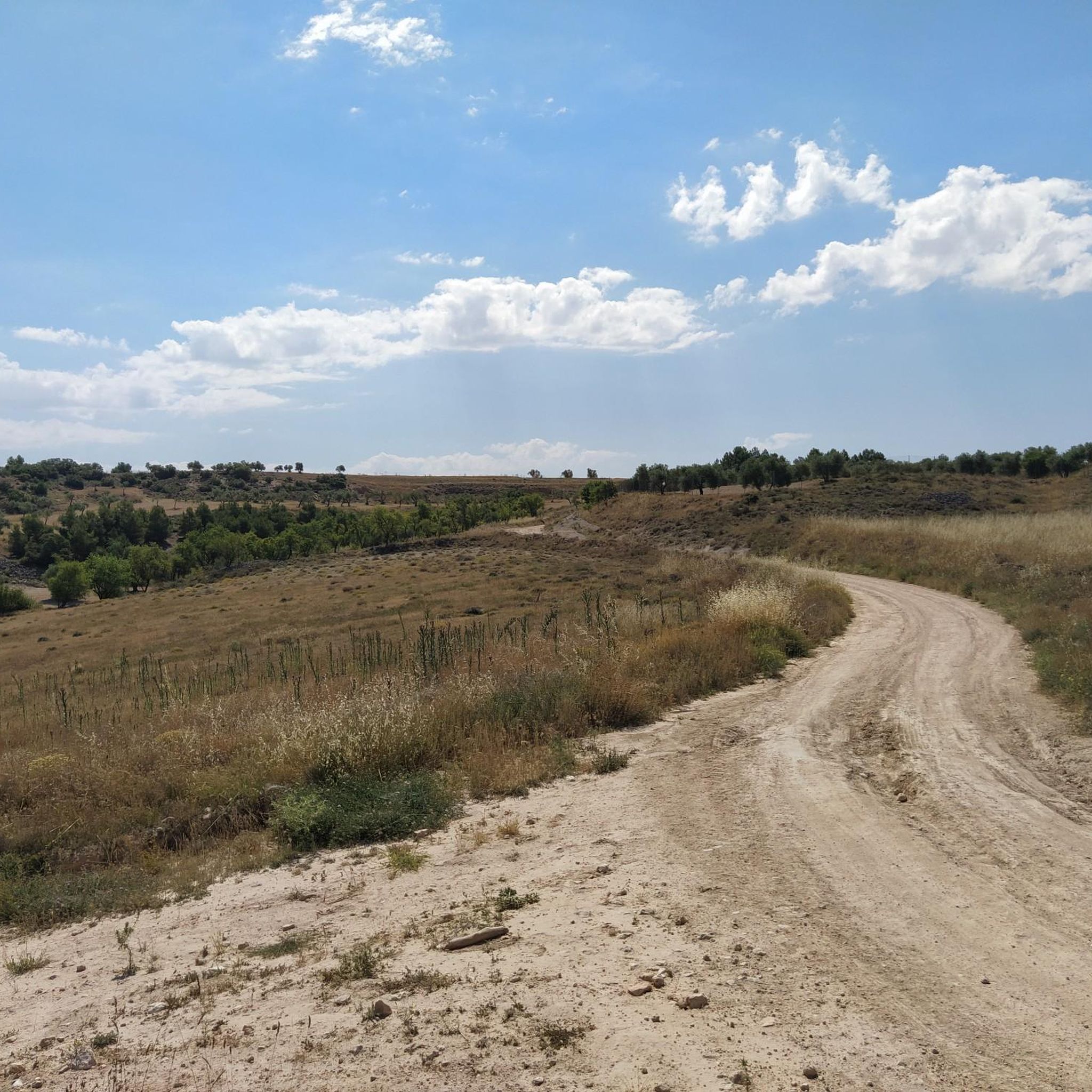
Hiking around Cabañas De Yepes offers exploration of the Ocaña Plateau, characterized by its distinct geological features and agricultural landscapes. The region features unique "cárcavas" (ravines) that reveal ancient geological history and provide scenic views. Trails often traverse extensive fields of cereals, vineyards, and olive groves, interspersed with areas of Mediterranean vegetation. Hikers can also discover historical gypsum quarries and natural springs, adding to the varied terrain.
Best hiking trails around Cabañas De Yepes
- The most popular hiking route is…
Last updated: June 30, 2026
5.18km
01:25
80m
70m
Easy hike. Great for any fitness level. Easily-accessible paths. Suitable for all skill levels.
4.92km
01:17
30m
30m
Easy hike. Great for any fitness level. Easily-accessible paths. Suitable for all skill levels.

Sign up for free
5
hikers
Easy hike. Great for any fitness level. Easily-accessible paths. Suitable for all skill levels.
5.0
(2)
5
hikers
8.49km
02:10
20m
20m
Moderate hike. Good fitness required. Easily-accessible paths. Suitable for all skill levels.
2
hikers
Moderate hike. Good fitness required. Easily-accessible paths. Suitable for all skill levels.
Get access to more routes and recommendations from other explorers.
Sign up for free
Already have an account?
Our route recommendations are based on thousands of hikes, rides, and runs completed by other people on komoot.
Start today with a free account
Your next adventure awaits.
Login or Signup


Tips from the Community

It is a 16th-century Renaissance building. The church has a three-aisled nave with a polygonal apse. The altarpiece paintings are by the Dominican friar Julio Ibáñez. The choir stalls are particularly noteworthy. Declared a Site of Cultural Interest in 2000.
2
0
It was the site of historical events such as the proclamation of the 1812 Constitution and military actions in the 19th century. Its construction lasted more than 150 years, finally being completed in 1961. Its Baroque aesthetic has made it a popular filming location for television series such as Águila Roja and for commercials. It was declared a Site of Cultural Interest in 2002.
6
0
The Plaza Mayor of Ocaña (Toledo) is considered one of the most impressive in Castilla-La Mancha due to its size, harmony, and historical significance. It is an arcaded square in the Baroque and Neoclassical styles, begun in 1777 by order of Charles III to emulate the Plaza Mayor of Madrid, albeit on a smaller scale. Its dimensions are imposing: 55 x 52 meters, almost square, with 70 stone pillars and semicircular arches supporting balconies and dormer windows. Symmetry and proportion are highly valued, creating an elegant and monumental visual effect.
7
0
The Plaza Mayor of Ocaña (Toledo) is one of the most impressive examples of Castilian Baroque architecture and a must-see if you visit the La Mesa de Ocaña region. Construction: Ordered by Charles III in 1777, inspired by the Plaza Mayor of Madrid.
4
0
Ocaña stands on the plateau in its own territory, La Mesa de Ocaña, which elevates it with landscapes, monuments, culture and history. Portico de la Mancha, its urban fabric treasures religious and civil legacies. Nuestra Señora de la Asunción and San Juan Bautista guard most of the images and brotherhoods that give reputation to its famous Holy Week, a Festival of National Tourist Interest. For more than 400 years, from Palm Sunday to Easter Sunday, order and silence have accompanied the majestic processions that take to the streets, made up of ten Brotherhoods and Confraternities, some of which date back to the 16th century, XVII and XVIII, with a total of 2,000 brothers. Civil works are scattered among its streets and exalt the importance that the activity of the town gave them at the time. Its monumental Plaza Mayor is a regular Plaza-cloister, with a closed structure and a vaulted architectural system. The main façade corresponds to the Town Hall Houses, at whose main door you can see the arms of the Villa. The construction works began in the last third of the 18th century, the first phase being completed in 1791 under the reign of Carlos IV. Another interesting visit is the Palace of Cárdenas, an Asset of Cultural Interest from the 15th-16th century, it was ordered built by Don Gutierre de Cárdenas from Ocaño, Knight of Santiago, Commander of León and Maestresala of Queen Isabella I, the Catholic.
23
0
To know Cabañas de Yepes is to walk through its streets and come across the Parish Church of Nuestra Señora de la Asunción, the old Casona de Gaspar Gutiérrez, the whitewashed hermitage of San Sebastián and its popular fountains.
2
0
Ocaña stands on the plateau in its own territory, La Mesa de Ocaña, which elevates it with landscapes, monuments, culture and history. Portico de la Mancha, its urban fabric treasures religious and civil legacies.
10
0
The Tower of the Church of San Martín belonged to the missing church of the same name; It is in the Herrerian-Renaissance style and construction began in 1562, ending in 1577. The direction of the works was carried out by D. Francisco Sánchez and it was carried out by the brothers Lucas and Pedro de la Villa.
10
0
Frequently Asked Questions
How many hiking trails are there in Cabañas De Yepes?
There are over 15 hiking routes available around Cabañas De Yepes, offering a variety of experiences from easy strolls to more moderate excursions across the Ocaña Plateau.
What is the best time of year to go hiking in Cabañas De Yepes?
The spring and autumn months are generally ideal for hiking in Cabañas De Yepes, offering pleasant temperatures and vibrant landscapes. Summers can be hot, so early morning or late afternoon hikes are recommended, while winters are mild but can be chilly.
Are there any easy hiking trails suitable for beginners or families in Cabañas De Yepes?
Yes, Cabañas De Yepes offers several easy trails perfect for beginners and families. For instance, the Sources of Cabañas de Yepes - circular route (PR-TO 16) is an easy 3.2-mile (5.2 km) path that explores natural fountains and agricultural fields, making it very accessible.
Are there any circular hiking routes in Cabañas De Yepes?
Yes, the region features several circular routes. A notable one is the Sources of Cabañas de Yepes - circular route (PR-TO 16), which is well-marked and takes you through the area's natural and historical highlights.
What kind of terrain can I expect on the hiking trails around Cabañas De Yepes?
The terrain around Cabañas De Yepes is diverse, characterized by the Ocaña Plateau. You'll encounter extensive agricultural fields of cereals, vineyards, and olive groves, interspersed with Mediterranean vegetation. Many routes also feature unique geological formations like the 'cárcavas' (ravines) and old gypsum quarries.
What natural features can I expect to see while hiking in Cabañas De Yepes?
Hikers can explore the distinctive 'cárcavas' (ravines) that reveal the region's geological history. The area is also dotted with several natural springs and historical fountains, such as the Fuente de la Cárcava and Fuente del Socorro. You might also discover the old gypsum quarry known as the Cueva del Yesar.
Are there any historical or cultural landmarks to explore along the hiking routes?
Absolutely. Beyond natural beauty, you can discover cultural landmarks like the 16th-century Mudejar-style Church of Nuestra Señora de la Asunción, the 18th-century Hermitage of San Sebastián, and various historical fountains. Nearby, you can also visit the Plaza Mayor de Ocaña or the Toledo Gate of Yepes.
Are dogs allowed on the hiking trails in Cabañas De Yepes?
Generally, dogs are welcome on many of the hiking trails in Cabañas De Yepes, especially on rural paths and in natural areas. However, it's always advisable to keep them on a leash, especially near agricultural fields or if passing through villages, and to check specific trail regulations if available.
How can I get to the hiking trails in Cabañas De Yepes using public transport?
Cabañas De Yepes is accessible by public transport, though options might be limited depending on your starting point. Buses connect Cabañas De Yepes with larger towns like Toledo. It's recommended to check local bus schedules in advance, as services may be less frequent on weekends or holidays.
Is there parking available near the trailheads in Cabañas De Yepes?
Yes, parking is generally available in Cabañas De Yepes, particularly in the village center near the starting points of popular trails like the PR-TO 16. Look for designated parking areas or street parking that respects local regulations.
What do other hikers say about the trails in Cabañas De Yepes?
The trails in Cabañas De Yepes are well-regarded by the komoot community, with an average rating of 3.5 stars from over 3 reviews. Hikers often praise the unique geological features like the 'cárcavas' and the historical fountains, as well as the peaceful agricultural landscapes.
Are there any places to eat or stay overnight in Cabañas De Yepes after a hike?
Cabañas De Yepes is a small village, but it offers basic amenities. You can find local restaurants or bars for refreshments and meals. For accommodation, there might be guesthouses or rural lodgings available within the village or in nearby towns, providing a comfortable stay after your hike.
Most popular routes around Cabañas De Yepes
Most popular attractions around Cabañas De Yepes

Get inspired with the komoot mobile app


Explore more
Browse the best Hikes in other regions.
