The best cycling routes around Tortellà
4.1
(45)
1,030
riders
50
rides
Touring cycling routes around Tortellà are situated within the La Garrotxa Volcanic Zone Natural Park, characterized by its unique volcanic landscape and varied terrain. The region features river valleys, including the Fluvià river, which offers routes alongside its banks. Cyclists encounter mountainous terrain with challenging climbs and descents, alongside areas of lush forests. This diverse geography provides a range of conditions for touring cyclists.
Best touring cycling routes around Tortellà
- The most popular touring cycling route is Besalú and Castellfollit…
Last updated: July 1, 2026
4.4
(8)
28
riders
38.1km
02:34
450m
450m
Cycle 23.7 miles through La Garrotxa, past medieval Besalú and the dramatic basaltic cliff of Castellfollit de la Roca.
5.0
(1)
27
riders
39.3km
03:36
1,020m
1,020m
Hard bike ride. Very good fitness required. You may need to push your bike for some segments of this route.

Sign up for free
5.0
(1)
22
riders
25.9km
01:42
330m
330m
Moderate bike ride. Good fitness required. Mostly paved surfaces. Suitable for all skill levels.
1.0
(2)
7
riders
19.8km
01:35
300m
300m
Moderate bike ride. Good fitness required. Mostly paved surfaces. Suitable for all skill levels.
5.0
(1)
9
riders
40.5km
02:42
500m
500m
Hard bike ride. Very good fitness required. Mostly paved surfaces. Suitable for all skill levels.
Get access to more routes and recommendations from other explorers.
Sign up for free
Already have an account?
Our route recommendations are based on thousands of hikes, rides, and runs completed by other people on komoot.
Start today with a free account
Your next adventure awaits.
Login or Signup

Tips from the Community

The church has a basilica-like floor plan with three naves, a crossing, and three semicircular apses. The central nave is higher than the side aisles and has a slightly pointed barrel vault. The side aisles, in contrast, have quarter-circle vaults. The main facade of the church features a striking Gothic stained-glass window and a rose window above it. On one of the side walls is the imposing and very well-preserved Romanesque St. Raphael Portal. Inside, it houses the Gothic tomb of Father de Rovira, who brought the relics of the martyr St. Vincent here in the 15th century.
5
0
The monastery of Sant Pere was founded in 977 by Bishop-Count Miró I and consecrated in 1003 by Count Bernhard I, also known as Taillefer. A Benedictine community of twelve monks lived there. However, with Count Taillefer's death in 1020, the decline of the count's rule began, culminating in its final demise in 1111. From then on, the abbot of the monastery became the highest authority over the population, which gave the Church considerable political influence in the 12th and 13th centuries.
5
0

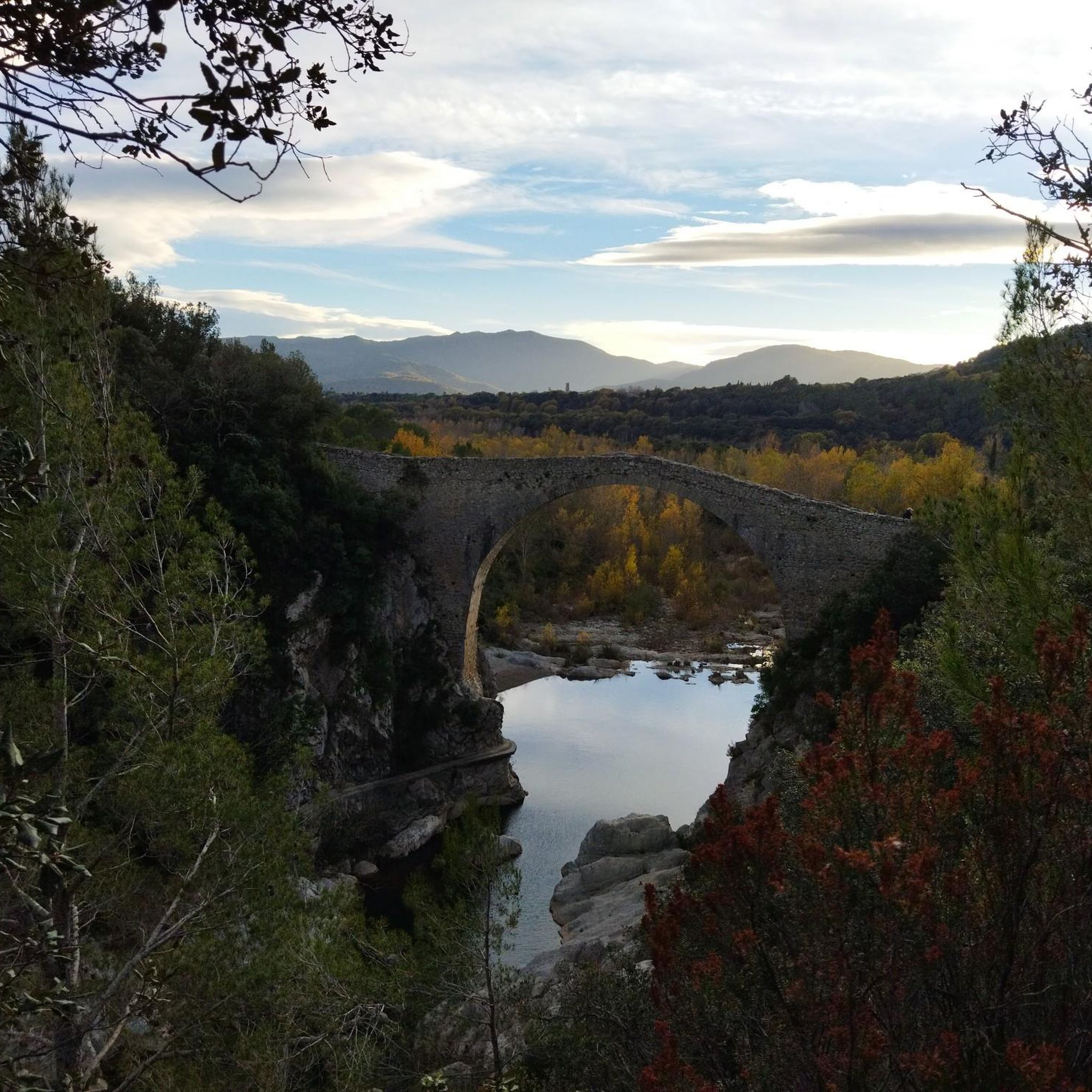
The area east of the bridge is not particularly suitable for gravel bikes. The bridge is definitely worth a visit.
0
0

Be sure to stop and enjoy the beautiful view of the village on the edge 🤩
1
0
A Romanesque bridge worth seeing. Be sure to take a detour there and take a look. You can easily walk across it.
3
0

The Llierca Bridge, also called Pont de Sadernes, is a bridge 28 m high, 52 m long and 3 m wide. With a single, very slender arch, it crosses the Llierca river between Tortellà and Sadernes. Romanesque in style, although we do not know the date of its construction, there is evidence of its use since at least the 14th century, when it is documented that a toll was paid to cross it. The bridge was probably built by order of the barons of Sales, to facilitate trade between the farmhouses located west of the Llierca river with the towns of Tortellà and Besalú.
0
0

beautiful track a real pleasure
0
0
look and that's it
0
0
Frequently Asked Questions
How many touring cycling routes are available around Tortellà?
There are over 50 touring cycling routes available around Tortellà, offering a wide range of options for exploring the region's unique volcanic landscape and river valleys.
Are there touring cycling routes suitable for beginners or families in Tortellà?
Yes, while many routes offer a challenge, there are at least 3 easy touring cycling routes around Tortellà. These routes typically feature less elevation gain and shorter distances, making them suitable for beginners or families looking for a more relaxed ride.
Where can I find challenging touring cycling routes near Tortellà?
For experienced cyclists seeking a challenge, Tortellà offers over 35 difficult routes. One such route is the Llierca Bridge – Parc Barrell loop from Sant Jaume de Llierca, which is a demanding 24.4-mile (39.2 km) path featuring significant elevation gain and passing by the historic Llierca Bridge. The region's mountainous terrain, including climbs like the Mare de Déu del Mont Summit, provides ample opportunities for strenuous rides.
What natural features can I expect to see while cycling around Tortellà?
The touring cycling routes around Tortellà are set within the stunning La Garrotxa Volcanic Zone Natural Park, so you'll encounter unique volcanic landscapes. You can also expect picturesque routes alongside the River Fluvià and the Llierca River, lush forests, and challenging mountainous terrain. Notable natural attractions include the extinct Volca de Montsacopa and the breathtaking views from the Mare de Déu del Mont Summit.
Are there any historical landmarks or points of interest along the cycling routes?
Yes, the region is rich in historical landmarks. You can cycle past the impressive Romanesque Pont Vell of Besalú, which crosses the Fluvià river, or the ancient Llierca Bridge (Pont de Sadernes), a Romanesque structure dating back to at least the 14th century. Other points of interest include the medieval Valentí Bridge and various religious buildings like the Sanctuary of Mare de Déu del Mont.
Are there circular touring cycling routes available from Tortellà?
Many touring cycling routes around Tortellà are designed as loops, allowing you to start and finish in the same location. An example is the Besalú and Castellfollit de la Roca Loop, a 23.7-mile (38.1 km) route connecting two notable villages with scenic views.
What is the best time of year to go touring cycling in Tortellà?
The region around Tortellà offers pleasant cycling conditions for much of the year. Spring and autumn generally provide the most comfortable temperatures for touring cycling, with lush landscapes in spring and vibrant colors in autumn. Summers can be warm, especially in lower elevations, while winters are typically mild but can be cooler in the mountainous areas.
Is there parking available for cyclists in Tortellà?
Yes, Tortellà, being a village well-suited for outdoor activities, typically offers parking options for visitors. You can often find parking in the village center or near popular trailheads, making it convenient to start your cycling tour.
Can I reach Tortellà by public transport with my bike?
While specific public transport options for bikes can vary, regional bus services often connect villages like Tortellà. It's advisable to check with local transport providers in advance regarding their policies for carrying bicycles, as space may be limited or require special arrangements.
Are touring cycling routes around Tortellà dog-friendly?
Many outdoor trails in the La Garrotxa region are dog-friendly, but it's always best to check specific route regulations, especially within the Natural Park. Ensure your dog is well-behaved, kept on a leash where required, and that you carry water and waste bags. Some routes may pass through areas with livestock, so caution is advised.
Are there places to eat or stay along the touring cycling routes?
Tortellà and nearby villages like Besalú offer various amenities including cafes, restaurants, and accommodation options. While cycling, you'll find charming local spots to refuel or even stay overnight, especially in the more populated areas or along well-trafficked routes. Camping areas like Camp dels Carlins also provide options for immersing yourself in nature.
Do I need a permit to cycle in La Garrotxa Volcanic Zone Natural Park?
Generally, you do not need a specific permit for touring cycling on established routes within La Garrotxa Volcanic Zone Natural Park. However, it's always good practice to respect park regulations, stay on marked trails, and be mindful of the natural environment. For any specific activities or large groups, it's advisable to check the official park website for the latest guidelines.
What do other touring cyclists say about the routes in Tortellà?
The touring cycling routes around Tortellà are highly rated by the komoot community, with an average score of 4.2 stars from over 40 reviews. Over 1000 touring cyclists have explored the varied terrain, often praising the unique volcanic landscapes, the scenic river paths, and the combination of challenging climbs and rewarding descents.
Most popular attractions around Tortellà

Get inspired with the komoot mobile app


Explore more
Browse the best Cycling routes in other regions.
