Top 7 Castles around Portbou
Best castles around Portbou are located in the scenic Costa Brava region, a coastal area known for its rugged landscapes and historical significance. This border town, situated in the Girona province, offers access to a variety of fortifications and historical sites. The surrounding area features diverse terrain, from Mediterranean shores to the Albera mountains. Exploring these sites provides insight into the region's strategic past.
Best castles around Portbou
- The most popular castles is Querroig Castle, a castle ruin that…
Last updated: June 29, 2026
Fort Saint-Elme
Highlight • Castle
On the foundation of an eighteenth-century lighthouse, Emperor Charles V had a revolutionary fortress built in 1538 in the shape …
Translated by Google •
Tip by

Querroig Castle
Highlight • Castle
Once upon a time there was a small castell, now only the base of a tower is left.
Translated by Google •
Tip by

Sign up now to discover places like this
Get recommendations on the best single tracks, peaks, & plenty of other exciting outdoor places.
Sign up for free
Fort Dugommier
Highlight • Historical Site
The fort was built between 1844 and 1852, but was already technically shortly after completion. outdated.
Further information here: dugommier.com
Translated by Google •
Tip by
Tour de la Massane
Highlight • Historical Site
Translated by Google •
Tip by

Béar Redoubt
Highlight • Historical Site
Translated by Google •
Tip by

Sign up for free to discover even more castles around Portbou.
Sign up for free
Already have an account?
Start today with a free account
Your next adventure awaits.
Login or Signup



Tips from the Community


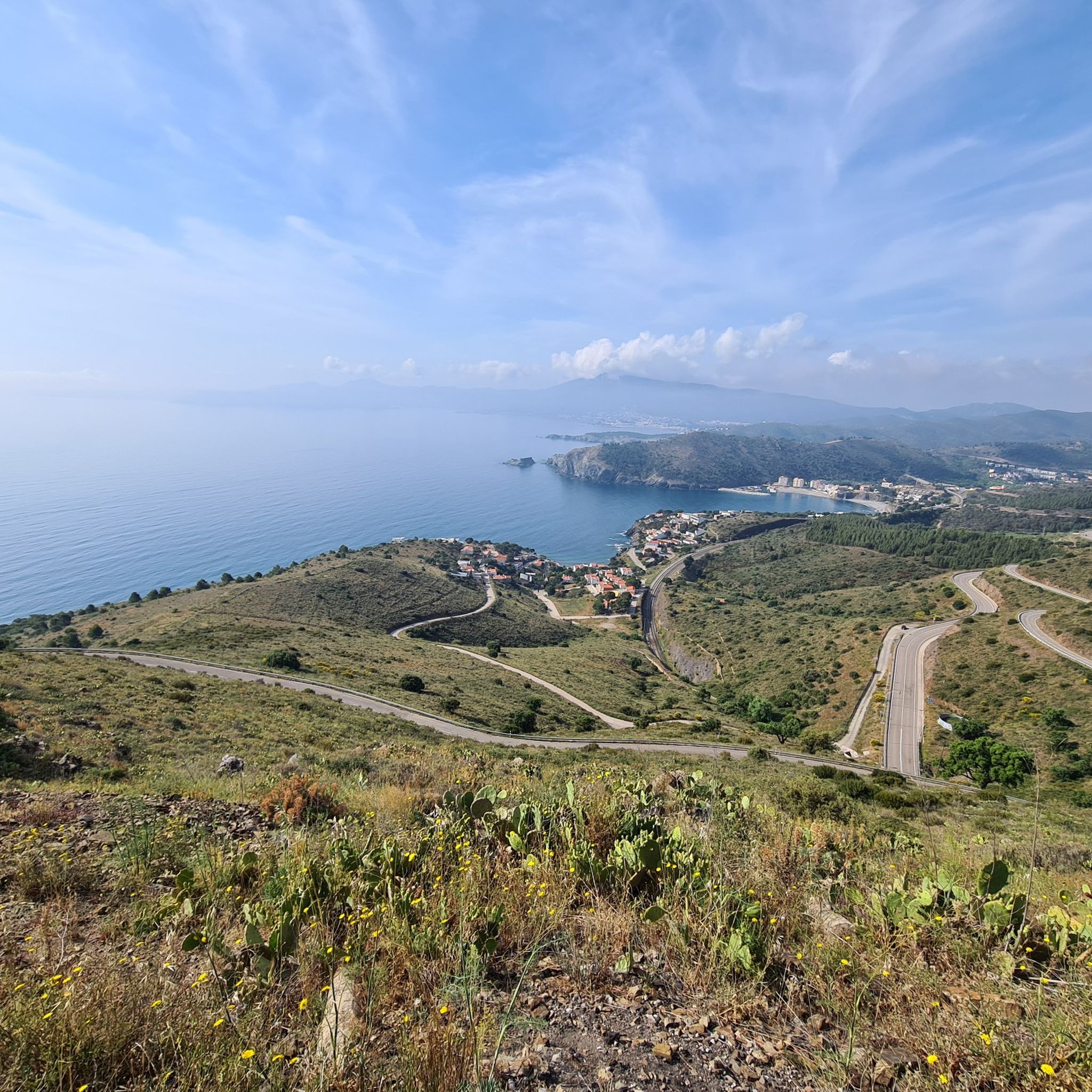
Vauban-style fort with a 180° view over the entire bay of Collioure.
0
0


Built in the 13th century, its original function was to watch over the coast and warn of possible invasions. Today, it is a popular hiking destination due to its location on a hilltop that offers spectacular panoramic views.
0
0
The fortress is named after French General Jacques François Dugommier, who played a prominent role during the French Revolutionary Wars. Although not fully open to the public as a tourist attraction today, it is a place of interest for those who enjoy military history and spectacular views, as well as being a good destination for a hike from Port-Vendres or Collioure.
0
0
Fort Dugommier is a historic fortress situated on a hill overlooking Port-Vendres and the Mediterranean coast in the Pyrénées-Orientales. Built in the 19th century, its strategic location offers stunning panoramic views of the bay of Port-Vendres, Cap Béar and the surrounding mountains.
1
0

Peak that is part of the FEEC list of 100 peaks where two states and three municipalities meet, Portbou, Cervera de la Marenda and Banyuls de la Marenda. From this point you get wonderful views of the Mediterranean to the east and the Albera mountains to the west, in a magnificent 360º panorama that includes Puig de Sallafort, Puig Neulós and Cap de Creus. At the top we find the ruins of an old medieval castle from the s. X-XI. The round tower is a later construction of the s. XIV or s. XV Until the Treaty of the Pyrenees (1659) when the current northern Catalan counties came under French jurisdiction, the castle depended ecclesiastically on the Count of Empúries and the Bishopric of Girona. The construction technique, like the material, is reminiscent of the castle of Sant Salvador Saverdera, near Sant Pere de Rodes, a peak also included in the list of the 100 Peaks. Salvem Querroig is a northern Catalan association that aims to restore the remains of the castle. For this reason, he had to contact the heir of the last known owner, Ponç Hug, Count of Empúries (1309). The current owner turned out to be Sol María de la Blanca de Medina i Orléans-Braganza, countess of Empúries, of the Ducal House of Medinaceli, based in Seville, and who has granted her permission for the works.
1
0
A superb hike with a great view of Collioure 😀👍👍😀👍
0
0
Frequently Asked Questions
What types of historical fortifications can I explore around Portbou?
The area around Portbou offers a diverse range of historical fortifications. You can find medieval castle ruins like Querroig Castle, historical watchtowers such as Tour de la Massane, and 16th-century military fortresses like Fort Saint-Elme. These sites provide insight into the region's strategic past.
Are there any castles near Portbou that offer panoramic views?
Yes, several castles and fortifications near Portbou provide spectacular panoramic views. Querroig Castle offers a 360º panorama of the Mediterranean and the Albera mountains. Fort Saint-Elme overlooks the bays of Collioure and Port-Vendres, while Tour de la Massane provides a wonderful view of the coast on a clear day from its base. Further afield, Castell de Requesens and Montsoriu Castle also boast commanding views.
What are some notable castles in the broader Girona province or Costa Brava region?
While Portbou itself doesn't have castles, the broader Girona province and Costa Brava region are home to several impressive ones. These include the large 18th-century military fortress of Castell de Sant Ferran in Figueres, the culturally rich Castell de Peralada, and the unique Gala-Dalí Castle (Castell de Púbol), which was the residence of Salvador Dalí and his wife Gala. Montsoriu Castle is another significant Gothic fortress offering panoramic views.
Are there family-friendly castles to visit near Portbou?
Many castles in the region can be enjoyed by families, though specific 'family-friendly' amenities vary. Castell de Sant Ferran in Figueres offers jeep tours of its moat and inflatable boat tours of its underground reservoirs, which can be an exciting experience for children. The historical context and scenic views at sites like Fort Saint-Elme can also be engaging for older children.
Can I find castles with a strong historical significance near Portbou?
Absolutely. The region is rich in history. Fort Saint-Elme, built in 1538, played a significant role in historical conflicts and offers deep historical context. Querroig Castle dates back to the 10th-11th century, showcasing medieval history. Castell de Sant Ferran in Figueres has a significant role in events like the Napoleonic wars and the Spanish Civil War, while Montsoriu Castle dates back to 1002 and was a key residence for the Viscounts of Cabrera.
What outdoor activities can I do near these castles?
The area around Portbou and its castles is excellent for outdoor activities. You can find numerous hiking trails, such as the Portbou - Querroig Loop Trail, which passes by Querroig Castle. There are also challenging MTB trails and running routes available. For more details on routes, you can explore the hiking, MTB, and running guides around Portbou.
Are there any castles near Portbou that are part of a natural park?
Yes, Castell de Requesens is situated near the French border within the Albera Natural Park, offering a blend of history and nature. Montsoriu Castle is also located on a hill within the Montseny Natural Park, providing spectacular panoramic views alongside its historical significance.
What do visitors enjoy most about the castles and fortifications around Portbou?
Visitors particularly enjoy the breathtaking views offered by these sites, such as the 360º panorama from Querroig Castle and the coastal vistas from Fort Saint-Elme. The historical context and the unique architecture of these fortifications are also highly appreciated, providing a glimpse into the region's past.
Is there a castle near Portbou associated with famous artists?
Yes, the Castell de Púbol, also known as the Gala-Dalí Castle, is a medieval fortification that gained fame as the residence of surrealist artist Salvador Dalí and his wife Gala. Dalí himself decorated the interior, creating a unique atmosphere, and it is now a museum showcasing art and memorabilia related to the artist.
Are there any castles that are particularly well-preserved or restored?
Castell de Peralada is a beautifully preserved castle, originally from the mid-14th century and rebuilt, known for its cultural offerings. The Vila Vella (old town) of Castillo de Tossa de Mar is also a well-preserved medieval walled enclosure. While Querroig Castle is a ruin, there's an association, Salvem Querroig, dedicated to its restoration.
Can I visit castles that are still in use or have modern amenities?
Castell de Peralada, while historical, features modern amenities such as a wine cellar, restaurants (including a Michelin-starred one), a casino, and gardens that are open during summer. It also hosts the international Festival Peralada, blending historical architecture with contemporary cultural events.
Are there any castles or forts that are easily accessible from Portbou?
The fortifications mentioned in the guide, such as Querroig Castle, Tour de la Massane, and Fort Saint-Elme, are relatively accessible from Portbou, often requiring a hike or a short drive. For example, Querroig Castle is part of popular hiking routes directly from Portbou.
Most popular routes around Portbou
Most popular attractions around Portbou

Get inspired with the komoot mobile app


Explore more
Looking for the best castles somewhere else? Discover other guides around Portbou:
