Attractions and Places To See around Châtellerault - Top 20
Attractions and places to see around Châtellerault include historical sites, settlements, and natural landscapes along the Vienne river. Châtellerault is the second-largest city in the Vienne department, known for its historical bridges and former arms factory. The region offers a variety of sites, from ancient ruins to spa towns, providing insights into local history and culture.
Best attractions and places to see around Châtellerault
- The most popular attractions is La Roche-Posay, a settlement known as a spa resort specializing…
Last updated: October 10, 2026
La Roche-Posay
Highlight • Settlement
Translated by Google •
Tip by

Châtellerault
Highlight • Settlement
Translated by Google •
Tip by

Sign up now to discover places like this
Get recommendations on the best single tracks, peaks, & plenty of other exciting outdoor places.
Gallo-Roman Theatre of Old Poitiers
Highlight • Other
Translated by Google •
Tip by
Le Grand Atelier
Highlight • Museum
Translated by Google •
Tip by

Notre-Dame Church
Highlight • Religious Site
Translated by Google •
Tip by

Porte Bourbon
Highlight • Historical Site
Translated by Google •
Tip by
L'Ancien Pont
Highlight • Other
Decades ago, trains crossed it towards …
Translated by Google •
Tip by
Park Lodges
Highlight • Other
Until you hear that it was La Roche-Posay's golden age during the Belle …
Translated by Google •
Tip by
The Tower - The Donjon
Highlight • Other
But upon closer inspection, you'll see this is no …
Translated by Google •
Tip by
La Mothe-Chandeniers Castle
Highlight • Castle
Translated by Google •
Tip by

Sign up for free to discover even more attractions around Châtellerault.
Already have an account?
Start today with a free account
Your next adventure awaits.
Popular around Châtellerault
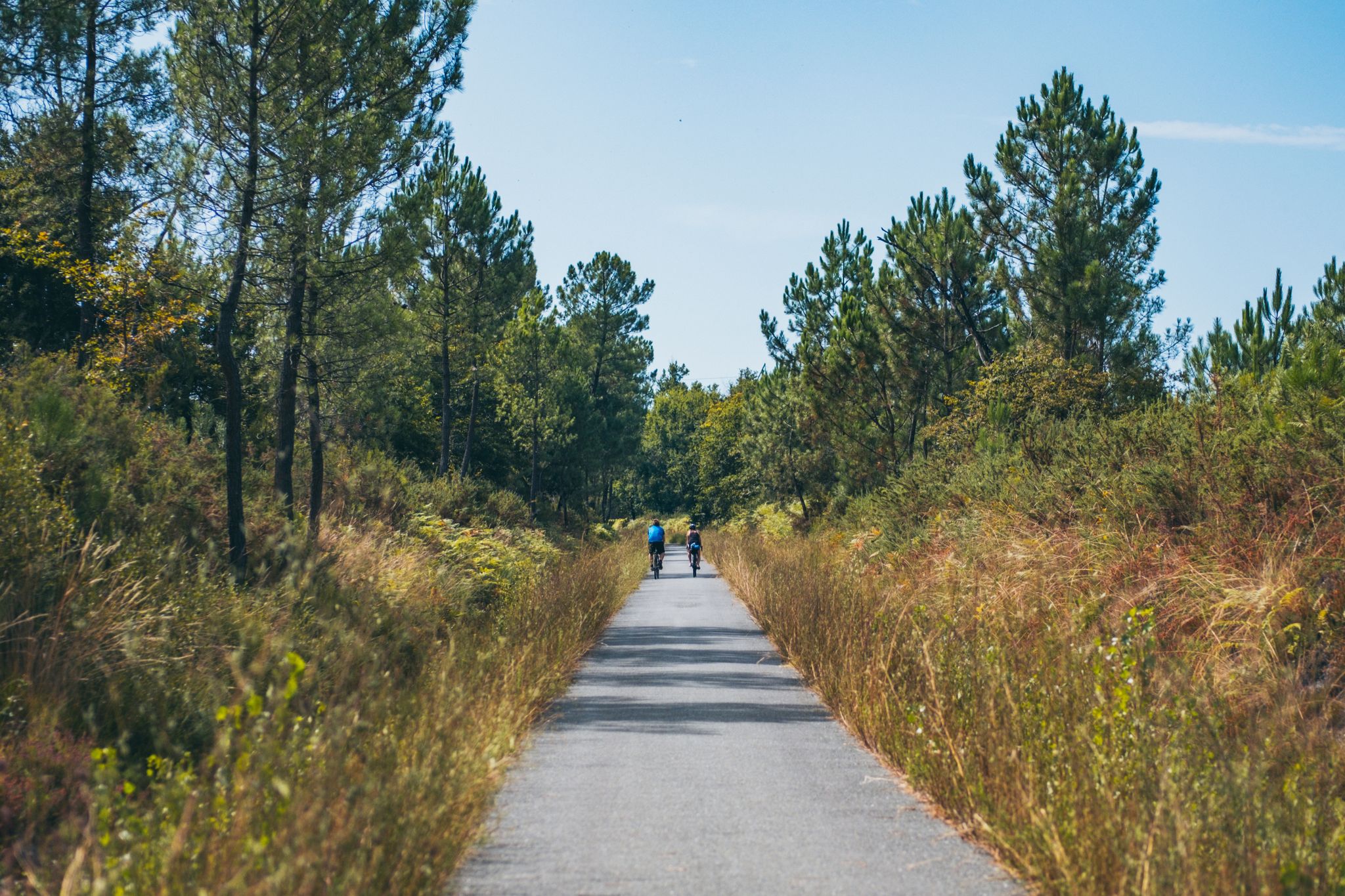
A cycling epic across France — La Scandibérique
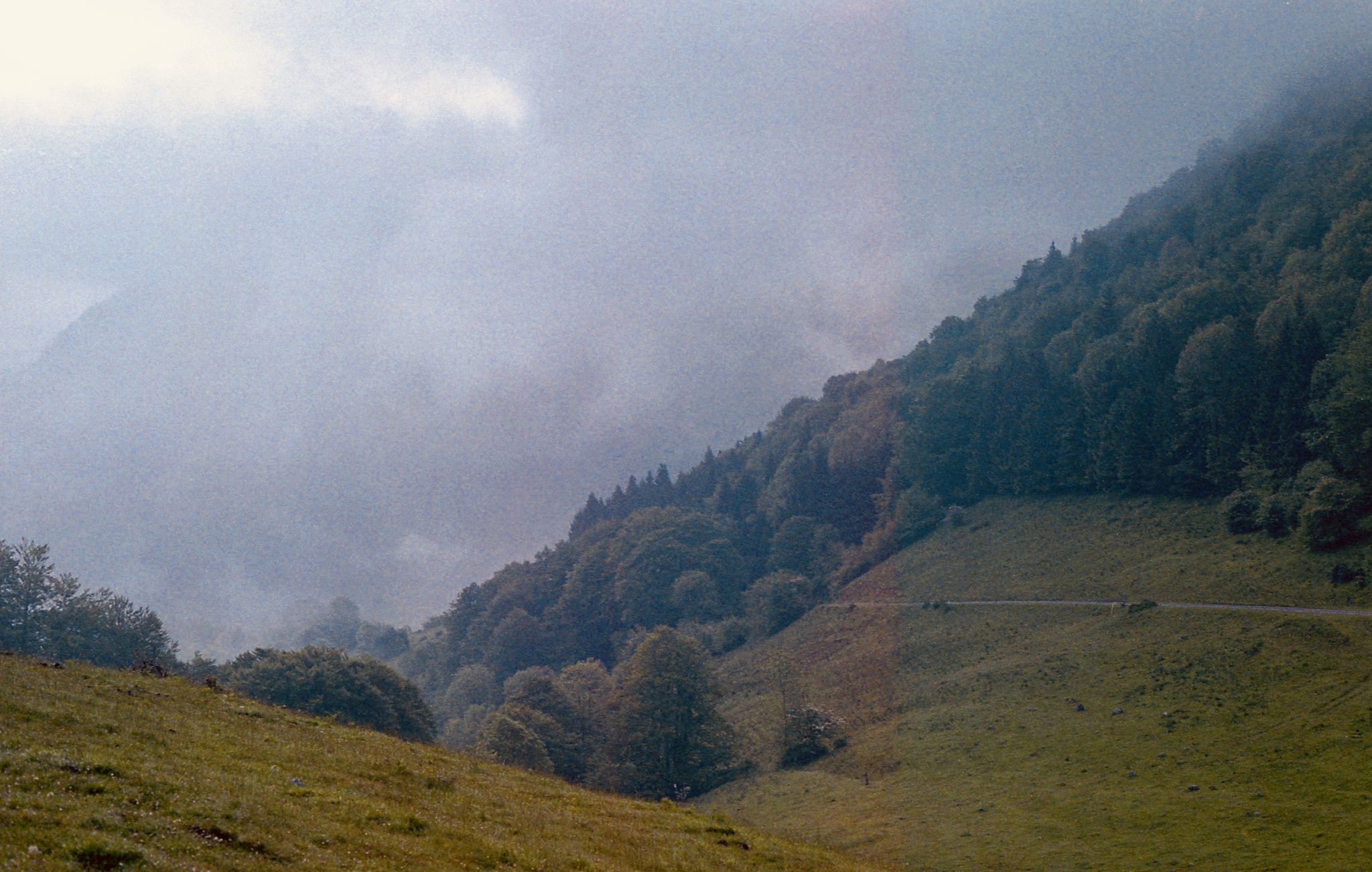
Tracing your route -- Solo from Paris to the edges of the Pyrenees
Cycling around Châtellerault
Hiking around Châtellerault
Running Trails around Châtellerault
Road Cycling Routes around Châtellerault
MTB Trails around Châtellerault

Gravel biking around Châtellerault


Tips from the Community

On 30/08/2026, the Francois Mitterand space, right in front of the kiosk, welcomed almost 1400 clarinettists to break the world record held by Hong Kong and entered in the Guinness Book. This has been done and recorded by an official member of the organization who came specifically for this purpose. The objective announced for months by the Poitiers conductor Emmanuel Boulanger has been largely achieved. The old record, set in Hong Kong with 448 clarinettists, has been smashed. Amateurs, music school students and professionals played together, in front of a large audience. The performance should now feature in the Guinness Book of Records. Below is the press article and video published locally. https://share.google/KJQ2WCRdVkkB0aF61
0
0
🏭 1. A museum set up in the former “Manu” Le Grand Atelier - Museum of Art and Industry is located on the site of the former Châtellerault Arms Factory ("Manufacture d’armes"). The Manufacture was created by royal ordinance on July 14, 1819, under Louis XVIII. Construction began in 1820. Its location in Châtellerault was notably due to the presence of the Vienne river, which allowed for the use of hydraulic energy, and the existence of a significant local tradition of cutlery and metallurgy. Initially, it mainly produced edged weapons: sabers, swords, lances, and cuirasses. From the 1830s onwards, production also turned to firearms. The Manufacture gradually became a huge industrial complex, employing several thousand people. It played a considerable role in the economic and social history of Châtellerault. 🔧 2. The museum building The building now occupied by the Grand Atelier is particularly interesting. It is part of the former assembly and finishing workshop, built between 1886 and 1887, notably in the context of the production of the Lebel rifle. It is a characteristic industrial building from the late 19th century, with vast spaces, large glass bays, and saw-tooth roofs allowing for significant natural light. It is now protected as heritage. The Manufacture closed permanently in 1968. 🚗 3. The birth of the automobile museum After the closure of the Manufacture, part of the buildings was reused for cultural purposes. As early as 1969, the site hosted a museum, notably stemming from Bernard de Lassée's vehicle collection. It was first named Musée de la Technique et de l’Automobile, then became Musée Auto-Moto-Vélo. The town of Châtellerault acquired part of Bernard de Lassée's collection and gradually developed the museum. The collections include, in particular, vintage cars, motorcycles, bicycles, engines, posters, and accessories, featuring prestigious brands such as Panhard-Levassor, Delahaye, Talbot, Darracq, or Bugatti. 🏛️ 4. The merger with the former Sully museum This is an important step in understanding why the museum today bears the name “museum of art and industry”. Châtellerault also had another museum, located in the Hôtel Sully, dedicated to the history and heritage of the town: archaeology, fine arts, weapons, cutlery, ethnology, local artists, etc. Gradually, the collections of the two institutions were brought together on the site of the former Manufacture. The Ministry of Culture thus indicates that the collections were regrouped on the Manufacture site, first under the name Musée de la technique et de l’automobile, then Musée Auto-Moto-Vélo, and finally Grand Atelier. 🎭 5. The transformation into “Grand Atelier” After significant renovations, the museum was reorganized and took its current name in 2019: Le Grand Atelier – Musée d’art et d’industrie. It is therefore no longer just a museum dedicated to automobiles. It now offers three main tours: 🚗 Auto-Moto-Vélo: the evolution of transport from the 19th century to the 2000s; 🔫 Manufacture d’armes: the industrial and social history of the “Manu” and its workers; 🎭 Cabaret du Chat Noir: dedicated to Rodolphe Salis, born in Châtellerault and founder of the famous Montmartre cabaret. The museum now covers over 3,000 m² of exhibition space. An important clarification It is therefore necessary to distinguish: - The Arms Factory (“La Manufacture d’armes”) → the large industrial site created in 1819, closed in 1968. - The Grand Atelier building → a former workshop of the Manufacture, built in 1886-1887. - Le Grand Atelier – Museum of Art and Industry → the museum gradually created on this site, whose current name dates from 2019. - And the former Sully museum → a historic museum institution in Châtellerault, part of whose collections have been integrated into the Grand Atelier.
0
0

Les Loges du Parc is one of those buildings you first pass by and think: "beautiful hotel." Until you hear that it was La Roche-Posay's golden age during the Belle Époque, when wealthy Parisians would come here for months to take a spa treatment, stroll, and stroll. Built around 1905, the hotel already had something striking: — wide balconies for "airing out," as doctors called it, — a facade that resembled a chic townhouse more than a spa, — and a garden that once served as a meeting place for spa guests (read: gossiping, playing cards, and making wedding plans).
4
0
The church of La Roche-Posay appears rather austere from the outside, but appearances can be deceiving. Inside, you'll find details you wouldn't immediately expect in such a small spa town: – stained-glass windows that make the entire interior glow in the right light, – Romanesque elements dating back to the 11th and 12th centuries, – and a strikingly massive bell tower that also once served a defensive function. Fun fact: the church has always been the heart of the pilgrimage route, long before La Roche-Posay became known for its thermal springs. Travelers came here to pray before continuing on to the Creuse Valley.
4
0
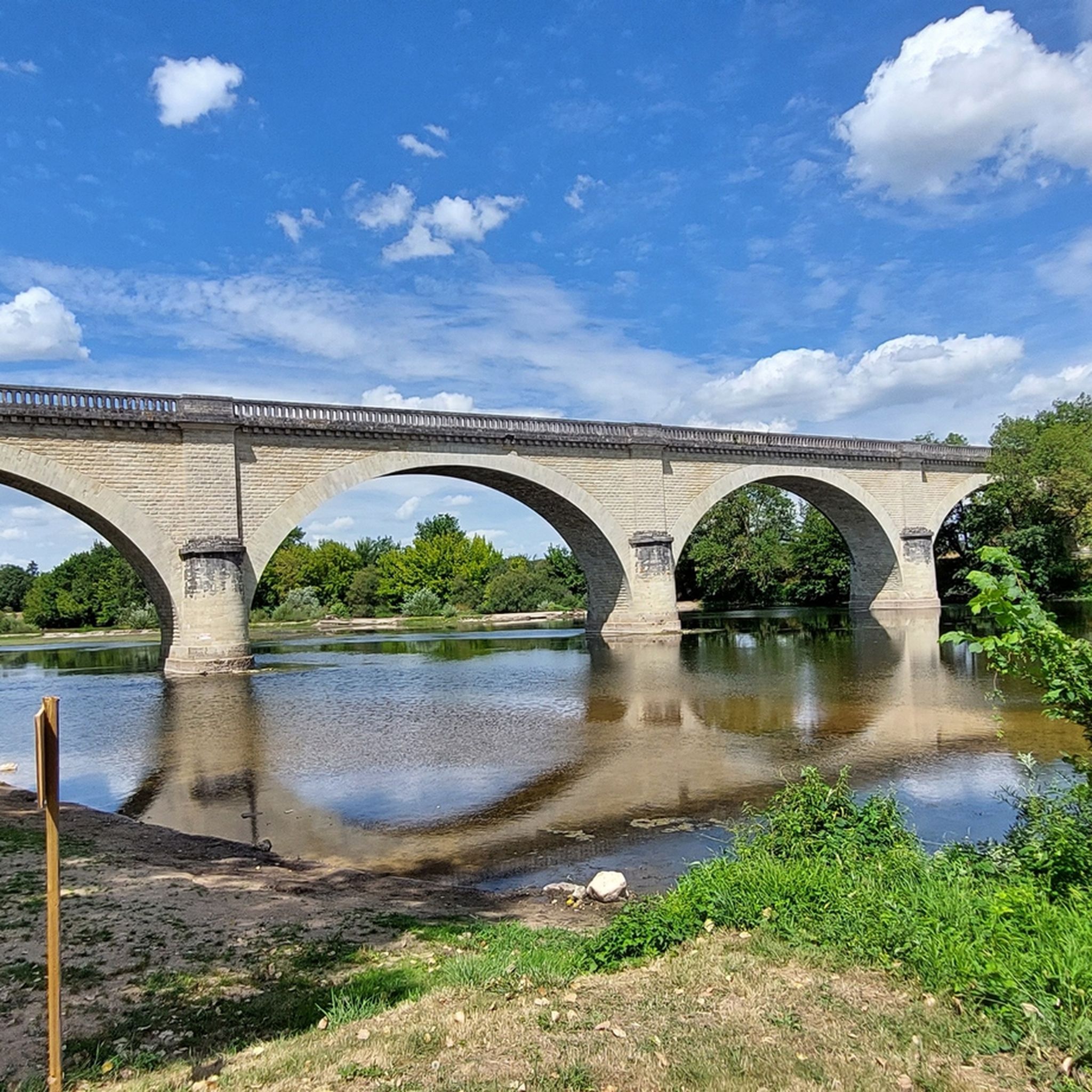
At first glance, this looks like a classic stone bridge, but it's actually an old railway bridge from the former Port-de-Piles – Argenton line. Decades ago, trains crossed it towards Châtellerault and Argenton-sur-Creuse. Now the railway is gone, but the viaduct remains. Massive, elegant, and almost perfectly reflected in the river. The large arches create the illusion of three large circles when the water is calm. An unexpectedly photogenic spot.
4
0
The keep of La Roche-Posay is one of those towers you first walk past and think, "Okay, old block of stone." But upon closer inspection, you'll see this is no ordinary tower. It's a rare example of a purely defensive keep from the 11th century. The funny thing? It was deliberately built asymmetrically. Not because medieval builders were sloppy, but because the tower had to fit on the rocky ridge below.
4
0
The Porte Bourbon is one of the medieval gates that once formed part of the city walls of La Roche-Posay. What many people don't know is that this gate served both as a defense and a toll station. Travelers entering the city used to have to stop here to pay taxes on goods. Note the details: the slanted slots at the top (where a portcullis or beams used to be attached) and the thick inner wall where soldiers waited. It feels small and unassuming, but this gate was once literally the city's "check-in."
4
0

Frequently Asked Questions
What are some unique historical sites to visit around Châtellerault?
Beyond the city of Châtellerault itself, which features the Targé castle and historical bridges, you can explore the Gallo-Roman Theatre of Old Poitiers. These 2000-year-old ruins offer a significant glimpse into Roman civilization in Gaul, with guided tours available during specific opening periods. Another notable site is La Mothe-Chandeniers Castle, a unique and picturesque castle.
Are there any family-friendly attractions in the Châtellerault area?
Yes, several attractions are suitable for families. The settlement of La Roche-Posay is considered family-friendly, offering a charming town center and opportunities for swimming in the Creuse river. The historical sites within Châtellerault, such as its bridges and the Manu site, are also enjoyable for families. Additionally, the Porte Bourbon, a medieval city gate, provides an interesting historical stop for all ages.
What is the best time of year to visit attractions around Châtellerault?
The best time to visit is generally during the warmer months, from late spring to early autumn (May to September). During this period, the weather is pleasant for exploring historical sites, enjoying outdoor activities, and taking advantage of opportunities like swimming in the Creuse near La Roche-Posay. Some sites, like the Gallo-Roman Theatre of Old Poitiers, have extended opening hours in July and August.
Are there any spa towns or places for relaxation near Châtellerault?
Absolutely. La Roche-Posay is a renowned spa resort specializing in skin diseases, famous for its parapharmaceuticals. It's an ideal place for relaxation and wellness, with a charming town center and the possibility of swimming in the Creuse river below the old town.
How much time should I allocate to visit the main attractions?
For key attractions like La Roche-Posay or the historical sites within Châtellerault, you could easily spend half a day to a full day exploring each. The Gallo-Roman Theatre of Old Poitiers might take 1-2 hours, especially if you opt for a guided tour. To experience a good selection of the region's highlights, plan for at least 2-3 days.
What outdoor activities can I do near the attractions around Châtellerault?
The region offers various outdoor activities. You can find numerous road cycling routes, such as the 'Châtellerault – Les Ormes loop' or the 'View of the Wild Vienne River loop'. For runners, there are trails like 'Aux Confins du Haut-Poitou et de la Touraine Trail'. Hikers can enjoy easy walks like the 'Vienna – Henri IV Bridge loop' in Châtellerault or the 'Pinail Nature Reserve loop'. You can find more details on these activities in the Road Cycling Routes around Châtellerault, Running Trails around Châtellerault, and Easy hikes around Châtellerault guides.
Are there easy hiking trails suitable for a leisurely walk?
Yes, there are several easy hiking options. For example, you can enjoy the 'Vienna – Henri IV Bridge loop' from Châtellerault, which is 5.4 km long. Another easy option is the 'Pinail Nature Reserve loop' from Vouneuil-sur-Vienne, a shorter 2.3 km walk. In La Roche-Posay, you can find easy loops like the 'La Roche-Posay – Porte Bourbon loop'. These trails are perfect for a relaxed exploration of the area. More details are available in the Easy hikes around Châtellerault guide.
Can I find any wild swimming spots near Châtellerault?
Yes, near the spa town of La Roche-Posay, swimming is possible in the Creuse river below the old town. This offers a refreshing natural swimming experience, especially during warmer weather.
Are there any dog-friendly walks or places to visit?
While specific dog-friendly designations for all attractions are not always available, many outdoor areas and walking trails around Châtellerault are generally suitable for dogs on a leash. The various hiking and running trails mentioned, such as those in the Easy hikes around Châtellerault guide, often welcome well-behaved dogs. Always check local signage for any restrictions.
Are there any hidden gems or lesser-known attractions worth discovering?
Beyond the main highlights, consider visiting Les Ormes, a small village known for its Château des Ormes, which is open to the public seasonally. You can also discover an old post house, the chapel of Falaise, and charming Halles in the heart of the village. The Porte Bourbon in La Roche-Posay, a 12th-century city gate, also offers a fascinating historical detail often overlooked.
Where can I find cafes or places to eat near outdoor attractions?
Many of the settlements and towns, such as La Roche-Posay and Châtellerault, have cafes and restaurants within their town centers. In La Roche-Posay, you can find charming spots to enjoy a coffee or a meal. Châtellerault also offers 'guinguettes' (open-air cafes/restaurants) along the banks of the Vienne river, perfect after exploring the city's historical sites.
What kind of historical architecture can I expect to see?
The region is rich in historical architecture. In Châtellerault, you'll find historical bridges over the Vienne river and the Targé castle. La Roche-Posay features medieval elements like the Porte Bourbon, a 12th-century city gate. The Gallo-Roman Theatre of Old Poitiers showcases ancient Roman engineering. Additionally, you can see religious buildings like the Notre-Dame Church and the impressive La Mothe-Chandeniers Castle.
Most popular routes around Châtellerault
Most popular attractions around Châtellerault

Get inspired with the komoot mobile app


Didn’t find what you were looking for?
Are you keen on exploring more awesome places nearby? Browse our guides:
Explore more
Still not found the Highlight you’re looking for? See guides of the top attractions in other regions:
