The best cycling routes around Châtellerault
4.4
(258)
1,958
riders
327
rides
Touring cycling around Châtellerault offers a diverse landscape characterized by the meandering Vienne River, extensive forests like Forêt de Moulière, and a network of dedicated cycling paths. The region features varied terrain, from flat, car-free greenways converted from old railway lines to routes with moderate elevation gains. These routes often follow riverbanks and connect to historical sites and charming villages.
Best touring cycling routes around Châtellerault
- The most popular touring cycling route is Gartempe Valley Loop, a 20.0 miles…
Last updated: October 10, 2026
5.0
(5)
23
riders
32.2km
02:07
210m
210m
Cycle a moderate 20-mile loop through the scenic Gartempe valley, passing charming villages and the spa town of La Roche-Posay.
3.9
(11)
20
riders
30.3km
01:51
120m
120m
Cycle an easy 18.9-mile loop along the Vienne River in Châtellerault, enjoying riverside views and charming villages.

4.6
(8)
15
riders
30.8km
01:58
280m
280m
Cycle a moderate 19.1-mile loop around Lac du Gros Caillou in the Hauts de Châtellerault, featuring paved paths and recreational areas.
4.0
(2)
7
riders
30.3km
01:49
130m
130m
Easy bike ride. Great for any fitness level. Mostly paved surfaces. Suitable for all skill levels.
6
riders
48.3km
02:55
370m
370m
Cycle a moderate 30.0-mile loop in Haut Loudunais, exploring vineyards, forests, and the romantic ruins of Château de la Mothe Chandeniers.
4.3
(3)
8
riders
34.0km
02:00
170m
170m
Cycle the moderate 21.1-mile (34.0 km) Ingrandes and Lac du Gros Cailloux loop in Hauts de la Vienne, featuring paved paths and lake views.
4.5
(2)
8
riders
39.6km
02:43
260m
260m
Hard bike ride. Good fitness required. You may need to push your bike for some segments of this route.
5.0
(2)
6
riders
54.7km
03:21
440m
440m
Cycle a moderate 34.0-mile loop through the scenic Creuse and Vienne valleys via Les Ormes, featuring green hills and historic châteaux.
2
riders
Moderate bike ride. Good fitness required. Mostly paved surfaces. Suitable for all skill levels.
4.7
(3)
6
riders
30.5km
02:03
280m
280m
Moderate bike ride. Good fitness required. Mostly paved surfaces. Suitable for all skill levels.
Get access to more routes and recommendations from other explorers.
Already have an account?
Our route recommendations are based on thousands of hikes, rides, and runs completed by other people on komoot.
Start today with a free account
Your next adventure awaits.






Tips from the Community

On 30/08/2026, the Francois Mitterand space, right in front of the kiosk, welcomed almost 1400 clarinettists to break the world record held by Hong Kong and entered in the Guinness Book. This has been done and recorded by an official member of the organization who came specifically for this purpose. The objective announced for months by the Poitiers conductor Emmanuel Boulanger has been largely achieved. The old record, set in Hong Kong with 448 clarinettists, has been smashed. Amateurs, music school students and professionals played together, in front of a large audience. The performance should now feature in the Guinness Book of Records. Below is the press article and video published locally. https://share.google/KJQ2WCRdVkkB0aF61
0
0
🏭 1. A museum set up in the former “Manu” Le Grand Atelier - Museum of Art and Industry is located on the site of the former Châtellerault Arms Factory ("Manufacture d’armes"). The Manufacture was created by royal ordinance on July 14, 1819, under Louis XVIII. Construction began in 1820. Its location in Châtellerault was notably due to the presence of the Vienne river, which allowed for the use of hydraulic energy, and the existence of a significant local tradition of cutlery and metallurgy. Initially, it mainly produced edged weapons: sabers, swords, lances, and cuirasses. From the 1830s onwards, production also turned to firearms. The Manufacture gradually became a huge industrial complex, employing several thousand people. It played a considerable role in the economic and social history of Châtellerault. 🔧 2. The museum building The building now occupied by the Grand Atelier is particularly interesting. It is part of the former assembly and finishing workshop, built between 1886 and 1887, notably in the context of the production of the Lebel rifle. It is a characteristic industrial building from the late 19th century, with vast spaces, large glass bays, and saw-tooth roofs allowing for significant natural light. It is now protected as heritage. The Manufacture closed permanently in 1968. 🚗 3. The birth of the automobile museum After the closure of the Manufacture, part of the buildings was reused for cultural purposes. As early as 1969, the site hosted a museum, notably stemming from Bernard de Lassée's vehicle collection. It was first named Musée de la Technique et de l’Automobile, then became Musée Auto-Moto-Vélo. The town of Châtellerault acquired part of Bernard de Lassée's collection and gradually developed the museum. The collections include, in particular, vintage cars, motorcycles, bicycles, engines, posters, and accessories, featuring prestigious brands such as Panhard-Levassor, Delahaye, Talbot, Darracq, or Bugatti. 🏛️ 4. The merger with the former Sully museum This is an important step in understanding why the museum today bears the name “museum of art and industry”. Châtellerault also had another museum, located in the Hôtel Sully, dedicated to the history and heritage of the town: archaeology, fine arts, weapons, cutlery, ethnology, local artists, etc. Gradually, the collections of the two institutions were brought together on the site of the former Manufacture. The Ministry of Culture thus indicates that the collections were regrouped on the Manufacture site, first under the name Musée de la technique et de l’automobile, then Musée Auto-Moto-Vélo, and finally Grand Atelier. 🎭 5. The transformation into “Grand Atelier” After significant renovations, the museum was reorganized and took its current name in 2019: Le Grand Atelier – Musée d’art et d’industrie. It is therefore no longer just a museum dedicated to automobiles. It now offers three main tours: 🚗 Auto-Moto-Vélo: the evolution of transport from the 19th century to the 2000s; 🔫 Manufacture d’armes: the industrial and social history of the “Manu” and its workers; 🎭 Cabaret du Chat Noir: dedicated to Rodolphe Salis, born in Châtellerault and founder of the famous Montmartre cabaret. The museum now covers over 3,000 m² of exhibition space. An important clarification It is therefore necessary to distinguish: - The Arms Factory (“La Manufacture d’armes”) → the large industrial site created in 1819, closed in 1968. - The Grand Atelier building → a former workshop of the Manufacture, built in 1886-1887. - Le Grand Atelier – Museum of Art and Industry → the museum gradually created on this site, whose current name dates from 2019. - And the former Sully museum → a historic museum institution in Châtellerault, part of whose collections have been integrated into the Grand Atelier.
0
0

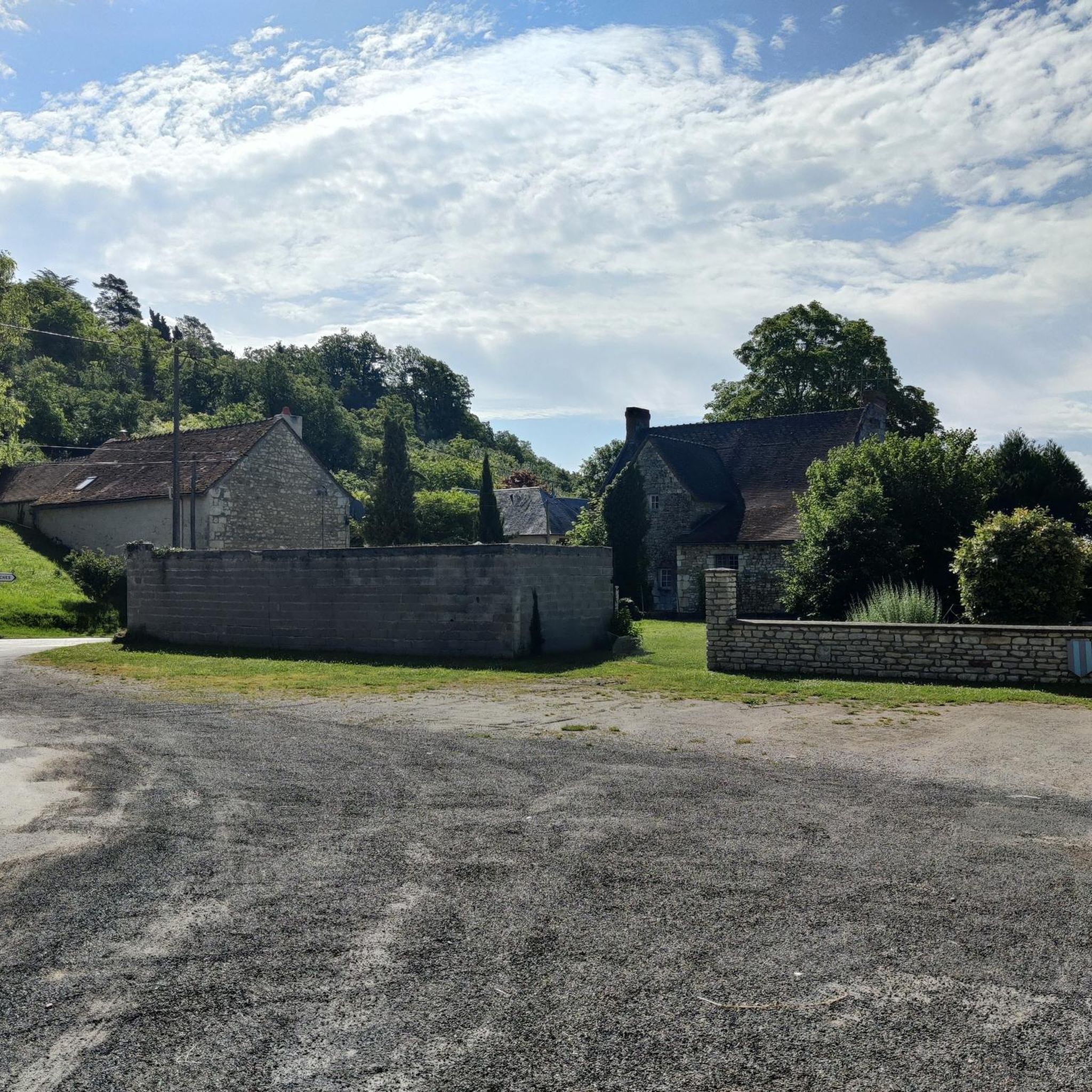
Attention private property
0
0


Frequently Asked Questions
How many touring cycling routes are available around Châtellerault?
Châtellerault offers an extensive network of over 300 touring cycling routes. These routes cater to various preferences, with a significant number of easy and moderate options, alongside more challenging trails for experienced cyclists.
Are there easy or family-friendly touring cycling routes in Châtellerault?
Yes, Châtellerault is well-suited for families and beginners. There are over 70 easy routes, many of which utilize car-free greenways. A great example is the Châtellerault: Ligne Verte and Vienne River Loop, which offers a smooth asphalt surface along the converted railway line and the Vienne River. The 'Green Line' (Ligne Verte) itself is ideal for a stress-free experience, as detailed on Tourisme Vienne.
What kind of terrain can I expect on touring cycling routes in Châtellerault?
The terrain around Châtellerault is diverse. You'll find flat, paved sections, especially along riverbanks and dedicated cycle paths like the Ligne Verte. However, some routes, particularly those venturing into areas like the Forêt de Moulière or connecting to nearby towns, may include unpaved sections and moderate elevation gains. The region's landscape is characterized by the meandering Vienne River and extensive forests.
Are there car-free cycling paths in the Châtellerault area?
Absolutely. A notable feature is the 'Green Line' (Ligne Verte), a car-free cycle path converted from an old railway line between Châtellerault and Loudun. This path, named after local cycling champion Sylvain Chavanel, offers a safe and enjoyable experience without significant hills. Châtellerault is also part of the Scandibérique (EuroVelo 3), which often uses dedicated cycle paths and minor roads along the Vienne River.
What historical sites or landmarks can I visit along touring cycling routes?
Many routes incorporate historical points of interest. You can cycle past the 16th-century Henri IV Bridge, explore routes that feature La Mothe-Chandeniers Castle, or visit the ruins of the Gallo-Roman Theatre of Old Poitiers. The region also boasts charming villages and other châteaux like Château de Dissay, often integrated into popular loops.
Are there natural attractions to see while cycling around Châtellerault?
Yes, the region is rich in natural beauty. Routes often follow the picturesque Vienne River or pass through significant green spaces. You can explore the Réserve Naturelle du Pinail, cycle around the tranquil Lac du Gros Caillou, or venture into the Forêt de Moulière, a 530-hectare national forest with diverse flora and fauna. More information on the forest can be found on Tourisme Vienne.
Can I find circular touring cycling routes in Châtellerault?
Many of the touring cycling routes around Châtellerault are designed as loops, offering convenient starting and ending points. Examples include the Gartempe Valley Loop and the Creuse and Vienne Valleys Loop, allowing you to explore the region's diverse landscapes without retracing your steps.
What is the best time of year for touring cycling in Châtellerault?
While touring cycling is enjoyable throughout much of the year, July and August are particularly popular months for cyclists in Châtellerault. The weather during these months is generally favorable for outdoor activities, allowing you to fully appreciate the region's scenic beauty and attractions.
Are there challenging touring cycling routes for experienced riders?
Yes, for those seeking a greater challenge, Châtellerault offers over 50 difficult touring cycling routes. These routes often feature more significant elevation gains and longer distances. An example of a more demanding route is the Les Ormes - loop along the Creuse banks, which provides a robust workout while exploring the riverbanks.
What do other touring cyclists say about the routes in Châtellerault?
The touring cycling routes in Châtellerault are highly regarded by the komoot community, with an average rating of 4.4 stars from over 220 reviews. Cyclists often praise the diverse landscapes, the well-maintained paths, and the blend of natural beauty with historical sites that the region offers.
Can I connect to longer, multi-day cycling routes from Châtellerault?
Yes, Châtellerault is strategically located for longer cycling adventures. It is part of the Scandibérique (EuroVelo 3), a major European cycling route that follows the Vienne River. This allows for connections to other historical and natural sites, and opens up possibilities for multi-day tours, such as routes extending towards Bordeaux.
Are there routes that explore the industrial heritage of Châtellerault?
While not explicitly dedicated routes, Châtellerault's industrial past is woven into the fabric of the town. Cycling through the town center allows you to see landmarks like the former arms factory, known as 'La Manu,' which now hosts cultural activities. The Auto Moto Vélo Museum (Le Grand Atelier) also celebrates this heritage, and can be a point of interest on routes passing through or near the town.
Most popular routes around Châtellerault
Most popular attractions around Châtellerault

Get inspired with the komoot mobile app


Didn’t find what you were looking for?
Check out more Cycling routes throughout Châtellerault below and find the perfect route in your destination.
Explore more
Browse the best Cycling routes in other regions.
