The best cycling routes around Royan
4.4
(1764)
13,967
riders
57
rides
Touring cycling around Royan offers a diverse landscape characterized by its extensive coastline, significant forest areas, and unique estuaries. The region features over 270 km of dedicated cycling paths, providing access to varied terrain. Cyclists can explore the Atlantic coast with its beaches and cliffs, traverse pine forests like the Coubre, and navigate the marshlands of the Gironde and Seudre estuaries. The area's relatively flat topography in many sections makes it accessible for a range of cycling abilities.
Best touring cycling routes around Royan
- The most popular touring cycling route is Coastal loop to see the Carrelets of Royan, a 25.4 miles (40.9 km) trail that takes 2 hours 30 minutes to complete. This moderate route offers views of traditional fishing huts along the coast.
- Another top favourite among local touring cyclists is Côte sauvage – Royan Promenade and Beach loop from Royan, a moderate 29.6 miles (47.7 km) path. This route showcases the dramatic scenery of the Wild Coast and urban promenades.
- Local touring cyclists also love the Pontaillac Villa – Pontaillac Mini Golf loop from Royan, a 11.5 miles (18.6 km) trail leading through coastal areas, often completed in about 1 hour 9 minutes.
- Touring cycling around Royan is defined by coastal paths, extensive pine forests, and estuarine marshlands. The network offers options for various ability levels, from easy rides to more challenging routes.
- The routes in Royan are highly rated by the komoot community with an average score of 4.5 stars from over 400 reviews. More than 3800 touring cyclists have used komoot to explore Royan's varied terrain.
Last updated: October 10, 2026
4.1
(14)
64
riders
40.9km
02:30
250m
250m
Cycle the moderate 25.4-mile From the Seudre to the Vélodyssée Loop, exploring salt marshes, pine forests, and coastal views.
4.6
(68)
625
riders
35.7km
02:12
210m
210m
Moderate bike ride. Good fitness required. Mostly paved surfaces. Suitable for all skill levels.

4.8
(16)
148
riders
26.0km
01:39
220m
220m
Moderate bike ride. Good fitness required. Mostly paved surfaces. Suitable for all skill levels.
4.7
(6)
137
riders
6.28km
00:23
40m
40m
Easy bike ride. Great for any fitness level. Mostly paved surfaces. Suitable for all skill levels.
5.0
(2)
80
riders
39.3km
03:06
170m
170m
Hard bike ride. Good fitness required. You may need to push your bike for some segments of this route.
Get access to more routes and recommendations from other explorers.
Already have an account?
Our route recommendations are based on thousands of hikes, rides, and runs completed by other people on komoot.
Start today with a free account
Your next adventure awaits.
Popular around Royan



Tips from the Community

The carrelets are today part of the emblematic images of Royan and the Côte de Beauté. However, contrary to what the current landscape might suggest, the large pontoons with huts are relatively recent. A much older fishing The word carrelet originally designates the square net used for very simple fishing. Fishing with a carrelet has been attested in the region since at least the 18th century. At that time, these were not yet the elegant huts on stilts that we know today. The fisherman used a square frame with a net, which he lowered into the water and then quickly pulled up. This fishing was particularly practiced by women and could provide a dietary supplement. The turning point of 1900: the birth of the pontoons It was around 1900 that the carrelet began to change its nature. With the development of sea bathing and seaside tourism in Royan, fixed structures appeared on the quays, rocks, and cliffs. In Royan, they can be found in particular on the rocks of Pigeonnier and at Pontaillac. Initially, they were essentially simple masts equipped with a winch. The users were often merchants, liberal professions, retirees, or wealthy owners rather than professional fishermen. A particularly interesting old photograph shows the conche de Pontaillac in 1918, with fishing installations. The carrelets become leisure spots Between the two wars, and especially after 1945, the carrelets multiplied. The generalization of paid holidays, the increase in free time, and the development of popular holidays favored their transformation into real small holiday resorts. The installations gradually became more substantial: cliff → footbridge → pontoon → hut → mast and winch → square net Owners often built their own installations with wood or salvaged materials. In the 1950s, this practice experienced a real boom around Royan. Why are there so many carrelets around Royan? The relief of the Côte de Beauté is particularly well-suited for this. They can be found in particular: * in Royan, at the Pointe du Chay, at Pigeonnier and at Pontaillac; * in Vaux-sur-Mer, particularly towards the conche de Gilet; * in Saint-Palais-sur-Mer, along the headlands of Terre-Nègre and Perrières, towards the Pont du Diable and the Concié; * in Saint-Georges-de-Didonne, particularly towards Suzac; * in Meschers-sur-Gironde, along the cliffs and coves. The carrelet is indeed identified today as a viewpoint in Royan. The 1999 storm: a catastrophe The carrelets are extremely vulnerable to storms. The storms of 1996 and especially 1999 destroyed a very large part of the installations in Charente-Maritime. On the coasts of Aunis and Saintonge, nearly 90% of the approximately 700 carrelets had been destroyed during the January 2000 storm. They were then gradually rebuilt, with the help of owners and public schemes. Today: a heritage of Royan The carrelet is therefore not just a fishing equipment. It has become an element of the maritime and landscape heritage of Royan. The Musée du patrimoine du Pays Royannais classifies it as 20th-century maritime heritage and points out that the current installations are essentially the result of the development of this practice in the 20th century. An interesting historical point: the carrelets that we spontaneously associate with Royan today are therefore mainly the result of the evolution of seaside tourism after 1900 and their extraordinary development after 1945, and not the intact survival of a very old tradition of fishing huts.
0
0
Operation Frankton was a British raid during World War II against German ships stationed in Bordeaux. Its objective was to destroy the "blockade runners", merchant ships that maintained links between occupied Europe and the Far East. On the night of December 7, 1942, the British submarine HMS Tuna arrived off the estuary of the Gironde. The commandos launched their small folding kayaks, nicknamed "Cockles". They then had to paddle up the estuary at night to Bordeaux. Of the ten men engaged, only two – Major Herbert "Blondie" Hasler and Marine William Sparks – would survive the operation and eventually make it back to Great Britain. Six were captured and then executed by the Germans, and two died at sea. Why is Royan associated with Frankton? It is particularly interesting for Royan: the Royan coast is on the operation's maritime route, near the mouth of the Gironde and the Cordouan sector. The memory of the operation is today commemorated in Royan by a stele dedicated to the "heroes of Operation Frankton", located on the esplanade of the 5th Marching Battalion of the West Indians and Guyanese, in the sector of Fort du Chay. The City of Royan also organized a major commemoration in 2012-2013 for the 70th anniversary: laying the first stone of the memorial, inauguration, exhibition, conferences, and even a kayak raid on the estuary symbolically retracing the operation. The route around Royan A particularly interesting point if you are in the area is to retrace the commandos' geographical route: HMS Tuna → off Cordouan / entrance to the Gironde → upstream along the estuary → Bordeaux → escape to Spain → return to Great Britain. The Royan – Saint-Georges-de-Didonne – Pointe de Grave – Cordouan sector therefore allows us to understand the first part of this incredible operation. A true "Frankton path of remembrance" now exists and also includes commemorative sites in Gironde and Charente-Maritime. An important historical clarification Different figures are sometimes found regarding the number of kayaks and participants, as sources do not all describe the preparation and launch phase in the same way. Royal Navy sources record 10 Royal Marines actually engaged in the five operational kayaks, while some tourist sources present six kayaks at the start, one of which could not be used. The film The Cockleshell Heroes, released in 1955, then made the story famous in the United Kingdom, under the name "Cockleshell Heroes" ("heroes of the cockleshells"). The film, however, takes liberties with historical reality.
0
0

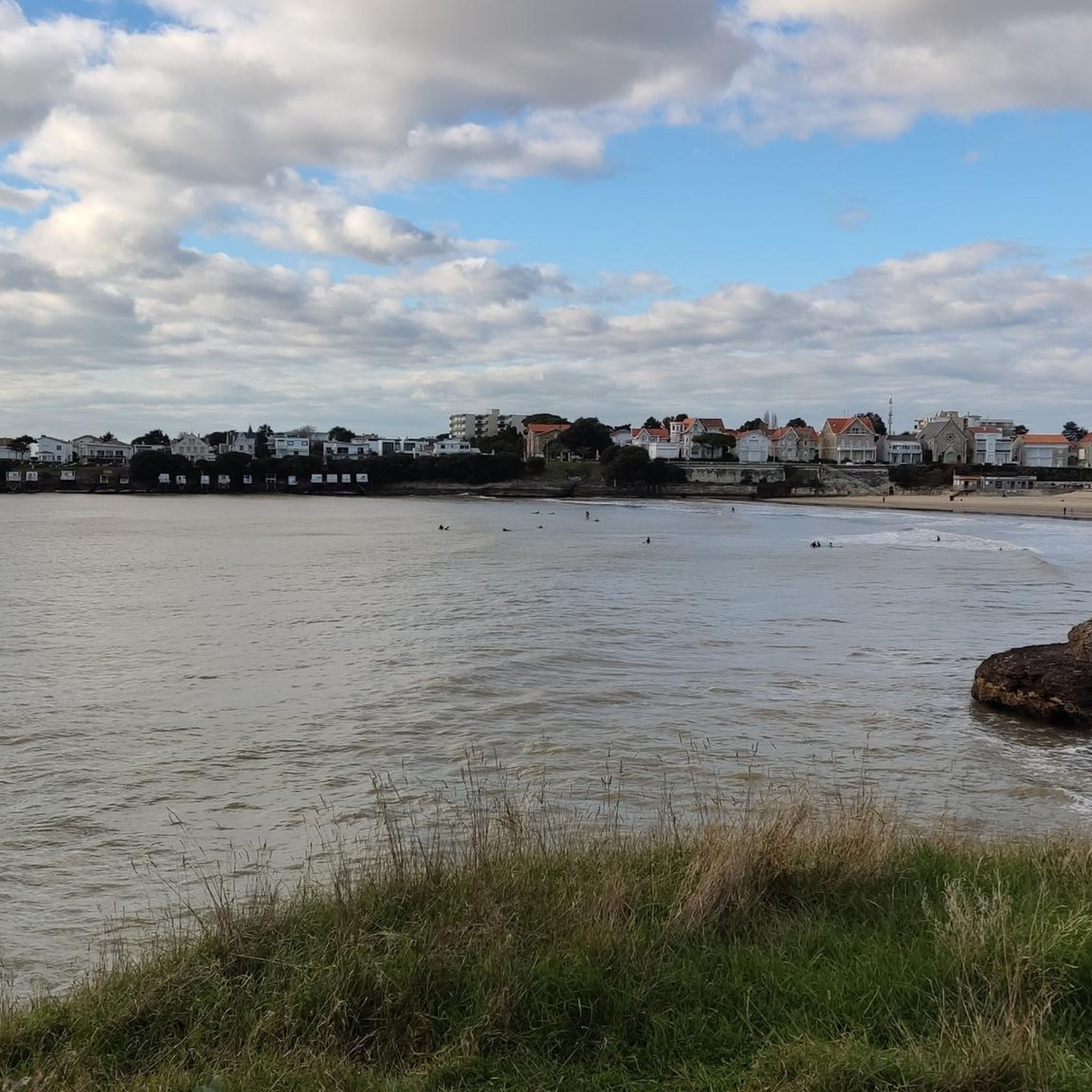
Some magnificent houses date from the Belle Époque
0
0

Located on the commune of St-Palais-sur-Mer, at the tip of Terre-Nègre, it is intended to mark the southern passage of the Gironde estuary and to signal the presence of a dangerous sandbank, the la barre à l'Anglais.
0
0
The carrelets of Saint-Palais-sur-Mer are among the most emblematic elements of the Charente coastline. Their history blends traditional fishing, tourist development, and local heritage. 🐟 Origin of the carrelets Originally, the word "carrelet" referred to a square fishing net used since the 17th century. A precise description can be found as early as 1769, in the writings of the scholar Henri-Louis Duhamel du Monceau, who mentioned this type of fishing on the Saintonge coast. 👉 At that time, these were not yet the current huts, but simply a net operated from rudimentary structures. ⚓ Artisanal fishing structures The first local carrelets were simple wooden platforms, built by the fishermen themselves to stand above the water. They were mainly used to catch shrimp, fish, and crabs near the shore, without going out to sea. 👉 It was a family and coastal fishery, less dangerous than sea fishing. 🏖️ 19th – early 20th century: transition to a leisure activity At the turn of the 20th century, with the rise of seaside resorts like Saint-Palais, the carrelets evolved. Holidaymakers and notable figures adopted this practice: construction of fixed jetties, appearance of huts on stilts. The carrelets then became places for relaxation as much as for fishing. 👉 They already contributed to the postcard image of the coast. 🪵 After 1945: democratization and multiplication After the Second World War, the number of carrelets increased sharply. They became a symbol of popular leisure and conviviality. The transition was gradually made from a means of subsistence to a recreational activity. 🌊 Storms and reconstruction The carrelets are fragile in the face of storms: 1999: massive destruction (up to 90% in some areas) 2010 (Xynthia storm): new damage Many have been rebuilt identically, respecting tradition. 🏛️ Today: protected heritage In Charente-Maritime, there are about 400 carrelets. They are: integrated into the public maritime domain allocated by administrative authorization (often renewed every 5 years) Since 2018, they have been recognized as cultural heritage of the department. 👉 In Saint-Palais, they can be observed in particular: at Pont du Diable at the conche du Concié at the Puits de l’Auture
0
0
The puits de l’Auture is an emblematic natural site located in Puits de l’Auture, north of the commune of Saint-Palais-sur-Mer. Its name often intrigues, and its history blends geology, local traditions, and maritime observation. 🌊 Origin and formation The puits de l’Auture is not a man-made well, but a natural formation: It is a cavity carved into the limestone rock by marine erosion. Under the effect of waves and infiltrations, the rock gradually collapsed, forming a sort of vertical chasm open to the sea. During strong swells or tides, water rushes in violently, creating spectacular eddies. 📜 Origin of the name The term “Auture” probably comes from Old French or the local dialect: It could derive from “hauteur” (height) or “autre” (other), evoking a high or separate place. Another hypothesis suggests a deformation of an old word related to a natural cavity or opening. No completely certain origin has been formally established, which adds to the mystery of the place. ⚓ Local historical role The site has had several uses or functions over time: 👀 Observation point Located on the rocky cornice, it served as a natural observation post to monitor the sea. Locals and fishermen could spot boats, storms, or dangers. 🎣 Fishing activities As elsewhere on the coast of Royan, particularly near the famous carrelets (fishing huts on stilts), the area was frequented by fishermen. The rocks around the well allowed for shore fishing or line fishing. 🌿 A remarkable natural site Today, the puits de l’Auture is mainly: A popular walking spot along the coastal path. A listed site for its landscape and geological interest. A remarkable viewpoint over the Atlantic Ocean, especially at sunset. ⚠️ Caution The site remains fragile and potentially dangerous: Unstable cliffs Powerful waves during storms It is advisable to stay on the marked trails.
0
0
🏖️ General Overview Chay Beach is a family-friendly, fine sandy beach located in Royan (Charente-Maritime), on the Côte d’Argent promenade between Pigeonnier Beach and Pointe du Chay. It stretches for approximately 200 meters and boasts a pleasant natural setting, with a cove bordered by rocks typical of the Charente coastline. 🏝️ Features • 🌊 Beach type: fine sand, sheltered cove. • 🏄♂️ Atmosphere: relatively calm and family-friendly, ideal for children and vacationers seeking relaxation away from the large urban beaches. • 🐾 Pets: prohibited from April 1st to September 30th. • 🫧 Water quality: excellent (Blue Flag label awarded for 2025). 🧭 Lifeguard and Safety • Swimming is supervised during the season (June to early September), with areas marked by red and yellow flags. • The area is classified as a Category 3 "Supervised Beach" and lifeguards are present during the indicated hours. 🪑 Amenities On-site, you can find: • 🏖️ Sun loungers, parasols, and mattresses for rent. • 🚿 Foot rinse and public restrooms. • 📶 Wi-Fi access, first aid station, and an area accessible to people with reduced mobility (assistance may be required depending on the slope). • 🍴 Beachfront restaurant ("Le Chay" bar-restaurant with sea views). 🚶♂️ Atmosphere and Activities • 🎈 Ideal for families and leisurely strolls. • 🌞 People come here for swimming, playing on the sand, flying kites, or simply relaxing by the ocean. • 🅿️ Parking is available nearby, and the beach is easily accessible on foot or by bike from Royan town center in just a few minutes. 🧭 Practical Tips • 📆 Best time to visit: summer for supervised swimming and full services, but also during the off-season for a more peaceful atmosphere. • ☀️ Arriving early in the morning makes parking easier during peak season. • 🐶 Dogs are not allowed during the summer season; check the signs on site during the off-season.
0
0

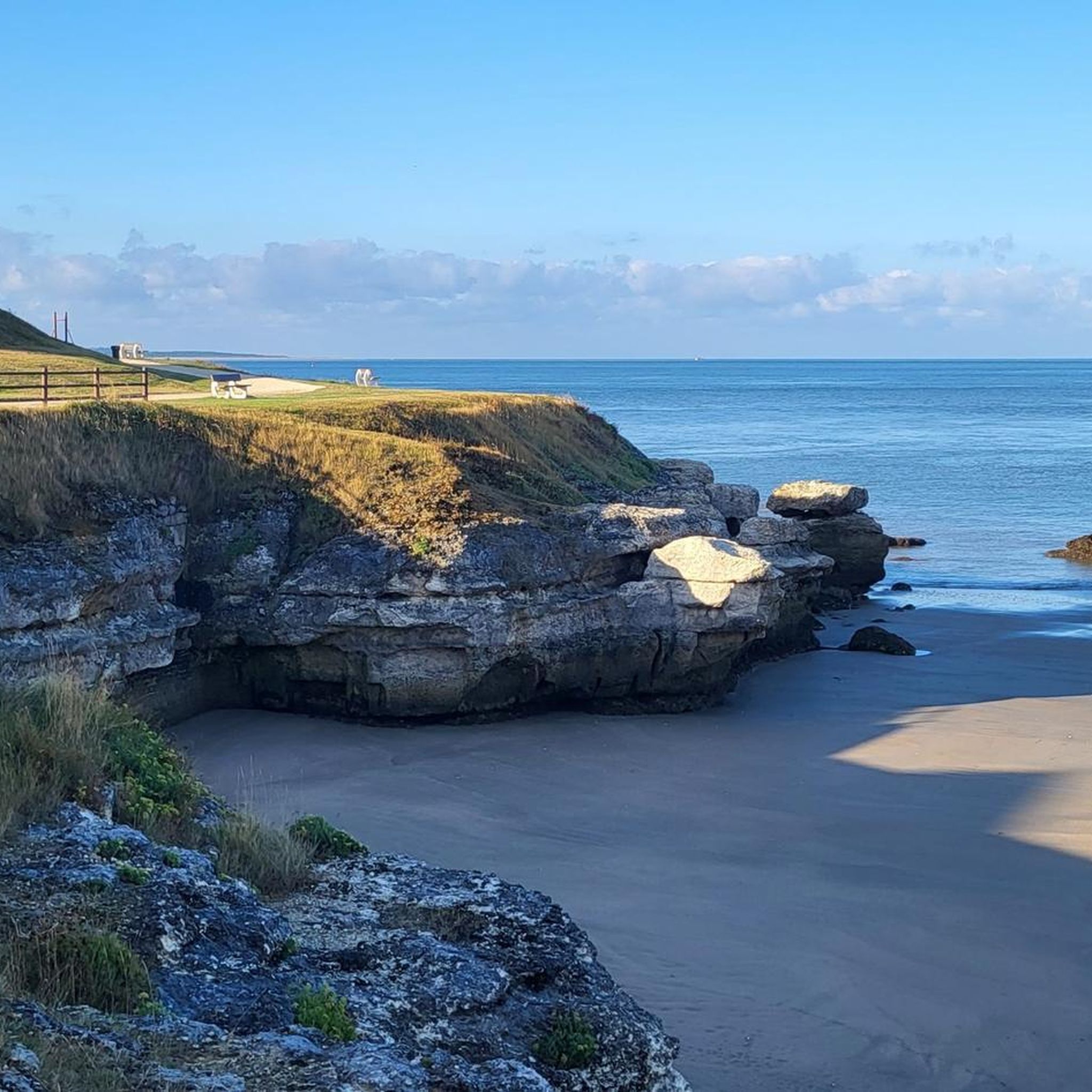
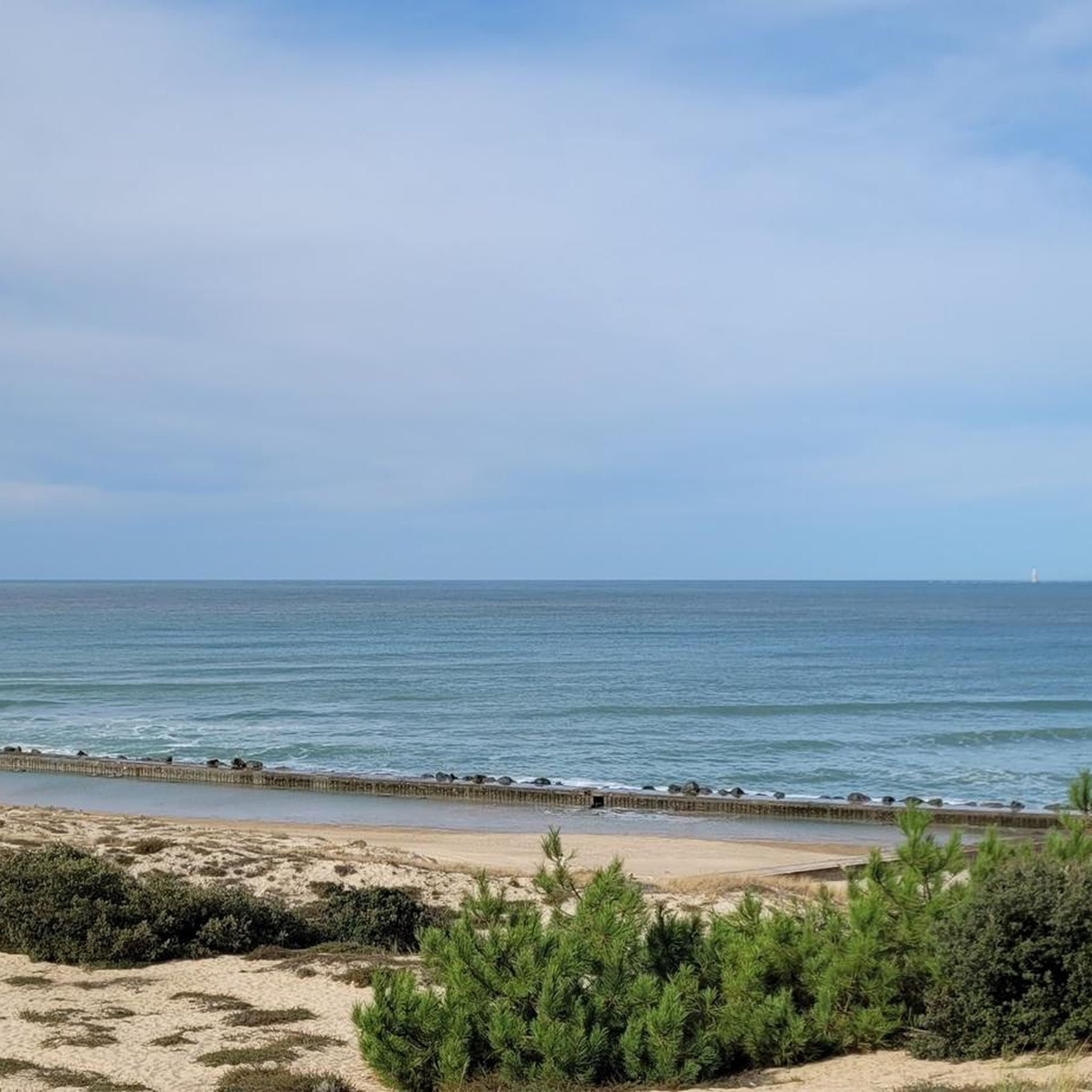
for a typical view here on the coast.. the cycle path along the shore is also worth it
0
0
Frequently Asked Questions
How many touring cycling routes are available in the Royan area?
The Royan region offers a wide selection of touring cycling routes, with over 50 options available on komoot. These routes cater to various preferences, from easy rides to more challenging adventures.
What kind of terrain can I expect on touring cycling routes around Royan?
Royan's touring cycling routes feature a diverse landscape. You can expect to cycle along the Atlantic coastline with its beaches and cliffs, through extensive pine forests like the Coubre and Suzac, and alongside the unique marshlands of the Gironde and Seudre estuaries. Many areas are relatively flat, making them accessible for various cycling abilities, but some routes along the estuaries or cliffs may include gentle inclines.
What is the best time of year for touring cycling in Royan?
The Royan region is generally pleasant for touring cycling from spring through autumn. The weather is typically mild, making it ideal for exploring the coastal paths, forests, and estuaries. Summer offers warm temperatures perfect for combining cycling with beach visits, while spring and autumn provide cooler, comfortable conditions and often fewer crowds.
Are there many easy touring cycling routes suitable for beginners or casual riders in Royan?
Yes, Royan is very welcoming for beginners and casual riders. Nearly half of the touring cycling routes in the area are classified as easy, offering gentle terrain and shorter distances. These routes are perfect for enjoying the scenery at a relaxed pace.
What natural features or landmarks can I see while cycling in Royan?
While cycling in Royan, you can discover a wealth of natural beauty and landmarks. Highlights include the dramatic Saint-Georges-de-Didonne Beach, the unique Grottes de Matata, and the serene Suzac Forest. Many routes also pass by picturesque coves like Conche de Gilet and Vergnes Cove, offering stunning views.
Are there any routes that showcase the traditional fishing huts (Carrelets) of Royan?
Absolutely. The traditional wooden fishing huts, known as Carrelets, are a distinctive feature of the Royan coastline. You can experience them on routes such as the Coastal loop to see the Carrelets of Royan, which offers moderate cycling with scenic views of these iconic structures.
Can I cycle through forests in the Royan region?
Yes, the Royan region is home to significant forest areas, often referred to as its 'green lung.' The **Coubre Forest**, a national forest spanning almost 8,000 hectares, is a highlight for cyclists, offering refreshing rides amidst remarkable natural views. The Suzac Forest is another notable forest area you can explore.
Are there any routes that explore the unique estuary landscapes?
Yes, the region is bordered by the Gironde and Seudre estuaries, offering unique landscapes of marshes, migratory bird habitats, and oyster farming areas. Routes like the 'Canal des 2 Mers by bike' (a section of which runs through the Royan area) or local loops along the Seudre estuary guide cyclists through a mosaic of water mirrors and channels, showcasing the region's rich ecosystem.
Are there circular touring cycling routes available in Royan?
Many of the touring cycling routes in Royan are designed as circular loops, allowing you to start and end your ride in the same location. Examples include the Côte sauvage – Royan Promenade and Beach loop from Royan and the Pontaillac Villa – Pontaillac Mini Golf loop from Royan, making planning your day trip convenient.
What do other touring cyclists enjoy the most about touring cycling in Royan?
The touring cycling experience in Royan is highly rated by the komoot community, with an average score of 4.5 stars from over 400 reviews. Cyclists often praise the diverse scenery, from the dramatic Wild Coast to the tranquil forest paths and unique estuary landscapes. The well-maintained cycle paths and the variety of routes suitable for different skill levels are also frequently highlighted.
Are there any routes that offer views of cliffs or dramatic coastal scenery?
Yes, the Royan area features impressive cliffs, particularly along the Gironde estuary, and the dynamic dunes of the Côte Sauvage. Routes like the View of the La Roche cliff – Carrelets de Royan loop from Royan offer stunning vistas of these natural formations, providing a dramatic backdrop to your ride.
Can I find routes that combine coastal views with urban exploration?
Certainly. Many routes in Royan offer a blend of natural coastal beauty and charming urban areas. For instance, the Côte sauvage – Royan Promenade and Beach loop from Royan showcases both the dramatic scenery of the Wild Coast and the elegant promenades of towns like Royan and Saint-Palais-sur-Mer, featuring 'Belle Époque' villas.
Most popular attractions around Royan

Get inspired with the komoot mobile app


Explore more
Browse the best Cycling routes in other regions.
