The best MTB trails around Saint-André-De-Lidon
4.6
(36)
174
riders
25
rides
Mountain biking around Saint-André-De-Lidon offers access to a diverse landscape in the Charente-Maritime department of France. The region features a mix of tranquil countryside paths, unpaved segments through vineyards, and sandy single tracks in wooded areas. Riders can explore varied terrain, from the rugged features of the Gironde estuary to extensive forests like those of Le Plantis. This area provides a network of cycling routes suitable for mountain biking, catering to different skill levels.
Best mountain bike trails around Saint-André-De-Lidon
…Last updated: October 16, 2026
7
riders
51.1km
03:15
410m
410m
Moderate mountain bike ride. Good fitness required. Suitable for all skill levels.
4.0
(1)
1
riders
40.7km
02:36
230m
230m
Moderate mountain bike ride. Good fitness required. Advanced riding skills necessary.

5.0
(1)
3
riders
24.9km
01:34
210m
210m
Easy mountain bike ride. Great for any fitness level. Suitable for all skill levels.
4.0
(2)
3
riders
31.4km
01:58
130m
130m
Easy mountain bike ride. Great for any fitness level. Suitable for all skill levels.
5.0
(1)
3
riders
30.5km
01:51
150m
150m
Easy mountain bike ride. Great for any fitness level. Suitable for all skill levels.
Get access to more routes and recommendations from other explorers.
Already have an account?
Our route recommendations are based on thousands of hikes, rides, and runs completed by other people on komoot.
Start today with a free account
Your next adventure awaits.


Tips from the Community

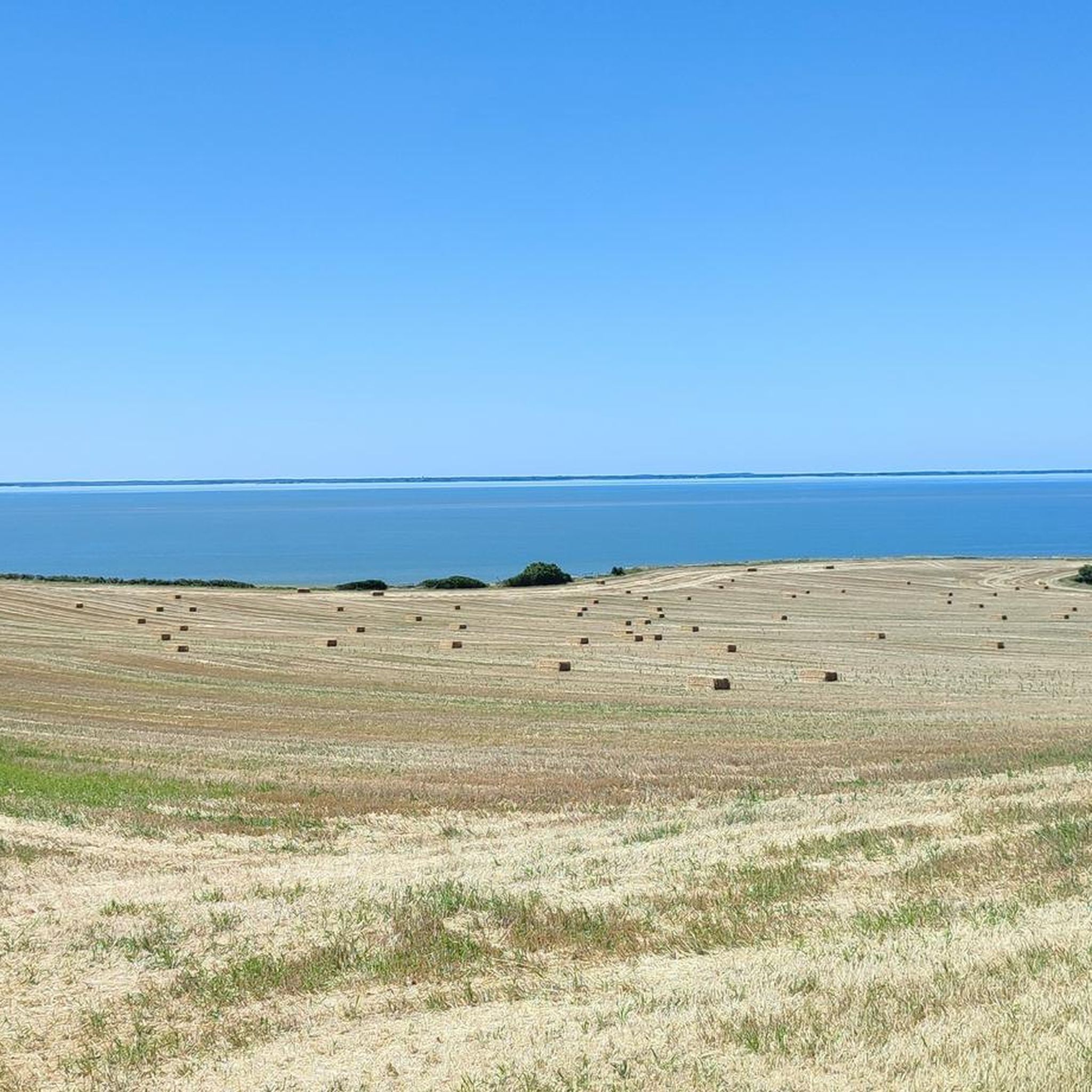
Magnificent portion with sublime views over the Gironde!
0
0

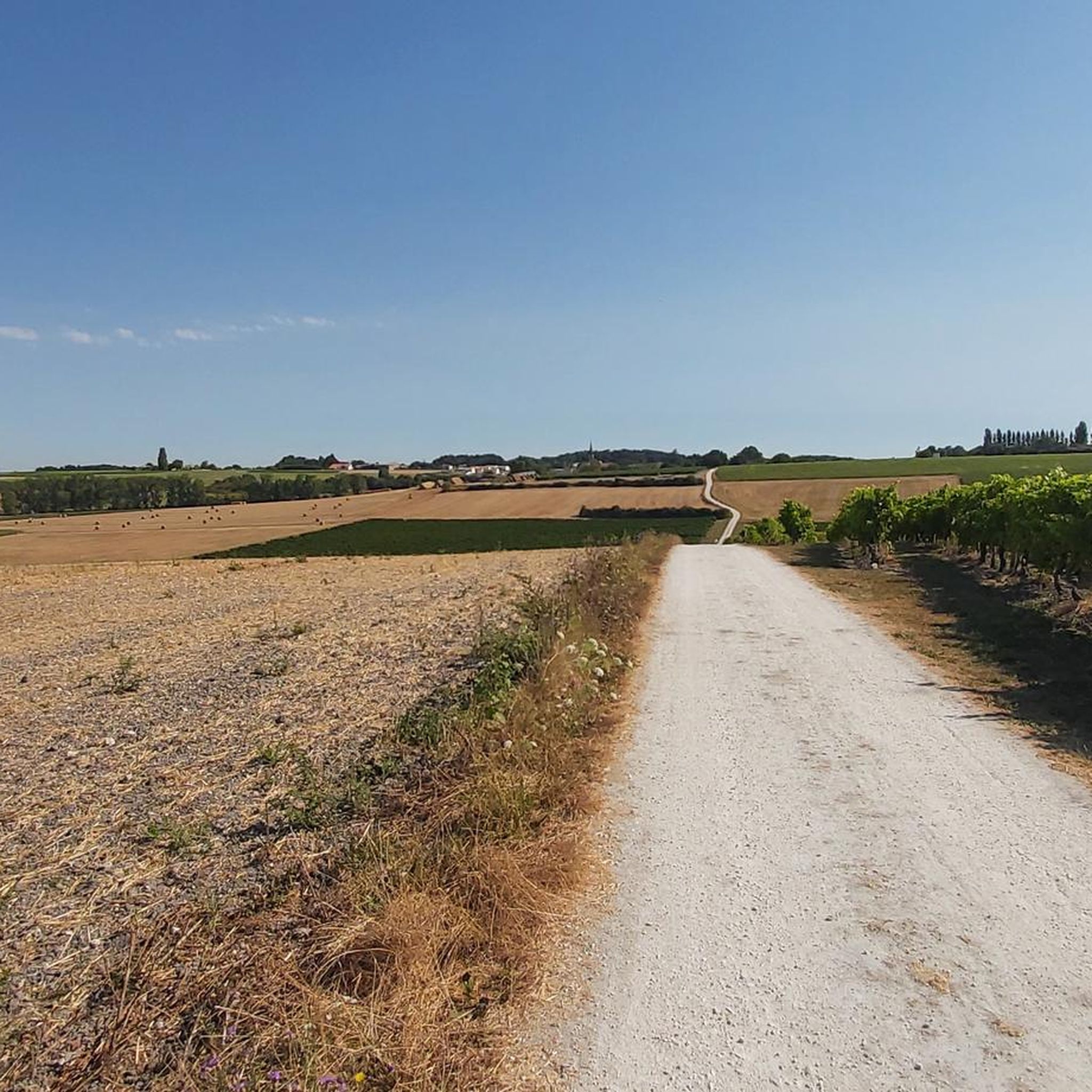
Very nice walk or bike ride
0
0


Even more beautiful after its restoration
0
0

beautiful passages along the Charente with pretty monuments and small waterfront cafés in Port d’Envaux and Saintes.
0
0

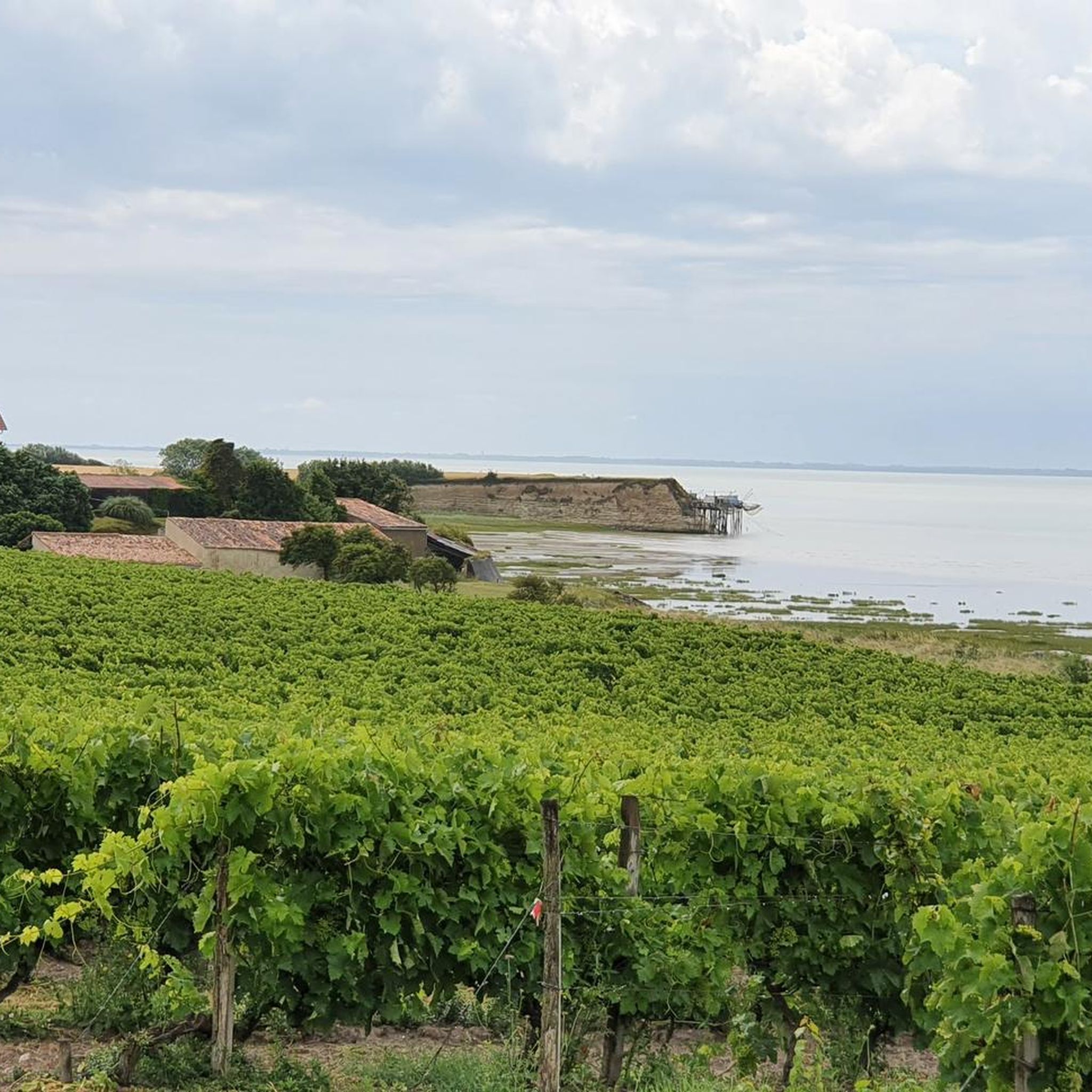
From the height of the coastal plateau the view reaches to the Gironde estuary, and the white cliffs of Pilou, with the tradition fishing huts on stilts (carelets).
1
0

Notre Dame de Nazareth Middle School is a private Catholic school under a state partnership agreement...and on a human scale, with 142 students and seven classes (two sixth-form, two fifth-form, one fourth-form, and two ninth-form), whose main focuses are student support and monitoring, valuing all achievements, and welcoming all. Depending on the families' schedules and needs, two statuses exist at Notre Dame de Nazareth Middle School: - Status 1: Children enter and exit NDN according to the school's hours: 8:55 a.m. - 5:10 p.m. They cannot enter later or leave earlier. - Status 2: Children can enter and leave the school at the first and last class times on their schedule. They have the option of entering later and leaving earlier than the school's hours, particularly in the event of a teacher's absence during the first and/or last class times of the day. 1865 The school was founded by three nuns from the Congregation of the Holy Family of Bordeaux at the "Château" in Sorlut. 1873 The sisters purchased land on the Route de Talmont in the hope of constructing a building there. 1875 The Château de Sorlut was put up for sale, and the school was relocated near the church on Rue Traversière. 1878 The building on the Route de Talmont was constructed, and the school was relocated there. 1902-1905 Despite the new secularization laws, the sisters continued their mission. 1914 The Red Cross flag flew over the school. 1923 The house was put up for sale by the estates. With some friends of the school, Father du Boulet placed a bid of 100 francs; no one else came forward, and the school was saved! 1940 The Red Cross flag flies over the house again, and the sisters carry out charitable works there. 1958 The school welcomes 70 children. 1959 The school is named "Our Lady of Nazareth." 1960 First expansion, installation of prefabricated classrooms, and opening of a complementary course. The school has 120 students. 1965 With 180 students, the school expands its enrollment to the surrounding towns: Cravans, Tesson, Montpellier, Corme Ecluse, Saint André de Lidon, etc. The classrooms and dormitories are modernized, and a refectory and a covered playground are built. 1983 The nuns hand over management to lay people while retaining supervision. 1987 A new building replacing the prefabricated buildings was constructed for the middle school students, with classrooms, a science laboratory, a technology room, and a computer room. The old building was completely renovated: the administrative area and a primary classroom were housed on the ground floor; the primary classrooms were housed on the first floor; and the library and chapel were located on the second floor. The entire school building, including the classrooms, courtyards, and grounds, underwent a complete renovation. 1989 Construction and development of the dining area: kitchen and refectories. 2008 Expansion of the middle school: new restrooms, 3 classrooms, and 1 study room. 2010 Creation of a nap and motor skills room for kindergarten students. 2012 Expansion of the refectory and construction of 3 additional classrooms at the middle school. 2015-2016 Nazareth celebrates its 150th anniversary! 2020 Opening of the flexible timetable (CHA) football classes, in partnership with the Cozes club. 2021 Interior renovation of the administrative building 2022 Opening of the CHA dance and table tennis classes Summer 2023 Renovation of the chapel and meeting room. Attic insulation. March 2025 Restoration underway
0
0
This vast building was originally owned by the Augustinian Abbey of Saint-Étienne de Mortagne (now defunct). Built beginning in the 13th century, the current church was supplemented with a flat chevet pierced by a triplet in the following century. The bell tower, set on a powerful square stump, extends into an octagonal floor, built in the 15th century. At that time, it housed seven bells. As in many parishes in the region, the bells of Cozes were taken down and taken to Royan Castle in 1548 as punishment for ringing the alarm bells of revolt during the Pitauds Jacquerie. The nave vaults collapsed in 1756 and were economically rebuilt in the 19th century. The five bays of the nave are covered with a very simple basket-handle ceiling, while the side chapels, on either side of the choir, are covered with groin vaults. The church has retained its 13th-century capitals with plant or historiated motifs, and part of its exterior ornamentation (cords, frieze, small columns, and an allusion to Aesop's fable, The Fox and the Stork). The façade contrasts sharply with the rest of the building. Neoclassical in inspiration, with its triangular pediment, it was redone in the 19th century. The furnishings include elements from all periods. The church nevertheless retains an 18th-century pulpit. Assembled by a cabinetmaker from Burie, it was intended for the Sainte-Colombe church in Saintes. It was later sold to the parish priest of Cozes. In 2000, the stained-glass windows were restored. An access ramp was installed for the disabled. Until the winter of 1862-1863, the church was surrounded by a cemetery. It was moved to La Grande Herbaude, and the square surrounding the church was then The area was leveled and planted with trees. In 1877, five bells were reinstalled. The bell tower houses a peal of five swinging bells, cast in 1877 by the Guillaume d'Angers foundry: Claire-Louise: F3 - approximately 950 kilos, Marie-Thérèse: A3 - approximately 450 kilos, Marie-Louise: C4 - approximately 250 kilos, Louise-Georgette: F4 - approximately 100 kilos, Marie-Madelaine: A4 - approximately 50 kilos. This peal is exceptional for several reasons. Peals composed of five bells are very rare in the Charente-Maritime department: there are fewer than five. It is rare for four or more bells to be cast simultaneously. Often, over time, one bell is recast, another is added, and often the different bells do not come from the same foundry. In Cozes, the five bells were cast together by a single founder. This is the only case in Charente-Maritime. Since these bells were cast at the same time, this guarantees the same homogeneity of the metal and therefore a much better sound when the five bells chime together. They form the perfect chord of F major.
0
0
Frequently Asked Questions
How many mountain bike trails are available around Saint-André-De-Lidon?
There are over 25 mountain bike trails around Saint-André-De-Lidon listed on Komoot, offering a diverse range of experiences for riders.
What kind of terrain can I expect on mountain bike trails in this region?
The region offers a mix of terrains, from tranquil countryside paths and viticultural landscapes to the more rugged features near the Gironde estuary and various forests. You'll find unpaved segments, sandy single tracks, and paths through hamlets, meadows, and vineyards.
Are there easy mountain bike trails suitable for beginners or families?
Yes, there are 9 easy mountain bike trails around Saint-André-De-Lidon. An example is the Bucoliques loop from Arces, an easy 31.3 km route that winds through agricultural fields and hamlets.
Are there challenging mountain bike trails for experienced riders?
While there are no trails explicitly rated as 'difficult' in our current selection, 17 of the routes are rated 'moderate'. Some routes, particularly in areas like the La Coubre forest, offer technical passages over sandy single tracks that can be exhilarating for more athletic riders.
What are some popular mountain bike routes in the Saint-André-De-Lidon area?
Among the popular routes are the Bois de la Grosse Pierre – La Motte Ronde loop from Arces, a moderate 30.2 km trail through forests and open countryside, and the Bucoliques loop from Saint-Seurin-d'Uzet, a moderate 33.9 km path winding through vineyards.
Are there any mountain bike trails with sea views or views of the Gironde estuary?
Yes, routes along the Gironde estuary offer magnificent panoramas. The Saint-Étienne Church – Sea view loop from Boutenac-Touvent is an easy 24.9 km trail that provides sea views. Additionally, the Forêt de Suzac offers trails with views of the Gironde estuary mouth.
What kind of natural features or attractions can I see along the trails?
You can explore diverse landscapes including the unique Gironde estuary, the serene Seudre river marshes, and various forests like Forêt de Pons and Forêt de la Coubre. Along the way, you might encounter historical elements like windmills, renovated stone buildings, and picturesque villages. Specific highlights include the Mortagne-sur-Gironde Marina and the Saint-Étienne Church.
Are there any circular mountain bike routes in the area?
Yes, many of the mountain bike trails around Saint-André-De-Lidon are designed as loops. Examples include the Bois de la Grosse Pierre – La Motte Ronde loop from Arces and the Gallo-Roman Arena – Cathedral of Saintes loop from Saintes.
What do other mountain bikers say about the trails in Saint-André-De-Lidon?
The area is highly rated by the Komoot community, with an average score of 4.5 stars from over 30 reviews. Mountain bikers often praise the varied terrain, from quiet woodlands to scenic vineyard paths, and the well-maintained routes.
Are there any historical landmarks accessible by mountain bike?
Yes, the region is rich in history. The 'Circuit vélo n°9 St André de Lidon' combines Romanesque heritage with viticultural landscapes. You can also find historical sites like the Romanesque church in Saint-André-De-Lidon itself, and the Notre-Dame Church of Corme-Écluse is another notable religious building in the vicinity.
What is the best time of year for mountain biking in Saint-André-De-Lidon?
The diverse landscapes of Saint-André-De-Lidon, with its forests, vineyards, and coastal paths, make it enjoyable for mountain biking across multiple seasons. Spring and autumn generally offer pleasant temperatures and vibrant scenery, while shaded forest trails can provide relief during warmer summer months.
Most popular routes around Saint-André-De-Lidon
Most popular attractions around Saint-André-De-Lidon

Get inspired with the komoot mobile app


Explore more
Browse the best MTB trails in other regions.
