Attractions and Places To See around Brives-Sur-Charente - Top 20
Attractions and places to see around Brives-Sur-Charente, located in the Charente-Maritime department of Nouvelle-Aquitaine, France, offer a mix of historical charm and natural landscapes. The area is characterized by its architectural heritage, including Romanesque churches, and its position along the Charente river. Visitors can explore local landmarks and natural sites, with opportunities for various outdoor activities. The region provides a setting for those interested in history, local culture, and exploring the French countryside.
Best attractions and places to see around…
Last updated: October 10, 2026
Chaniers chain bin
Highlight • Structure
Tip by

Saint-Martin Church
Highlight • Other
Translated by Google •
Tip by

Sign up now to discover places like this
Get recommendations on the best single tracks, peaks, & plenty of other exciting outdoor places.
Saint-Césaire Church
Highlight • Religious Site
Translated by Google •
Tip by

Le Moulin de la Baine
Highlight • Historical Site
Translated by Google •
Tip by

Chêne de François 1er
Highlight • Natural Monument
Translated by Google •
Tip by

Sign up for free to discover even more attractions around Brives-Sur-Charente.
Already have an account?
Start today with a free account
Your next adventure awaits.


Tips from the Community

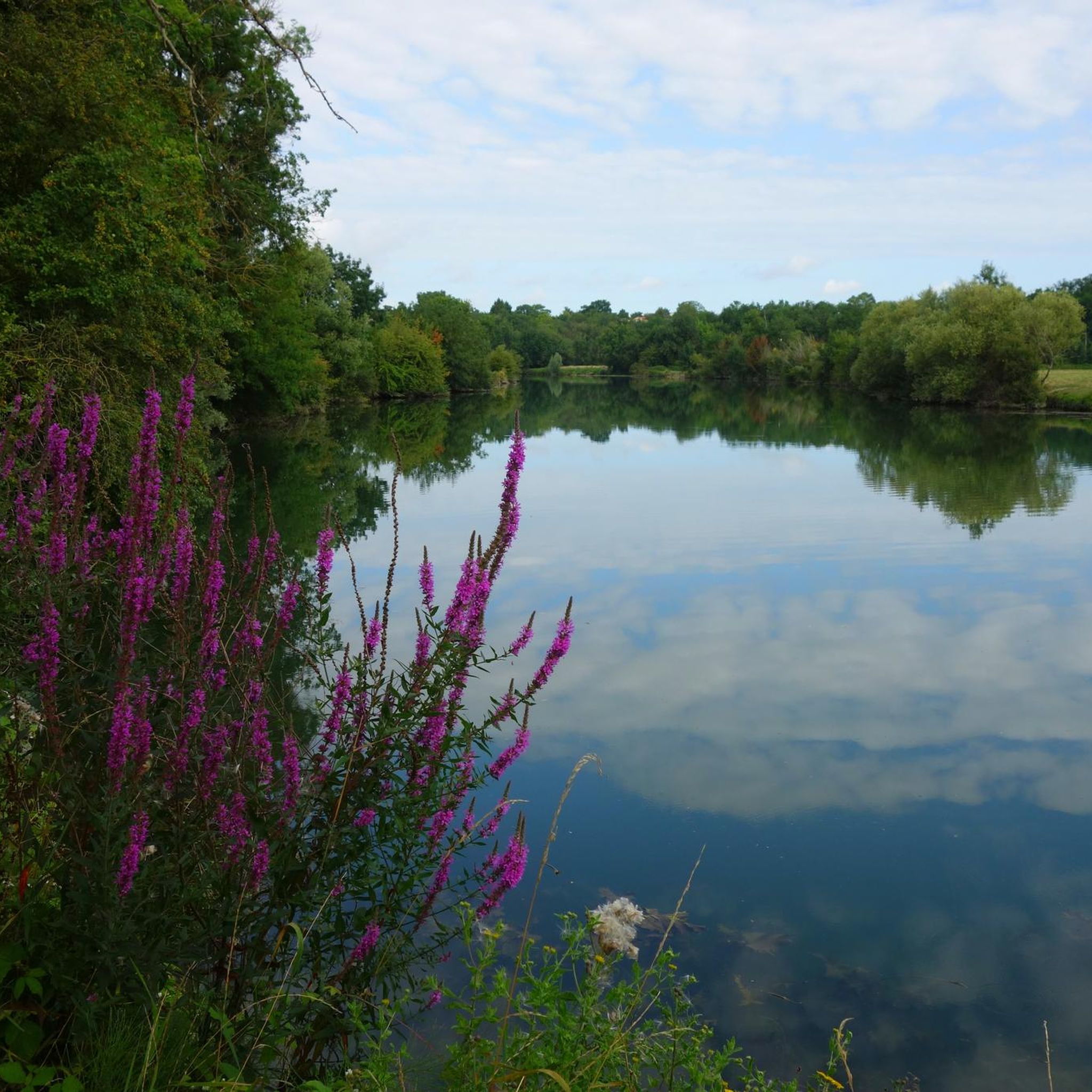
The site of La Baine, in Chaniers, predates the current mill. 14th century: the first attested mills A document dated 1310 mentions cloth mills at La Baine. They were built on piles driven into the riverbed and were used, among other things, for fulling fabrics. These mills then belonged to the dean and chapter of the cathedral of Saintes. They had been destroyed a few years earlier by the Count of la Marche. In 1313, the chapter obtained authorization to rebuild two mills, a weir, and a fishery. 17th century: Colbert's royal mill It was in the 17th century that La Baine gained considerable importance. A complex of five wheat mills was rebuilt on a secondary branch of the Charente, which was not used for navigation. Around 1630, the mills belonged to the brothers Charles and Jacques Duval, who held the beneficial ownership, while the lordship of Chaniers was under the chapter of the Saint-Pierre de Saintes cathedral. Then came Jean-Baptiste Colbert, minister to Louis XIV and Secretary of State for the Navy. Around 1670, Colbert had the mill redeveloped and enlarged to considerably increase its production capacity. The new complex had seven water passages and thus became one of the most powerful mills in the region. Why was Colbert interested in La Baine? The reason was directly linked to the creation and development of the Rochefort arsenal. The mill primarily produced wheat and barley flour intended for the sustenance of the Royal Navy sailors. The grains arrived via the Charente aboard gabares (flat-bottomed barges). After delivering their cargo to the mill, the gabares departed with the flour destined, among other places, for Rochefort. The mill of La Baine was therefore part of a true royal industrial and logistical system organized around the Charente and Rochefort. 19th century: gradual transformation In the 19th century, milling activity continued. The old mills gradually became a true industrial establishment. In 1845, the site was operated by five different millers. From 1897, the complex was gradually brought together by Mr. Lardy, who modernized the facilities and introduced machinery. His son Rémy Lardy succeeded him. 20th century: the flour mill In the 1930s, the mill had become a true industrial flour mill. Its capacity reached about 50 quintals of wheat per day. In 1936, the hydraulic power was supplied by several wheels about 5 meters in diameter. The total water intake was about 4 meters, with a head of 1.50 meters. The facilities included, among other things: two double grinders; a double converter; a pair of millstones; a plansichter; five purifiers. Milling activity finally ceased in the mid-20th century, with sources placing the end of industrial activity around the years 1940-1960, depending on whether one refers to the flour mill or the complete disappearance of milling activity. Today The building has been preserved and transformed into a restaurant, while retaining remarkable elements of its industrial past, notably the wheel and part of the old machinery. The Moulin de la Baine is now located at 14 rue Colbert, 17610 Chaniers, directly above the Charente. A particularly interesting point The mill, the dam, and the locks form an inseparable historical ensemble. The current dam has, however, undergone modern transformations: a prefectural decree from 2012 classifies the hydraulic structure of the Moulin de La Baine as a Class D dam, among other things.
0
0
The Chaniers ferry (Charente-Maritime) is one of the last traditional river ferries still in operation in France. It allows crossing the Charente River between Chaniers and Courcoury, a few kilometers downstream from Saintes. A crossing used for centuries History of the Chaniers ferry The ferry crossing at Chaniers is very old: it dates back to the Middle Ages. In the mid-17th century, it was already an important crossing point on the Charente. It was not only used to cross the river: it also allowed residents to access the meadows on the other side, particularly for agricultural activities. In the early 20th century, the Chaniers ferry was part of a much larger network of crossings on the Charente. In 1909, thirteen ferries were still recorded in Charente-Inférieure, including the one in Chaniers. Ferries were essential at the time before the proliferation of bridges. Why "chain ferry"? The principle consists of holding the ferry on a chain connecting the two banks. The ferryman uses this chain to move the boat forward and keep it on its course despite the current. In Chaniers, the current ferry is motorized, unlike the ferry in Dompierre-sur-Charente, which is operated manually. The Tourist Office, however, still describes it as a "chain ferry," and the municipality as the traditional crossing method connecting Chaniers to Courcoury. The ferry today The crossing takes place between Le Communal in Chaniers and the Courcoury bank. It is free and can transport pedestrians, cyclists, and motorized vehicles. Its operation depends in particular on the flow of the Charente River. The municipality of Chaniers officially presents "the port of Chaniers and its chain ferry" as an element of its local heritage. Important point: I am correcting my previous message: the Chaniers ferry is not simply a "19th-century ferry." The crossing has been attested since the Middle Ages; it is its mode of operation and its equipment that have evolved over the centuries.
0
0

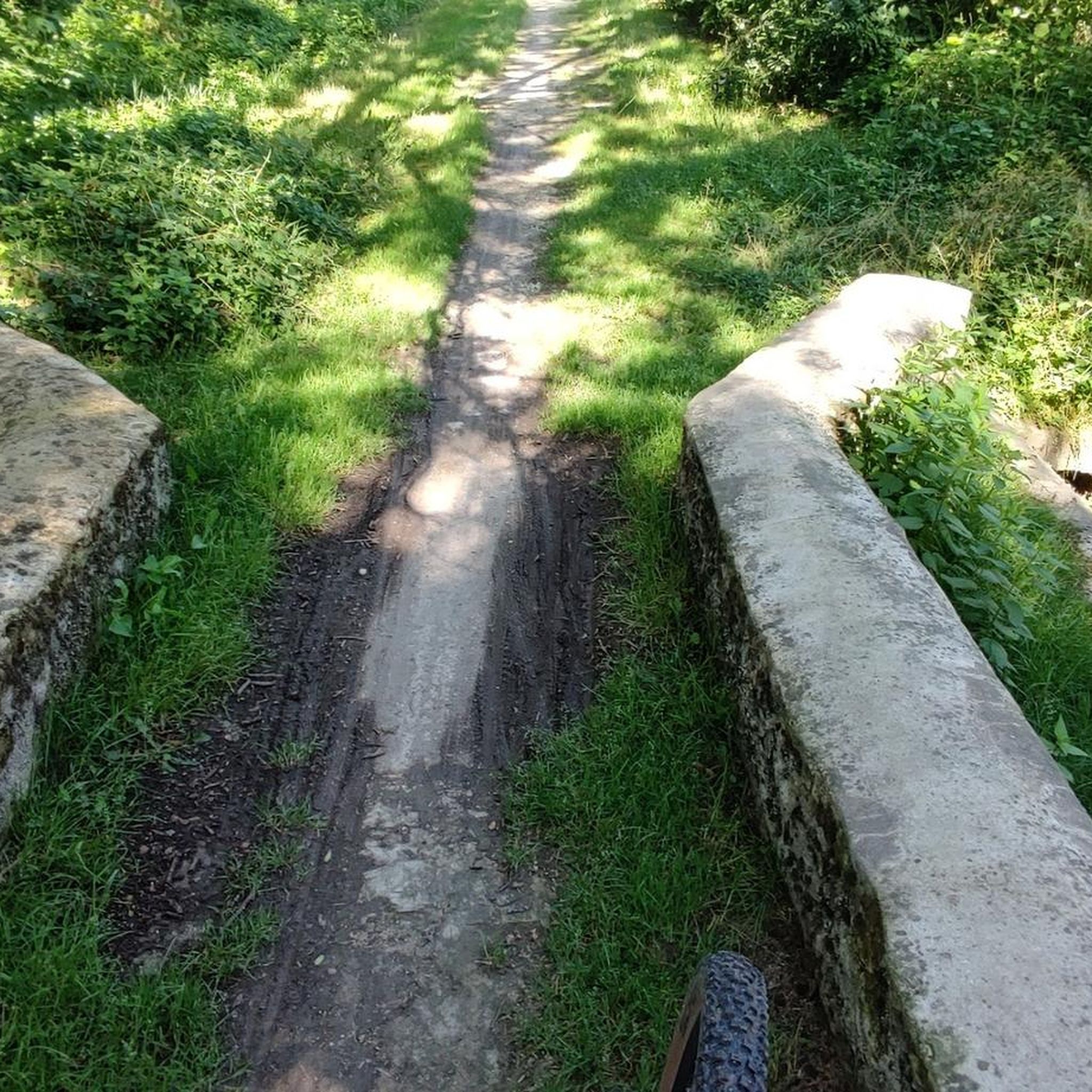
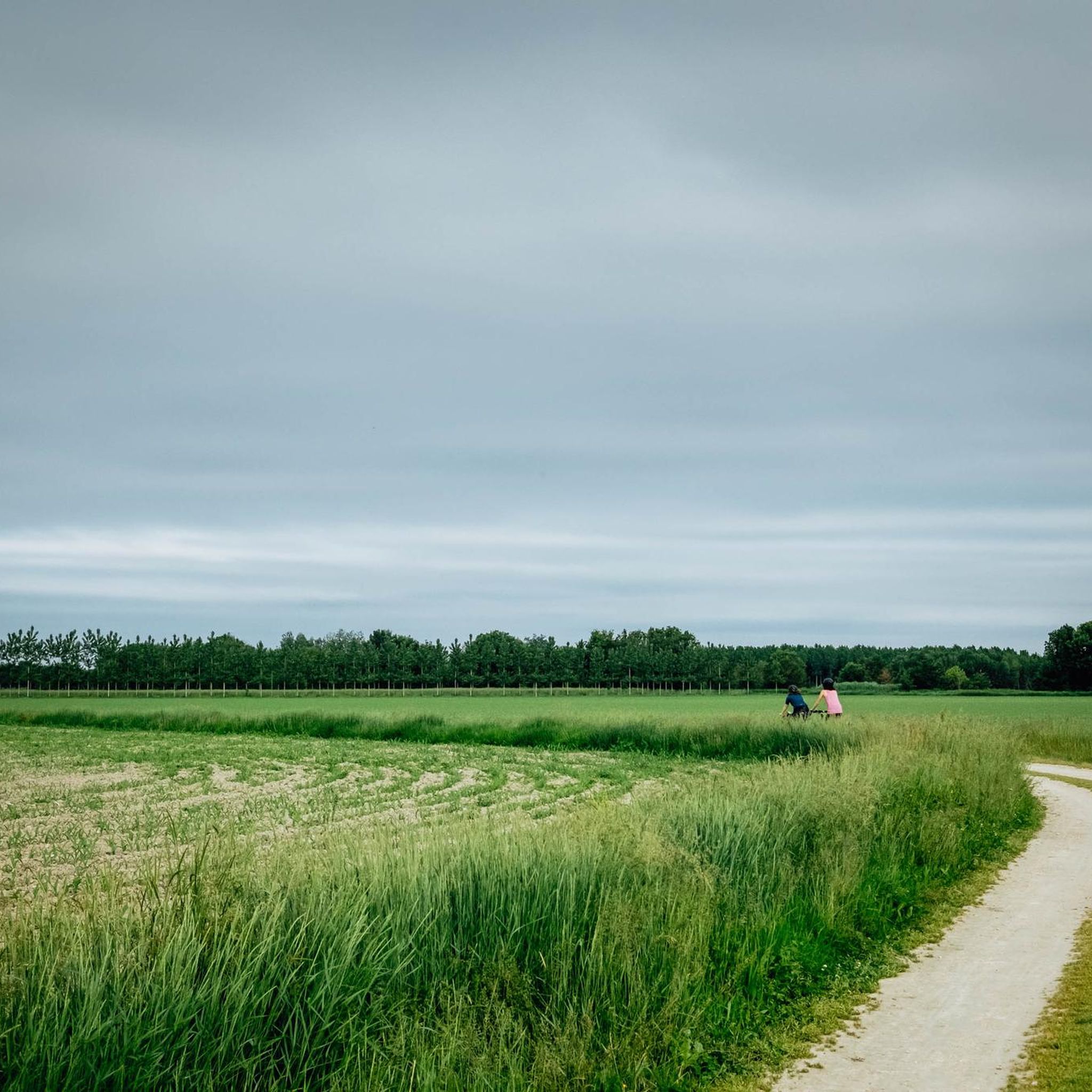
I really enjoyed this ride. I’m 46, I did it on a 40 year old road bike, it’s more suited to a cyclocross bike!
1
0

This imposing holm oak is approximately 500 years old. We do not know if it was planted on the occasion of the birth of the future king of France François I in 1494, on the occasion of his coronation in 1515 or on the occasion of his death in 1547. What we do know, however, is that it measures 17 meters high with a trunk circumference of 5.5 meters. Classified as a “remarkable tree”, it was even elected “tree of the year” in 2014 by the National Forestry Office.
0
0
A particularity is located in the gallery of arcature which overhangs the portal. Indeed it has three arched windows on one side of the central window and two semicircular on the other. Note that the two bays on the right occupy the same width as the three on the left. The bell tower, like many others in the region, has a pyramidal roof. Simple columns come to partition the two windows which cover each face. Inside the church, archival documents prove that the nave with two bays was originally vaulted with warheads. Unfortunately, this vault was destroyed during religious wars. Still according to archival documents, it would seem that at the beginning of the 20th century, a narthex, where the catechumens were held, leaned on its facade. Today, it has completely disappeared. The church was classified as a historic monument in 1913. The building underwent a complete restoration in 1935. To admire just next to the church a magnificent and majestic period residence.
0
0

The Church of Saint-Martin de Coucoury was built around the 11th century. It is a pretty example of a Romanesque church.
1
0
It was in the 12th century that the church of Saint Césaire was built. It is a Saintonge Romanesque style church.
0
1

The Moulin de la Baine dates from the 17th century. You will now find a restaurant and a magnificent view of the Charente.
0
0
Frequently Asked Questions
What historical and architectural sites can I explore in Brives-sur-Charente?
Brives-sur-Charente and its surroundings are rich in history. You can visit the 12th-century Saint-Césaire Church, a beautiful example of Saintonge Romanesque style, classified as a historic monument. Another significant religious site is Saint-Martin Church, built around the 11th century, featuring a massive square bell tower and a mix of architectural styles. The region also boasts the historic Château de Brives, known for its connection to the cognac trade and recent restoration, and the Église Saint-Étienne.
Are there any natural attractions or scenic spots to visit near Brives-sur-Charente?
Yes, the area offers several natural highlights. The Port of the Lys is a popular river area, ideal for walkers, cyclists, fishermen, and boaters, offering a shady stopover. You can also discover the impressive Chêne de François 1er, a remarkable 500-year-old holm oak elected 'tree of the year' in 2014. The Charente River itself provides picturesque settings for outdoor activities.
What outdoor activities are popular around Brives-sur-Charente?
The region is excellent for various outdoor pursuits. You can enjoy hiking, walking, Nordic walking, bike rides, mountain biking, and horseback riding. The GR 360 (Tour de Saintonge), a long-distance hiking trail, passes through the area, offering segments like 'l'île de la Grenouillette' and 'le bois Brossard'. The Charente River also provides opportunities for boating and water skiing.
Are there hiking trails suitable for different skill levels near Brives-sur-Charente?
Yes, you'll find a variety of hiking trails. For a moderate challenge, consider the 'Three Villages Trail' or the 'Pont des Gaulois – Moulin de Saint-Laurent loop from Louzac-Saint-André'. There are also several other moderate hiking loops available, such as those from Chérac and Saint-Laurent-de-Cognac. You can find more details and routes on the Hiking around Brives-Sur-Charente guide.
What cycling routes are available in the Brives-sur-Charente area?
Cyclists can explore several routes, ranging from easy to moderate. An easy option is the 'Port of the Lys – Crouin bridge loop from Saint-Laurent-de-Cognac'. For a moderate ride, try the 'Bike loop from Chérac'. Other easy loops include 'The chain box – Chaniers chain bin loop from Rouffiac' and 'Crouin bridge – Port of the Lys loop from Saint-Laurent-de-Cognac'. Discover more routes on the Cycling around Brives-Sur-Charente guide.
What is there to see in the nearby town of Cognac?
Just a short distance from Brives-sur-Charente, you can visit the Historic Center of Cognac. This wealthy town is famous for its cognac and pineau trade, with historic houses like Hennessy, Rémy Martin, Courvoisier, and Martell. It's also the birthplace of King François I, adding to its rich historical significance.
Are there any family-friendly attractions or activities in the region?
Many of the natural sites and outdoor activities are suitable for families. The Port of the Lys is a great spot for a family outing, offering space for walking and enjoying the river. The Historic Center of Cognac is also considered family-friendly, providing an engaging cultural experience.
What do visitors enjoy most about the attractions around Brives-sur-Charente?
Visitors particularly appreciate the blend of historical charm and natural beauty. The ancient Romanesque churches, like Saint-Césaire and Saint-Martin, are admired for their architecture and history. The scenic river areas, such as the Port of the Lys, are loved for their peaceful atmosphere and opportunities for walking, cycling, and relaxation. The overall appeal lies in exploring the French countryside with its rich heritage.
Can I find local markets or producers in Brives-sur-Charente?
The commune occasionally hosts artisanal markets, sometimes held in the park of the Château de Brives. These markets offer a chance to discover local crafts and products, highlighting the presence of local producers and regional specialties.
What is the best time of year to visit Brives-sur-Charente for outdoor activities?
The region is generally pleasant for outdoor activities from spring through early autumn. These seasons offer mild temperatures, making it ideal for hiking, cycling, and exploring the natural landscapes and historical sites. Summer can be warm, perfect for river activities, while spring and autumn provide comfortable conditions for longer walks and bike rides.
Are there options for running trails near Brives-sur-Charente?
Yes, there are several running trails available. For a challenging run, consider the 'Porte Saint-Jacques – Cognac Castle loop from Salignac-sur-Charente'. Moderate options include the 'Running loop from Château de Merpins' or 'Running loop from Saint-Sever-de-Saintonge'. You can find more detailed routes and distances on the Running Trails around Brives-Sur-Charente guide.
Are the attractions in Brives-sur-Charente generally dog-friendly?
While specific dog policies for each attraction may vary, many outdoor areas and trails around Brives-sur-Charente are generally welcoming to dogs, especially if kept on a leash. The GR 360 hiking trail and other walking routes offer great opportunities to explore with your canine companion. It's always advisable to check specific venue rules for indoor sites or private properties.
Most popular routes around Brives-Sur-Charente

Get inspired with the komoot mobile app


Explore more
Still not found the Highlight you’re looking for? See guides of the top attractions in other regions:
