Attractions and Places To See around Chermignac - Top 20
Best attractions and places to see around Chermignac include a blend of historical sites within the commune and a variety of landmarks, cultural sites, and natural features in the surrounding Nouvelle-Aquitaine region. The area is characterized by its Gallo-Roman heritage, significant religious architecture, and access to forests and coastal points. Visitors can explore ancient structures, learn about local traditions, and experience diverse natural landscapes.
Best attractions and places to see around Chermignac
- The most popular attractions is Abbaye aux Dames…
Last updated: October 10, 2026
Chaniers chain bin
Highlight • Structure
Tip by

Saint-Martin Church
Highlight • Other
Translated by Google •
Tip by

Sign up now to discover places like this
Get recommendations on the best single tracks, peaks, & plenty of other exciting outdoor places.
Abbaye aux Dames de Saintes
Highlight • Religious Site
Translated by Google •
Tip by

Saint-Pierre Cathedral (Saintes)
Highlight • Religious Site
Translated by Google •
Tip by

Le Moulin de la Baine
Highlight • Historical Site
Translated by Google •
Tip by

Sign up for free to discover even more attractions around Chermignac.
Already have an account?
Start today with a free account
Your next adventure awaits.



Tips from the Community

The site of La Baine, in Chaniers, predates the current mill. 14th century: the first attested mills A document dated 1310 mentions cloth mills at La Baine. They were built on piles driven into the riverbed and were used, among other things, for fulling fabrics. These mills then belonged to the dean and chapter of the cathedral of Saintes. They had been destroyed a few years earlier by the Count of la Marche. In 1313, the chapter obtained authorization to rebuild two mills, a weir, and a fishery. 17th century: Colbert's royal mill It was in the 17th century that La Baine gained considerable importance. A complex of five wheat mills was rebuilt on a secondary branch of the Charente, which was not used for navigation. Around 1630, the mills belonged to the brothers Charles and Jacques Duval, who held the beneficial ownership, while the lordship of Chaniers was under the chapter of the Saint-Pierre de Saintes cathedral. Then came Jean-Baptiste Colbert, minister to Louis XIV and Secretary of State for the Navy. Around 1670, Colbert had the mill redeveloped and enlarged to considerably increase its production capacity. The new complex had seven water passages and thus became one of the most powerful mills in the region. Why was Colbert interested in La Baine? The reason was directly linked to the creation and development of the Rochefort arsenal. The mill primarily produced wheat and barley flour intended for the sustenance of the Royal Navy sailors. The grains arrived via the Charente aboard gabares (flat-bottomed barges). After delivering their cargo to the mill, the gabares departed with the flour destined, among other places, for Rochefort. The mill of La Baine was therefore part of a true royal industrial and logistical system organized around the Charente and Rochefort. 19th century: gradual transformation In the 19th century, milling activity continued. The old mills gradually became a true industrial establishment. In 1845, the site was operated by five different millers. From 1897, the complex was gradually brought together by Mr. Lardy, who modernized the facilities and introduced machinery. His son Rémy Lardy succeeded him. 20th century: the flour mill In the 1930s, the mill had become a true industrial flour mill. Its capacity reached about 50 quintals of wheat per day. In 1936, the hydraulic power was supplied by several wheels about 5 meters in diameter. The total water intake was about 4 meters, with a head of 1.50 meters. The facilities included, among other things: two double grinders; a double converter; a pair of millstones; a plansichter; five purifiers. Milling activity finally ceased in the mid-20th century, with sources placing the end of industrial activity around the years 1940-1960, depending on whether one refers to the flour mill or the complete disappearance of milling activity. Today The building has been preserved and transformed into a restaurant, while retaining remarkable elements of its industrial past, notably the wheel and part of the old machinery. The Moulin de la Baine is now located at 14 rue Colbert, 17610 Chaniers, directly above the Charente. A particularly interesting point The mill, the dam, and the locks form an inseparable historical ensemble. The current dam has, however, undergone modern transformations: a prefectural decree from 2012 classifies the hydraulic structure of the Moulin de La Baine as a Class D dam, among other things.
0
0
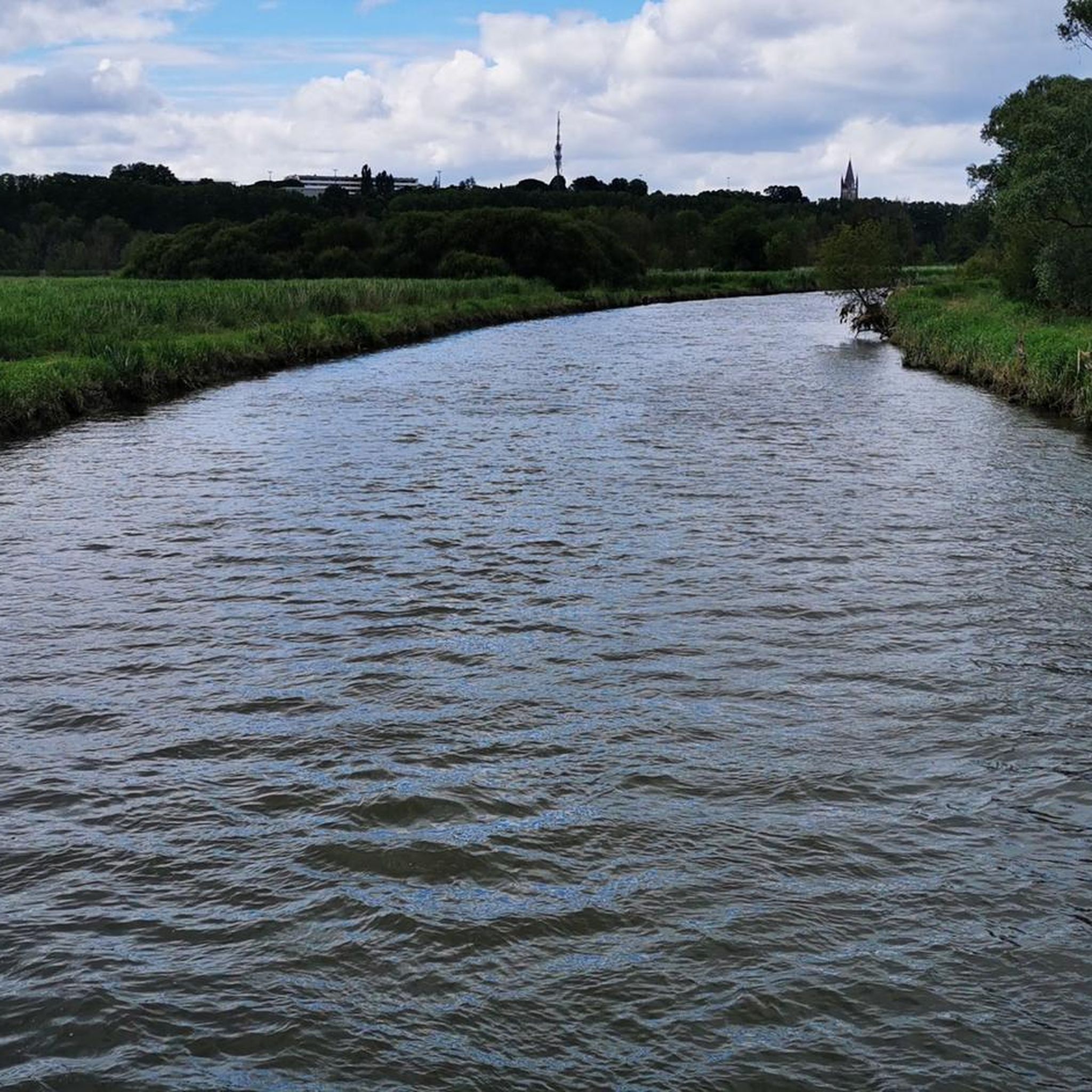
The Chaniers ferry (Charente-Maritime) is one of the last traditional river ferries still in operation in France. It allows crossing the Charente River between Chaniers and Courcoury, a few kilometers downstream from Saintes. A crossing used for centuries History of the Chaniers ferry The ferry crossing at Chaniers is very old: it dates back to the Middle Ages. In the mid-17th century, it was already an important crossing point on the Charente. It was not only used to cross the river: it also allowed residents to access the meadows on the other side, particularly for agricultural activities. In the early 20th century, the Chaniers ferry was part of a much larger network of crossings on the Charente. In 1909, thirteen ferries were still recorded in Charente-Inférieure, including the one in Chaniers. Ferries were essential at the time before the proliferation of bridges. Why "chain ferry"? The principle consists of holding the ferry on a chain connecting the two banks. The ferryman uses this chain to move the boat forward and keep it on its course despite the current. In Chaniers, the current ferry is motorized, unlike the ferry in Dompierre-sur-Charente, which is operated manually. The Tourist Office, however, still describes it as a "chain ferry," and the municipality as the traditional crossing method connecting Chaniers to Courcoury. The ferry today The crossing takes place between Le Communal in Chaniers and the Courcoury bank. It is free and can transport pedestrians, cyclists, and motorized vehicles. Its operation depends in particular on the flow of the Charente River. The municipality of Chaniers officially presents "the port of Chaniers and its chain ferry" as an element of its local heritage. Important point: I am correcting my previous message: the Chaniers ferry is not simply a "19th-century ferry." The crossing has been attested since the Middle Ages; it is its mode of operation and its equipment that have evolved over the centuries.
0
0

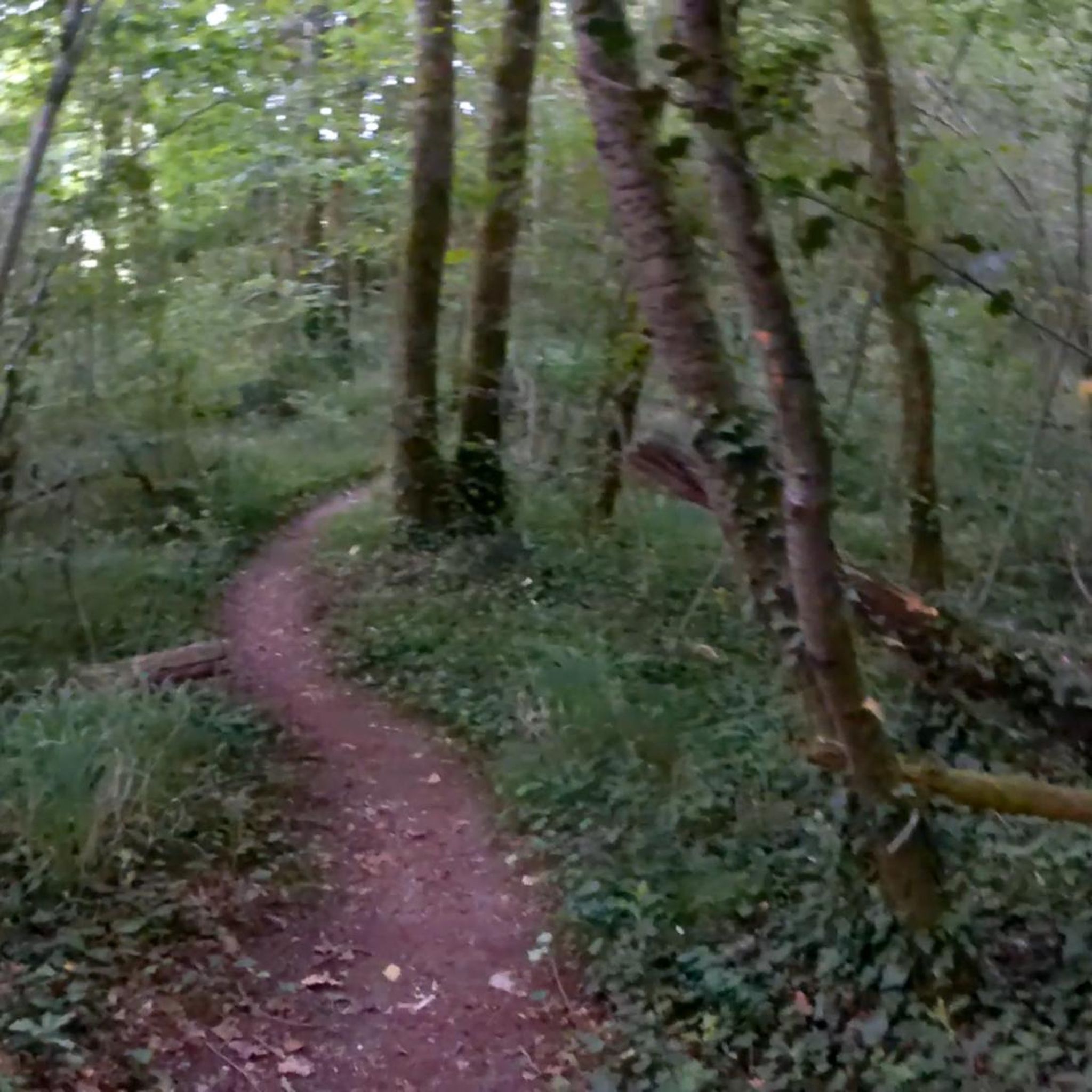
I really enjoyed this ride. I’m 46, I did it on a 40 year old road bike, it’s more suited to a cyclocross bike!
1
0

The Abbaye-aux-Dames is built around the church of Sainte-Marie, built in the twelfth century. Famous for its facade and its characteristic "pinecone" bell tower, it is one of the emblematic monuments of Saintonge's Romanesque art. After several wars and fires, the place was restored in the 1970s and 1980s and is now a hotel. When you walk through the long corridors you feel like you have been transported back to the time when the abbey was still alive.
4
0
The Saint-Pierre Cathedral is located in the heart of the old town on the left bank of the Charente. According to tradition, the founding of this episcopal see goes back to Saint Eutrope. The construction of the first Christian building on the site of the current cathedral could not be dated with any precision. It probably dates back to the 6th century.
5
0

A former Benedictine abbey created in 1047, Abbaye-aux-Dames was the first women's monastery in Saintonge. These powerful women were nuns, that is to say, nuns living cloistered and having taken a vow of piety, occupying their lives in contemplation. They carried the crosier, in other words the pastoral staff of a bishop, and minted coins. Richly endowed, the abbey carried its influence well beyond the borders of the county and over time it became one of the most powerful women's monasteries in all of South-West France. With up to a hundred nuns at its peak, it was entrusted with the mission of instructing young girls, often from the French nobility, and counted among its most illustrious residents the future Marquise de Montespan, favorite of Louis XIV. The Abbaye-aux-Dames is structured around the Sainte-Marie church, built in the 12th century, famous for its facade and its characteristic “pine cone” bell tower. The premises were restored during the 1970s and 1980s and now house a Cité de la musique in which the Saintes Festival dedicated to classical music takes place each year. You can also stay in a wing of the building, the cells having been converted into hotel rooms, and leave your bike in a secure room.
0
0

The Church of Saint-Martin de Coucoury was built around the 11th century. It is a pretty example of a Romanesque church.
1
0

The current cathedral is the successor to an early Christian sanctuary built under Bishop Palladius in the 6th century (Wikipedia).
0
0
Frequently Asked Questions
What historical and cultural sites can I explore near Chermignac?
Beyond Chermignac's own 12th-century Église Saint-Quentin and the Cognac Vallein Tercinier estate, the nearby city of Saintes offers a wealth of Gallo-Roman heritage, including its ancient Amphitheatre, the Abbaye aux Dames, and Saint-Pierre Cathedral. Other notable sites include the Château de la Roche Courbon with its unique 'gardens on stilts,' the picturesque village of Talmont-sur-Gironde with its Romanesque Church Sainte-Radegonde, and the Paléosite, Europe's leading prehistory interpretation center.
Are there opportunities to learn about local traditions or industries?
Yes, in Chermignac itself, you can visit the Cognac Vallein Tercinier estate. They offer tours to explain the ancestral art of Cognac production, including the distillation process, aging cellars, and tastings to discover the diverse aromas of Cognac.
What natural features are there to visit around Chermignac?
The region around Chermignac offers several natural attractions. You can explore various forests like Forêt de Pons or Forêt de la Lande for nature walks. Coastal points such as Pointe de Suzac and Pointe de la Coubre provide scenic beauty. A unique natural site is the Lacs Bleus de Touvérac, where former clay pits have transformed into lakes with striking turquoise and emerald waters, offering hiking trails and a refuge for biodiversity.
What outdoor activities can I do near these attractions?
The area around Chermignac is excellent for outdoor activities. You can find numerous routes for hiking, running, and road cycling. For instance, there are moderate hiking trails like the 'Remarkable Oak Tree loop' or the 'Étang du Clone Flanquet loop.' Cyclists can enjoy routes such as the 'Port of the Lys – Saint-Martin Church loop.' You can find more details and routes in the dedicated guides for Hiking around Chermignac, Running Trails around Chermignac, and Road Cycling Routes around Chermignac.
Are there family-friendly attractions around Chermignac?
Yes, several attractions cater to families. The Paléosite, near Saintes, is an excellent choice with interactive exhibits, virtual reality experiences, and life-sized prehistoric animal reconstructions. Many of the historical sites, such as the Abbaye aux Dames and Saint-Pierre Cathedral in Saintes, are also considered family-friendly, offering educational experiences in a historical setting.
What is the best time of year to visit Chermignac for outdoor activities?
The Nouvelle-Aquitaine region generally enjoys pleasant weather for outdoor activities from spring through early autumn. Spring (April-May) offers mild temperatures and blooming landscapes, while early autumn (September-October) provides comfortable weather for hiking and cycling, often with fewer crowds. Summers can be warm, ideal for coastal visits.
Can I find charming villages to explore near Chermignac?
Absolutely. The region is home to several picturesque villages. Talmont-sur-Gironde and Mornac-sur-Seudre are both recognized as two of France's 'Most Beautiful Villages,' offering attractive centers, historical architecture, and a pleasant atmosphere for strolling and exploration.
What are some significant religious buildings in the area?
The area is rich in religious heritage. In Chermignac, you'll find the historic Église Saint-Quentin. Nearby Saintes boasts the Abbaye aux Dames, Saint-Pierre Cathedral, and the Basilique St-Eutrope, all significant monuments. The Saint-Martin Church is another beautiful example of Romanesque architecture. Pons features the Ancien hopital des pèlerins, and Saint-Jean d'Angély has the impressive Abbaye royale.
Are there any fortified historical sites nearby?
Yes, the Brouage Fortifications, a 'Grand Site of France,' are located approximately 36 km from Chermignac. These fortifications offer significant historical interest and are well worth a visit for those interested in military architecture and history.
What do visitors enjoy most about the attractions around Chermignac?
Visitors particularly appreciate the blend of historical depth and natural beauty. The well-preserved Romanesque churches and abbeys, like the Abbaye aux Dames, are often highlighted for their architectural significance and serene atmosphere. The diverse landscapes, from forests to unique blue lakes, also receive high praise for offering varied outdoor experiences.
Where can I find places to eat or stay near Chermignac?
Chermignac and its surrounding towns offer various options for dining and accommodation. In Saintes, you'll find a wider selection of restaurants and hotels. For a unique experience, a wing of the Abbaye aux Dames in Saintes has been converted into hotel rooms, offering a chance to stay in a historic setting.
Are there any accessible attractions for visitors with mobility considerations?
While specific accessibility details for all sites are best checked directly with each venue, many modern museums and renovated historical sites, such as the Paléosite, often strive to offer accessible pathways and facilities. For outdoor areas like forests or coastal points, accessibility can vary depending on the specific trail or viewpoint.
Most popular routes around Chermignac

Get inspired with the komoot mobile app


Explore more
Still not found the Highlight you’re looking for? See guides of the top attractions in other regions:
