The best road cycling routes around Clohars-Fouesnant
4.3
(408)
9,544
riders
297
rides
Road cycling around Clohars-Fouesnant offers diverse landscapes, from varied coastlines with sandy beaches and rocky headlands to lush green countryside and serene forests. The region features generally gentle elevations, with most climbs considered hills, making it suitable for a range of cyclists. An extensive network of dedicated cycle paths and greenways connects charming towns and natural areas. This setting provides a scenic backdrop for exploring the Finistère department of Brittany.
Best road cycling routes around Clohars-Fouesnant
- The most popular road…
Last updated: August 14, 2026
4.3
(7)
67
riders
42.2km
01:48
210m
210m
Moderate road ride. Great for any fitness level. Some segments of this route may be unpaved and difficult to ride.
31
riders
93.9km
04:26
1,000m
1,010m
Hard road ride. Very good fitness required. Mostly well-paved surfaces and easy to ride.

Sign up for free
5.0
(1)
26
riders
30.0km
01:22
270m
260m
Easy road ride. Great for any fitness level. Mostly well-paved surfaces and easy to ride.
26
riders
23.3km
00:58
120m
120m
Moderate road ride. Great for any fitness level. Some segments of this route may be unpaved and difficult to ride.
5.0
(1)
27
riders
31.1km
01:24
250m
250m
Moderate road ride. Great for any fitness level. Some segments of this route may be unpaved and difficult to ride.
Get access to more routes and recommendations from other explorers.
Sign up for free
Already have an account?
Our route recommendations are based on thousands of hikes, rides, and runs completed by other people on komoot.
Start today with a free account
Your next adventure awaits.
Login or Signup

Tips from the Community

The church mostly dates from the second half of the 16th century. The Saint Idunet statue is dated 1562. This saint is celebrated on October 19th and the pardon takes place on the third Sunday of October. The bells are dated 1602 and 1646. The cemetery, once attached to the church, has been moved, as well as the calvary dating from the 16th century.
0
0
The parish of Tourc’h was established as early as the 5th century. Tourc’h became a commune in 1790. The Gothic church of Saint-Cornély (15th-19th century) in the shape of a Latin cross (23 meters long and 20 meters wide) was built at the end of the 15th century. The bell tower dates from 1726 and was restored in 1930. The entire church and its enclosure have been listed as historical monuments since 1944. The stained glass window of the apse “the crucifixion” dates from 1551 and is classified. On the west facade, several coat-of-arms stones can be distinguished, including that of the Kerouet de Kerstrat family, representing a wild boar, the commune’s emblem. The nave was rebuilt in 1843 and the sacristy dates from 1930.
0
0

In 1239, Bishop Raynaud commissioned the construction of Saint-Corentin Cathedral. It was built on the foundations of a Romanesque cathedral. Construction lasted three centuries. In 1410, the choir vaults were completed and the windows were installed. In 1424, construction began on the nave and the two towers of the facade. The reconstruction was completed in 1515. The two towers were finally finished between 1854 and 1856. A distinctive feature is its kink in the main axis. The reason for this design element is unclear. Several theories exist. One suggests that it emphasizes the crucifix. Another posits that it is due to the stability of the foundation. Yet another suggests that the kink reflects the inclined head of the crucified Jesus. Following the completion of renovations in December 1999, the cathedral can now be admired as it was decorated at the end of the 15th century. The same colors as in the original, i.e., ochre yellow and ochre red, were used in lime plaster on the rib vaults. Numerous chapels are situated around the chancel, dating from various periods between the 13th and 16th centuries. Excerpts from https://de.wikipedia.org/wiki/Kathedrale_Saint-Corentin
3
0

Saint-Corentin Cathedral - Quimper Saint-Corentin Cathedral was built on the foundations of a Romanesque church in Quimper, the capital of Cornouaille in Brittany. It is one of the three oldest Gothic cathedrals in Brittany, along with the cathedrals of Saint-Pol-de-Léon and Tréguier. Saint-Corentin Cathedral in Quimper is a historic building.
1
0

Notre-Dame-des-Carmes is the Catholic parish church of Pont-l'Abbé. The church was originally a Carmelite monastery. https://de.m.wikipedia.org/wiki/Notre-Dame-des-Carmes_(Pont-l%E2%80%99Abb%C3%A9)
0
0

Not exactly a highlight for road cyclists. But still a beautiful building.
1
0

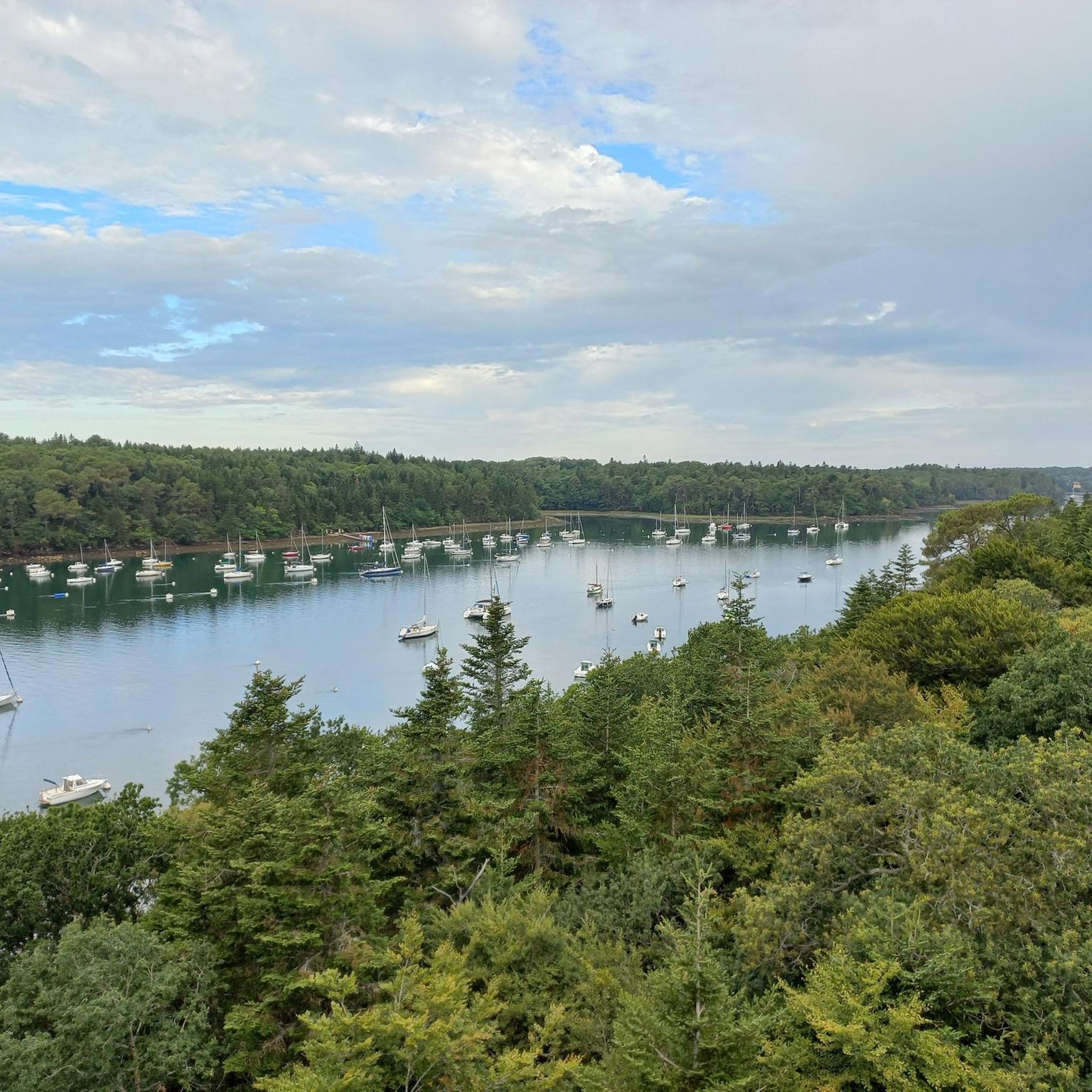
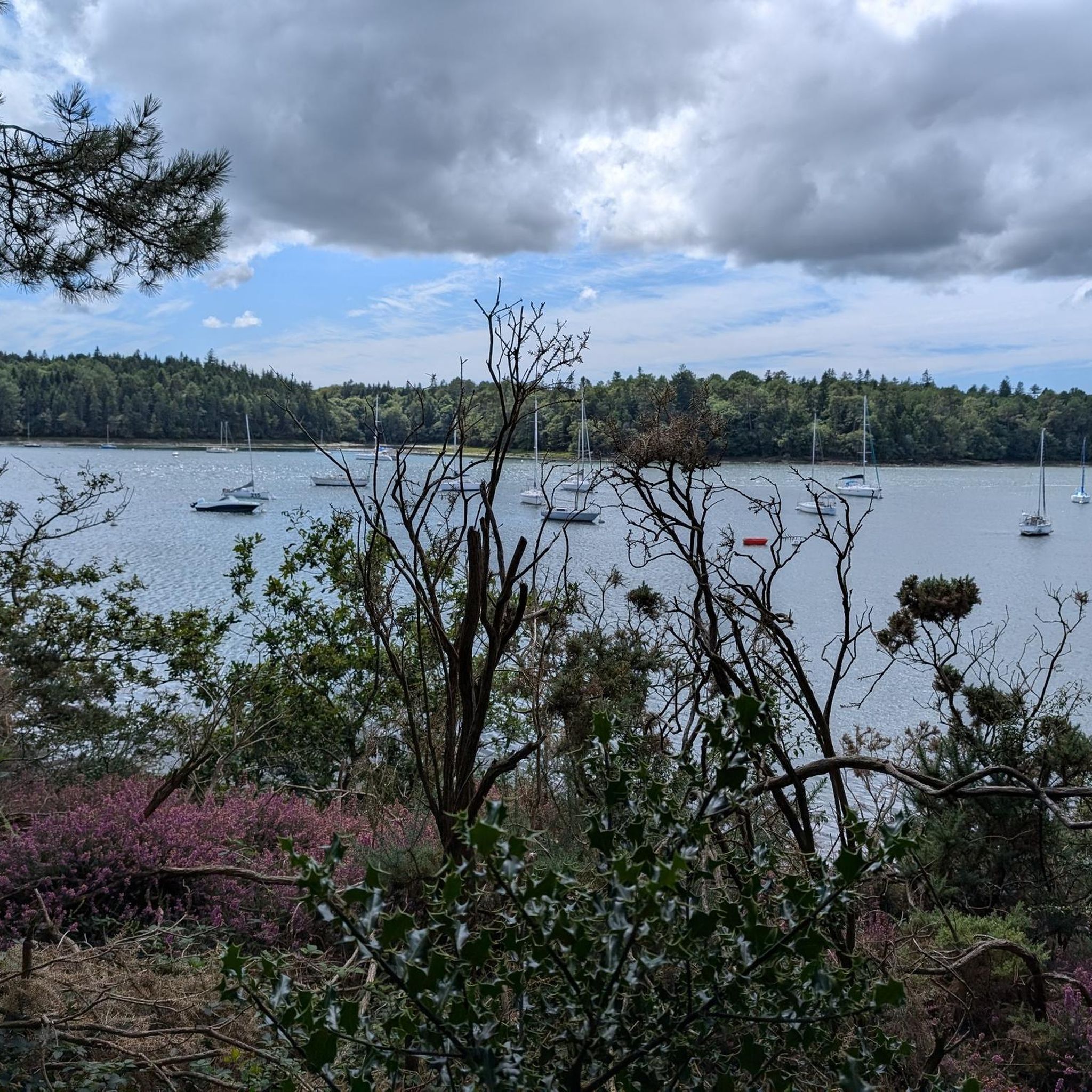
A great outing combining sections of hilly roads, shaded secondary roads, and exceptional views. Of course, take the opportunity to eat during a well-deserved break along the way!
0
0

Very interesting building on the water
0
0
Frequently Asked Questions
How many road cycling routes are available around Clohars-Fouesnant?
There are over 260 road cycling routes around Clohars-Fouesnant, offering a wide variety of options for different skill levels and preferences. This extensive network ensures plenty of choices for exploring the region.
What kind of terrain can I expect when road cycling in Clohars-Fouesnant?
The terrain around Clohars-Fouesnant is characterized by a diverse landscape, including varied coastlines with sandy beaches and rocky headlands, lush green countryside, and serene forests. Elevations are generally gentle, with most climbs considered hills rather than challenging peaks, making it suitable for a wide range of road cyclists.
Are there routes suitable for beginners or those looking for an easy ride?
Yes, Clohars-Fouesnant offers a good selection of routes for beginners. Approximately 38 routes are classified as easy, providing pleasant rides along dedicated paths and less demanding terrain. An example of an easy route is the Quimper – Saint Corentin Cathedral loop from Ty Laé, which is 29.5 km long.
What do other road cyclists say about the routes in Clohars-Fouesnant?
The road cycling routes in Clohars-Fouesnant are highly rated by the komoot community, with an average score of 4.3 stars from over 360 reviews. Cyclists often praise the varied coastal views, the charming towns accessible by bike, and the well-maintained paths that make for enjoyable rides.
Can I find routes that explore cultural landmarks or towns?
Absolutely. The region is rich in cultural attractions. For instance, you can cycle to Quimper, a 'Town of Art and History' with attractions like Saint Corentin Cathedral, via routes such as the Quimper – Saint Corentin Cathedral loop from Ty Laé. Concarneau, another 'Town of Art and History' featuring the notable Closed City, is also easily reachable, as seen in the Ville Close de Concarneau – Ville Close of Concarneau loop from Bénodet.
Are there any scenic viewpoints or natural features to see along the routes?
Yes, the region boasts numerous scenic spots. You can explore the diverse coastline with stunning sea views and impressive rocky formations. The Biotope of the Mousterlin Marshes and Pointe de Mousterlin offer beautiful natural landscapes. For panoramic views, consider routes that pass through areas like La Forêt-Fouesnant, which has several viewpoints. You can find more information on local viewpoints at foret-fouesnant-tourisme.com.
What are some popular coastal cycling routes in the area?
Many routes offer coastal experiences. The V5 coastal route (also known as V45) runs through areas like La Forêt-Fouesnant, providing an excellent way to explore the littoral beauty. Routes like the Ville Close de Concarneau – Ville Close of Concarneau loop from Bénodet also offer stunning coastal views and connect popular seaside towns.
Are there any long-distance road cycling options?
For those seeking longer rides, Clohars-Fouesnant offers several routes that extend further inland or along the coast. An example of a more challenging, longer route is the Rosporden Ponds – 2nd Pond, Rosporden loop from Fouesnant, which covers nearly 96 km and explores inland countryside and pond areas.
Can I find loop trails for road cycling?
Yes, many of the road cycling routes in Clohars-Fouesnant are designed as loops, allowing you to start and end your ride in the same location. Examples include the Ville Close de Concarneau – Ville Close of Concarneau loop from Bénodet and the Quimper – Saint Corentin Cathedral loop from Ty Laé.
What is the best time of year for road cycling in Clohars-Fouesnant?
The region is generally pleasant for cycling from spring through autumn. The mild climate of Brittany makes it enjoyable, with summer offering warmer temperatures ideal for coastal rides and enjoying the beaches of popular spots like Beg-Meil and Benodet.
Are there places to stop for refreshments along the routes?
Yes, the region has many charming towns and popular tourist spots like Beg-Meil, Benodet, and La Forêt-Fouesnant, which offer cafes, restaurants, and pubs. Many routes are designed to pass through or near these areas, providing convenient stops for refreshments and breaks.
What are some other interesting places to explore by bike near Clohars-Fouesnant?
Beyond the main towns, you can cycle to smaller seaside resorts like Sainte-Marine on the estuary of the River Odet, or explore the area around La Forêt-Fouesnant, home to a large marina. The Île-Tudy is also a charming destination accessible by bike.
Most popular routes around Clohars-Fouesnant
Most popular attractions around Clohars-Fouesnant

Get inspired with the komoot mobile app


Explore more
Browse the best Road cycling routes in other regions.
