Attractions and Places To See around Saint-Rome-De-Tarn - Top 20
Best attractions and places to see around Saint-Rome-De-Tarn include a rich blend of historical sites, natural landscapes, and engaging activities. This medieval village, nestled in the Aveyron department of southern France, is ideally situated within the Parc naturel régional des Grands Causses. The region features a Mediterranean microclimate and diverse scenery, with the village itself designated as a "site patrimonial remarquable" for its historical, architectural, and scenic significance.
Best attractions and places to see around Saint-Rome-De-Tarn
- The most popular attractions…
Last updated: October 10, 2026
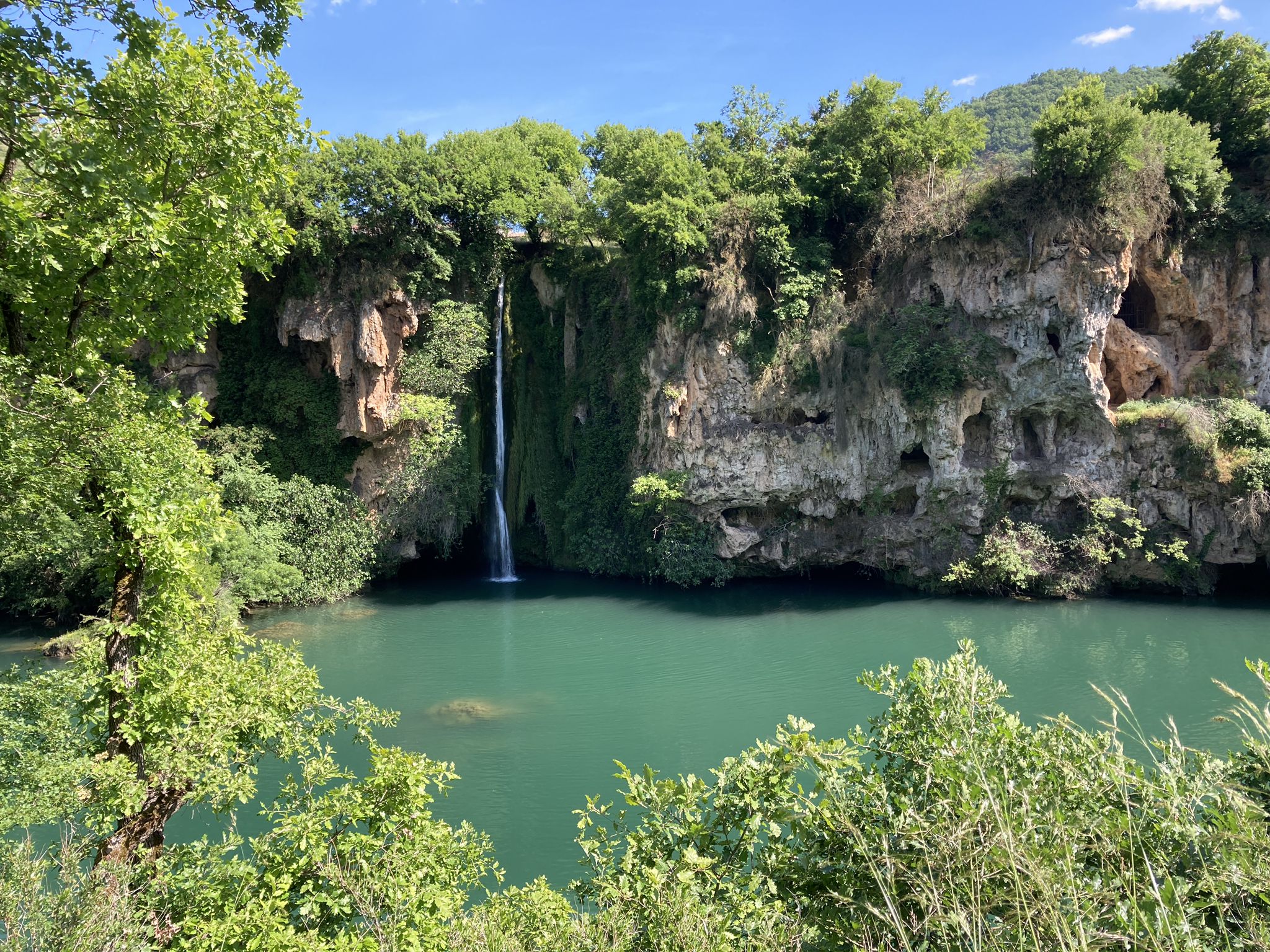
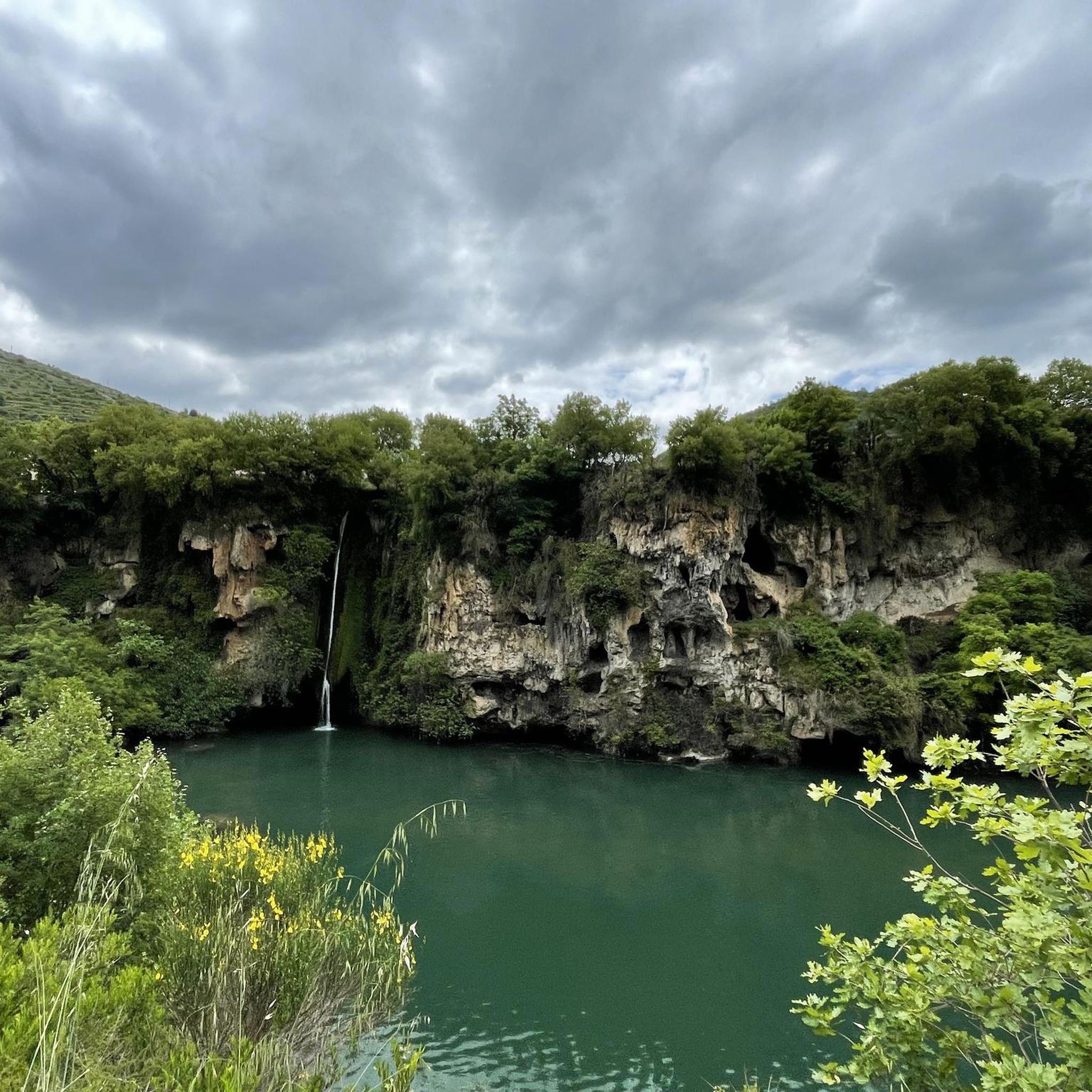
The Creissels waterfalls
Highlight • Waterfall
Translated by Google •
Tip by

Millau Viaduct
Highlight • Bridge
Translated by Google •
Tip by

Sign up now to discover places like this
Get recommendations on the best single tracks, peaks, & plenty of other exciting outdoor places.
Millau Viaduct
Highlight • Bridge
Translated by Google •
Tip by

Brunas hang-gliding site - View of the Tarn valley
Highlight • Other
Showing Translation
Tip by

Cap de Coste Viewpoint
Highlight • Viewpoint
Showing Translation
Tip by
Sign up for free to discover even more attractions around Saint-Rome-De-Tarn.
Already have an account?
Start today with a free account
Your next adventure awaits.
Popular around Saint-Rome-De-Tarn

Other adventures around Saint-Rome-De-Tarn

Tips from the Community

From the Larzac plateau, the Brunas site offers a vast panorama of the Millau valley. Stretched between the two banks of the Tarn, the viaduct with its seven concrete piers appears in its entirety. Behind it unfolds the entire Causse Rouge, a large limestone plateau whose undulations dominate the valley. Then, the Puech d’Andan is distinguished by its wooded silhouette, cut in two by a clear central notch. Further to the right stands the Pouncho d'Agast, a pyramidal promontory marking the beginning of the Causse Noir at an altitude of 841 m. Brunas is also a real site for paragliding. The take-off area is located directly on the plateau; the site is mainly used with a north wind and allows paragliders to take off and land near the same area, with an altitude difference of about 370 m to the valley. The spectacle of the sails evolving in front of the viaduct adds a special dimension to this panorama.
3
0
Perché at an altitude of approximately 730 meters, the Cap de Coste viewpoint overlooks the eastern end of the Boundoulaou cirque. It reveals a vast panorama of the Millau basin and its surrounding massifs. To the left, the easily recognizable Millau Viaduct spans the Tarn valley, connecting the Larzac to the Causse Rouge. Further to the right stretches the latter: a large limestone plateau whose undulations dominate the valley. Then, the Puech d’Andan stands out with its wooded silhouette, cut in two by a clear central notch. Finally, further away, the Pouncho d’Agast, an emblematic relief of the Causse Noir, is easily recognized by its profile like a true limestone pyramid.
2
0
From this point at the foot of the structure, the regular succession of piers and guyed pylons can be particularly well distinguished. The deck, 2,460 m long, crosses the valley at a height of approximately 270 m above the Tarn. Pier P2, the tallest, culminates at 245 m, while the assembly formed by the pier and its pylon reaches 343 m: a height greater than that of the Eiffel Tower. This perspective also recalls the technical feat that the construction of the viaduct represented. The metal deck was assembled in sections from either side of the valley, then progressively launched across the void. The joining of the two parts was carried out on May 28, 2004, 268 m above the Tarn, before the official inauguration a few months later. An interesting detail can be discerned here: despite its exceptional dimensions, the structure appears remarkably light. This impression is not accidental. The viaduct was specifically designed to blend into the valley by limiting the visual impact of its structure, with a very slender deck and piers that branch out in a "Y" shape.
2
0
From the greenway, the Millau Viaduct is revealed from a particularly spectacular angle! One becomes aware of the extraordinary dimensions of the structure. Built between 2001 and 2004, the viaduct crosses the Tarn valley over 2,460 m and connects the Causse Rouge to the north with the Causse du Larzac to the south. Its metal deck, approximately 32 m wide, rests on seven concrete piers extended by seven cable-stayed pylons. At its highest point, the entire structure reaches 343 m above the ground; the deck is up to about 270 m above the Tarn. Designed by engineer Michel Virlogeux and British architect Sir Norman Foster, the viaduct combines a very slender metal structure with piers whose "Y" shape helps to visually lighten the whole. The deck was manufactured in metal elements and then gradually launched from both ends of the valley. The joining of the two parts was finally carried out on May 28, 2004, at 268 m above the Tarn.
2
0

Absolutely worth seeing - view it from below and definitely join the architecture tour.
0
0

because it remains planted there, in the middle of nature, in perfect harmony
1
0
History and nature an ideal mix
0
0
Frequently Asked Questions
What natural attractions can I explore around Saint-Rome-De-Tarn?
The region boasts diverse natural beauty. You can visit the impressive Cascade des Baumes, an 18-meter high waterfall with emerald waters. The Parc naturel régional des Grands Causses offers stunning karstic panoramas, caves, and dolmens. Additionally, the peaceful Vallée de la Muse, with its agricultural plots and small villages, is worth exploring.
Are there opportunities for water activities on the Tarn River?
Yes, the Tarn River is a central feature for water activities. You can enjoy swimming, pedal boating, canoeing, and electric boat tours. The dramatic Raspes du Tarn, often called the 'second Gorges du Tarn,' offer spectacular landscapes carved by the river.
What historical and cultural sites can I visit in Saint-Rome-De-Tarn?
Saint-Rome-De-Tarn itself is a remarkable heritage site with rich history. Explore its medieval architecture, including fortified gates and narrow streets like Rue des Tourelles. The Église Saint-Romain, rebuilt in 1734, is a significant historical point. You can also see the former priory of Conques Abbey at Place de l'église and enjoy panoramic views from Place de la Poudrière.
Can I explore ancient structures near Saint-Rome-De-Tarn?
Absolutely. The region is home to ancient megalithic structures such as the Dolmens of Taurine and Auriac, which are testaments to its distant past. You can also discover the remains of feudal castles in the Fortified Village of Auriac, offering unique panoramas.
What kind of hiking and cycling routes are available near Saint-Rome-De-Tarn?
The area offers a variety of routes for outdoor enthusiasts. For mountain biking, you can find trails like the 'Dolmen de Tiergues et Rocher de Caylus' loop. Road cyclists can enjoy routes such as the 'Saint-Rome-de-Tarn – View of the Millau Viaduct' loop. You can find more details on these activities in the MTB Trails around Saint-Rome-De-Tarn, Gravel biking around Saint-Rome-De-Tarn, and Road Cycling Routes around Saint-Rome-De-Tarn guides.
Are there family-friendly attractions suitable for children?
Yes, several attractions are suitable for families. The Saint-Rome-Plage offers a supervised sandy beach for relaxing and swimming in the Tarn. The impressive Millau Viaduct and its Millau Viaduct Viewpoint are also great for families, offering spectacular sights.
Are there any wheelchair-accessible attractions?
Yes, the Millau Viaduct Viewpoint is noted as being wheelchair-accessible, allowing everyone to enjoy the spectacular views of this architectural marvel.
What notable landmarks are located close to Saint-Rome-De-Tarn?
Just 11 km away, you can marvel at the Millau Viaduct, the world's tallest cable-stayed bridge. Another nearby point of interest is Roquefort-sur-Soulzon, about 10.5 km away, famous for its cheese and cave visits.
Are there any other charming villages to visit nearby?
Yes, Peyre, recognized as one of France's 'Most Beautiful Villages,' is just 9 km from Saint-Rome-De-Tarn and well worth a visit for its unique charm and architecture.
What do visitors particularly enjoy about the attractions around Saint-Rome-De-Tarn?
Visitors frequently praise the spectacular views, especially from the Millau Viaduct Viewpoint, where the bridge can appear to float in the clouds. The unique experience of crossing the narrow Verdalle Bridge over the Tarn River is also a highlight, despite its wooden apron shaking a bit on a bike!
When is the best time to visit Saint-Rome-De-Tarn for outdoor activities?
Given its Mediterranean microclimate, Saint-Rome-De-Tarn is pleasant for outdoor activities for much of the year. Spring and autumn generally offer mild temperatures ideal for hiking, cycling, and exploring the natural landscapes without the intense heat of summer.
Most popular routes around Saint-Rome-De-Tarn
Most popular attractions around Saint-Rome-De-Tarn

Get inspired with the komoot mobile app


Explore more
Still not found the Highlight you’re looking for? See guides of the top attractions in other regions:
