The best MTB trails around Loubejac
4.4
(34)
214
riders
26
rides
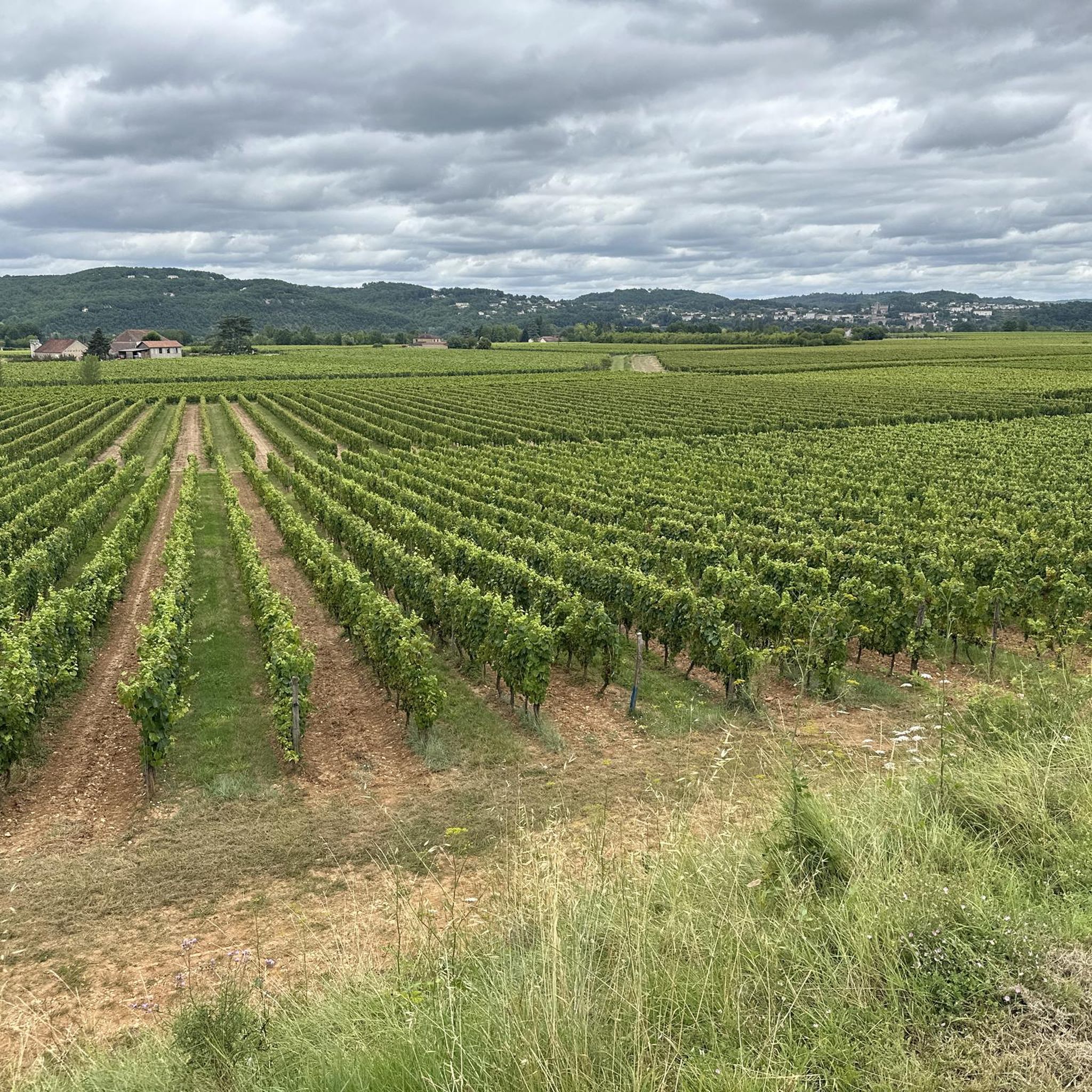
Mountain biking around Loubejac, France, offers diverse terrain within the rural Dordogne department. The region is characterized by extensive oak forests and discreetly hilly landscapes, providing varied elevation changes for mountain bike routes. Altitudes range from approximately 135m to 287m, with trails often featuring short, technical climbs and descents. The chalky ground can influence trail conditions, adding to the riding experience.
Best mountain bike trails around Loubejac
- The most popular mountain bike trail is Cavagnac Church – Touzac Suspension Bridge…
Last updated: October 16, 2026
5.0
(2)
9
riders
36.6km
03:06
620m
620m
Moderate mountain bike ride. Good fitness required. Advanced riding skills necessary.
4.7
(3)
7
riders
20.5km
01:38
330m
330m
Moderate mountain bike ride. Good fitness required. Advanced riding skills necessary.

4.7
(3)
7
riders
22.5km
01:50
350m
350m
Moderate mountain bike ride. Good fitness required. Advanced riding skills necessary.
5.0
(1)
3
riders
18.0km
01:20
290m
290m
Easy mountain bike ride. Great for any fitness level. Suitable for all skill levels.
8
riders
46.7km
04:12
970m
970m
Hard mountain bike ride. Very good fitness required. Advanced riding skills necessary.
Get access to more routes and recommendations from other explorers.
Already have an account?
Our route recommendations are based on thousands of hikes, rides, and runs completed by other people on komoot.
Start today with a free account
Your next adventure awaits.


Tips from the Community

The Voie verte et véloroute de la Vallée du Lot (V86) is a major, safe cycling route stretching for approximately 430 to 480 km, connecting La Canourgue in Lozère to Aiguillon in Lot-et-Garonne. The route follows the meanders of the Lot river through varied landscapes of limestone cliffs, vineyards, orchards, and causses.
0
0
The Voie verte et véloroute de la Vallée du Lot (V86) is a large, safe cycling route that stretches for about 430 to 480 km, connecting La Canourgue in Lozère to Aiguillon in Lot-et-Garonne. The route follows the meanders of the Lot river through varied landscapes of limestone cliffs, vineyards, orchards, and causses.
0
0
The Saint-Pierre-ès-Liens church of Cavagnac is a parish church of Romanesque origin located in the locality of Cavagnac in the commune of Soturac. Less known than the Saint-Pierre church in the main town of Soturac, it is listed in the General Inventory of the heritage of the Occitanie region for its preserved architecture and its unique sculptures. (Mid-12th century): The majority of the current structure (the choir and the apse) dates back to the Romanesque period. Works (1777): It is at this date that the single nave is fitted with its current groin vaults, while the south portal is remodeled. Enlargement and Fire (1789–1792): Two side chapels (north and south) are added and blessed in February 1789, just before the building suffered a fire in 1792 during the Revolution, forcing the reconstruction of the vault at a lower level. The church is distinguished by a plan typical of small rural sanctuaries in Quercy: A massive bell tower rising 18 meters high. A choir composed of a straight bay under a barrel vault and terminated by a semi-circular cul-de-four apse. Remarkable sculpted capitals located at the entrance to the choir (on the double arch)
0
0
The Saint-Pierre-ès-Liens church of Cavagnac is a parish church of Romanesque origin located in the locality of Cavagnac in the commune of Soturac. Less well-known than the Saint-Pierre church in the main village of Soturac, it is listed in the General Inventory of the Heritage of the Occitanie region for its preserved architecture and its unique sculptures. (Mid-12th century): The majority of the current structure (the choir and the apse) dates back to the Romanesque period. Works (1777): It was at this date that the single nave was fitted with its current groin vaults, while the south portal was remodeled. Enlargement and Fire (1789–1792): Two side chapels (north and south) were added and consecrated in February 1789, just before the building suffered a fire in 1792 during the Revolution, forcing the reconstruction of the vault at a lower level. The church is distinguished by a plan typical of the small rural sanctuaries of Quercy: A massive bell tower rising 18 meters high. A choir composed of a straight bay under a barrel vault and terminated by a semi-circular cul-de-four apse. Remarkable sculpted capitals located at the entrance to the choir (on the double arch).
0
0
The greatest paradox of Bonaguil is that it appeared totally obsolete as soon as it was completed (at a time when kings were building the peaceful châteaux of the Loire). Situated away from the main strategic routes, it was never attacked or besieged, which explains why it has come down to us almost intact. A war machine... that never served!
0
0
Bonaguil's greatest paradox is that it appeared totally obsolete as soon as it was completed (at a time when kings were building the peaceful Loire castles). Located away from major strategic routes, it was never attacked or besieged, which explains why it has come down to us almost intact. A war machine... that never served!
0
0
The church mixes Romanesque (12th century) and Gothic (15th and 16th centuries) styles. It rests on the site of a primitive wooden church dating from the 4th-6th centuries. It has a barrel-vaulted nave, a Romanesque choir and a Limousin-style bell tower built in 1905. A crypt was also discovered during work in the 1980s.
0
0

The Château de Bonaguil is one of the most impressive castles in France. Perched on a rocky spur on the border of Lot-et-Garonne and Quercy, it was entirely modernized at the end of the Middle Ages to withstand early artillery. With its drawbridges, towers, moats, and immense keep, this 7,500-square-meter fortress is considered one of the last great masterpieces of medieval military architecture... and remarkably, it has never been taken by storm.
0
0
Frequently Asked Questions
How many mountain bike trails are available around Loubejac?
There are over 25 mountain bike trails around Loubejac, offering a variety of experiences. These routes have been explored by more than 280 mountain bikers using komoot, with an average rating of 4.4 stars.
Are there mountain bike trails suitable for beginners in Loubejac?
Yes, Loubejac offers several mountain bike trails suitable for beginners. For example, the Bridge over the Lot – Puy-l'Évêque loop from l'Evasion is rated as easy, covering 18.3 km with moderate elevation changes, making it a good option for those new to mountain biking. The region's green routes in the valley of the Céou are also known to be suitable for newcomers.
What kind of terrain can I expect on mountain bike trails near Loubejac?
Mountain bike trails near Loubejac are characterized by discreetly hilly landscapes and extensive oak forests, providing varied elevation changes. You'll encounter a mix of wooded paths and open sections. The terrain can feature short, technical climbs and descents, and the chalky ground can sometimes make trails slippery, adding to the riding experience.
Are there challenging mountain bike routes for experienced riders in Loubejac?
While many routes are moderate, the region's diverse terrain, with its varied elevation changes and technical sections, can offer a good challenge for experienced riders. The Dordogne area, which includes Loubejac, features trails color-coded up to black difficulty, indicating options for more advanced mountain biking. You can find routes with significant elevation gain, such as the Cavagnac Church – Touzac Suspension Bridge loop from l'Evasion, which has over 600 meters of ascent over 37 km.
What historical or natural attractions can I see while mountain biking near Loubejac?
The region around Loubejac is rich in heritage and natural beauty. You can encounter historical sites like the parish church of Saint-Pierre-ès-Liens within Loubejac itself, or the impressive Château de Bonaguil, a 13th-century fortress. The medieval city of Puy-l'Évêque, with its golden stone houses and 13th-century tower, is also accessible. The extensive oak forests provide a scenic backdrop, and you might spot wildlife in the tranquil environment.
Are there any castles accessible from the mountain bike trails?
Yes, several castles are within reach. The formidable Château de Bonaguil is a notable 13th-century fortress that can be a highlight of your ride. Additionally, the Puy-l'Évêque Castle and Blanquefort-sur-Briolance Castle are also in the vicinity, offering historical points of interest along or near mountain bike routes.
Is there parking available at the trailheads in Loubejac?
While specific parking locations for every trailhead are not detailed, many routes, especially those starting from towns like Villefranche-du-Périgord or Le Bourg, typically have designated parking areas. The rural nature of Loubejac and surrounding villages often means accessible parking for outdoor activities.
Can I access mountain bike trails in Loubejac using public transport?
Loubejac is a rural commune, and public transport options directly to trailheads might be limited. The region is best explored with personal transport to reach starting points. However, some routes might be accessible from larger towns in the Dordogne that have more public transport connections, from which you could cycle to the trails.
Are there places to eat or drink near the mountain bike routes?
Given the rural setting of Loubejac, direct trailside cafes or pubs might be scarce. However, towns like Villefranche-du-Périgord, just 4 km from Loubejac, and other nearby villages offer amenities where you can find places to eat and drink. Planning your route to pass through these settlements is recommended for refreshment stops.
Are there any family-friendly mountain bike routes in Loubejac?
Yes, the Dordogne region, including areas around Loubejac, offers trails suitable for families. The green routes in the valley of the Céou are specifically mentioned as being suitable for both newcomers and more experienced riders, making them a good choice for families. Look for routes rated as 'easy' on komoot for the most family-friendly options.
What is the best time of year for mountain biking in Loubejac?
The Dordogne region generally offers good mountain biking conditions for much of the year. Spring and autumn are often ideal, with pleasant temperatures and vibrant scenery. Summer can also be good, especially in the extensive oak forests which provide shade. Winter riding is possible, but trail conditions might be affected by rain, making the chalky ground slippery.
Are there mountain bike routes that form a loop around Loubejac?
Yes, several mountain bike routes around Loubejac are designed as loops. Examples include the Church of Loubejac loop from Villefranche-du-Périgord (20.5 km) and the Church of Loubejac loop from Le Bourg (22.5 km). These loops allow you to start and finish in the same location, which is convenient for planning your ride.
What do other mountain bikers enjoy the most about mountain biking in Loubejac?
The area is highly rated by the komoot community, with an average score of 4.4 stars from over 30 reviews. Reviewers often praise the varied terrain, the extensive oak forests providing scenic and shaded paths, and the overall tranquil, rural character of the routes. The mix of discreetly hilly landscapes and historical points of interest also contributes to a highly enjoyable riding experience.
Most popular attractions around Loubejac

Get inspired with the komoot mobile app


Explore more
Browse the best MTB trails in other regions.
