The best cycling routes around La Saucelle
4.3
(29)
111
riders
45
rides
Touring cycling routes around La Saucelle traverse a landscape bordering the Perche Natural Regional Park and the Forest of Senonches. The region features tranquil countryside, gentle hills, and extensive woodlands, with an altitude ranging from 175m to 215m. This varied topography offers a mix of forested paths and open cereal plains, providing diverse terrain for cyclists.
Best touring cycling routes around La Saucelle
- The most popular touring cycling route is Forests and beautiful homes, a 57.9 miles (93.2 km)…
Last updated: August 26, 2026
93.2km
05:22
440m
450m
Hard bike ride. Very good fitness required. Mostly paved surfaces. Suitable for all skill levels.
4.6
(5)
20
riders
26.3km
01:33
110m
120m
Easy bike ride. Great for any fitness level. Mostly paved surfaces. Suitable for all skill levels.

Sign up for free
4.0
(1)
1
riders
Easy bike ride. Great for any fitness level. Mostly paved surfaces. Suitable for all skill levels.
23.3km
01:26
130m
130m
Easy bike ride. Great for any fitness level. Mostly paved surfaces. Suitable for all skill levels.
4.0
(1)
3
riders
46.7km
02:42
220m
220m
Moderate bike ride. Good fitness required. Mostly paved surfaces. Suitable for all skill levels.
Get access to more routes and recommendations from other explorers.
Sign up for free
Already have an account?
Our route recommendations are based on thousands of hikes, rides, and runs completed by other people on komoot.
Start today with a free account
Your next adventure awaits.
Login or Signup



Tips from the Community


The castle of Senonches. You will find an information point inside.
0
0
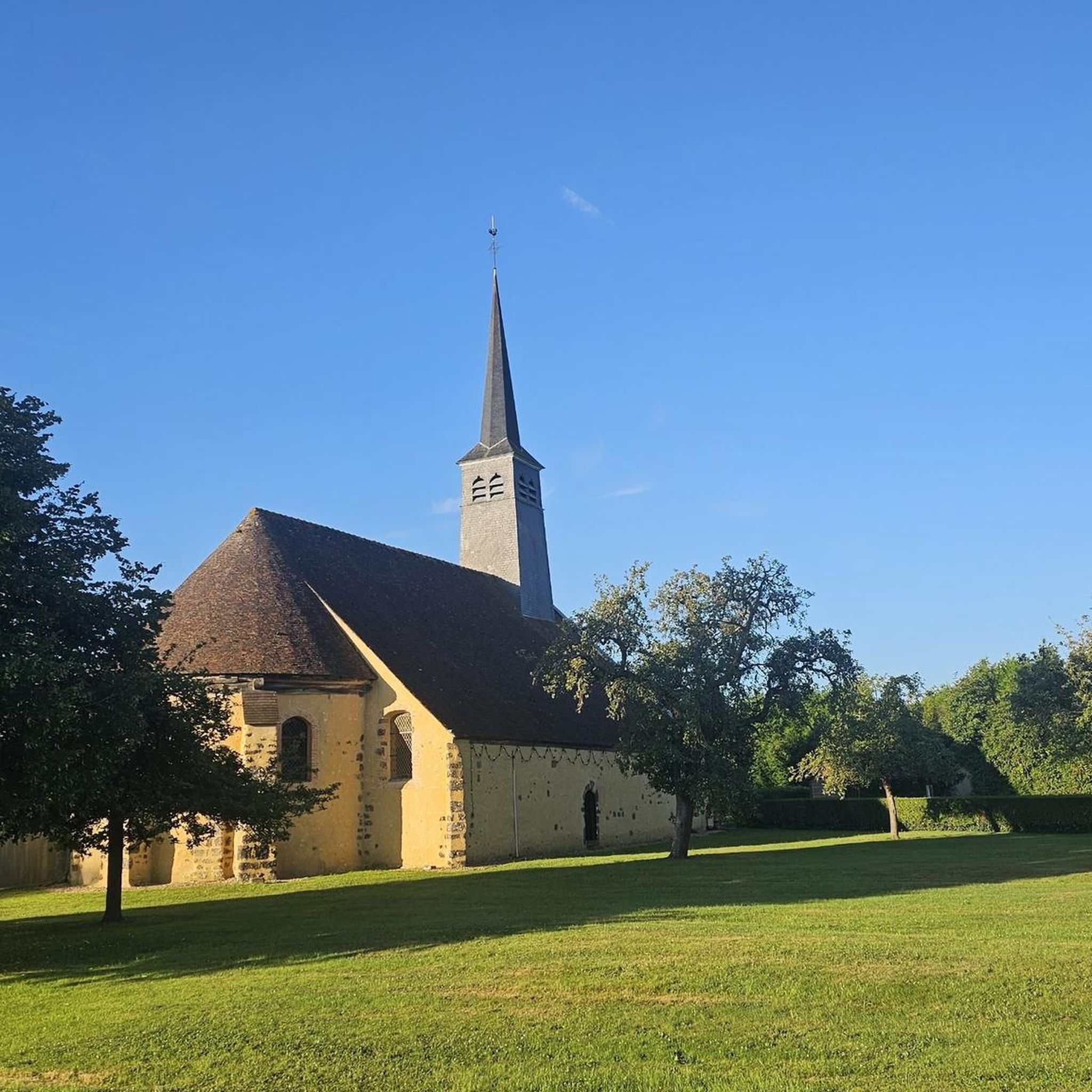
Beautiful little village, typical of the region.
0
0
CHURCH SAINT NICOLAS (17th century) The town of La Ferté-Vidame takes its name from the Latin Firmitas Castrum which means the fortified villa belonging to the vidame'. Its primitive church existed from the 12th century. We find it mentioned in a charter dated 1136 under the name “Ecclesia Sancti Nicolai de Firmitate”. Under the Ancien Régime, the rectory which was at the disposal of the abbot of Saint-Vincent-des-Bois became an annex of the parish of Lamblore. This particular situation of a chief town of a castellany belonging to a rural parish is explained by the detachment of the original parish from the territory around the castle. Successor to the Huguenot heirs, Claude de Rouvroy de Saint-Simon, proclaimed by the grace of Louis XIII duke and peer of France, acquired the La Ferté estate in 1632. In order to erase all traces of Protestantism, of which the church had become over the centuries a very active platform, the Duke of Saint-Simon ordered in 1658 the demolition of the original church to replace it on the same site with the current building. The work was carried out promptly. On November 1, 1659, the Saint-Nicolas church was blessed by Messire Louis Oudard de Germens, canon priest of Chartres. Classic in style with its homogeneous and ordered composition, the church was built according to a plan in the shape of a Latin cross. Its construction was inspired by the drawings of the famous Italian architect, Andrea di Pietro Palladio, whose sketches Duke Saint-Simon had brought back from Spain. The architecture remains faithful to the marriage of stone and brick while giving this alternation a fanciful touch. Very majestic, the facade is built according to the Italian pattern (bossed pilasters, superposition of orders, pediment, volutes), a style also in vogue in France since 1630. The arms of the Saint-Simon family were engraved on a stone at the pediment of the portal and on two others on either side of the portal. They were burned during the Revolution. Today, only the date engraved on the frieze remains: 1659. 16 59 Square in plan, the bell tower, which adjoins the church in the northern part, is topped with a dome surmounted by a lantern. Two bells are housed in the bell tower: one dates from 1762, the second from 1813. The history of the church is closely intertwined with that of the lords of the parish, including the families Saint-Simon, Laborde, Bourbon-Penthievre and Bourbon-Orléans remain the most famous. Grandstands accessible from the outside and opening onto the side chapels recall their presence. In 1743, at the request of Louis de Saint-Simon, a great memoirist, the family vault was built in the Chapel of the Resurrection. A slab on the ground marks the location of the grave. Unfortunately, during the Revolution, the tombs were desecrated, the bones of the benefactors were extracted from the vault and scattered in a common grave dug at the apse of the church. The church was the subject of significant restorations at the end of the 18th century and the beginning of the 19th century, including the interior ornamentation of the building which is a manifestation of the neo-classical style.
2
0

The castle of La Ferté-Vidame impresses with its ruins, the only remains of its destruction during the French Revolution. Its park is also pleasant to visit.
2
0
This forest is one of the largest in the Perche natural region. This would be the remains of the ancient forest of the Celtic people of the Carnutes. It is mainly made up of sessile oaks. Half of the massif is state-owned, and the other half private, for a total of more than 8,000 hectares.
0
0

On the edge of the Perche, the Senonches castle, whose oldest remains date from the 12th century, had illustrious owners until the Revolution: from the lords of Thimerais to “Monsieur”, brother of King Louis XVI.
0
0
The church tower was built around the middle of the 12th century, by Hugues II, lord of Châteauneuf and Senonches. It is built with grison. Originally, this tower served as an observation post and a fortress intended to protect the castle. The octagonal turret of the spiral staircase (122 steps), has thirty-two manholes or loopholes arranged for the defense of the keep in the event of a siege. The exterior has five floors. The windows are Romanesque and vary in shape on each floor. The church was located inside the square, protected by ditches. It itself formed a rampart.
0
0
Frequently Asked Questions
How many touring cycling routes are available around La Saucelle?
There are over 45 touring cycling routes around La Saucelle, offering a wide range of options for different skill levels. This includes 23 easy routes, 20 moderate routes, and 2 more challenging routes.
What kind of landscape can I expect while touring cycling around La Saucelle?
The region offers a diverse landscape, bordering the Perche Natural Regional Park and the Forest of Senonches. You'll find tranquil countryside, gentle hills, extensive woodlands, and open cereal plains, with altitudes ranging from 175m to 215m. This mix provides varied terrain for cyclists.
Are there any easy touring cycling routes suitable for beginners or families?
Yes, La Saucelle offers several easy routes perfect for beginners or families. One such route is the Château de Senonches – Notre-Dame Church of Senonches loop from Senonches, an easy 16.4-mile (26.3 km) path that explores historical landmarks around Senonches.
What are some notable historical or natural attractions I can visit along the touring cycling routes?
Many routes pass by interesting sites. You can explore castles like Château de Senonches or the Ruins of the Château de La Ferté-Vidame. The region is also rich in natural beauty, being on the edge of the Perche Natural Regional Park and the Forest of Senonches, offering ancient oak trees and serene countryside.
Are there any circular touring cycling routes available?
Yes, many routes in the area are circular, allowing you to start and end in the same location. An example is the Senonches Castle – Senonches Castle loop from Senonches, a 12.7-mile (20.5 km) trail through forested areas and past the castle.
What do other touring cyclists say about the routes around La Saucelle?
The touring cycling routes around La Saucelle are highly rated by the komoot community, with an average score of 4.5 stars from over 20 reviews. Cyclists often praise the tranquil countryside, extensive woods, and the variety of routes suitable for different ability levels.
Are there any routes that offer a more challenging touring cycling experience?
For those seeking a more challenging ride, the region has options. The Forests and beautiful homes route is a difficult 57.9-mile (93.2 km) trail that takes approximately 5 hours and 22 minutes to complete, offering a demanding ride through varied natural settings.
Can I find places to eat or stay near the cycling routes?
La Saucelle and nearby towns like Senonches, Verneuil-sur-Avre, and La Loupe offer various amenities. You can find cafes, pubs, and accommodation options in these areas, as well as local markets to experience regional produce.
What is the best time of year to go touring cycling in La Saucelle?
The region's gentle undulations and varied landscape make it enjoyable for touring cycling across multiple seasons. Spring and autumn offer pleasant temperatures and beautiful scenery with changing foliage, while summer provides longer daylight hours. Winter cycling is also possible, though some paths might be affected by weather.
Are there any routes that focus on historical landmarks or specific themes?
Yes, the region offers themed trails that delve into its rich heritage. These routes explore aspects like the influence of the Knights Templar, local Resistance efforts during wartime, and the management of forest and water resources, providing a cultural dimension to your ride.
What kind of wildlife might I encounter on the touring cycling trails?
Given the proximity to the Perche Natural Regional Park and the Forest of Senonches, you might encounter various wildlife. The tranquil woodlands and countryside are home to diverse bird species, deer, and other small mammals, especially during quieter times of the day.
Is there public transport or parking available near the touring cycling routes?
While specific public transport details for rural areas like La Saucelle can vary, parking is generally available in villages and near popular trailheads. It's advisable to check local information for the specific starting point of your chosen route.
Most popular routes around La Saucelle
Most popular attractions around La Saucelle

Get inspired with the komoot mobile app


Explore more
Browse the best Cycling routes in other regions.
