The best road cycling routes around La Saucelle
4.5
(14)
124
riders
63
rides
Road cycling around La Saucelle features a network of routes through the rural landscape of Eure-et-Loir, France. The region is characterized by agricultural fields, scattered woodlands, and gentle rolling hills, with elevations generally remaining below 200 meters. These conditions provide varied terrain suitable for road cyclists seeking both leisurely rides and more extended excursions. The area's roads often connect small villages and historical sites, offering a blend of natural scenery and cultural points of interest.
Best road cycling routes around…
Last updated: July 2, 2026
2
riders
Easy road ride. Great for any fitness level. Mostly well-paved surfaces and easy to ride.
53.3km
02:08
290m
290m
This moderate 33.1-mile (53.3 km) road cycling loop through Parc naturel régional du Perche offers quiet roads and scenic views.

Sign up for free
3.0
(1)
13
riders
Moderate road ride. Good fitness required. Mostly well-paved surfaces and easy to ride.
5.0
(1)
8
riders
41.6km
01:40
200m
200m
Easy road ride. Great for any fitness level. Mostly well-paved surfaces and easy to ride.
5.0
(2)
8
riders
38.2km
01:38
220m
220m
Easy road ride. Great for any fitness level. Mostly well-paved surfaces and easy to ride.
Get access to more routes and recommendations from other explorers.
Sign up for free
Already have an account?
Our route recommendations are based on thousands of hikes, rides, and runs completed by other people on komoot.
Start today with a free account
Your next adventure awaits.
Login or Signup



Tips from the Community

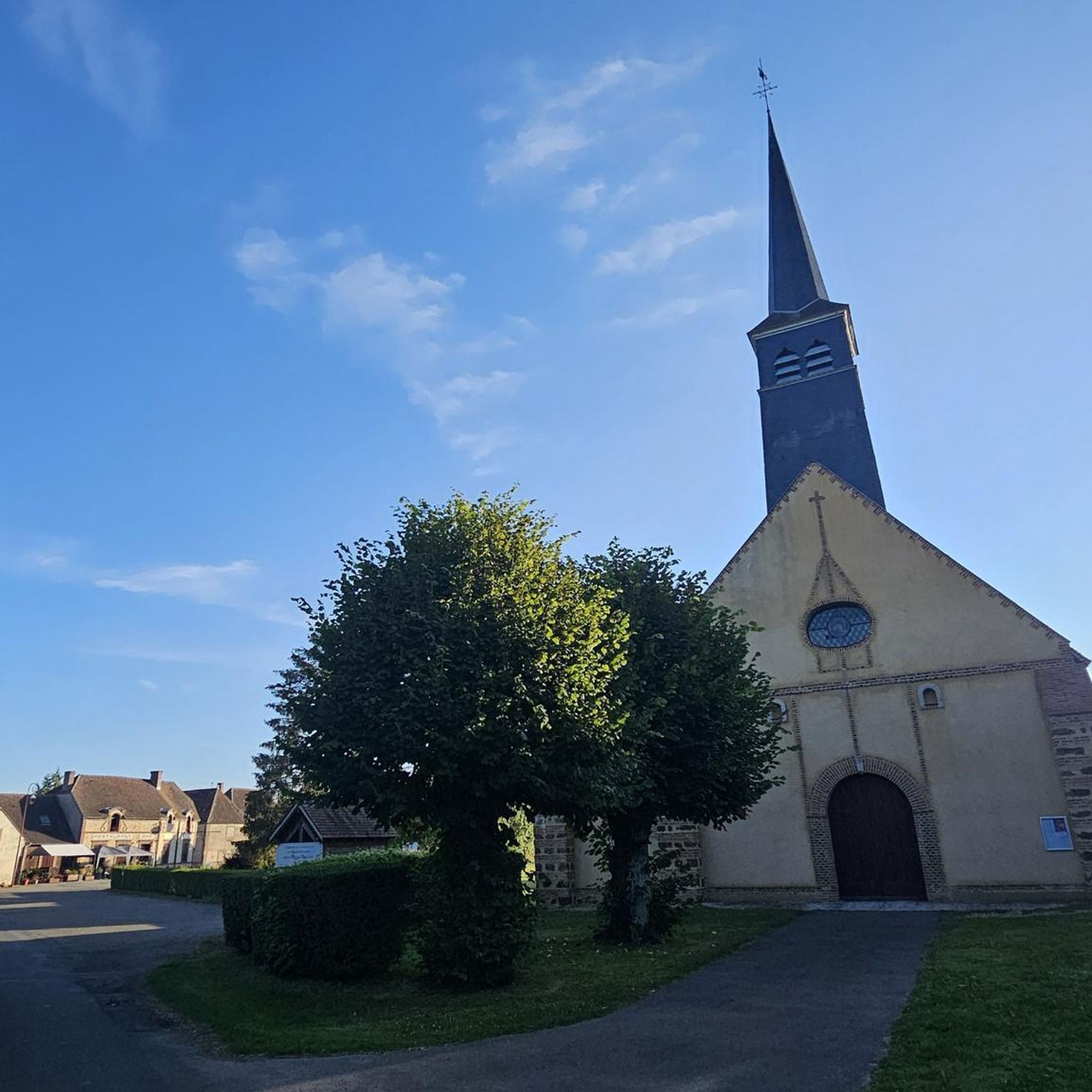
A lovely castle when leaving the Senonches forest in a very cute village.
0
0


It was heavily remodeled in the 19th century. The bell tower, previously in the center of the roof, was rebuilt as a gable in the 19th century. At that time, the eleven windows were enlarged. Near the Meuvette, to the northeast of the town, are the ruins of an old fortified castle destroyed in 1793.
0
0
Arriving at La Framboisière, you can barely make out the church bell tower which blends in with the tops of the majestic trees of the Senonches forest. A privileged location on the edge of the Perche, rather sought after by second homeowners who represent a quarter of the homes.
0
0

The castle of Senonches. You will find an information point inside.
0
0
Possibility of taking a walk in the park adjoining this beautiful ruin.
0
0
Beautiful little village, typical of the region.
0
0
CHURCH SAINT NICOLAS (17th century) The town of La Ferté-Vidame takes its name from the Latin Firmitas Castrum which means the fortified villa belonging to the vidame'. Its primitive church existed from the 12th century. We find it mentioned in a charter dated 1136 under the name “Ecclesia Sancti Nicolai de Firmitate”. Under the Ancien Régime, the rectory which was at the disposal of the abbot of Saint-Vincent-des-Bois became an annex of the parish of Lamblore. This particular situation of a chief town of a castellany belonging to a rural parish is explained by the detachment of the original parish from the territory around the castle. Successor to the Huguenot heirs, Claude de Rouvroy de Saint-Simon, proclaimed by the grace of Louis XIII duke and peer of France, acquired the La Ferté estate in 1632. In order to erase all traces of Protestantism, of which the church had become over the centuries a very active platform, the Duke of Saint-Simon ordered in 1658 the demolition of the original church to replace it on the same site with the current building. The work was carried out promptly. On November 1, 1659, the Saint-Nicolas church was blessed by Messire Louis Oudard de Germens, canon priest of Chartres. Classic in style with its homogeneous and ordered composition, the church was built according to a plan in the shape of a Latin cross. Its construction was inspired by the drawings of the famous Italian architect, Andrea di Pietro Palladio, whose sketches Duke Saint-Simon had brought back from Spain. The architecture remains faithful to the marriage of stone and brick while giving this alternation a fanciful touch. Very majestic, the facade is built according to the Italian pattern (bossed pilasters, superposition of orders, pediment, volutes), a style also in vogue in France since 1630. The arms of the Saint-Simon family were engraved on a stone at the pediment of the portal and on two others on either side of the portal. They were burned during the Revolution. Today, only the date engraved on the frieze remains: 1659. 16 59 Square in plan, the bell tower, which adjoins the church in the northern part, is topped with a dome surmounted by a lantern. Two bells are housed in the bell tower: one dates from 1762, the second from 1813. The history of the church is closely intertwined with that of the lords of the parish, including the families Saint-Simon, Laborde, Bourbon-Penthievre and Bourbon-Orléans remain the most famous. Grandstands accessible from the outside and opening onto the side chapels recall their presence. In 1743, at the request of Louis de Saint-Simon, a great memoirist, the family vault was built in the Chapel of the Resurrection. A slab on the ground marks the location of the grave. Unfortunately, during the Revolution, the tombs were desecrated, the bones of the benefactors were extracted from the vault and scattered in a common grave dug at the apse of the church. The church was the subject of significant restorations at the end of the 18th century and the beginning of the 19th century, including the interior ornamentation of the building which is a manifestation of the neo-classical style.
2
0
Frequently Asked Questions
How many road cycling routes are available around La Saucelle?
There are nearly 70 road cycling routes in the La Saucelle area, offering a wide range of options for different skill levels and preferences. This includes 39 easy routes and 30 moderate routes.
Are there easy road cycling routes suitable for beginners in La Saucelle?
Yes, La Saucelle offers numerous easy road cycling routes perfect for beginners. An excellent option is the From Brezolles to Saulnières — loop via the Châteaux d'Escorpin and Maillebois, an easy 46.6 km (28.9 miles) trail that takes about 1 hour 51 minutes to complete.
What kind of terrain can I expect on road cycling routes in La Saucelle?
Road cycling around La Saucelle features a rural landscape with agricultural fields, scattered woodlands, and gentle rolling hills. Elevations generally remain below 200 meters, providing varied terrain suitable for both leisurely rides and more extended excursions on quiet country roads.
Are there any circular road cycling routes in the area?
Yes, many routes in La Saucelle are circular, allowing you to start and end at the same point. For example, the La Ferté-Vidame - Senonches Loop is a moderate 53.3 km (33.1 miles) circular path that offers a mix of open roads and forested sections.
What are some scenic road cycling routes in La Saucelle?
The region is known for its picturesque countryside. Routes often connect small villages and historical sites, offering a blend of natural scenery and cultural points of interest. The Ferté-Vidame Castle – Château de Senonches loop from Louvilliers-lès-Perche is a scenic 70.2 km (43.6 miles) route passing between two notable castles.
What attractions can I see along the road cycling routes?
Many routes pass by historical landmarks. You can cycle past impressive structures like the Château de Senonches, the Ferté-Vidame Castle, or the Château de Maillebois. Some routes also go near the Ruins of the Château de La Ferté-Vidame.
What do other road cyclists say about the routes in La Saucelle?
The routes in La Saucelle are highly rated by the komoot community, with an average score of 4.5 stars from over 10 reviews. Cyclists often praise the quiet country roads, the charming villages, and the historical châteaux encountered along the way.
Are there any road cycling routes that pass through villages or offer places to stop for refreshments?
Yes, the routes often connect small villages, providing opportunities to stop. For instance, the Château de Senonches – Notre-Dame Church of Senonches loop from Senonches starts and ends in Senonches, a town where you can find amenities and cafes.
What is the best time of year for road biking in La Saucelle?
The region's gentle terrain and rural setting make it pleasant for road cycling from spring through autumn. The agricultural fields are particularly beautiful in late spring and summer. Winters can be chilly, but many routes remain accessible depending on weather conditions.
Are there any advanced road cycling trails for experienced riders?
While there are no routes classified as 'difficult,' the area offers moderate trails that provide more extended distances and elevation changes for experienced riders. The Ferté-Vidame Castle – Château de Senonches loop from Louvilliers-lès-Perche, at over 70 km, offers a good challenge.
Are the road cycling routes in La Saucelle generally crowded?
The rural landscape of Eure-et-Loir is characterized by quiet country roads. While popular routes may see more cyclists, the overall network of routes means you can often find less crowded options, especially outside of peak holiday periods.
Most popular routes around La Saucelle
Most popular attractions around La Saucelle

Get inspired with the komoot mobile app


Explore more
Browse the best Road cycling routes in other regions.
