Attractions and Places To See around Bailleulmont - Top 6
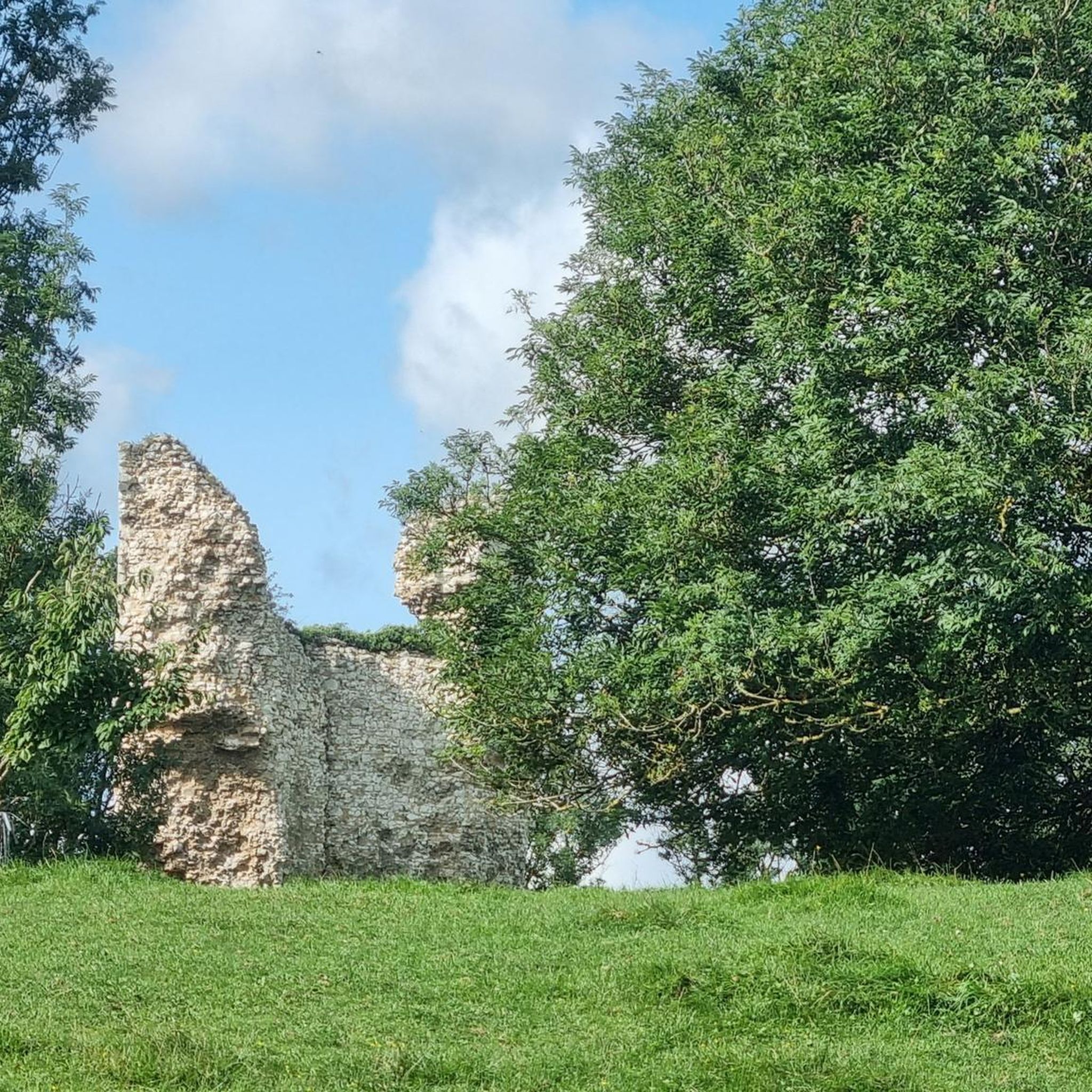
Best attractions and places to see around Bailleulmont include a visible vestige of an 11th-century castle, strategically built on a hill. This commune in the Pas-de-Calais department of France offers local points of interest and serves as a base for exploring the Hauts-de-France region. The area features historical sites, castles, and natural features, providing varied exploration opportunities.
Best attractions and places to see around Bailleulmont
- The most popular attractions is Château de Bavincourt, a castle that was built by…
Last updated: July 1, 2026
Castle adjoining the church in Habarcq
Highlight • Castle
Translated by Google •
Tip by

The Carré des Sources
Highlight • Other
Translated by Google •
Tip by

Sign up now to discover places like this
Get recommendations on the best single tracks, peaks, & plenty of other exciting outdoor places.
Sign up for free
Château de Bavincourt
Highlight • Castle
mairie.bavincourt.fr/?page_id=304
Translated by Google •
Tip by
Dainville English Cemetery
Highlight • Other
Dainville British Cemetery is a British military cemetery in Dainville. It contains 131 bodies from the period 1914-1918). From March 1916 to April 1918, several British graves …
Translated by Google •
Tip by

Eglise du Lattre Saint-Quentin
Highlight • Other
Its patron …
Translated by Google •
Tip by
Sign up for free to discover even more attractions around Bailleulmont.
Sign up for free
Already have an account?
Start today with a free account
Your next adventure awaits.
Login or Signup




Tips from the Community

Place of commemoration. Dainville British Cemetery is a British military cemetery in Dainville. It contains 131 bodies from the period 1914-1918). From March 1916 to April 1918, several British graves were added to the municipal cemetery in addition to the French military cemetery. This English military cemetery was used by the Burial Officer of the 56th Division (London) and then by the Canadians. We Will Remember Them
2
0

The current castle with a beautiful weathercock.
4
0
The Église Saint-Martin in Habarcq is a historic building with a rich history. It was originally built in the 13th century by Jehan de Habarcq, but was quickly destroyed and burned during the conflicts between Louis the French Revolution. The church has a number of unique features, including the fact that it was originally a chapel attached to the de Habarcq family castle. It only became a parish church in 1806. Inside the church there were windows (which are still visible) that allowed the gentlemen to attend religious ceremonies without having to move. Built in the Gothic style, the church has a number of interesting architectural features, including richly decorated windows depicting vegetative and animal motifs from the medieval bestiary. Above the first window you can see the coat of arms of the Count of Lens, lord of Habarcq. The church is located in the heart of the village and is partly hidden by its proximity to the castle. The interior is completely covered in woodwork and paneling, said to come from a cedar tree from Lebanon that once stood in the castle's park and was uprooted by a storm in 1940.
4
0
The castle adjoining the Habarcq church is a historic monument located in Habarcq. The facades and roofs of the castle are listed as historical monuments by decree of April 5, 1948. The castle is private property
4
0
Rebuilt in 1792, the church was partly destroyed during the revolution after seeing its furniture piled up and burned inside; it is said that only the walls remained. Its patron saint is St Quentin. The church was purchased by the son Aimable Billot de Lattre on 7 Floréal year 9, (May 7, 1801) from the Fabrique, for the sum of 58,300 francs. The bell tower, although restored in recent years, still appears to be the bell tower of the old church which dates back to a very remote period. It bears the stamp of the 13th century. The current bell dates from 1890 (700kg) It is called Marie, was baptized by Mr. LEFIN, dean of Avesnes-le-Comte, and had as godfather Mr. Brazier, Mayor, and as godmother Me Desaulty. As a relic, the church firstly has a considerable relic (femur bone) of St Quentin, a gift made by the church of St Quentin to Mr. Flajollet priest of Lattre at the beginning of this century as well as a fairly important relic from St Vaast, one from St Arnaud and one from St Wulgan. There was once a very popular pilgrimage in honor of St Quentin. It is difficult to assign the time when this pilgrimage began. But as far back as the church's account registers go, that is to say in the year 1570, there is question of the income made by the sale to pilgrims of coupons to burn and images on the days of the feasts of St Quentin.
4
0

At the beginning of the 18th century, the flow of the Crinchon (river of about twenty kilometers which flows between Bailleulmont and Saint-Nicolas before flowing into the Scarpe) is weak, irregular and its waters are of poor quality. The city of Arras needs healthy and abundant water for the inhabitants and for the drinking troughs of the cavalry barracks. In 1723, at his request, the springs that gush out in Brétencourt, a hamlet of Rivière, were collected in a reservoir, it is a vast rectangular basin surrounded by brick walls now called "Carré des sources". Its dimensions: 33 m long, 11 m wide and 8 m deep. The works were carried out by the Military Engineering on the orders of the king, who financed them, as recalled by a sandstone sealed in a wall: "In the year 1723, under the reign of Louis XV, the sources of the Crinchon were sought and enclosed in this basin at the expense of the king" Le Carré des sources delivers 64 liters per second of water that is extremely fresh and remarkably clear. The stream thus formed crosses the park of the castle and joins the initial bed of the Crinchon, after a course of 500 m. The flow being capricious, the system was completed by the digging of a few artesian wells, from the end of the 18th century.
1
0
Château de Bavincourt is a castle located in the commune of Bavincourt, in the Pas-de-Calais department of France. An old manor house used to stand on the site of the present castle and its motte was still there during the construction of the latter; however, not much is known about it. The current castle was built by François Deslions, nephew of Jean-Louis Deslions, canon and dean of Saint-Omer, who had inherited the lands of Bavincourt.
1
0
to know more about this castle: http://mairie.bavincourt.fr/?page_id=304
2
0
Frequently Asked Questions
What historical castles can I explore near Bailleulmont?
You can visit several historical castles in the vicinity. The Château de Bavincourt, built by François Deslions, is a significant local landmark. Another notable site is the Castle adjoining the church in Habarcq, which features facades and roofs listed as historical monuments. Additionally, Bailleulmont itself has a visible vestige of an 11th-century castle, strategically built on a hill, which can be explored via the 'sentier de randonnée de la Tour' hiking trail.
Are there any unique historical sites related to water sources around Bailleulmont?
Yes, you can discover The Carré des Sources, a historic water reservoir near Rivière. This site features a vast rectangular basin that collects springs, delivering exceptionally fresh and clear water. It was constructed in 1723 to supply water to Arras.
What World War I historical sites are accessible from Bailleulmont?
The wider Pas-de-Calais area is rich in WWI history. You can visit the Dainville English Cemetery, a place of commemoration for soldiers from 1914-1918. Further afield, Arras features the Carrière Wellington museum, a series of tunnels used during the war, and the Canadian National Vimy Memorial at Vimy Ridge is also within reach.
What kind of churches or religious sites can I visit?
The Eglise du Lattre Saint-Quentin is a notable religious site. Rebuilt in 1792, it has a rich history, including a bell tower dating back to the 13th century and relics of various saints. The Église Saint-Martin in Habarcq, originally a 13th-century chapel, is also worth seeing for its Gothic architecture and unique features.
What are the best options for road cycling near Bailleulmont?
For road cycling enthusiasts, there are several routes available. You can explore the 'Crinchon – Chemin de Rivière loop from Berles-au-Bois' or the 'Memory Cycle Route – Ulster Tower loop from Beaumetz-lès-Loges'. Another option is 'The Citadel – Arras Citadel loop from Rivière'. Find more details and routes on the Road Cycling Routes around Bailleulmont guide.
Are there mountain biking trails in the area?
Yes, mountain biking is popular around Bailleulmont. You can try routes like the 'English Cemetery loop from Ransart' or the more challenging 'Barly Castle – Forest Trail loop from Saulty'. The 'Barly Castle loop from Bavincourt' offers a moderate option. Discover more trails in the MTB Trails around Bailleulmont guide.
What are some good general cycling routes for touring bicycles?
For general cycling, consider routes such as the 'Veloroute – A.S.L. Park loop from La Herlière' or 'The Carré des Sources – Along the Crinchon loop from Beaumetz-lès-Loges'. The 'Citadel Paths of Arras – The Citadel loop from Beaumetz-lès-Loges' is an easier option. More routes can be found in the Cycling around Bailleulmont guide.
What are some notable day trips from Bailleulmont for cultural exploration?
Arras, approximately 13 km away, is an excellent day trip destination. It boasts a beautiful town center with a UNESCO World Heritage belfry and Baroque-style houses. Its Grand'Place and Place des Héros are famous for their Flemish-Baroque architecture. Amiens Cathedral, about 42 km away, is another magnificent example of 13th-century Gothic architecture.
Are there any natural features or gardens to visit in the region?
While Bailleulmont itself has the 'sentier de randonnée de la Tour' around its castle ruins, the wider region offers natural reserves like the Réserve naturelle régionale du Marais de Wagnonville and the Réserve naturelle de l'Étang Saint-Ladre, though they are a bit further. For gardens, consider Les Jardins de Sericourt (23 km) and Les Jardins de Maizicourt (35 km).
What do visitors generally appreciate about the attractions around Bailleulmont?
Visitors appreciate the rich historical context, particularly the ancient castles and significant water sources. The attractions around Bailleulmont are well-regarded by the komoot community, with more than 10 upvotes and over 20 photos shared, indicating a positive experience exploring the blend of ancient ruins and architectural landmarks.
What is the best time of year to visit Bailleulmont for outdoor activities?
The region generally offers pleasant conditions for outdoor activities from spring through early autumn. Summer provides warmer weather ideal for exploring castles, cycling, and hiking. However, checking local weather forecasts closer to your visit is always recommended for optimal planning.
Are there any specific local events or festivals that might be of interest?
While specific events for Bailleulmont are not detailed, the broader Hauts-de-France region, particularly cities like Arras, often host cultural festivals, markets, and historical reenactments throughout the year. It's advisable to check local tourism websites for current event schedules closer to your travel dates.

Get inspired with the komoot mobile app


Explore more
Still not found the Highlight you’re looking for? See guides of the top attractions in other regions:
