Attractions and Places To See around Vincelottes - Top 20
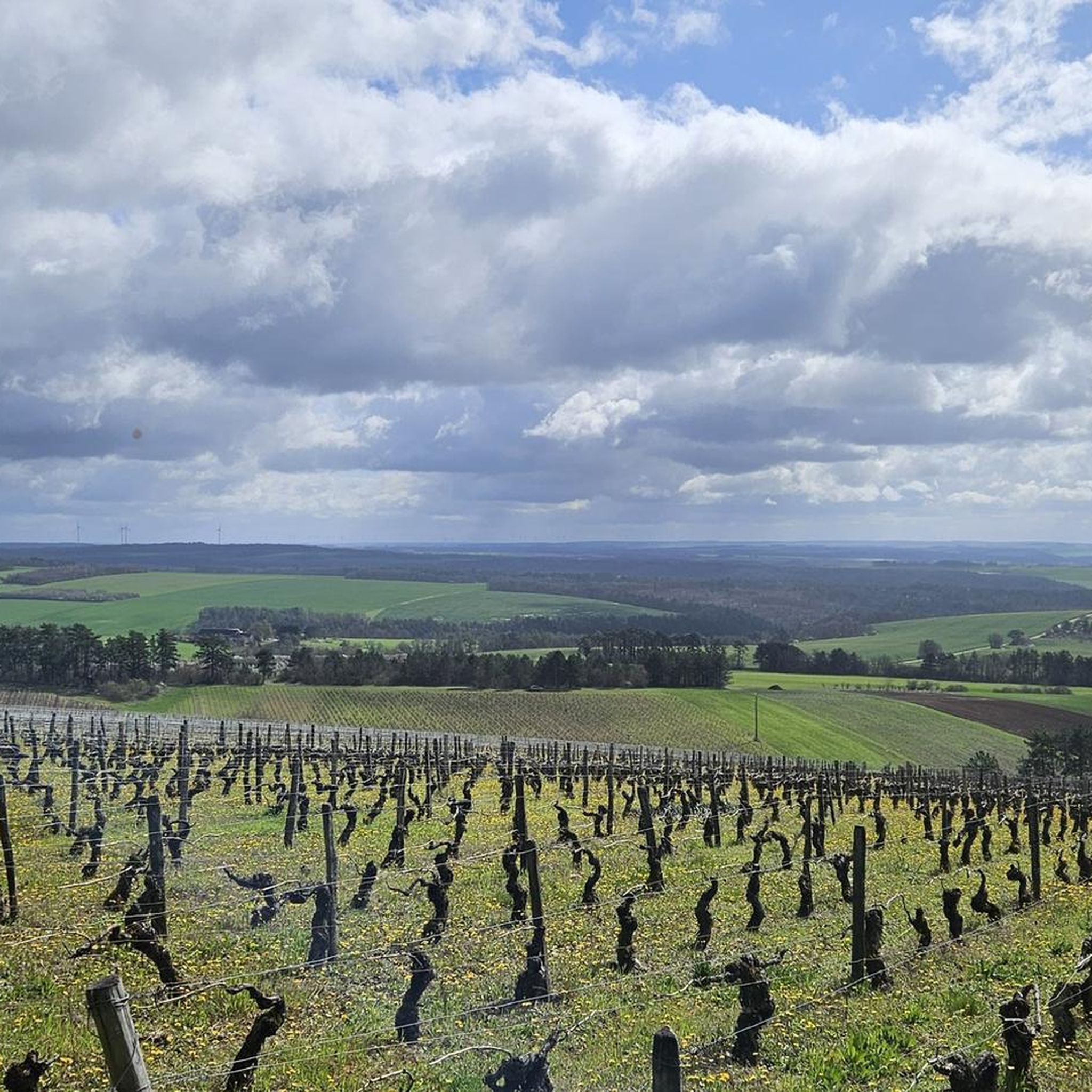
Best attractions and places to see around Vincelottes include historical sites, natural waterways, and cultural landmarks. This small commune in the Yonne department of Bourgogne-Franche-Comté is historically rooted in viticulture and river trade. The Yonne River and Nivernais Canal are central features, offering picturesque settings. The area provides access to both local points of interest and notable regional attractions.
Best attractions and places to see around Vincelottes
- The most popular attractions is Place Surugue and Cadet Roussel Fountain, a…
Last updated: August 26, 2026
Place Surugue and Cadet Roussel Fountain
Highlight • Monument
There is a fountain in the square that is reminiscent of the famous French folk …
Translated by Google •
Tip by

Saint-Étienne Cathedral of Auxerre
Highlight • Religious Site
You can visit the cathedral for free, which you should definitely do. The sight of these incredibly …
Translated by Google •
Tip by
Sign up now to discover places like this
Get recommendations on the best single tracks, peaks, & plenty of other exciting outdoor places.
Sign up for free
Saint Nicholas Square
Highlight • Other
Translated by Google •
Tip by

Church of Saints Peter and Paul, Cravant
Highlight • Religious Site
Its impressive dimensions remind us that Cravant was a city of more than …
Translated by Google •
Tip by

Belombre Castle
Highlight • Other
Translated by Google •
Tip by
Sign up for free to discover even more attractions around Vincelottes.
Sign up for free
Already have an account?
Start today with a free account
Your next adventure awaits.
Login or Signup

Tips from the Community

In Escolives-Sainte-Camille lies the Chateau de Belombre. The origins of this château on the Yonne date back to the early 16th century. The current château was completed by the renovation of the former manor house in the 17th century.
0
0

The extremely impressive church in Cravant was dedicated to the two SAINTS "PIERRE et PAUL". They are also known as the "Princes of the Apostles" and their common feast day in the calendar of saints is June 29th. * Simon, nicknamed Peter (Rock), was a fisherman on Lake Genesareth when he - together with his brother Andrew - was called by Jesus Christ to be a "fisher of men". According to Catholic understanding, he is the highest apostle and the two thousand year long line of popes - currently Francis - are his successors. In statues and paintings, Peter is almost always depicted with two keys in his hand; this attribute refers to the Bible verse in Matthew: "I will give you the keys of the kingdom of heaven; whatever you bind on earth will be bound in heaven, and whatever you loose on earth will be loosed in heaven." (Chapter 16, Verse 19). * Paul was initially an opponent of the Christian movement and was not called to the apostleship of Jesus Christ during his lifetime like the other apostles, but was only converted later with the famous "Damascus experience". His attribute is the sword with which he was executed. According to the Roman law of the time, such a sentence was a "privilege" (quick death and not, like other types of execution, associated with a long, painful death struggle) that was available to the citizens of Rome.
0
0

The stronghold of Belombre was the seat of part of the lordship of Escolives held, in 1507, by the lieutenant general of Auxerre, Blanchet David. Marie David brought it to Jacques de Meung dit de La Ferté, who died on June 4, 1589, massacred by the Leaguers of Auxerre. Madeleine de La Ferté Meung, her granddaughter, transmitted Bellombre to the La Bussière family and Catherine de La Bussière brought it to the Girard d'Azy family. The children of Paul de Girard sold it, around 1656, to François de Chastellux, who ceded this first half of Escolives in 1670, to Robert Chaponnel, Receiver General of Finances. He died on October 28, 1678 without issue, while he was undertaking the reconstruction of the castle. Anne Robineau, receiver general of Finances in Provence, who carried out the project developed by Chaponnel and built a new castle on the land surrounded by a moat on the site of the medieval manor. In 1709, Louis Gayot, buyer, united the two shares of the land of Escolives before selling the Château de Bélombre in November 1726, to Joseph Le Muet, King's attorney in the bailiwick of Auxerre. Rosalie Le Muet married in 1804, Jean Jacques Claude Baudenet d'Annoux. Their son, Louis-Hugues, who feared the dangerous invasions of the waters of the Yonne, decided to demolish the castle which he rebuilt on vast basements around 1870. The estate is located on the left bank of the canal. It is a large single-story building. Corner chains and harped stone legs support the entablature and an attic floor in the overhang of the broken roof. The moat and the stone bridge decorated with elegant 18th century ironwork have been preserved. (1) MH protected elements: facades and roofs; water pit ; the pillars of the entrance gate; the vestibule and the interior staircase with its wrought iron banister: registration by decree of December 6, 1977. The facades and roofs of the outbuildings; the terrace located to the southwest of the castle and the sleeping bridge; the bridge thrown over the moat, in front of the northeast facade of the castle; the gardens surrounding the castle; the perspective alley and the double water alley: registration by decree of June 7, 1993 The Chateau de Belombre 89290 Escolives-Sainte-Camille, private property, cannot be visited.
0
0

The cathedral is open for tours during the day and this is not to be missed! It is a major work of French Gothic architecture and impresses with its high, light-flooded vaults and colorful windows. "The cathedral is located in the center of the old town on a hill above the Yonne. Saint-Étienne was begun in 1215. Today's Gothic cathedral is the fifth building on this site. In 1567 the Huguenots sacked the city and the cathedral, which necessitated repairs, particularly to the choir glazing. The French Revolution caused countless damage to the building and its furnishings. The goldsmith's work was melted down, the church was transformed into a temple of reason, and the important statue of the suffering Stephen on the high altar only escaped destruction because it was turned into a suffering Marat in the bath. In 1840 Prosper Mérimée placed the cathedral under monument protection. Extensive restoration work took place throughout the 19th century." Much more about the history here: https://de.wikipedia.org/wiki/Kathedrale_von_Auxerre
2
0
View of the 18th century castle from the cycle path.
2
1
The Saint Pierre Saint Paul church is a remarkable building. It has a unique architecture in Burgundy. Its impressive dimensions remind us that Cravant was a city of more than 3000 inhabitants. The church then belonged to the bishops of Auxerre who came there regularly and did everything to make it beautiful and imposing. The interior of the church, with its nave, its Renaissance choir, its chapels, its keystones and its vaulted ceilings, bears witness to its prestigious past. It was built in the 9th century, enlarged in the 12th century then rebuilt at the end of the 16th century. https://www.bourgogne-tourisme.com/abbayes-et-autre-edifices-religieux/eglise-de-saint-pierre-et-saint-paul-de-cravant-3
3
0
Rue du Temple also begins here heading south. The Templars had a headquarters on this street. There are a lot of small shops there and of course many beautiful houses. What you can't see at first glance is the entrance to a relatively large supermarket. The Monoprix food department is hidden behind the clothing department, which can be seen from the square.
2
0
The skipper's patron had his natural place on the banks of the Yonne river, on the very spot where the port has existed since time immemorial. The oldest charters mention the Port Saint-Nicolas. The fountain of the same name, formerly the Saint-Germain fountain, sprang up in the middle of the square, at the time when the enclosure of the city walls existed, and in the middle of this same square stood a stone cross. We can still see, at the corner of the old house n° 2, the statue of the great bishop of Myre, raised by the brotherhood of Saint-Nicolas and having at his feet a tank filled with small children who serve as his attributes. In 1339, the Book of the Hôtel-Dieu tells us that there was a Maison des Estuves or public baths in front of the Saint-Germain fountain. In 1626, the port of Saint-Nicolas was the scene of a violent tumult caused by the high cost of grain. A lady Noubert, from Dijon, who was driving two boats laden with wheat to Paris, was arrested at Auxerre on July 26 by the populace, who loudly demanded the sale of wheat at the market price. The provost, not knowing how to stop the riot, sanctioned the demands of the inhabitants and had the wheat sold. But Dame Noubert assigned the aldermen of Auxerre to the Parliament of Paris. We do not know the outcome of this case. The fountain supplied the district with drinking water until 1783. In 1909, the stone basin which adorned the square of the large fountains (Charles Surugue square) was installed in this square where it can still be seen. http://auxerre.histoire.free.fr/Ville/quartier_saint_germain/place_saint_nicolas.htm
2
0
Frequently Asked Questions
What historical sites can I explore in Vincelottes and its immediate vicinity?
In Vincelottes, you can visit the significant 13th-century Cistercian Cellar, which highlights the village's wine storage and trade history. The Church Saint-Martin is also a listed monument within the commune. Just a few kilometers away, the village of Escolives-Sainte-Camille is known for its Gallo-Roman remains.
Are there any notable viewpoints or scenic spots around Vincelottes?
Yes, the Paul Bert Bridge offers breathtaking panoramic views of the old town of Auxerre and the Yonne River. Additionally, the Yonne River and Nivernais Canal provide picturesque settings for strolls and enjoying the natural landscape.
What are some family-friendly attractions near Vincelottes?
Families can enjoy visiting the Paul Bert Bridge for its views and the impressive Saint-Étienne Cathedral of Auxerre, which offers a fascinating historical experience. Strolling along the Yonne River and Nivernais Canal also provides a pleasant outdoor activity for all ages.
What kind of outdoor activities can I do near Vincelottes?
The area around Vincelottes is excellent for cycling. You can find various routes, including road cycling routes like the 'Mailly-le-Château Bridge – Vincelles Lock loop' or touring bicycle routes such as the 'Canal du Nivernais and Irancy Loop'. For mountain biking enthusiasts, there are MTB trails like 'Along the Yonne River loop'. Canoeing on the Yonne River is also an option.
Where can I experience the local viticulture and wine heritage?
Vincelottes itself has a rich history rooted in viticulture, evident in its name and the Cistercian Cellar. Just a few kilometers south, the village of Irancy is renowned for its quality wines and picturesque vineyards, offering a direct experience of the region's wine heritage. The famous Chablis wine region is also only about 17 km away.
What are some cultural landmarks to visit in the wider region?
Beyond Vincelottes, you can explore the medieval town center of Auxerre, home to the magnificent Saint-Étienne Cathedral and museums like the Musée Saint-Germain. Other notable destinations include the historic town of Noyers-sur-Serein, the famous Vézelay basilica, and the abbey at Pontigny.
Are there any natural parks or areas for hiking near Vincelottes?
Yes, nature enthusiasts can find hiking and other outdoor activities in the Parc naturel régional du Morvan, which is accessible from Vincelottes. The Yonne River and Nivernais Canal also offer pleasant settings for leisurely walks and enjoying the natural surroundings.
What is the significance of the Yonne River and Nivernais Canal to Vincelottes?
The Yonne River and Nivernais Canal were historically crucial for Vincelottes, facilitating the transport of wine and timber. Today, they provide a picturesque backdrop for strolls, cycling, and potentially activities like canoeing, with local offerings such as 'Canoës Vincelottes'.
What do visitors enjoy most about the attractions around Vincelottes?
Visitors particularly appreciate the historical charm and architectural beauty. For instance, the Place Surugue and Cadet Roussel Fountain is loved for its wonderfully beautiful old half-timbered houses, cafes, and its connection to a famous French folk song. The Saint-Étienne Cathedral of Auxerre is highly praised for its impressive Gothic vaults and historical significance.
Are there any castles or grand estates to see in the area?
While not open for public visits, the Belombre Castle in Escolives-Sainte-Camille is an 18th-century stronghold with a rich history, visible from the cycle path. Its facades, roofs, and water pit are protected elements, showcasing the region's historical estates.
What is the best time of year to visit Vincelottes for outdoor activities?
While specific seasonal data isn't provided, the mention of cycling, canoeing, and hiking suggests that the warmer months, typically from spring through early autumn, would be ideal for enjoying outdoor activities along the Yonne River, Nivernais Canal, and in the Parc naturel régional du Morvan.
Can I find charming town squares or settlements to explore?
Yes, the Place Surugue and Cadet Roussel Fountain in Auxerre is a very popular spot with old half-timbered houses, cafes, and restaurants. Another charming area is Saint Nicholas Square, located right next to the L'Yonne, featuring many half-timbered houses in the Saint Nicolas district.
Most popular routes around Vincelottes

Get inspired with the komoot mobile app


Explore more
Still not found the Highlight you’re looking for? See guides of the top attractions in other regions:
