The best walks and hikes around Coustouges
4.4
(633)
3,830
hikers
125
hikes
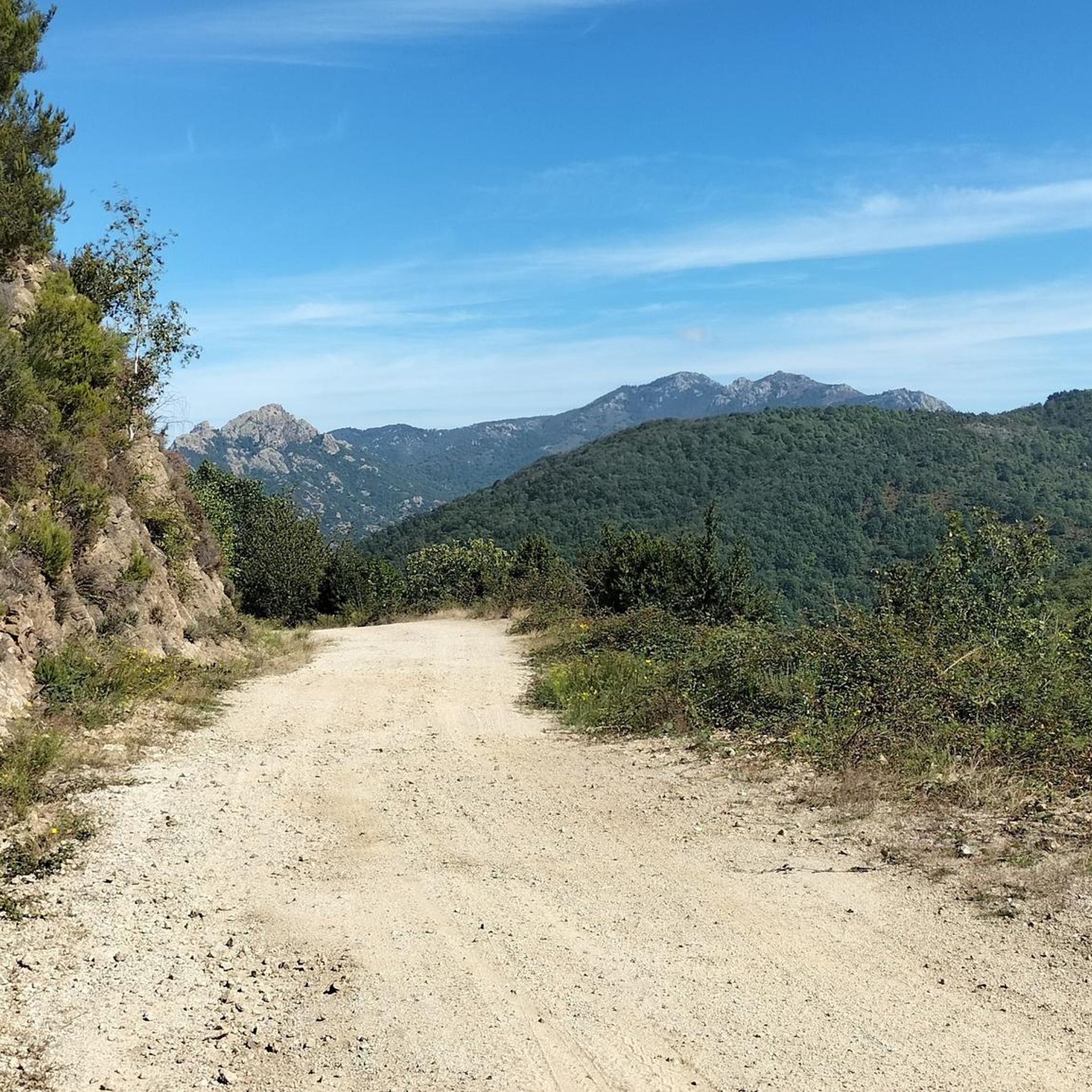
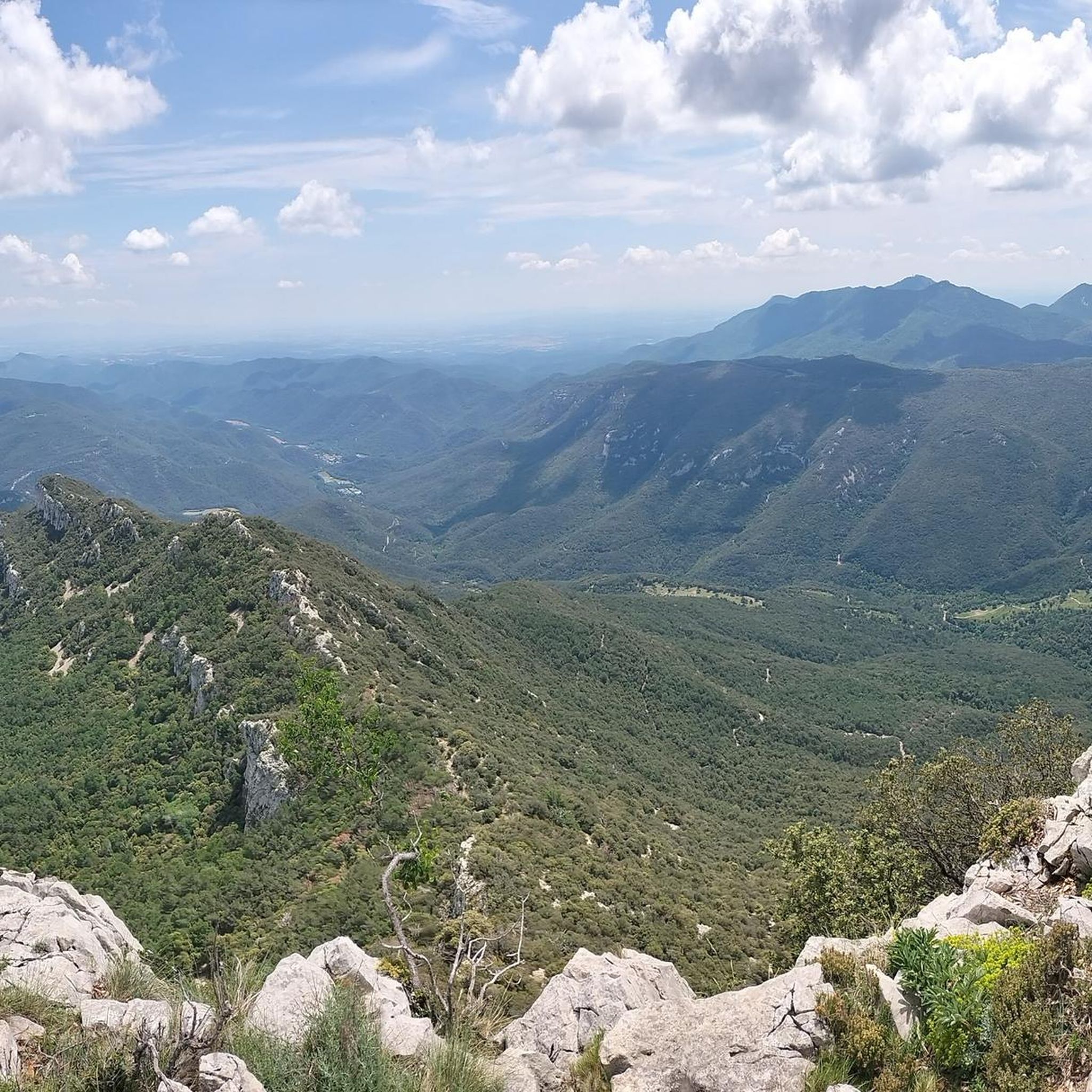
Hiking around Coustouges offers access to mountainous terrain in the Haut Vallespir region of the French Pyrénées-Orientales. The area features diverse landscapes including forests, valleys, and rocky outcrops, with views of the Canigó peak and the Riu Major valley. Pure rivers and streams characterize the region, which is also close to the Pyrénées Catalanes Regional Natural Park.
Best hiking trails around Coustouges
- The most popular hiking route is Puig de la Gavarra – Bac Grillera Castle loop from Coll dels…
Last updated: October 1, 2026
4.9
(8)
40
hikers
Moderate hike. Good fitness required. Easily-accessible paths. Suitable for all skill levels.
4.8
(5)
31
hikers
8.30km
02:41
330m
330m
Moderate hike. Good fitness required. Easily-accessible paths. Suitable for all skill levels.

5.0
(4)
22
hikers
8.79km
02:33
230m
230m
Moderate hike. Good fitness required. Easily-accessible paths. Suitable for all skill levels.
4.0
(2)
10
hikers
Moderate hike. Good fitness required. Easily-accessible paths. Suitable for all skill levels.
3.5
(4)
12
hikers
4.67km
01:18
80m
80m
Easy hike. Great for any fitness level. Easily-accessible paths. Suitable for all skill levels.
Get access to more routes and recommendations from other explorers.
Already have an account?
Our route recommendations are based on thousands of hikes, rides, and runs completed by other people on komoot.
Start today with a free account
Your next adventure awaits.

Tips from the Community

Sant Cristòfol dels Horts is a church in the municipality of Els Horts, in the municipality of Albanyà, included in the Inventory of Architectural Heritage of Catalonia. It has been partially restored by the GAT of La Jonquera in recent times. The church of Sant Cristòfol dels Horts is very ruined. It consists of a single nave topped to the east by a semicircular apse. It presents construction elements from different periods. The western half, which seems to be the oldest, is the most damaged and has suffered various interventions. The rest of the nave preserves the vault, while the apse has a ruined roof and also part of the walls. The side walls are reinforced by buttresses on a slope. The differences in the construction system highlight the different periods in which the walls were built. In the western sector of the nave it presents a system of small ashlars of travertine limestone that corresponds to a late reconstruction. Little of the southern side wall has been preserved. The north wall has been well preserved and is covered by a slightly pointed vault. The structure is made of small ashlars and broken limestone slabs and could date from the 11th century. The rest of the church, the eastern section of the nave and the apse, was built with large, well-squared ashlars arranged in uniform rows, at an angle. This construction is typical of the late Romanesque period, 12th or 13th centuries. The apse opened onto the nave by a simple pointed arch and had an almond-shaped vault, which has not been preserved. On the southern wall there is a double-slanted semicircular arch window. At the bottom of the apse there were two that have disappeared. Sant Cristòfol dels Horts is the church of a scattered village of farmhouses, currently abandoned, located at the northern end of the municipality of Albanyà. The place of Horts is mentioned in the royal precept, favorable to Santa Maria d'Arles, of the year 878, in relation to some lands that were to belong to Sant Pere d'Albanyà. The parish does not appear mentioned until the year 954. The parish of Sant Cristòfol dels Horts depended, in the post-medieval period, on the churches of Fontfreda, Carbonils, els Vilars, Oliveda and the Sanctuary of Santa Maria del Fau. Source: https://ca.m.wikipedia.org/wiki/Sant_Crist%C3%B2fol_dels_Horts
0
0

Very beautiful church. The first name Laurenz is common in my family.
3
0

The Church of San Lorenzo is a construction dating back to medieval times, and like many churches in the region, it has been modified and restored over the centuries. It is a reflection of the Romanesque and later Baroque influence, with several renovations carried out to maintain its structure and functionality. San Lorenzo is the patron saint of the town, which gives him a central role in the religious life of the community. The feast of San Lorenzo, celebrated on August 10, is one of the most important events in the town.
7
0
The origins of the village date back to medieval times, and like many towns in the Pyrénées-Orientales, Saint-Laurent-de-Cerdans has historically been influenced by French and Catalan cultures. The Vallespir region has historically been a place of passage and trade between both sides of the border. Throughout the 19th century, the village experienced a boom due to its traditional industries, especially the manufacture of espardenyes (espadrilles) and cotton fabrics. These industries played an important role in the growth of the village and its regional recognition.
10
0
According to the most recent data, the population of Saint-Laurent-de-Cerdans is approximately 1,200 inhabitants. Although there has been a decline in population in recent decades, the village remains one of the most important rural centres in the region, especially for its artisan tradition.
10
0

Oak (Quercus ilex) next to the fountain of the old Bac hostel. Characteristics: This specimen has a barrel circumference of 3.30 m, the trunk is very rounded at the base, it is 6.30 meters in circumference and the maximum diameter is 1.20 m. The head is 15 m and rises up to 16 m. The spring that is next to the tree provides it with the necessary moisture for its growth. The trunk of the oak appears to be a regrowth from an older trunk. Condition: The trunk is bulging, it can be deduced that this tree has suffered from a lack of soil and the roots have had to make their way through the pumice stone. Suggestions: Very close to the source and this tree are the remains of L'hostal del Bac (17th century), frequented by porters who followed the St. Llorenç de Cerdans in Figueres.
1
0
The Teix del Fau (Taxus baccata) is a hundred-year-old specimen. The yew tree is a very slow-growing tree with millennial longevity. Characteristics: This specimen has a twisted trunk of a reddish color, it is about 2.60 m round and 8 meters high. The appearance of the tree is sudden and shows its velvety with a bark that is paraded. The diameter is 85 cm and the top, green and dense, is 7.50 m. Status: It is in a healthy state and, with so many years, its seeds have spread over the lap of the Fau, where many of its saplings are slowly growing. Suggestions: It should be borne in mind that both the roots and the leaves and branches contain a substance called taxine which is very poisonous.
0
0
Before reaching the Collada del Fau, if we come from the Castle of Bac de Grillera, we find a quite narrow gap with a path that goes inside and crosses it in its entirety. Inside the crack, almost reaching the end, and in its deepest part, the Pou del Fau begins by means of a ramp with a slight slope and covered by plant debris. At -7 meters a first well of -17 vertical meters begins, very narrow and with some small landing of clastic origin. At the eastern end of the lower floor, depth continues to be gained by another well with a -9 meter drop. From this point, exploration becomes impossible due to the narrowness of the duct. To visit its interior it is necessary to have the appropriate knowledge and equipment.
0
0
Frequently Asked Questions
How many hiking trails are available around Coustouges?
There are over 110 hiking trails around Coustouges, offering a wide range of options for different preferences and fitness levels. The komoot community has rated these routes highly, with an average score of 4.5 stars.
What are the difficulty levels of hikes around Coustouges?
The trails around Coustouges cater to various fitness levels. You'll find approximately 19 easy routes, 57 moderate routes, and 37 difficult routes. This diversity ensures there's a suitable path for everyone, from leisurely strolls to more challenging ascents.
What natural features can I expect to see on hikes near Coustouges?
Hiking around Coustouges offers diverse natural beauty. You can expect to see mountainous terrain with panoramic views of the Canigó peak and the Riu Major valley, especially from trails like the Roc del Bau – Rock of the Cross loop from Coustouges. The region is characterized by pure rivers and streams, rich biodiversity with varied flora and fauna, and extensive forests, particularly along routes such as the Roc del Bau – The chestnut mountain loop from Saint-Laurent-de-Cerdans.
Are there family-friendly hiking options in Coustouges?
Yes, Coustouges offers several easy paths suitable for families. These trails are generally shorter with less elevation gain, making them accessible for all ages. An example of an easy route is the Roc del Bau – Rock of the Cross loop from Coustouges, which is just under 3.5 km long.
What is the best time of year to hike in Coustouges?
Thanks to its mild climate, hiking in Coustouges is possible year-round. The diverse landscapes, including forests and valleys, change beautifully with the seasons. Spring and autumn offer pleasant temperatures and vibrant colors, while summer provides warm, sunny days. Even winter can be suitable for hiking, especially at lower altitudes.
What historical or cultural points of interest can I discover along the trails?
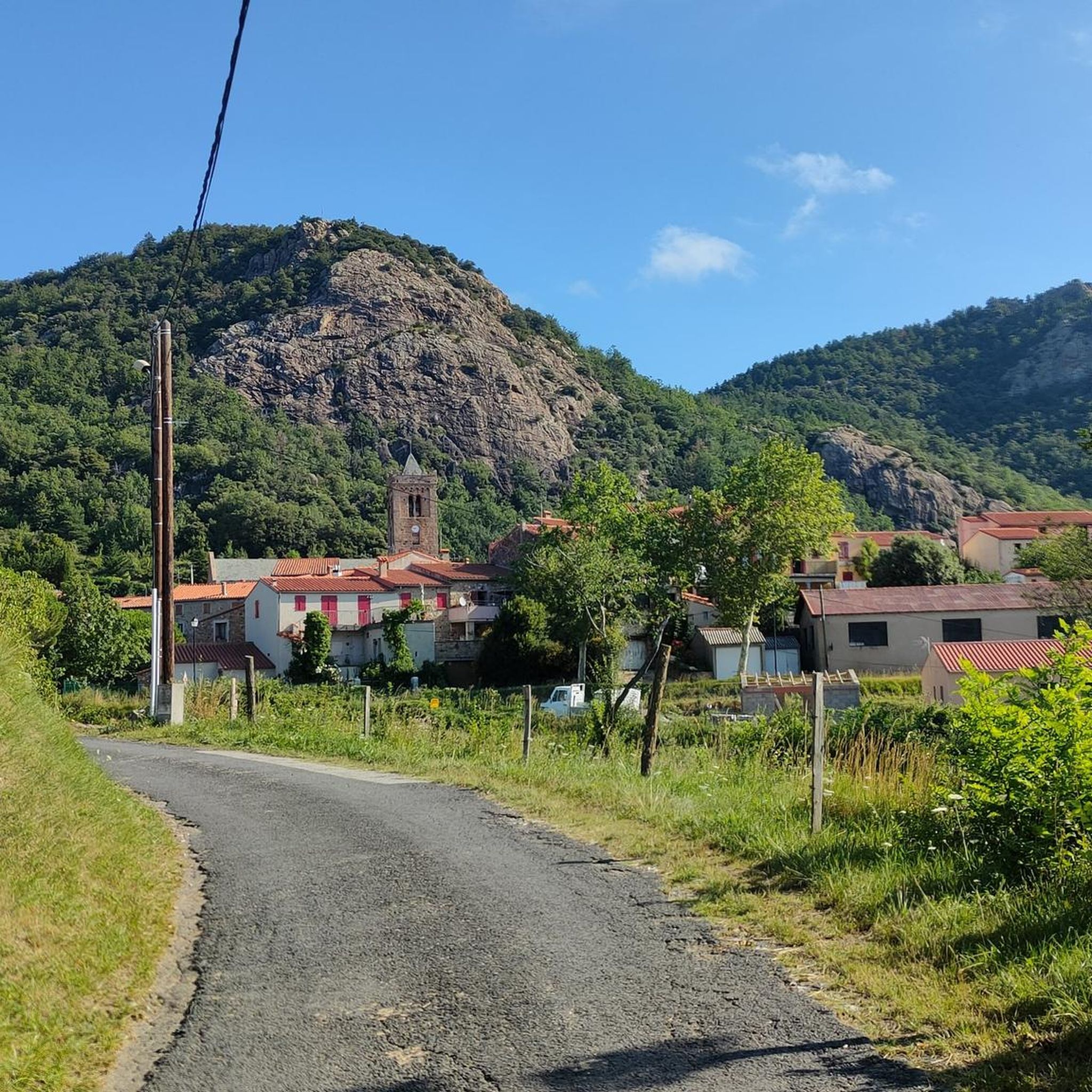
Many trails around Coustouges weave through areas rich in history and culture. You can discover Romanesque chapels, old bridges, and even dolmens. Within the village, the magnificent 12th-century Romanesque church of Sainte Marie is a notable landmark. The path from Coustouges to the Roc de la Creu offers not only panoramic views but also a glimpse into the region's heritage.
Are there any circular hiking routes in Coustouges?
Yes, many of the hiking routes around Coustouges are circular, allowing you to start and end at the same point. Examples include the popular Puig de la Gavarra – Bac Grillera Castle loop from Coll dels Horts and the Pla de la Muga – Le Catalan loop from Domaine de Falgos, both offering varied scenery without the need for a return trip.
What do other hikers enjoy most about hiking in Coustouges?
The area is highly rated by the komoot community, with an average score of 4.5 stars from over 500 reviews. Hikers often praise the stunning mountainous terrain, the diverse landscapes that include forests and valleys, and the breathtaking views of the Canigó peak. The well-maintained network of trails that blend natural beauty with historical discovery is also frequently highlighted.
Are there any huts or refuges near the hiking trails in Coustouges?
Yes, there are several huts and refuges in the vicinity that can be useful for longer hikes or overnight stays. Notable options include Refugi Bassegoda Can Galan and Talaixà Refuge. These can provide shelter and a place to rest during your adventures.
Can I find mountain passes or viewpoints with panoramic vistas?
Absolutely. The mountainous setting of Coustouges means there are numerous points offering spectacular panoramic views. From various locations, you can enjoy vistas of the majestic Canigó peak and even down into South Catalonia. Specific passes like Pou de la Neu Pass and Sagué Pass provide excellent vantage points.
Is Coustouges close to any major natural parks?
Yes, Coustouges is ideally located near the Pyrénées Catalanes Regional Natural Park, a vast protected area renowned for its exceptional natural beauty, including mountain lakes and wetlands. It's also close to the Massif du Canigó, a significant Pyrenean massif with an extensive network of marked trails, offering magnificent panoramas from the Mediterranean coast to the Pyrenean summits.
Most popular routes around Coustouges
Most popular attractions around Coustouges

Get inspired with the komoot mobile app


Explore more
Browse the best Hikes in other regions.
