Attractions and Places To See around Camelin - Top 19
Best attractions and places to see around Camelin, a commune in the Aisne department of the Hauts-de-France region, include historical sites and traditional architecture. The area serves as a base for exploring the rich heritage of the Aisne and Oise departments, featuring forests and historical towns. Visitors can observe traditional white stone houses and numerous old farms within the village.
Best attractions and places to see around Camelin
- The most popular attractions is Pont-l'Évêque marina, an other man-made structure…
Last updated: June 24, 2026
Notre-Dame d'Ourscamp Abbey
Highlight • Religious Site
Translated by Google •
Tip by

Abbaye d'Ourscamp
Highlight • Religious Site
Translated by Google •
Tip by
Sign up now to discover places like this
Get recommendations on the best single tracks, peaks, & plenty of other exciting outdoor places.
Sign up for free
Broken Cross Monument
Highlight • Other
Translated by Google •
Tip by

Pont-l'Évêque marina
Highlight • Structure
Translated by Google •
Tip by

Monument to the Executed of Vingré
Highlight • Monument
Translated by Google •
Tip by
Sign up for free to discover even more attractions around Camelin.
Sign up for free
Already have an account?
Start today with a free account
Your next adventure awaits.
Login or Signup

Tips from the Community

In the footsteps of the Poilus
0
0
In the footsteps of the Poilus
0
0


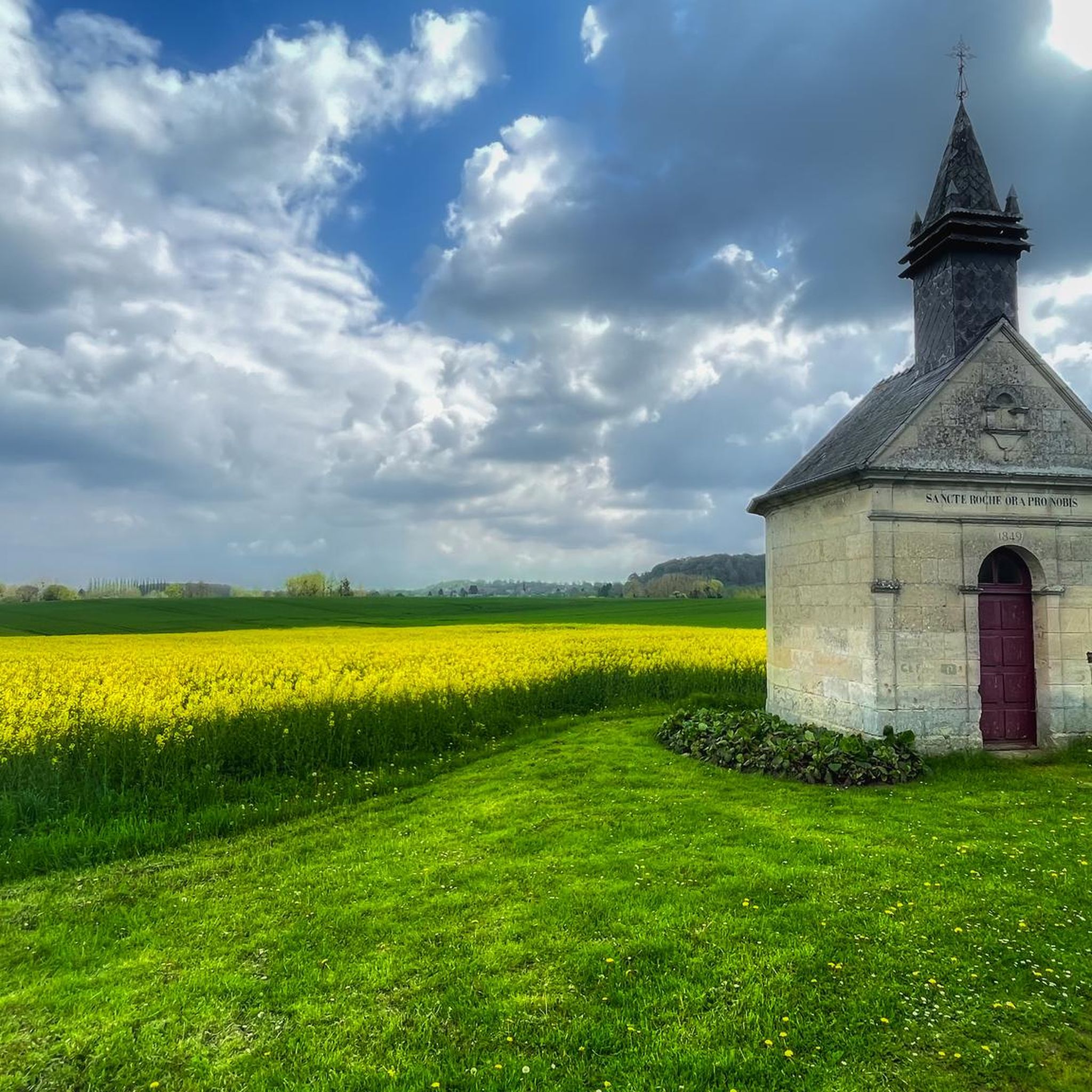
Built in 1929 by the Marquis de Croix, owner of the land, this monument symbolises the suffering of all the soldiers who fought on the Confrécourt plateau during the First World War. The monument is in the shape of a broken cross, reminiscent of the many postcards showing crucifixes or Christs who miraculously survived the bombardments of the war. The monument is located near a stone marker that marks the furthest advance of the German troops during their offensives in 1918. You can also see the new Confrécourt farm, rebuilt after the war on the site where the French front lines were located.
0
0

We used the abbey park for our breakfast. A wonderful place for a break. 🫖🥖
1
0

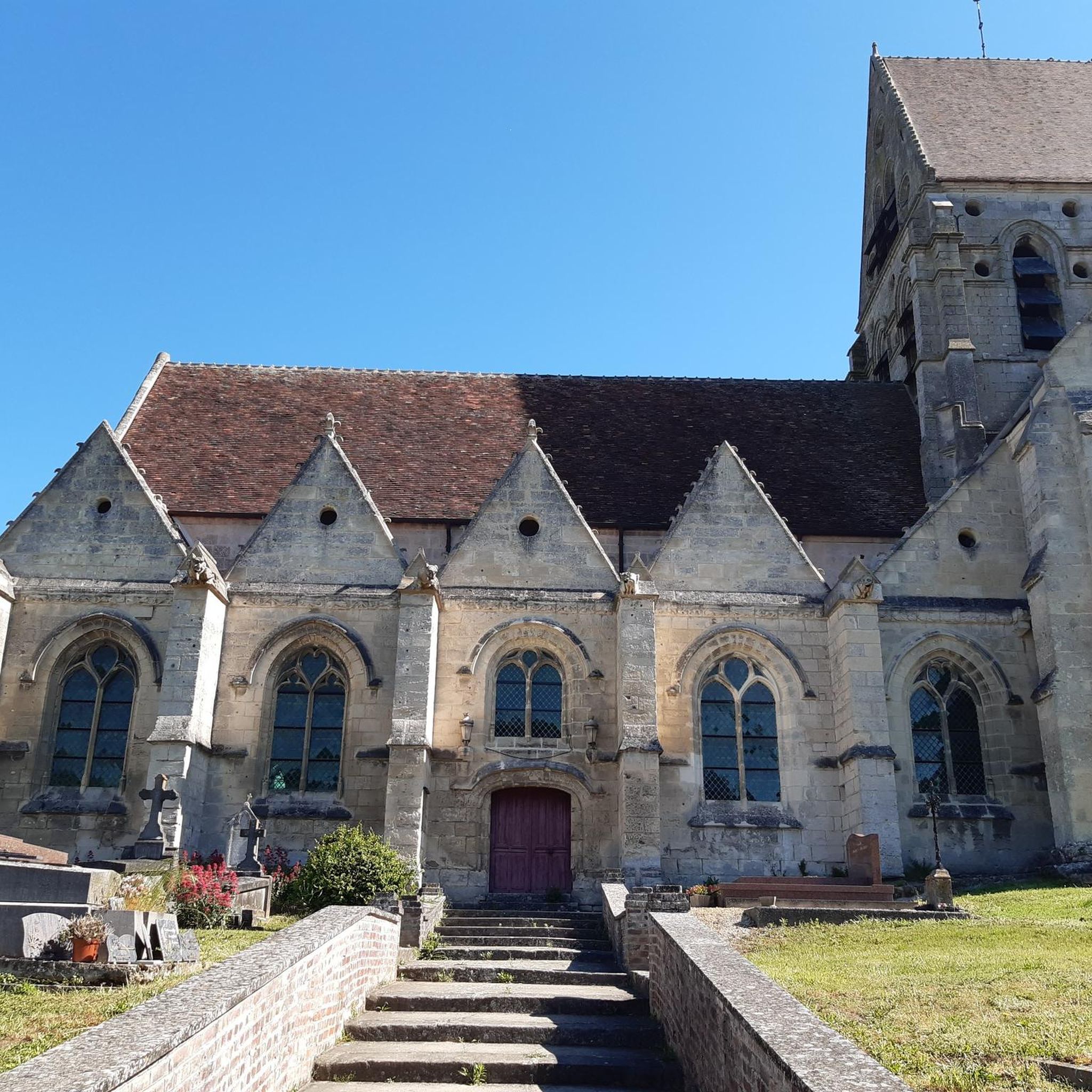
Ourscamp originated in the 7th century as a priory, named after St. Eligius, bishop of Noyon. St. Bernard of Clairvaux himself founded an important Cistercian abbey there in 1129, beautifully situated in a park. The impressive ruin with weathered arches of the Gothic choir is the remains of an enormous former church, built in the transition from Romanesque to Gothic. However, the `Salle des morts’ from the 13th century has been well preserved and is used as a church. Together with the hospital, it is the only building in this Cistercian style in France, as can be seen from the three rows of windows above each other. Other parts were rebuilt after 1949. (open Tue-Sun 9-12 and 14-18 hrs).
1
0
Ourscamp Abbey is located a few kilometers from Noyon, in the upper Oise Valley. Founded in 1129, it is the second-oldest Cistercian abbey in Picardy. It has been destroyed and rebuilt several times. Its longevity and conflicts have contributed to the abbey's transformations: from religious building to hospital and manufactory; over the centuries, it has served various purposes. Admire the ruins of the abbey church's Gothic choir, a magnificent stone structure. The nave, of which nothing remains, had nine sides, now symbolized by pine trees. Finally, the 13th-century sickbay, also known as the mortuary, is also worth a visit. Anecdotally: the abbey's name dates back to the 7th century. In 641, King Dagobert's advisor began construction, and according to the story, he used a bear to transport the heaviest materials...
1
0

Magnificent place, calm and peaceful, rejuvenating, a beautiful example of our Christian architectural and spiritual heritage, with the monastic life which is still alive there with the community of the brothers and sisters of Mary
1
0
Frequently Asked Questions
What historical and cultural sites can I visit around Camelin?
Camelin is surrounded by a rich historical landscape. You can explore the 11th-century Church of Saints-Pierre-et-Paul within the village. Nearby, about 14 km away, are the ruins of Notre-Dame d'Ourscamp Abbey, a Cistercian abbey with a fascinating history of destruction and rebuilding. Other significant sites include Noyon with its Gothic cathedral, Soissons with its abbey and cathedral, and the impressive Pierrefonds Castle, all within a short drive.
Are there any significant war memorials or monuments near Camelin?
Yes, the area around Camelin holds poignant reminders of past conflicts. You can visit the Broken Cross Monument, built in 1929, which symbolizes the suffering of soldiers during the First World War on the Confrécourt plateau. Another important site is the Monument to the Executed of Vingré, honoring six French soldiers executed in 1914, later exonerated as 'martyrs of Vingré'.
What natural areas or scenic spots are there to explore around Camelin?
While Camelin itself is a small commune, it's close to several natural features. The Pont-l'Évêque marina offers pleasant views of the side canal to the Oise. For more extensive natural exploration, the Forêt de Laigue, Mont Ganelon, and the vast Forêt de Compiègne are all within reach, providing opportunities for outdoor activities and scenic beauty.
What outdoor activities, like hiking or cycling, can I do near Camelin?
The region around Camelin is excellent for outdoor enthusiasts. You can find numerous routes for hiking, cycling, and road cycling. For hiking, consider trails like 'Les sept muids — loop from Morsain' or 'Salency church – Religious Grotto loop from Salency'. Cyclists can explore routes such as 'Compiègne Town Hall – Route Forestiere - car-free loop from Caisnes' or 'Lock of Longueil Annel, – On the banks of the Oise loop from Appilly'. More details on these and other routes can be found in the Hiking around Camelin and Cycling around Camelin guides.
Are there family-friendly attractions in the Camelin area?
Yes, several attractions are suitable for families. The Notre-Dame d'Ourscamp Abbey, with its historical ruins and spacious park, can be an engaging visit for all ages. The Monument to the Executed of Vingré offers a historical lesson in a natural setting. Additionally, the lively atmosphere and snack bars at Pont-l'Évêque marina can be enjoyable for families.
What kind of traditional architecture can I see in Camelin?
Camelin is known for its traditional white stone houses, some featuring distinctive crow-stepped gables. You can also observe numerous old farms and square dovecotes throughout the village, offering a glimpse into the region's architectural heritage.
Can I find places to eat or relax near the attractions?
Yes, particularly at the Pont-l'Évêque marina, which is described as a lively spot with snack bars where you can enjoy a coffee or a drink. For more extensive dining options, nearby towns like Noyon or Compiègne would offer a wider selection of cafes and restaurants.
What are some lesser-known historical gems in the wider Camelin region?
Beyond the more prominent sites, the region offers several hidden gems. Consider visiting Morienval Abbey, an impressive example of Romanesque architecture located about 30 km from Camelin. The department capital, Laon, 35 km away, is also home to an astonishing early Gothic cathedral, an architectural masterpiece often overlooked by those focusing solely on Paris.
What do visitors enjoy most about the attractions around Camelin?
Visitors frequently praise the historical depth and serene beauty of the area. For instance, the Notre-Dame d'Ourscamp Abbey is described as an 'enchanting place that breathes history,' with its dilapidated ruins and spacious park. The war memorials, like the Broken Cross Monument, are noted for their 'impressive and important' commemoration, offering a place of peace and contemplation.
Are there any specific natural features or forests suitable for walks near Camelin?
Yes, the region is rich in forests. The Forêt de Laigue, Mont Ganelon, and the extensive Forêt de Compiègne are all within a reasonable distance from Camelin. These areas provide excellent opportunities for walks and enjoying the natural environment. You can find various hiking routes in these forests, catering to different difficulty levels.
What is the significance of the 'Camel Site' mentioned in some research about Camelin?
It's important to clarify that the 'Camel Site' is a distinct archaeological discovery located in Saudi Arabia, not France. It's famous for its ancient rock carvings of camels and equids, dating back over 7,000 years. This site is considered one of the oldest large-scale animal reliefs in the world and is of immense prehistoric artistry and symbolic significance. You can learn more about it at archeologie.culture.gouv.fr.

Get inspired with the komoot mobile app


Explore more
Still not found the Highlight you’re looking for? See guides of the top attractions in other regions:
