Attractions and Places To See around Troussey - Top 20
Attractions around Troussey include natural features and historical sites in the Meuse department of northeastern France. The commune is situated in the Meuse river basin, bordered by the Canal de la Marne au Rhin and the Canal de l'Est Branche-Nord. Troussey is also known for the discovery of a Roman treasure within its former village of Dommartin. These elements contribute to the area's appeal for tourism Troussey France.
Best attractions and places to see around Troussey
- The most popular attractions…
Last updated: August 16, 2026
Vaucouleurs
Highlight • Settlement
Translated by Google •
Tip by

Lourdes Grotto
Highlight • Gorge
Translated by Google •
Tip by

Sign up now to discover places like this
Get recommendations on the best single tracks, peaks, & plenty of other exciting outdoor places.
Sign up for free
Rosary Chapel
Highlight • Other
Translated by Google •
Tip by
Saint Martin's Church
Highlight • Other
Translated by Google •
Tip by

Saint Peter and Saint Paul Church of Euville
Highlight • Religious Site
Translated by Google •
Tip by
Sign up for free to discover even more attractions around Troussey.
Sign up for free
Already have an account?
Start today with a free account
Your next adventure awaits.
Login or Signup

Tips from the Community

For the meditative contemplation of the faithful during the prayer of the Rosary, there are several text variants. According to ancient tradition, the Church knows three versions – referred to as "Mysteries" (from the Greek "Mysterion", which in theology means the revelation of something that would not be accessible to us humans without God's help"): the 'Joyful Mysteries' / the 'Sorrowful Mysteries' / the 'Glorious Mysteries'. His Holiness Pope John Paul II supplemented them in October 2002 with the Apostolic Letter "Rosarium Virginis Mariae" by adding the 'Luminous Mysteries'. Furthermore, it is not at all uncommon for a Rosary devotion in various parishes or groups to be expanded with formulations. A special variant, which I once found on a prayer sheet and would like to present here, is the "Peace Rosary", in which the five mysteries are as follows: + Jesus, at whose birth angels announced peace (cf. Lk 2:8-14) + Jesus, who directs our steps on the path of peace (cf. Lk 1:67-79) + Jesus, who has blessed those who peacemake (cf. Mt 5:3-12a) + Jesus, who sent his disciples to bring peace (cf. Mt 10:7-13) + Jesus, who has left us his peace (cf. Jn 14:23-27)
0
0

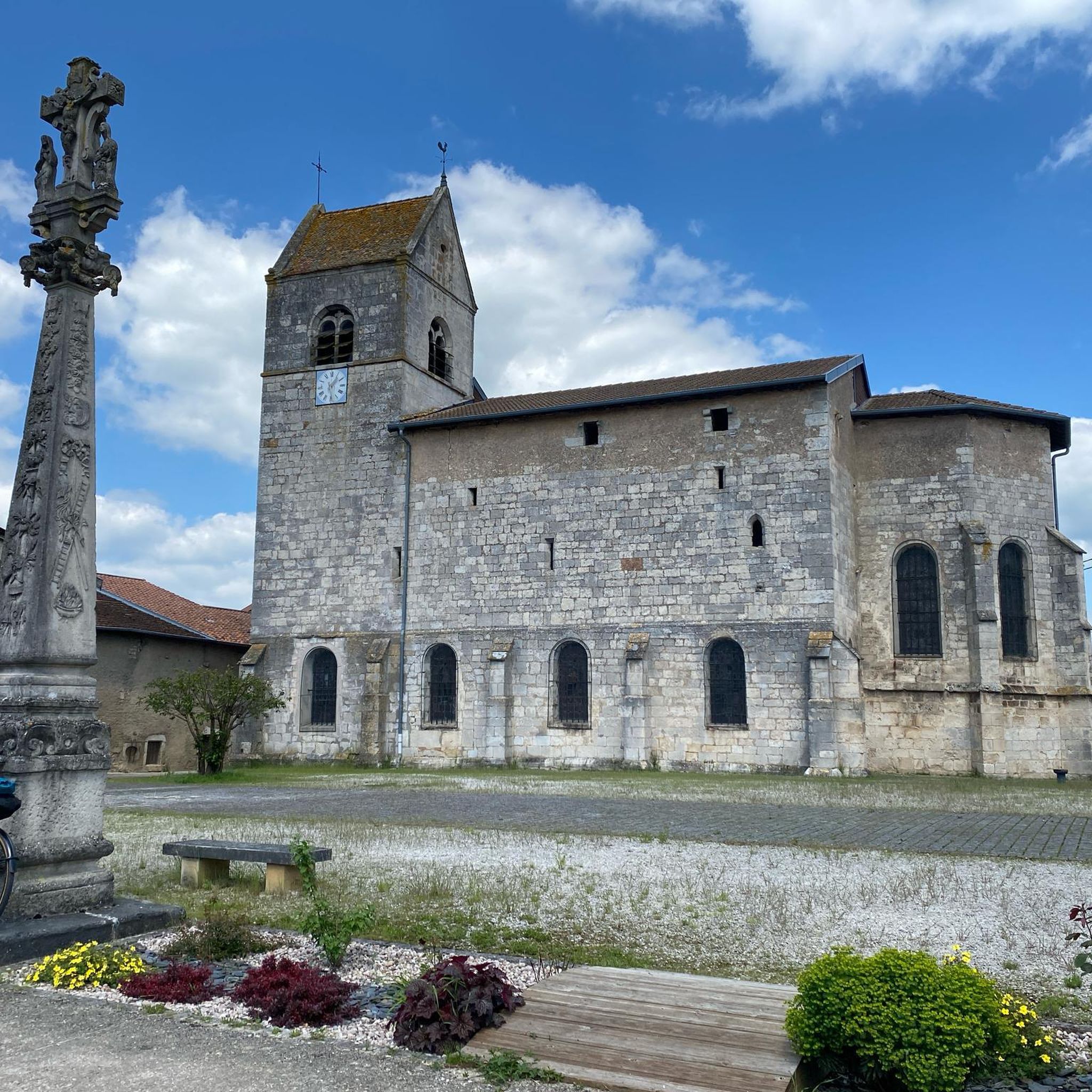
Magnificent church and a good bakery on the square.
0
0

We particularly enjoyed the history of the town, situated on the Meuse River. The beautiful town hall was built in 1847/48 on the site of a monastery in the Italian Renaissance style. In front of the town hall stands the gigantic equestrian statue of Joan of Arc, revered by the French. This cast-iron monument weighs 2.5 tons. Joan is said to have conquered the city. There is also a Joan of Arc Museum in the town.
1
0

An unusual church because of its shape (round). To the left of the gate there is a water tap.
0
0

The cult of the Virgin is ancient in Lorraine, particularly on the Hill of Sion. The apparitions of Lourdes after those of La Salette mark the souls of a very Christianized population in the countryside. Pilgrimages to Lourdes gained momentum in the 1880s. In 1883, there were 1,600 pilgrims from Lorraine. The momentum was given. The idea naturally came to evoke or reproduce the Massabielle cave. https://www.bruley.mairie54.fr/fr/la-replique-de-la-grotte-de-lourdes.html
4
0
The general plan of the Rosary Chapel is reminiscent of the Rosary Basilica in Lourdes. It was built from 1892 to 1894 to the plans of the architect Jacquemin at the initiative of Canon Demange and then his brother. The chapel has three alveoli for the three mysteries: joyful mystery, painful mystery, glorious mystery. Each cell has five windows and five tables. The entire esplanade and the Rosary chapel were listed in the supplementary inventory of Historic Monuments in July 2005. https://www.bruley.mairie54.fr/fr/la-chapelle-du-rosaire.html
4
0

In addition to its beautiful church, Euville has the particularity of having a town hall placed under the sign of Art Nouveau. This magnificent building is open to visitors on request. If you like this architecture and the particular objects of this period, then be delighted. The works of recognized artists such as Louis Majorelle or Edgard Brandt are present there.
0
0
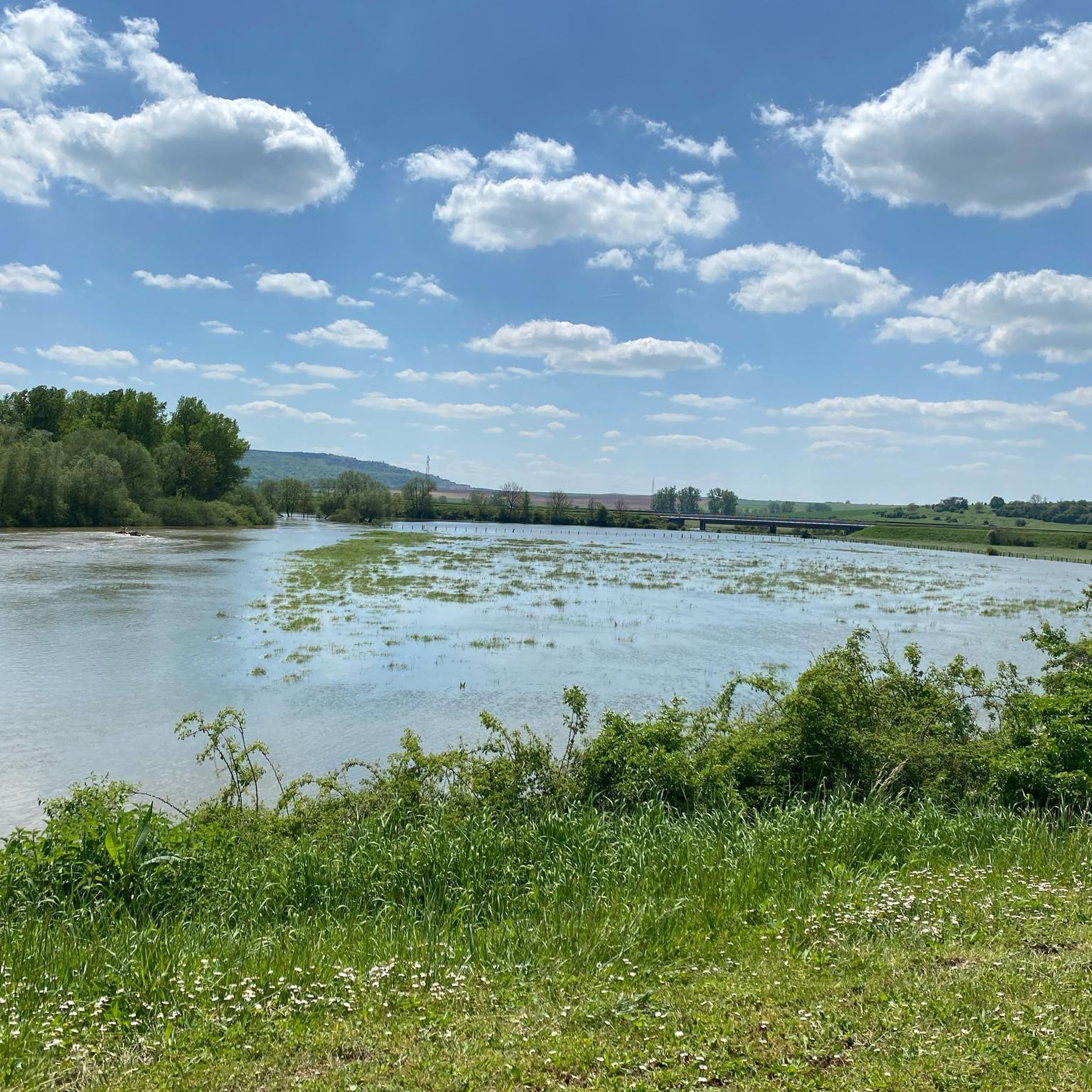
Vaucouleurs takes its name from this part of the Meuse river, called Val des Couleurs. This Joan of Arc town (dedicated to Joan of Arc) was located a few kilometers from the front during the First World War. Today, it is a charming village with many streams and beautiful forests.
2
0
Frequently Asked Questions
What natural features can I explore around Troussey?
Troussey is nestled in the basin of the Meuse River, a prominent European waterway. You can also explore the significant Canal de la Marne au Rhin and the Canal de l'Est Branche-Nord, both of which border the commune and contribute to the area's natural beauty and offer scenic routes for walks or cycling.
Are there historical sites to visit in and around Troussey?
Yes, Troussey itself is known as the site where a significant Roman treasure of 5,860 silver and bronze coins was unearthed. Nearby, you can visit Vaucouleurs, a village famous for its historical connection to Joan of Arc, featuring a beautiful town hall and an equestrian statue of her. Several historic churches are also in the vicinity.
What outdoor activities are available near Troussey?
The region around Troussey offers various outdoor activities. You can find numerous routes for cycling, hiking, and mountain biking. For detailed routes, explore the cycling guide around Troussey, the hiking guide around Troussey, and the MTB trails guide around Troussey.
Can I go cycling around Troussey?
Absolutely. The area around Troussey, with its canals and river, is ideal for cycling. You can find routes like the 'Bridge Over the Meuse – The Meuse loop from Troussey' (24.9 km, moderate) or longer options like 'Path Along the Water – Small Waterfall loop from Pagny-sur-Meuse' (104.2 km, difficult). More options are available in the cycling guide around Troussey.
Are there specific hiking trails recommended near Troussey?
Yes, there are several hiking trails. You can explore the 'Rangéval Abbey Trail' (8.9 km, moderate) or the 'Le Neuf Étang loop from Gérard Sas Etang' (6.9 km, easy). For more options, including family-friendly trails, refer to the hiking guide around Troussey.
What is the significance of the Roman treasure discovered in Troussey?
The Roman treasure discovered in Troussey in 1987-1988 consisted of 5,860 silver and bronze coins. This significant archaeological find was made in the area of the former village of Dommartin, along a secondary Roman road, highlighting the region's ancient history and its role in Roman times.
Is Troussey suitable for family visits?
Yes, Troussey and its surroundings offer family-friendly activities, especially for those who enjoy nature and history. The canals and river provide pleasant settings for easy walks or bike rides. Exploring historical sites like Vaucouleurs can also be an educational experience for families.
What is the best time of year to visit Troussey?
The best time to visit Troussey for outdoor activities like hiking and cycling is typically during the spring (April to June) and autumn (September to October) when the weather is mild and pleasant. Summer months can also be enjoyable, especially for exploring the waterways.
Where can I find religious sites or churches near Troussey?
The area features several notable religious buildings. You can visit Saint Martin's Church in Rigny-Saint-Martin, known for its unique design and stained glass. Other churches include Saint Peter and Saint Paul Church of Euville and Saint Martin Church of Bruley, which features neo-Gothic architecture.
Are there options for mountain biking near Troussey?
Yes, mountain biking enthusiasts can find trails in the vicinity. Routes like 'Fort d'Ecrouves (Remains) – Lourdes Grotto loop from Trondes' (45.1 km, moderate) or 'Canal de Toul – Barbotte Rock loop from Foug' (54.9 km, moderate) are available. Check the MTB trails guide around Troussey for more detailed information.
What do visitors particularly enjoy about the attractions near Troussey?
Visitors appreciate the blend of natural beauty and historical significance. The replica of the Lourdes Grotto is a popular spiritual site, reflecting the region's deep religious heritage. The historical charm of Vaucouleurs, with its Joan of Arc connections, and the unique architecture of churches like Saint Martin's Church are also highly regarded.

Get inspired with the komoot mobile app


Explore more
Still not found the Highlight you’re looking for? See guides of the top attractions in other regions:
