The best road cycling routes around Longmesnil
5.0
(5)
277
riders
63
rides
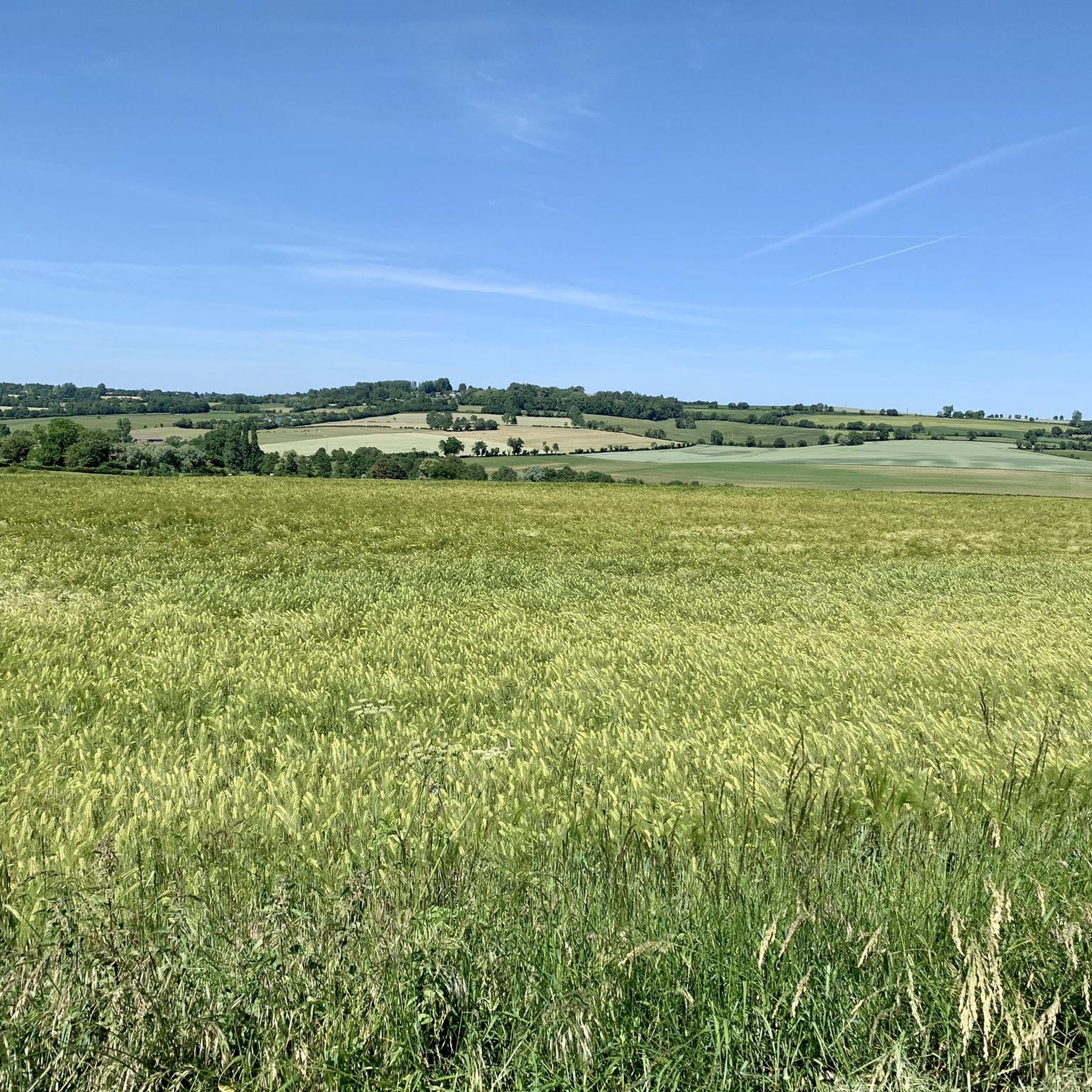
Road cycling around Longmesnil offers varied terrain within the Seine-Maritime department of Normandy. The landscape features a valley through which the ruisseau du Moulin Breteau flows, providing gentle slopes and descents. The highest point in the area reaches 230 meters, offering moderate climbs and descents. Rural roads and green valleys characterize the region, providing a scenic backdrop for cycling.
Best road cycling routes around Longmesnil
- The most popular road cycling route is Town of Neufchâtel-en-Bray loop from Serqueux, a…
Last updated: June 30, 2026
5.0
(4)
63
riders
30.6km
01:16
130m
130m
Easy road ride. Great for any fitness level. Mostly well-paved surfaces and easy to ride.
28
riders
78.8km
03:26
620m
620m
Moderate road ride. Good fitness required. Mostly well-paved surfaces and easy to ride.

Sign up for free
26
riders
9.16km
00:24
50m
50m
Easy road ride. Great for any fitness level. Mostly well-paved surfaces and easy to ride.
10
riders
56.9km
02:28
440m
440m
Moderate road ride. Good fitness required. Mostly well-paved surfaces and easy to ride.
9
riders
41.7km
01:55
380m
380m
Moderate road ride. Good fitness required. Mostly well-paved surfaces and easy to ride.
Get access to more routes and recommendations from other explorers.
Sign up for free
Already have an account?
Our route recommendations are based on thousands of hikes, rides, and runs completed by other people on komoot.
Start today with a free account
Your next adventure awaits.
Login or Signup



Tips from the Community

A seemingly simple church with a very original structure composed of a concrete shell reinforced with nested ceramic cylinders (forming the catenary profile of the vault).
1
0

Today the sign was unfortunately painted over in white 🥲
0
0

North-facing church with a Latin cross plan, composed of a nave accompanied by side aisles divided into nine bays and ending with a polygonal chevet with three cut sides. The entrance to the building is through a bell tower-porch.
0
0
Church with an elongated plan. A nave preceded by a bell tower with a polygonal spire surmounting the gable of the main façade, finished with a flat chevet and topped with a long-span slate roof. The elevations are in brick, rendering and stone, with each bay materialized by a semicircular bay and buttresses.
0
0
Listed as a Historic Monument, the Notre-Dame church is a very interesting building that expresses some very characteristic features of the architecture of the Norman School, particularly in the Gothic choir attributed to the 13th century. The bell tower-porch has a late 15th century portal with an ogival arcade that frames an openwork tympanum. Above the portal is built a flamboyant style rose window. The nave, flanked by two side aisles, was built in the 13th century, but was extensively remodeled in the 16th and 17th centuries. It has an interior elevation on 3 levels. All that remains of the primitive Romanesque church is the base of the old lantern tower. Visible only from the outside, it is located at the crossing of the transept. The church has some singularities: -The sepulchre dating from the 15th century, representing Christ stretched out on a shroud, Nicodemus, Joseph of Arimathea, Saint John the Evangelist, the Virgin Mary and Mary Magdalene. -The stained glass windows are attributed for the most part to Édouard Didron, a great Parisian master glassmaker.
0
0
At a recent city council meeting, the city decided to rename this park Michel Lejeune after the former mayor of Forges who died two years ago. Michel Lejeune particularly liked this place, which was long called Mondory, after a 17th century theater actor.
0
0

The war memorial of François POMPON, the famous animal sculptor (born in Saulieu 1855-1933) represents a Latin cross and a Gallic rooster with open wings, elements sculpted from the same Burgundy stone. It is this monument that will save him from poverty and that will allow him in 1922 to create his polar bear and to be able to live from his sculpture. He had come to Cuy-Saint-Fiacre because he worked as a practitioner for René de Saint-Marceaux, after having been that of Rodin, of Camille Claudel. The monument is classified as a historical monument in 2022 and labeled as a rural heritage of departmental interest.
0
0
The 17th century Château de Merval with its dovecote, bread oven and outbuildings (listed as a Historic Monument in 1943). The Domaine de Merval invites you to discover its orchard, cider house and local products certified as organic farming in an idyllic natural setting. You will be able to discover some of the secrets of making Calvados or Pommeau AOC, typical Normandy drinks, and its Neufchâtel AOP. Family activity: Discovering calves and milking cows Mezzanine to watch milking (at 5 p.m. access on request to the farm)
0
0
Frequently Asked Questions
How many road cycling routes are available around Longmesnil?
There are over 50 road cycling routes available around Longmesnil, offering a wide range of options for different skill levels. These include 12 easy routes, 42 moderate routes, and a few more challenging options.
What kind of terrain can I expect on road cycling routes in Longmesnil?
The terrain around Longmesnil is characterized by green valleys and rural roads. You'll find gentle slopes and descents along watercourses like the ruisseau du Moulin Breteau, with the highest point reaching 230 meters, providing moderate climbs and descents. The routes often feature mostly well-paved surfaces, ideal for road cycling.
Are there any easy road cycling routes suitable for beginners in Longmesnil?
Yes, Longmesnil offers several easy road cycling routes perfect for beginners or those seeking a relaxed ride. An excellent option is the Mondory Park loop from La Bellière, an easy 6.5 miles (10.5 km) path that navigates through green valleys, offering pleasant cycling with minimal elevation gain.
What are some longer or more challenging road cycling routes in the area?
For those looking for longer or more challenging rides, the region offers routes with more significant elevation changes. The Market Hall – Gournay-en-Bray loop from Gaillefontaine is a moderate 35.4 miles (56.9 km) trail leading through rural countryside, featuring more substantial climbs. Another moderate option is the Mondory Park – Forges-les-Eaux loop from Serqueux, covering 42.1 km with notable elevation.
What do other road cyclists say about the routes in Longmesnil?
The road cycling routes in Longmesnil are highly regarded by the komoot community, holding an average score of 5.0 stars from more than 10 reviews. Over 600 road cyclists have used komoot to explore the varied terrain, often praising the scenic rural roads and the tranquil Norman countryside.
Are there any circular road cycling routes around Longmesnil?
Many of the road cycling routes around Longmesnil are designed as loops, allowing you to start and finish at the same point. For example, the popular Town of Neufchâtel-en-Bray loop from Serqueux is a 19.0 miles (30.6 km) trail that takes you through rural roads and gentle elevation changes in a circular fashion.
What natural features or landmarks can I see while cycling in Longmesnil?
While cycling around Longmesnil, you'll experience the charm of the Norman countryside, characterized by green valleys and agricultural land. You might encounter local heritage such as the Saint Martin church in Longmesnil, rebuilt between 1754 and 1756. For specific points of interest, consider exploring highlights like the Domaine de Forges and Historic Thermal Quarter or sections of the Avenue Verte, a cycleway that passes nearby.
Is Longmesnil well-connected for cyclists using public transport?
Longmesnil is a small commune, and direct public transport links specifically for cyclists might be limited. It's advisable to check regional bus or train services in nearby larger towns like Gournay-en-Bray or Forges-les-Eaux for connections, as these areas are more likely to have public transport options that can accommodate bicycles. For more general information on cycling in Normandy, you can visit francevelotourisme.com.
Where can I find parking for road cycling routes in Longmesnil?
As Longmesnil is a rural area, parking is generally available in or near the village center, or at the start points of specific routes. Look for designated parking areas in small hamlets or near local amenities. For routes starting from nearby towns like Serqueux or Gaillefontaine, there will typically be more established parking facilities.
Are there any cafes or pubs near the cycling routes in Longmesnil?
Longmesnil itself is a small village, so options directly within the commune might be limited. However, the cycling routes often pass through or near charming rural villages and towns in the broader Seine-Maritime department. Larger towns like Gournay-en-Bray or Forges-les-Eaux, which are often part of longer routes, will offer a wider selection of cafes, pubs, and restaurants for refreshments.
What is the best time of year for road cycling in Longmesnil?
The best time for road cycling in Longmesnil, and Normandy in general, is typically from spring through early autumn (April to October). During these months, the weather is generally milder and more pleasant, with the countryside in full bloom or displaying beautiful autumn colors. The 'intense greenery' mentioned in the region research is particularly vibrant during spring and summer.
Are there any family-friendly road cycling routes in Longmesnil?
Yes, the region offers routes suitable for families, especially those categorized as 'easy'. These routes often feature gentle elevation changes and well-paved surfaces, making them enjoyable for various ages and skill levels. The green valleys and tranquil rural roads provide a safe and scenic environment for family outings.
Can I combine road cycling with exploring other attractions in the Longmesnil area?
Absolutely! The charm of the region lies in its rural character and the opportunity to explore the Norman countryside. You can easily combine your road cycling trips with visits to local heritage sites or nearby towns. Consider exploring Forges-les-Eaux, a settlement known for its historic thermal quarter, or cycling along sections of the Avenue Verte London–Paris, which offers a dedicated cycleway experience.
Most popular attractions around Longmesnil

Get inspired with the komoot mobile app


Explore more
Browse the best Road cycling routes in other regions.
