The best road cycling routes around Fesques
5.0
(36)
969
riders
74
rides
Road cycling around Fesques, located in Seine-Maritime, France, offers diverse terrain for cyclists. The region features a mix of coastal routes along the Côte d'Albâtre with chalk cliffs, rolling countryside in areas like Pays de Bray and Pays de Caux, and routes along the Seine River. Cyclists can expect varied landscapes, from gentle agricultural lands to more challenging inclines near the coast.
Best road cycling routes around Fesques
- The most popular road cycling route is Town of Neufchâtel-en-Bray – Saint-Martin…
Last updated: July 13, 2026
5.0
(4)
58
riders
Easy road ride. Great for any fitness level. Mostly well-paved surfaces and easy to ride.
5.0
(2)
49
riders
Easy road ride. Great for any fitness level. Mostly well-paved surfaces and easy to ride.

Sign up for free
7
riders
80.9km
03:42
720m
720m
Moderate road ride. Good fitness required. Mostly well-paved surfaces and easy to ride.
5.0
(1)
7
riders
13.0km
00:31
40m
40m
Easy road ride. Great for any fitness level. Mostly well-paved surfaces and easy to ride.
3
riders
34.6km
01:34
310m
310m
Moderate road ride. Good fitness required. Mostly well-paved surfaces and easy to ride.
Get access to more routes and recommendations from other explorers.
Sign up for free
Already have an account?
Our route recommendations are based on thousands of hikes, rides, and runs completed by other people on komoot.
Start today with a free account
Your next adventure awaits.
Login or Signup



Tips from the Community


A seemingly simple church with a very original structure composed of a concrete shell reinforced with nested ceramic cylinders (forming the catenary profile of the vault).
1
0

Today the sign was unfortunately painted over in white 🥲
0
0

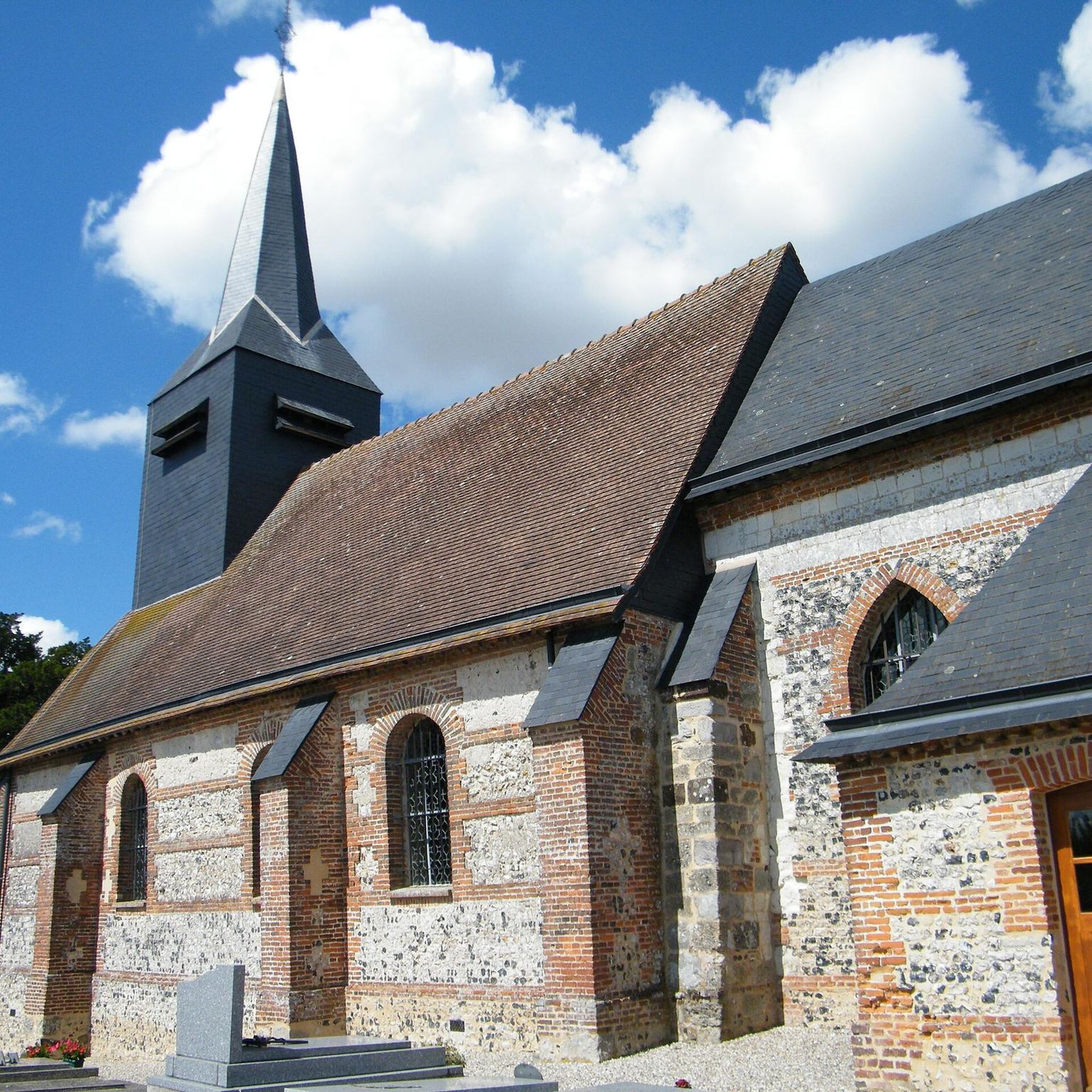
The Notre-Dame church was built from 1170 and the building retains an inscription dated April 26, 1170. The bell tower dates from the 12th century and the choir dates from the 13th century. The church was restored at the end of the 19th century and the beginning of the 20th century. The building is listed as a historical monument by decree of July 19, 1926. Structural disorders made work necessary in the 2010s, approved by the municipal council of the commune in 2018 and a local heritage preservation association founded in May of the same year.
1
0
Church with an elongated plan. A nave preceded by a bell tower with a polygonal spire surmounting the gable of the main façade, finished with a flat chevet and topped with a long-span slate roof. The elevations are in brick, rendering and stone, with each bay materialized by a semicircular bay and buttresses.
0
0
Listed as a Historic Monument, the Notre-Dame church is a very interesting building that expresses some very characteristic features of the architecture of the Norman School, particularly in the Gothic choir attributed to the 13th century. The bell tower-porch has a late 15th century portal with an ogival arcade that frames an openwork tympanum. Above the portal is built a flamboyant style rose window. The nave, flanked by two side aisles, was built in the 13th century, but was extensively remodeled in the 16th and 17th centuries. It has an interior elevation on 3 levels. All that remains of the primitive Romanesque church is the base of the old lantern tower. Visible only from the outside, it is located at the crossing of the transept. The church has some singularities: -The sepulchre dating from the 15th century, representing Christ stretched out on a shroud, Nicodemus, Joseph of Arimathea, Saint John the Evangelist, the Virgin Mary and Mary Magdalene. -The stained glass windows are attributed for the most part to Édouard Didron, a great Parisian master glassmaker.
0
0

Accessible only by mountain bike or gravel.
0
0

The Fontaine aux Dames wash house, purchased by the town hall in 1998, has undergone a complete restoration. The original building being in ruins, a reconstruction was carried out according to a Brayon washhouse model in the year 2000: low brick wall, oak frame and roofing in traditional local tiles. The wash house houses a ceramic work “the monument to the unknown lover” which we owe to the Brayon artists Jacques and Juliette Damville; This monument pays tribute to women for the role they played during the First World War.
1
0
Frequently Asked Questions
How many road cycling routes are available around Fesques?
There are over 75 road cycling routes available around Fesques, catering to various skill levels. You'll find a diverse selection, from easy loops through the countryside to more challenging rides with significant elevation changes.
What kind of landscapes can I expect to see while road cycling around Fesques?
The Fesques region offers a rich variety of landscapes. You can experience the dramatic white chalk cliffs and invigorating inclines of the Côte d'Albâtre, cycle through the peaceful, rolling countryside of Pays de Bray and Pays de Caux with their charming villages and flax fields, or enjoy scenic routes along the lush Seine Valley.
What are the difficulty levels of road cycling routes in the Fesques area?
The routes around Fesques offer a good mix of difficulties. Approximately 24 routes are considered easy, perfect for a relaxed ride. There are also 51 moderate routes for those seeking a bit more challenge, often featuring varied landscapes and longer distances. Currently, there are no routes classified as difficult, making the area accessible to a wide range of cyclists.
Are there family-friendly road cycling options near Fesques?
Yes, the region offers family-friendly cycling options. The Avenue Verte London-Paris, for example, features flat, well-maintained sections ideal for relaxed rides with family. These greenways provide safe and enjoyable paths away from heavy traffic.
Are there any challenging climbs for advanced road cyclists?
For advanced road cyclists seeking a challenge, the coastal routes along the Côte d'Albâtre, particularly near Etretat and Dieppe, offer significant inclines and breathtaking views of the English Channel. These sections provide invigorating rides with notable elevation gains.
What interesting landmarks or attractions can I explore along road cycling routes near Fesques?
Many routes pass by interesting landmarks. For instance, the Town of Neufchâtel-en-Bray – Mesnières-en-Bray Castle loop from Baillolet takes you near the historic Mesnières-en-Bray Castle. You can also find routes that follow sections of the Railroads from Dieppe to Forges Les Eaux or the Avenue Verte London–Paris: Forges-les-Eaux to Neufchâtel-en-Bray, which are attractions in themselves.
What is the best time of year for road cycling in Fesques?
The Seine-Maritime region generally offers pleasant cycling conditions from spring through autumn. Spring brings blooming landscapes, while summer provides warm weather for coastal rides. Autumn offers cooler temperatures and beautiful foliage. Always check local weather forecasts before heading out.
Where can I find parking for road cycling routes in Fesques?
While specific parking details vary by route, many towns and villages along the cycling networks, such as Neufchâtel-en-Bray, offer public parking facilities. For routes starting from specific points, it's advisable to check the route details on komoot or local tourism websites for designated parking areas.
Can I access road cycling routes in Fesques using public transport?
The Seine-Maritime region has some public transport options, but direct access to all trailheads via public transport might be limited. Major towns like Dieppe, Rouen, and Le Havre are better connected. For detailed information on public transport links to specific starting points, it's best to consult local transport services or the regional tourism website, such as Seine-Maritime Tourisme.
Are there loop routes available for road cycling?
Yes, many road cycling routes around Fesques are designed as loops, offering convenient starting and ending points. Examples include the Town of Neufchâtel-en-Bray – Saint-Martin Church loop from Neufchâtel-en-Bray and the Town of Neufchâtel-en-Bray – Gîte Le Mouton Gras loop from Neufchâtel-en-Bray, allowing you to return to your starting location without retracing your path.
What amenities are available for cyclists in the Fesques region?
The Seine-Maritime region is well-equipped for cyclists, featuring numerous 'Accueil Vélo' labeled services. These establishments, including accommodations, restaurants, and repair shops, offer quality reception and amenities tailored for touring cyclists. You'll find cafes and pubs in many of the charming villages along the routes.
What do other road cyclists say about the routes around Fesques?
The road cycling routes around Fesques are highly regarded by the komoot community, with an impressive average rating of 4.9 stars from over 20 reviews. Cyclists often praise the varied terrain, from peaceful countryside to scenic coastal views, and the well-maintained paths that make for an enjoyable experience.
Most popular attractions around Fesques

Get inspired with the komoot mobile app


Explore more
Browse the best Road cycling routes in other regions.
