The best cycling routes around Prunelli-Di-Casacconi
4.6
(112)
1,209
riders
63
rides
Touring cycling routes around Prunelli-Di-Casacconi are set within Corsica's diverse landscape, featuring a mix of coastal areas and mountainous terrain. The region includes scenic Prunelli Gorges, large valleys, rivers, and distinctive rock formations. Forests are also present, contributing to varied natural environments for cycling.
Best touring cycling routes around Prunelli-Di-Casacconi
- The most popular touring cycling route is Monte Sant'Angelo Loop, a 33.8 miles (54.4 km) trail that takes 4 hours 5 minutes to complete. This route features significant elevation…
Last updated: June 28, 2026
4.8
(4)
32
riders
54.4km
04:05
1,350m
1,350m
Hard bike ride. Very good fitness required. Mostly paved surfaces. Suitable for all skill levels.
3.5
(32)
216
riders
49.7km
02:47
80m
80m
Moderate bike ride. Good fitness required. Mostly paved surfaces. Suitable for all skill levels.

Sign up for free
5.0
(12)
100
riders
98.7km
06:42
1,680m
1,680m
Hard bike ride. Very good fitness required. Mostly paved surfaces. Suitable for all skill levels.
4.2
(10)
85
riders
70.7km
04:55
1,300m
1,300m
Hard bike ride. Very good fitness required. Mostly paved surfaces. Suitable for all skill levels.
39
riders
55.4km
04:02
1,240m
1,240m
Hard bike ride. Very good fitness required. Mostly paved surfaces. Suitable for all skill levels.
Get access to more routes and recommendations from other explorers.
Sign up for free
Already have an account?
Our route recommendations are based on thousands of hikes, rides, and runs completed by other people on komoot.
Start today with a free account
Your next adventure awaits.
Login or Signup


Tips from the Community

This church is one of the Baroque buildings found in Corsica. It is recognizable from afar with its distinctive bell tower, visible amidst the natural forest setting of the Costa Verde massif.
0
0


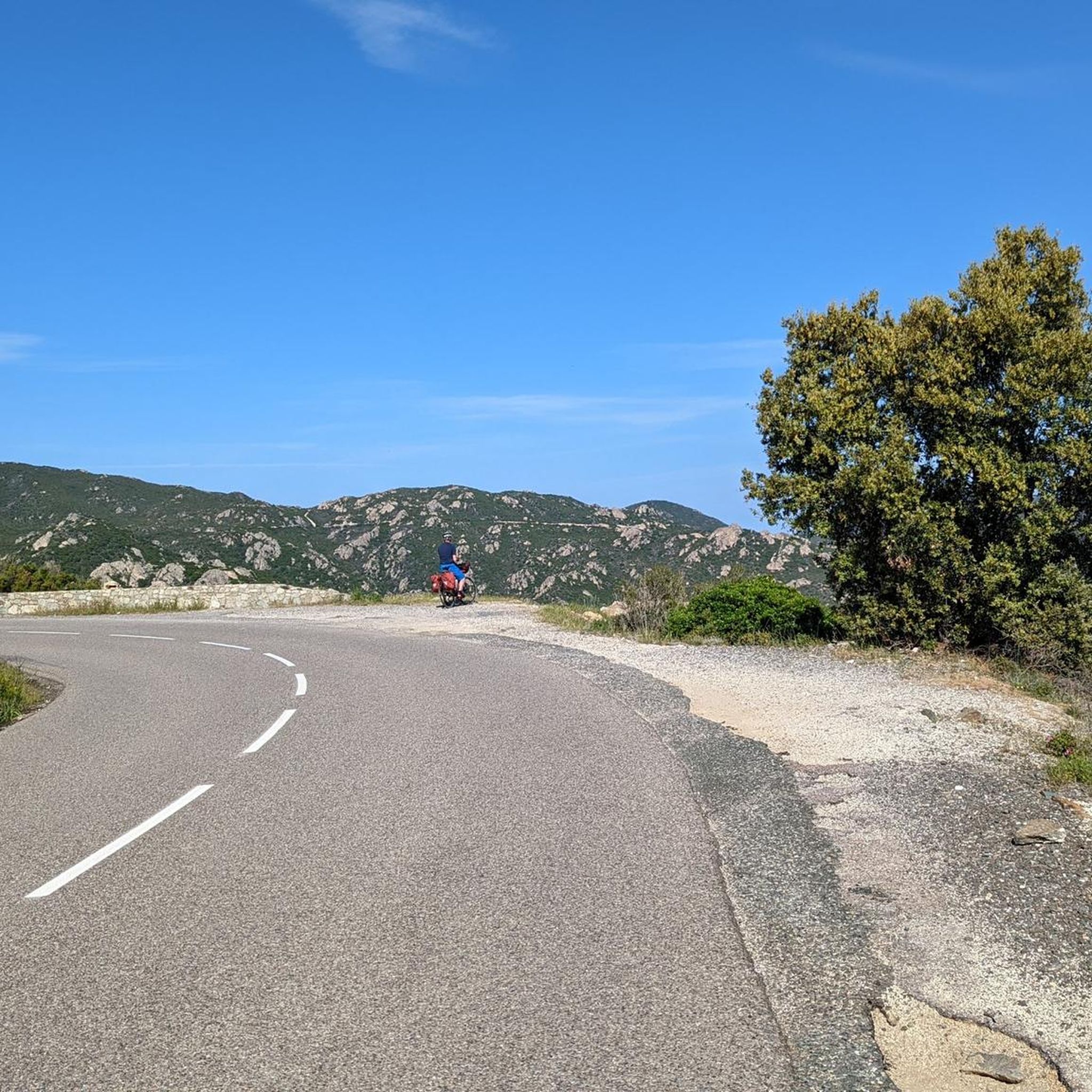
For your information, this is the "Lacone parade." It's very popular with cyclists because it's rarely used by cars, except for tourists in summer.
0
0

Beautiful place that invites you to linger.
0
1

The Col de Bigorno is definitely one of the most beautiful passes in Corsica with a high alpine flair! 📸 It is an absolute gem in terms of landscape and also has very little traffic.
0
0
Very beautiful small church made of green serpentine and white limestone blocks.
0
0

The church was begun at the beginning of the seventeenth century and completed in 1717. In 1740, embellishment works were carried out. The wall paintings were painted by Luigi Pollero in 1810. The main façade consists of two levels delimited by cornices and surmounted by a triangular pediment with three acroteria. On the first level, on either side of the portal, there are two niches that house the statues of Saint Nicholas and Saint Peter. The church ends in a semicircular apse. The bell tower rises at the junction of the apse and the right side façade. It has five floors that end in a dome surmounted by a cross. The interior consists of a nave and five richly decorated side chapels. On either side of the altar there are caryatid angels. Building dating from the first quarter of the 17th century (?), mentioned in the report of the pastoral visit of Msgr. Marliani, Bishop of Mariana and Accia, in 1646. It was restored in 1686 with the collaboration of master masons Lorenzo Chiglione and Giovanni Filippi. Rebuilt in 1717 and 1740. Main door dating from 1766. Painted decoration (investigated in the Palissy database) carried out by the painter Luigi Polleri in 1810, as shown by the date on the inside of the building. Restored in 1896.
1
0
Frequently Asked Questions
How many touring cycling routes are available around Prunelli-Di-Casacconi?
There are over 50 touring cycling routes around Prunelli-Di-Casacconi, offering a wide range of options for different skill levels and preferences. The region is part of Corsica, which is known for its diverse cycling landscape.
Are there any easy touring cycling routes in the Prunelli-Di-Casacconi area?
Yes, there are 5 easy touring cycling routes available. These routes are generally less demanding, making them suitable for beginners or those looking for a relaxed ride. The region also offers moderate and difficult options for more experienced cyclists.
What kind of terrain can I expect on touring cycling routes in Prunelli-Di-Casacconi?
The terrain around Prunelli-Di-Casacconi is highly varied, encompassing both coastal areas and mountainous landscapes. You'll encounter rolling roads, hills, and significant climbs, especially on routes that venture into the Prunelli Gorges or towards summits. The region also features large valleys, rivers, and forests, providing diverse scenery.
Are there any circular touring cycling routes in Prunelli-Di-Casacconi?
Many of the touring cycling routes in the area are designed as loops. For example, the challenging Monte Sant'Angelo Loop offers a circular journey through mountainous terrain. Another option is the moderate Cathédrale La Canonica – Route de la Lagune loop from Casamozza, which provides coastal views.
What are some notable landmarks or attractions I can see along the touring cycling routes?
You can explore several interesting landmarks and natural features. Routes often pass by historical sites like the San Michele de Murato Church or the Cathédrale La Canonica. For natural beauty, you might encounter the scenic Prunelli Gorges, or even views from the Mount Sant'Angelo Summit.
Are there any routes that feature waterfalls?
Yes, the region offers routes that include natural attractions like waterfalls. For instance, the challenging Ucelluline Waterfall – Cervione loop from Casamozza is a long route that incorporates a visit to the Ucelluline Waterfall.
What is the best time of year for touring cycling in Prunelli-Di-Casacconi?
Corsica, including the Prunelli-Di-Casacconi area, is generally favorable for cycling during spring and autumn when temperatures are milder. Summer can be quite warm, especially in coastal areas, but higher elevation routes offer cooler conditions. Winter can bring colder weather and potential snow in the mountains.
What do other touring cyclists say about the routes in Prunelli-Di-Casacconi?
The touring cycling routes in Prunelli-Di-Casacconi are highly regarded by the komoot community, with an average rating of 4.3 out of 5 stars from over 100 reviews. Cyclists often praise the diverse landscapes, from coastal views to challenging mountain climbs, and the relatively low traffic on many roads.
Are there any routes that pass through picturesque villages?
Yes, the region's routes often provide opportunities to explore picturesque villages. The broader Corsican landscape is known for its charming settlements, and cycling through these areas allows you to experience local heritage and culture. For example, the San Michele de Murato Church – Défilé du Lancone loop from Casamozza leads through valleys and past historical sites, often including local villages.
What is the longest touring cycling route in the area?
One of the longer and more challenging routes is the Ucelluline Waterfall – Cervione loop from Casamozza, which spans nearly 99 kilometers (61 miles) and features significant elevation gain, making it a demanding ride for experienced cyclists.
Are there routes suitable for advanced touring cyclists?
Absolutely. A significant portion of the routes, 41 out of 57, are classified as difficult. These routes often involve substantial elevation gains and longer distances, such as the Saint Antoine Ruines – La Porta loop from Barchetta, which covers over 66 kilometers with considerable climbing.
Most popular routes around Prunelli-Di-Casacconi
Most popular attractions around Prunelli-Di-Casacconi

Get inspired with the komoot mobile app


Explore more
Browse the best Cycling routes in other regions.
