Attractions and Places To See around Templeux-La-Fosse - Top 20
Attractions and places to see around Templeux-La-Fosse are concentrated in the surrounding Somme region of France. This small commune acts as a base for exploring historical sites, particularly those connected to World War I. The area offers a combination of historical landmarks, natural wetlands, and reconstructed villages. Visitors can find significant cultural and natural points of interest within a short distance.
Best attractions and places to see around Templeux-La-Fosse
- The most popular attractions is Historial of the Great War –…
Last updated: October 17, 2026
Château de Péronne
Highlight • Castle
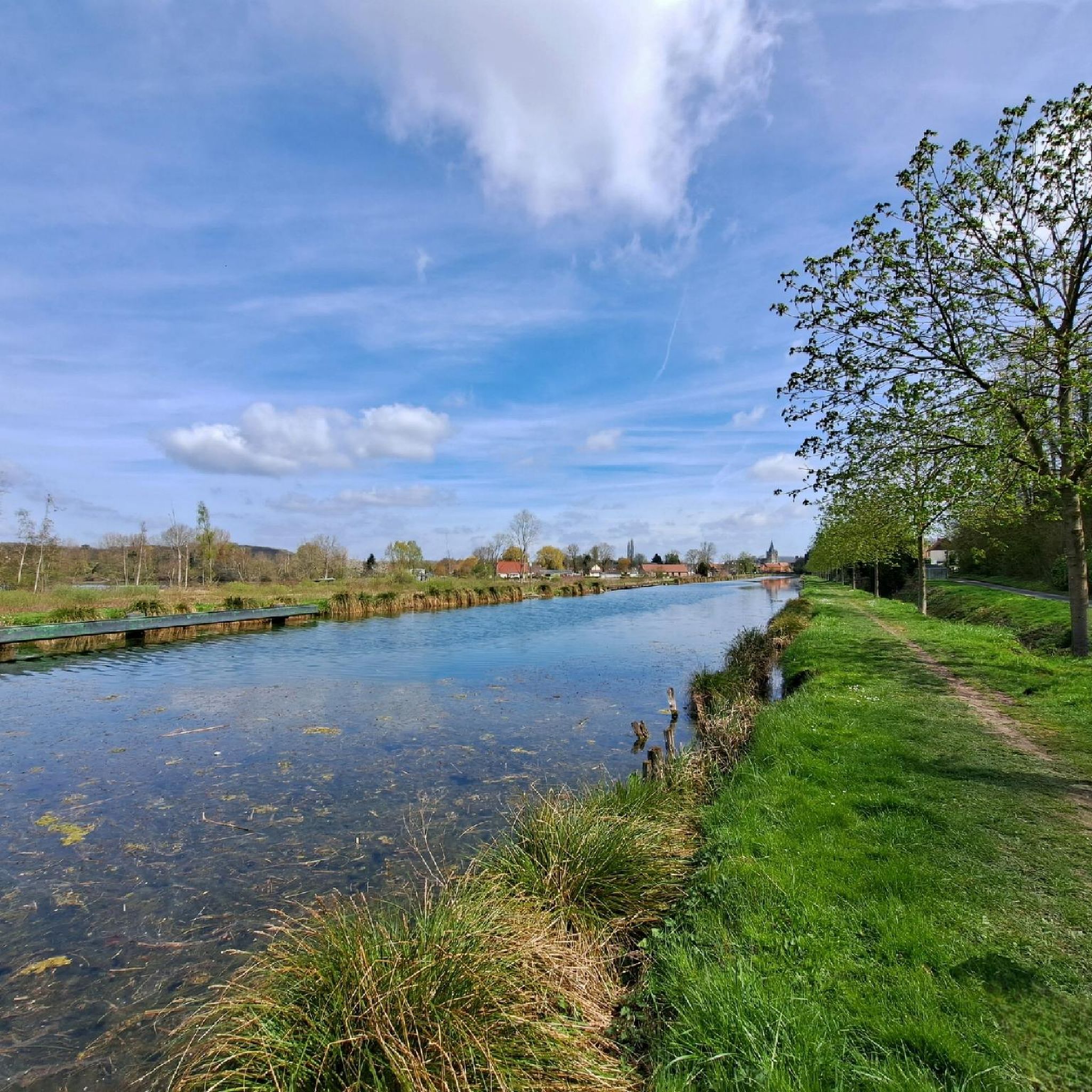
The Somme here forms natural ponds that surround the city, giving it an undeniable attractiveness. Its old center is on a small hill which dominates the whole.
Translated by Google •
Tip by

Historial of the Great War – Château de Péronne
Highlight • Castle
Translated by Google •
Tip by
Sign up now to discover places like this
Get recommendations on the best single tracks, peaks, & plenty of other exciting outdoor places.
Monument aux morts
Highlight • Other
Translated by Google •
Tip by

Doingt Greenway
Highlight (Segment) • Cycleway
Translated by Google •
Tip by

Doingt
Highlight • Other
Translated by Google •
Tip by
Sign up for free to discover even more attractions around Templeux-La-Fosse.
Already have an account?
Start today with a free account
Your next adventure awaits.





Tips from the Community

Also a bicycle repair and electric bike charging point
0
0

The museum covers the period of the First World War in all its aspects: military, social, cultural.
0
0

This museum is located on the front lines of the Battle of the Somme. The white concrete design by architect Henri-Edouard Ciriani describes a gentle arc set into the southwest wall of the medieval castle. It forms a harmonious whole with the four large round towers, each with a diameter of 9 m. The building at the Etang du Cam stands on a series of smooth white concrete columns, creating a beautiful reflection in the water. The rooms are accessed through an opening in the wall of the 13th-century castle, which was built by the Counts of Vermandois. Charles the Bold imprisoned Louis XI in one of the towers.
2
0

Very nice museum in a great, historic building. A must visit on a bike tour 😍.
3
0
The Église Notre-Dame De L’Assemption is a Catholic church located in the commune of Doingt, in the east of the Somme department, near Péronne. The church was built in the second quarter of the 20th century and was inaugurated on 26 October 1930. It was designed by the architect Maurice Quentin and is built in the Neo-Romanesque style with a traditional basilica plan. The facade of the church has features of Romanesque art, such as sober and narrow windows, buttresses, a circular portico with a typed sculpture representing the Virgin surrounded by angels, arched folds resting on a column on each side, and a rose window above the portico. The church has a massive and projecting bell tower which is reminiscent of Romanesque bell towers by its structure and sober decoration. The interior of the church is decorated with a mural by Gustave Riquet representing the Assumption of the Virgin. The church was restored in 2016-2017.
6
0
Doingt is a commune on the banks of the River Somme. The settlement was destroyed during the First World War. A Commonwealth cemetery is located just outside the town. The village and its church have been rebuilt and in 2023 a crucifix, rescued from the ruins of the village church by a British military chaplain after the Battle of the Somme and placed in All Saints’ Church, Tinwell in Rutland, England, was returned to the new church.
7
0
The Monument aux Morts in Péronne is a monument commemorating the victims of the First World War. The monument was designed by the architect Louis Faille and the sculptor Paul Auban. The monument is located in a public square and consists of a stone wall framing a terrace, the corners of which are occupied by planters. The monument contains a striking sculpture called “La Picarde maudissant la guerre” (The Picard who curses the war). The sculpture shows a woman on her knees, crying over the body of a dead soldier, while raising her fist in the air to curse the war. The monument was inaugurated on 20 June 1926.
7
0

This greenway in the middle of nature offers a bucolic setting. Away from the urban bustle, this path allows you to enjoy the charms of the forest.
2
0
Frequently Asked Questions
What historical sites related to World War I can I visit near Templeux-La-Fosse?
The region around Templeux-La-Fosse is at the heart of the Circuit of Remembrance of the Battles of the Somme. You can visit the Historial of the Great War – Château de Péronne, a museum that explains the First World War from multiple perspectives. Additionally, the Monument aux morts in Péronne commemorates WWI victims, and the village of Doingt, destroyed and rebuilt after the war, features a Commonwealth cemetery and a restored church.
Are there any natural attractions or wetlands to explore in the area?
Yes, the marais de Halles is a significant wetland mainly composed of meadows. It supports a diverse range of plants and animals, including the obese-leaved waterwort and spotted newt. This area was also a site of battles during the First World War.
What is there to see in the town of Péronne?
Péronne is a charming town worth exploring. It is home to the historical Château de Péronne, which also houses the Historial of the Great War. The town is surrounded by natural ponds formed by the Somme river, adding to its attractiveness. You can also find the Monument aux morts and several cafés in the town square.
Are there family-friendly attractions near Templeux-La-Fosse?
Yes, both the Historial of the Great War – Château de Péronne and the Château de Péronne are considered family-friendly. The museum offers an engaging way to learn about history, and the castle grounds provide a picturesque setting for a stroll.
What outdoor activities, like cycling, can I do near these attractions?
The area offers various cycling routes. You can find options like the 'Canal du Nord – Château de Péronne loop from Roisel' or 'The port of Peronne – Moislains Lock loop from Moislains'. For more details and routes, visit the Cycling around Templeux-La-Fosse guide.
Are there running trails available around Templeux-La-Fosse?
Yes, there are several running trails in the vicinity. Popular options include 'Running loop from Cartigny' and the 'Doingt Greenway loop from Buire-Courcelles'. You can explore more routes and their details in the Running Trails around Templeux-La-Fosse guide.
What is the significance of the village of Doingt?
Doingt is a commune on the banks of the River Somme with significant historical ties to World War I, having been destroyed during the conflict. It features a Commonwealth cemetery and a rebuilt Neo-Romanesque church, the Église Notre-Dame De L’Assemption, which was inaugurated in 1930.
What do visitors enjoy most about the attractions around Templeux-La-Fosse?
Visitors particularly appreciate the immersive historical experience offered by the Historial of the Great War, which vividly depicts the daily lives of soldiers and civilians. The picturesque setting of the Château de Péronne and the natural beauty and biodiversity of the marais de Halles are also highly valued.
Can I learn about the ecology and history of the Marais de Halles?
Yes, the marais de Halles is a site of both ecological and historical interest. You can learn about the diversity of plants and animals thriving in this humid environment, as well as its role in the fierce battles of the First World War. Guided tours are sometimes organized by the Association for the Preservation of the Marais de Halles.
What kind of architecture can I expect to see in the region?
The region showcases a mix of historical and rebuilt architecture. The Château de Péronne dates back to the 13th century, while the modern extension of the Historial of the Great War features contemporary design. In Doingt, you can see the Neo-Romanesque style of the Église Notre-Dame De L’Assemption, rebuilt in the 20th century.
Is there a specific memorial for World War I victims in the area?
Yes, the Monument aux morts in Péronne is a monument commemorating the victims of the First World War. It features a striking sculpture called “La Picarde maudissant la guerre” (The Picard who curses the war).
Most popular routes around Templeux-La-Fosse

Get inspired with the komoot mobile app


Explore more
Still not found the Highlight you’re looking for? See guides of the top attractions in other regions:
