The best road cycling routes around Sablons-Sur-Huisne
4.2
(69)
1,490
riders
23
rides
Road cycling routes around Sablons-Sur-Huisne are set within the Perche Regional Natural Park, offering diverse landscapes for cyclists. The terrain features the flat and open Huisne valley, alongside rolling hills and wooded hillsides that provide varied elevation. The Huisne River is a prominent natural landmark, with many routes running alongside it or offering views. This region provides a mix of gentle slopes and more challenging climbs.
Best road cycling routes around Sablons-Sur-Huisne
- The most popular road cycling route is Porte…
Last updated: July 16, 2026
42
riders
111km
05:21
1,140m
1,140m
Hard road ride. Very good fitness required. Some segments of this route may be unpaved and difficult to ride.
3.0
(1)
6
riders
68.1km
02:57
600m
600m
Moderate road ride. Good fitness required. Mostly well-paved surfaces and easy to ride.

Sign up for free
5.0
(1)
6
riders
70.2km
03:04
600m
600m
Moderate road ride. Good fitness required. Mostly well-paved surfaces and easy to ride.
8
riders
48.3km
02:10
420m
420m
Moderate road ride. Good fitness required. Mostly well-paved surfaces and easy to ride.
3
riders
61.1km
02:43
590m
590m
Moderate road ride. Good fitness required. Mostly well-paved surfaces and easy to ride.
Get access to more routes and recommendations from other explorers.
Sign up for free
Already have an account?
Our route recommendations are based on thousands of hikes, rides, and runs completed by other people on komoot.
Start today with a free account
Your next adventure awaits.
Login or Signup



Tips from the Community

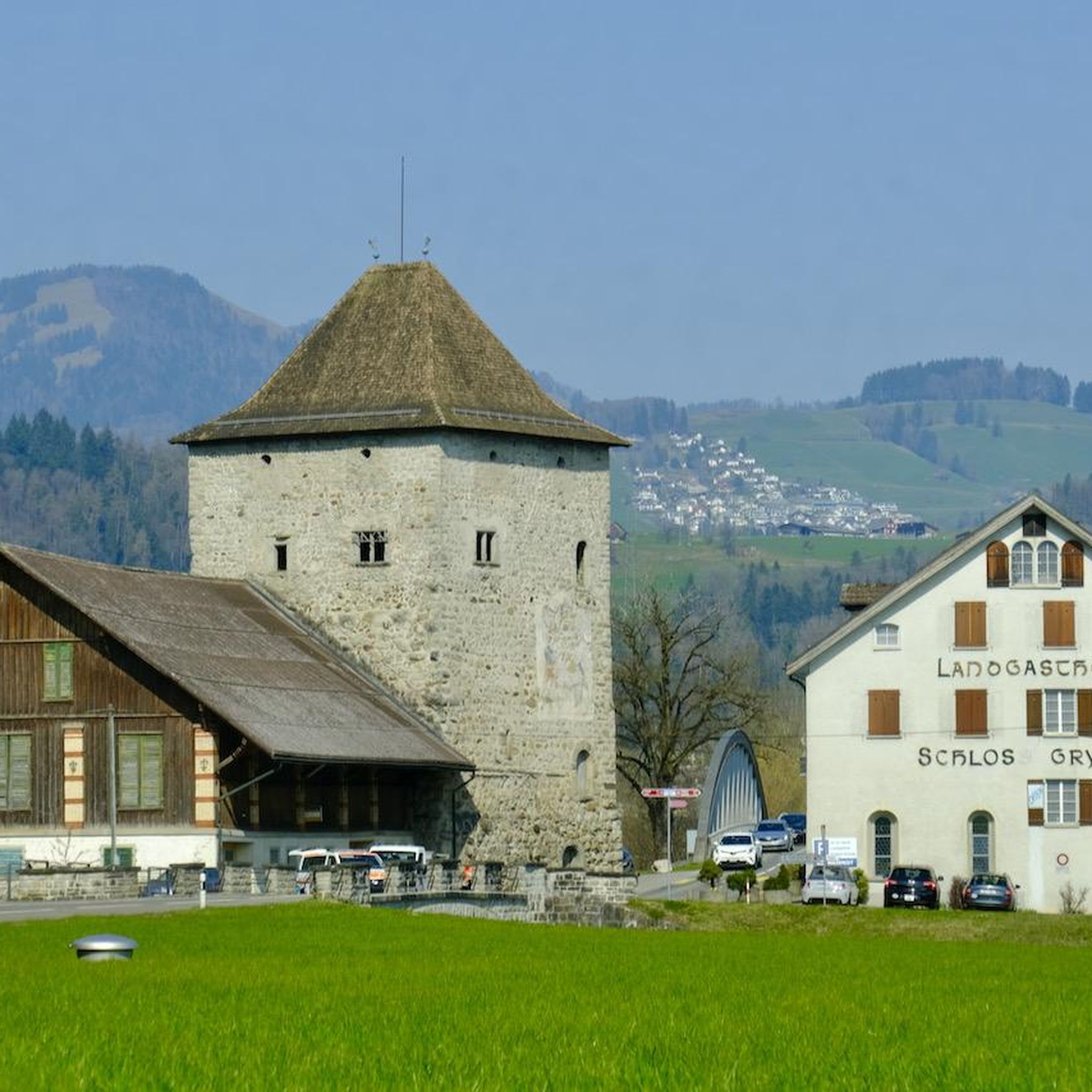
The original Marian shrine "La Salette," which is referred to in this patronal feast, is located in the French Alps (Grenoble district) and is an important Marian shrine, even if it has not achieved the same level of fame as other pilgrimage sites honoring the Mother of God—such as Lourdes in the French Pyrenees or Fatima in Portugal. The hiking highlight "La Salette" can be found on komoot at the following link =>> https://www.komoot.com/de-de/highlight/1861054
0
0

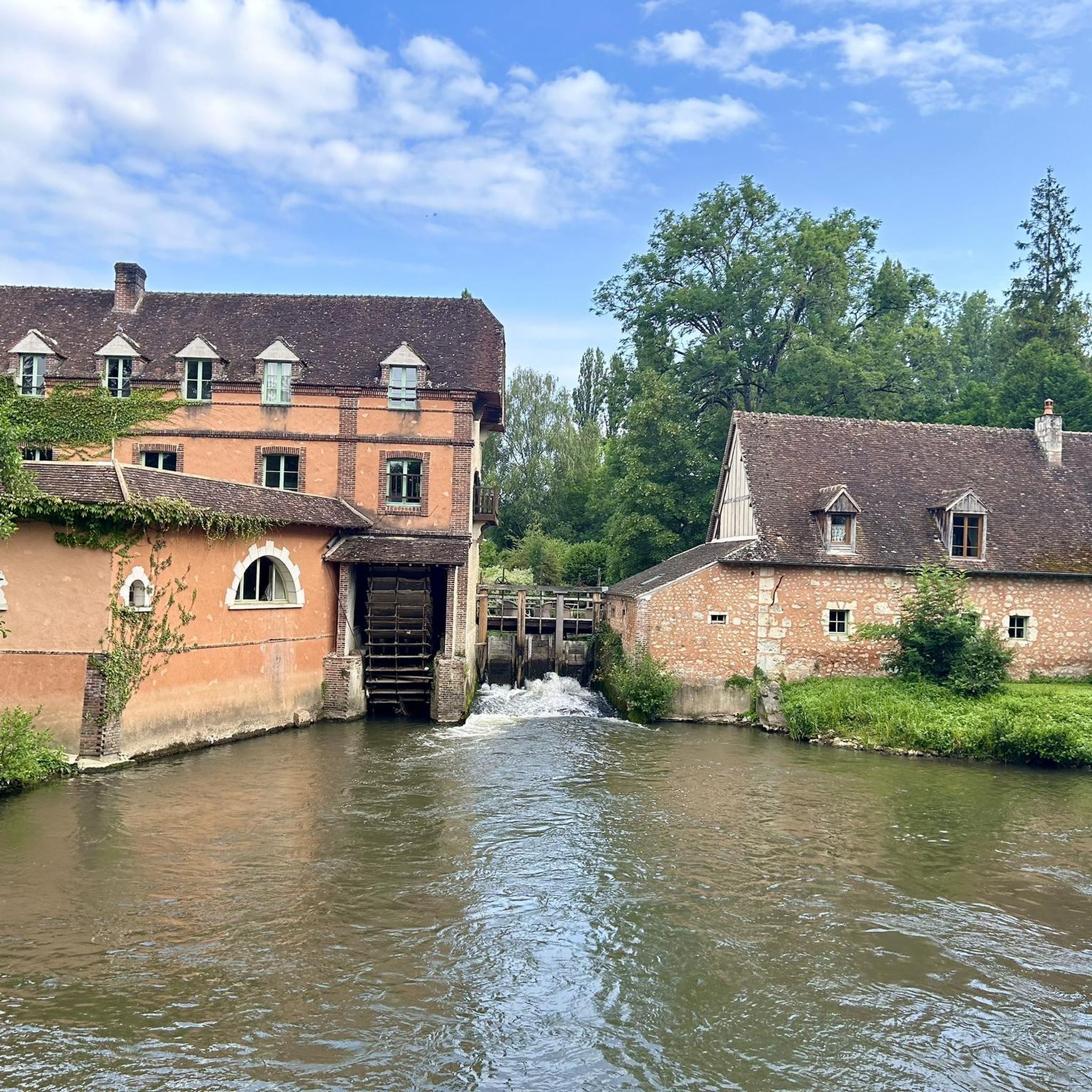
The Church of Saint-Pierre, under the Ancien Régime, part of the deanery of Bellême, in the diocese of Sées, is located in the heart of the village of Saint-Pierre-la-Bruyère, in the Perche region. This building features a relatively high nave, surmounted by a slate bell tower, extending into a square-plan choir, much lower, flanked by a rectangular chapel to the south. The façade is supported by four powerful buttresses that appear to date from the late Middle Ages. It features a basket-handle lintel entrance door, dating from the late Gothic period. This door replaced a Romanesque doorway whose semicircular arch appears above the Gothic opening. It is surmounted by a pointed window. The northern drip wall is flanked, where it meets the western façade, by a brick staircase turret leading to the attic. The nave was built in the Romanesque period, as evidenced by the small round-arched windows in the upper part of the north drip wall. The bell tower is supported by four posts set within the nave's volume behind the façade wall. The three bays delimited by these posts are covered by a plastered wooden vault, lower than the nave vault, built in the 18th century. The triumphal arch is quite small. It is flanked by two finely crafted stone altarpieces. The choir is adorned with a large stone altarpiece with three sides delimited by four columns, surmounted by a richly decorated cornice crowned with fire pots. The high altar and side altars, in the same style, were built after the episcopal visit of 1706. They are a representative example of the quality of the renovations carried out in Percheron churches in the 17th and 18th centuries. A seigneurial chapel, built in the late 15th or early 16th centuries to the south of the choir, was converted into a sacristy between 1701 and 1706, to satisfy the observations made during the episcopal visitations. The arch opening onto the choir was walled up for this purpose. Aside from the altarpieces, the church contains few furnishings: an 18th-century stone Virgin Mary and a 16th-century baptismal font. The Sauvegarde de l'Art Français (French Art Protection Agency) granted €4,000 in grants in 2005 for the restoration of the roof.
0
0

I am delighted to see and see again the basilica of "La chapelle Montligeon" and I am proud to have been the doctor of this charming village. In the year 2000 and following after 40 years of general medicine in Paris. R.G. Dean of the "couch of doctors".
0
0
The inhabitants of Margon can admire the church of Notre-Dame du Mont-Carmel, proudly dominating the old town on its rocky spur, at the corner of two green valleys. It was later given an aisle during the 16th century, but its Romanesque portal has been preserved. It reigns benevolently over the old cemetery which surrounds it and which has recently been enlarged due to the increase in the population of the commune.
0
0
From very humble beginnings, a significant sanctuary with a very unusual patronage has emerged in La Chapelle-Montligeon, one I've never encountered anywhere else: The church here, with the papal distinction of "Basilica Minor," is not one of the usual churches dedicated to Our Lady, but rather specifically to "Our Lady, the Liberator of Souls in Purgatory." The present pilgrimage church was built at the turn of the 19th and 20th centuries, as the previous building had become far too small for the pilgrims who came here.
0
0

The priory was founded at the beginning of the 11th century and is dedicated to Saint Gauburge (or Walburge), abbess of a large Bavarian monastery in the 8th century. Originally owned by the lords of Bellême, it passed, from the 12th century, to the Royal Abbey of Saint-Denis-en-France. From the end of the 15th century, it was directly dependent on royal power until the Revolution. An important rural estate, its buildings bear witness to its special status and the magnitude of its revenues. Since 1972, it has housed the headquarters of the Perche Ecomuseum, which bears witness to the peasant life of the Perche and develops a diverse cultural program.
0
0
The small church of Dame Marie was part of a large priory founded in the 11th century under the control of Jumièges Abbey. The monks left the priory between 1701 and 1789, and it was sold as national property in 1792. In 1850, an imposing bell tower porch was built, which was demolished in 2006 and replaced by the current shingled bell tower, allowing the reconstruction of the old Romanesque porch.
0
0

The church was built in 1865 by Father Migorel, who supposedly had three visions of a church to be built on a hilltop at the junction of three roads. It was consecrated in 1867 and opened for worship. The octagonal tower, erected in 1871, is decorated with polychrome bricks and topped with four turrets housing statues of archangels.
0
0
Frequently Asked Questions
How many road cycling routes are available around Sablons-sur-Huisne?
There are 19 road cycling routes available around Sablons-sur-Huisne. These routes cater to various skill levels, including 3 easy, 15 moderate, and 1 difficult option.
What kind of terrain can I expect when road cycling in the Perche Regional Natural Park?
The Perche Regional Natural Park offers diverse terrain for road cycling. You'll find the flat and open landscape of the Huisne valley, alongside rolling hills, gentle slopes, and wooded hillsides. This variety provides engaging rides for different skill levels, from relaxed spins to more challenging climbs.
Are there routes suitable for beginners or families?
Yes, there are routes suitable for beginners and families. The region offers 3 easy road cycling routes. For a shorter, moderate ride through the local area, consider the Notre-Dame Church – Saint-Denis Church loop from Condeau, which is 22.2 km long.
What is the best time of year for road cycling in Sablons-sur-Huisne?
The Perche Regional Natural Park is beautiful throughout the warmer months. Spring and autumn offer pleasant temperatures and vibrant scenery with blooming orchards or colorful foliage. Summer provides longer daylight hours, though shaded sections along routes like the Voie Verte can offer respite on warmer days.
Are there any long-distance road cycling routes in the area?
Yes, for those seeking longer distances, the region offers several options. The Porte Saint Denis – Saint Germain de Loisé loop from Condé-sur-Huisne is a challenging 111.3 km route with significant elevation gain through the Perche countryside. Another substantial ride is the Relais du Roi Saint Louis – Saint-Denis Church loop from Condé-sur-Huisne, covering 70.8 km.
What scenic viewpoints or natural features can I see along the routes?
Many routes offer views of the picturesque Huisne River, which flows through the area. You'll also cycle through dense woods, ancient oak forests, and apple orchards, characteristic of the Perche Regional Natural Park. The varied terrain provides panoramic vistas from wooded hillsides and valleys.
Are there any historical sites or landmarks to explore while cycling?
Yes, the region is rich in history. You can cycle past or near the ancient Nogent-le-Rotrou Castle, which dominates the Huisne Valley. The Former Rémalard-Bellou Station, an old railway station, is integrated into the Voie Verte, adding a historical touch to your ride. The impressive Thiron-Gardais Abbey Gardens are also worth exploring.
Is there a dedicated greenway for road cyclists in the region?
Yes, a major highlight for cyclists is the Voie Verte Alençon–Condé-sur-Huisne. This 65-kilometer multi-activity greenway is built on a former railway line, providing a safe and smooth surface for road cycling away from vehicular traffic. It features shaded sections and portions running close to the Huisne River.
Are there challenging routes for experienced road cyclists?
Absolutely. For experienced road cyclists seeking a challenge, the region offers routes with significant elevation gain. The Porte Saint Denis – Saint Germain de Loisé loop from Condé-sur-Huisne is classified as difficult, covering 111.3 km with over 1100 meters of elevation gain.
What do other cyclists say about the road cycling routes here?
The road cycling routes around Sablons-sur-Huisne are highly rated by the komoot community, with an average score of 4.3 stars from over 38 reviews. Cyclists often praise the varied terrain, the beauty of the Perche countryside, and the well-maintained paths, especially the dedicated greenway.
Can I find circular road cycling routes around Sablons-sur-Huisne?
Yes, many of the road cycling routes in the area are designed as loops, allowing you to start and end your ride in the same location. Examples include the Notre-Dame Church – Saint-Denis Church loop from Condeau and the Notre-Dame Church – Saint-Denis Church loop from Condé-sur-Huisne.
Are there options for shorter road cycling outings?
Yes, if you're looking for a quicker ride, there are several shorter options. The Notre-Dame Church – Saint-Denis Church loop from Condeau is a moderate 22.2 km path, perfect for a shorter outing. Another option is the Saint Hilaire Church loop from Saint-Pierre-la-Bruyère, which is 14 km long.
Most popular routes around Sablons-Sur-Huisne
Most popular attractions around Sablons-Sur-Huisne

Get inspired with the komoot mobile app


Explore more
Browse the best Road cycling routes in other regions.
